Delmuno 2.5
Poland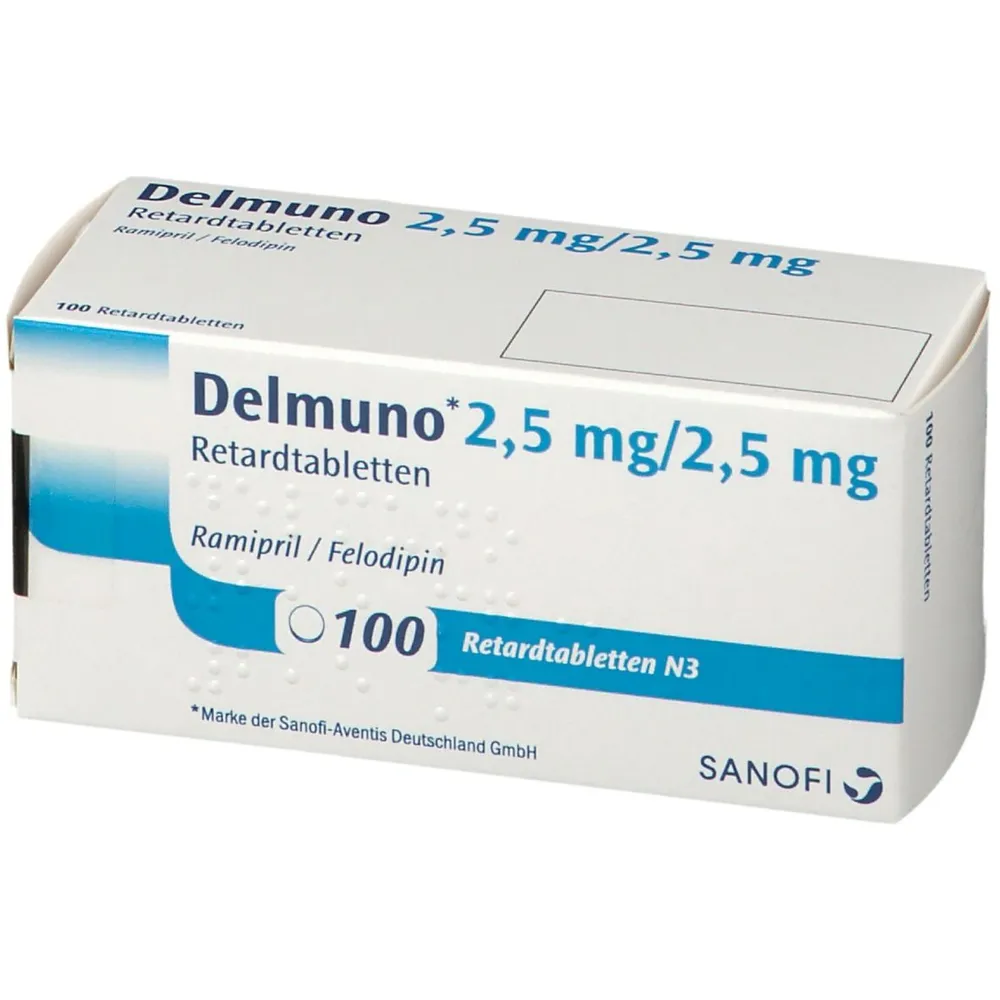
Table of Contents
Package leaflet: Information for the user
Delmuno 2,5, 2.5 mg + 2.5 mg, film-coated tablets
Delmuno 5, 5 mg + 5 mg, film-coated tablets
Ramiprilum + Felodipinum
Please read all of this leaflet carefully before taking this medicine because it contains important information for you.
- Keep this leaflet. You may need to read it again.
- If you have any further questions, ask your doctor or pharmacist.
- This medicine has been prescribed for you personally. Do not pass it on to others. It may harm them, even if their symptoms are the same as yours.
- If you experience any side effects, including any not listed in this leaflet, inform your doctor or pharmacist. See section 4.
((responsible entity's logo))
Contents of the leaflet
- What Delmuno is and what it is used for
- What you need to know before taking Delmuno
- How to take Delmuno
- Possible side effects
- How to store Delmuno
- Contents of the pack and other information
1. What Delmuno is and what it is used for
Delmuno contains two active substances: ramipril and felodipine.
- Ramipril belongs to a group of medicines called angiotensin-converting enzyme (ACE) inhibitors. It works by blocking the production of a substance that raises blood pressure and by relaxing and widening blood vessels.
- Felodipine belongs to a group of medicines called calcium antagonists. It works by widening and relaxing blood vessels. This helps lower blood pressure.
Delmuno is used to treat high blood pressure (essential hypertension) in patients who are already receiving the same doses of ramipril or felodipine as those contained in Delmuno.
2. Important information before using Delmuno
When not to use Delmuno:
- if the patient is allergic to:
- ramipril or any other ACE inhibitor;
- felodipine or any other dihydropyridine derivative (a group of medicines);
- any of the other ingredients of this medicine (listed in section 6);
- if the patient has ever had a severe allergic reaction called "angioedema". Symptoms include: itching, urticaria, red patches on hands, feet and throat, swelling of the throat and tongue, puffiness around the eyes and lips, difficulty breathing and swallowing. Use of this medicine may increase the risk of such severe reactions;
- if the patient has taken or is taking a combination medicine containing sacubitril and valsartan (used to treat long-term (chronic) heart failure in adults), because the risk of angioedema (rapid swelling of subcutaneous tissue, e.g. in the throat area) increases;
- in haemodynamically unstable conditions, such as untreated heart failure, unstable angina pectoris, cardiogenic shock, myocardial infarction (acute heart attack) or stroke (disturbances in blood flow to the brain);
- in patients with significant haemodynamically relevant stenosis of heart valves;
- in patients with dynamic obstruction of the blood outflow tract from the heart;
- if the patient has a condition called second- or third-degree atrioventricular block;
- if the patient has severe kidney function disorders;
- if the patient is undergoing dialysis;
- if the patient has haemodynamically significant renal artery stenosis: bilateral or unilateral in the case of a single functioning kidney;
- if the patient has severe liver function disorders;
- if the patient is pregnant, plans or suspects pregnancy, or is breastfeeding (see below "Pregnancy and breastfeeding");
- if the patient has diabetes or kidney function disorders and is being treated with a blood pressure-lowering medicine containing aliskiren;
- if the patient has kidney disorders related to diabetes and is being treated with angiotensin II receptor antagonists (AIIRAs), also known as sartans, such as valsartan, telmisartan, irbesartan (blood pressure-lowering medicines).
Concomitant use of Delmuno and extracorporeal therapeutic procedures
such as: dialysis or hemofiltration using certain high-flux membranes (e.g. polyacrylonitrile) and low-density lipoprotein apheresis (LDL cholesterol) using dextran sulfate should be avoided.
Do not use Delmuno if any of the above conditions apply to the patient.
If in doubt, consult a doctor or pharmacist before starting to use this medicine.
Warnings and precautions
Before starting to take Delmuno, discuss this with your doctor or pharmacist.
Exercise caution in the following cases:
-
If the patient is taking any of the following medicines, because the risk of angioedema may increase:
- racecadotril, a medicine used to treat diarrhoea;
- medicines used to prevent organ transplant rejection and to treat cancer (e.g. temsirolimus, sirolimus, everolimus);
- vildagliptin, a medicine used to treat diabetes.
-
If "angioedema" occurs, discontinue the medicine immediately (see section "When not to use Delmuno"). The risk of angioedema may also increase with concomitant use of other medicines that may cause angioedema.
-
If the patient has coexisting heart failure, renovascular hypertension, kidney function disorders or is in a post-kidney transplant state, monitoring of kidney function is recommended.
-
If the patient has kidney disorders or diabetes.
-
If the patient is taking medicines that increase potassium levels (potassium-sparing diuretics, potassium supplements, including salt substitutes, or other medicines that may increase potassium levels). The doctor may recommend regular blood tests, especially to determine blood potassium levels. Use of potassium-sparing diuretics, potassium supplements, and other medicines that may increase blood potassium levels increases the risk of (sometimes severe) hyperkalaemia (high potassium levels), and therefore their use is not recommended during treatment with Delmuno.
-
If the patient has stenosis of the main blood vessel leaving the heart (aortic valve stenosis), mitral valve stenosis or cardiomyopathy (hypertrophic cardiomyopathy).
-
If the patient has heart failure (with or without kidney failure) and is being treated with high doses of loop diuretics, and in cases of hyponatraemia (low sodium levels) or reduced kidney function.
-
If the patient has systemic lupus erythematosus or scleroderma.
-
If the patient has liver function disorders.
-
If the patient has haemodynamically significant stenosis of the coronary arteries (heart vessels) or blood vessels supplying the brain, close monitoring is required, preferably in a hospital setting.
-
In patients with strong activation of the renin-angiotensin system. Significant activation of the renin-angiotensin system may occur in the following cases:
- if the patient has severe hypertension or moderate circulatory failure, initiation of treatment with Delmuno should take place in a hospital or similar setting;
- if the patient has haemodynamically significant inflow or outflow disorders from the left ventricle of the heart (e.g. aortic or mitral valve stenosis);
- if the patient has haemodynamically significant renal artery stenosis, initiation of treatment with Delmuno should take place in a hospital or similar setting;
- if the patient is simultaneously taking diuretics;
- if the patient has fluid or electrolyte deficiency (salts). Electrolyte deficiencies should be corrected before starting treatment with Delmuno, if possible.
-
If the patient will undergo general anaesthesia or surgery.
-
If the patient is taking medicines that affect blood cell counts.
-
If the patient is of black race, as the medicine may be less effective in lowering blood pressure and may cause more adverse effects.
-
If the patient is receiving allergen-specific immunotherapy for bee or wasp venom (desensitisation).
-
If the patient is undergoing extracorporeal treatment such as low-density lipoprotein apheresis (LDL cholesterol).
-
If the patient has gingival hyperplasia. Cases of benign gingival hyperplasia with visible inflammation of the gums and/or periodontium have been reported in patients taking felodipine. Gingival hyperplasia can be prevented or reversed through proper oral hygiene.
-
If the patient is taking any of the following medicines used to treat high blood pressure:
- angiotensin II receptor antagonist (AIIRA), also known as sartan – e.g. valsartan, telmisartan, irbesartan, especially if the patient has kidney disorders related to diabetes;
- aliskiren.
-
If the patient is taking medicines that may reduce sodium levels in the body or has symptoms suggesting such a condition. The doctor may recommend regular blood tests, especially to determine sodium levels, particularly in elderly patients.
The treating doctor may recommend regular monitoring of kidney function, blood pressure and
electrolyte levels (e.g. potassium) in blood.
See also the section "When not to use Delmuno".
If in doubt whether any of the above conditions apply to the patient, contact a doctor or pharmacist before starting to use this medicine.
In patients treated with Delmuno, the doctor may order regular tests to determine blood sodium levels.
Delmuno and other medicines
Inform your doctor or pharmacist about all medicines currently taken or recently taken, as well as any medicines the patient plans to take.
This includes over-the-counter medicines and herbal preparations. This is important because Delmuno may affect the action of other medicines, and some medicines may affect the action of Delmuno.
Concomitant use with Delmuno is not recommended for the following medicines:
- potassium supplements (including salt substitutes), potassium-sparing diuretics (such as spironolactone, triamterene, amiloride) and other medicines increasing blood potassium levels (e.g. trimethoprim and cotrimoxazole, used for bacterial infections; cyclosporine, an immunosuppressive medicine used to prevent organ transplant rejection; and heparin (used to thin the blood to prevent clots)) – close monitoring of blood potassium levels is required if these medicines are used concomitantly;
- phenytoin, carbamazepine and barbiturates. These medicines are usually used to treat epilepsy and seizures. Barbiturates are also used to treat sleep disorders;
- rifampicin – used to treat tuberculosis;
- St. John's wort preparations;
- macrolide antibiotics (erythromycin), telithromycin, azole derivatives (itraconazole, ketoconazole) – used to treat infections;
- HIV protease inhibitors – medicines used to treat HIV infection;
- aliskiren (used to treat high blood pressure) – concomitant use of Delmuno with medicines containing aliskiren is contraindicated in patients with diabetes or moderate to severe kidney function disorders (see section "When not to use Delmuno") and is not recommended in other patients;
- angiotensin II receptor antagonists (medicines used to treat high blood pressure). Concomitant use of Delmuno and angiotensin II receptor antagonists is contraindicated in patients with kidney disorders related to diabetes (see section "When not to use Delmuno") and is not recommended in other patients.
Exercise caution when using the following medicines concomitantly with Delmuno:
- blood pressure-lowering medicines (antihypertensives) and other medicines that reduce blood pressure (nitrates, antipsychotics, opioids and anaesthetics);
- procainamide – used to treat heart rhythm disorders;
- heparin – used to thin the blood;
- lithium preparations – used to treat mania, depression and bipolar disorder;
- theophylline – used to treat asthma;
- adrenergic agents such as adrenaline or noradrenaline (medicines that may affect the heart or blood vessels);
- allopurinol – used to treat gout;
- non-steroidal anti-inflammatory drugs (NSAIDs) – used to relieve pain and inflammation;
- immunosuppressive medicines – used in rheumatoid arthritis or after organ transplantation;
- tacrolimus – a medicine given to prevent rejection of transplanted organs such as kidney or liver;
- cytostatics – used to treat tumours and other medicines that may affect blood counts;
- insulin, sulfonylurea derivatives (glibenclamide), metformin, vildagliptin and other medicines used to treat diabetes;
- corticosteroids;
- desensitising medicines – reducing allergy to bee or wasp venom;
- vildagliptin (used in diabetes);
- racecadotril (a medicine used to treat diarrhoea);
- temsirolimus, sirolimus, everolimus (used to prevent organ transplant rejection and to treat cancer).
The treating doctor may recommend dose adjustments and/or additional precautions:
- If the patient is taking an angiotensin II receptor antagonist (AIIRA) or aliskiren (see also sections "When not to use Delmuno" and "Warnings and precautions").
If in doubt whether concomitant use of any of the above medicines applies to the patient, contact a doctor or pharmacist before starting to use this medicine.
Delmuno with food and drink
- Taking the medicine with alcohol may intensify its effect.
- Do not take the medicine with grapefruit juice.
- Increasing salt intake in the diet may reduce the effect of the medicine.
- The medicine should be taken on an empty stomach or after a light meal.
Pregnancy and breastfeeding
Do not use Delmuno:
- if the patient is pregnant, suspects she may be pregnant, or plans to become pregnant, because the medicine may be harmful to the unborn child;
- if the patient is breastfeeding or plans to breastfeed, because a small amount of the medicine may pass into breast milk.
If the patient suspects she may have become pregnant while taking Delmuno, she should
contact her doctor immediately.
Driving and operating machinery
Dizziness or feeling faint may occur after taking this medicine. In such cases, do not drive, use tools or operate machinery.
Delmuno contains lactose
If the patient has previously been diagnosed with intolerance to certain sugars, the patient should
contact a doctor before taking the medicine.
Delmuno contains macrogol glycerol hydroxystearate (polyoxylated hydrogenated castor oil)
The medicine may cause indigestion and diarrhoea.
Delmuno contains sodium
The medicine contains less than 1 mmol (23 mg) of sodium per tablet, meaning the medicine is considered "sodium-free".
3. How to use Delmuno
This medicine should always be taken exactly as directed by your doctor. If in doubt, consult your doctor or pharmacist.
Delmuno is intended for use in adults only and must not be given to children.
Method of administration
For oral use.
The tablets should be taken on an empty stomach or after a light meal. Swallow the tablets whole with half a glass of water or another liquid. Do not divide, crush, or chew the tablets. Do not take the tablets with grapefruit juice or alcohol.
Recommended dose
The recommended dose is 1 tablet of Delmuno 2.5 or 1 tablet of Delmuno 5 once daily.
Your doctor may start treatment with Delmuno 2.5 and then switch to Delmuno 5 to increase the dose.
The maximum daily dose is 2 tablets of Delmuno 2.5 or 1 tablet of Delmuno 5 once daily.
Patients with mild to moderate hepatic impairment: your doctor may individually adjust the dose depending on liver function.
Patients with mild to moderate renal impairment: your doctor may individually adjust the dose depending on kidney function.
Patients taking diuretics: your doctor may individually adjust the dose depending on the diuretics being taken.
Use in children
Do not use Delmuno in children.
If you take more Delmuno than you should
If you have taken more Delmuno than recommended, contact your doctor immediately or go to the emergency department of your nearest hospital. Take the medicine packaging with you so the doctor knows which medicine has been taken. Dizziness or lightheadedness due to low blood pressure may occur.
If you forget to take Delmuno
If you miss a dose, take the next dose at the usual time. Do not take a double dose to make up for a forgotten dose.
Stopping Delmuno
Continue treatment for as long as your doctor advises. Do not stop taking this medicine just because you feel better.
If you have any further questions about the use of this medicine, consult your doctor or pharmacist.
4. Possible adverse reactions
Like all medicines, this medicine can cause adverse reactions, although not everyone will experience them.
You should stop taking Delmuno and contact your doctor immediately if
the patient experiences any of the following severe adverse reactions – urgent medical
attention may be required:
- Swelling of the face, lips or throat causing difficulty in swallowing or breathing, as well as itching and rash. These may be symptoms of a severe allergic reaction to Delmuno.
- Severe skin reactions, including rash, ulceration of the mucous membranes of the mouth, worsening of pre-existing skin disease, redness, blistering or peeling of the skin (such as Stevens-Johnson syndrome, toxic epidermal necrolysis or erythema multiforme).
You should contact your doctor as soon as possible if any of the following occur:
- Rapid heartbeat, irregular or forceful palpitations, chest pain, chest tightness or more serious disturbances, including heart attack and stroke.
- Shortness of breath or cough. These may be symptoms of lung disorders.
- Easy bruising, bleeding that lasts longer than usual, any signs of bleeding (e.g. bleeding gums), purple spots, skin petechiae or more frequent than usual infections, sore throat and fever, fatigue, fainting, dizziness or pale skin. These may be symptoms of blood or bone marrow disorders.
- Severe abdominal pain which may radiate to the back. This may be a symptom of pancreatitis.
- Fever, chills, fatigue, loss of appetite, stomach pain, nausea, yellowing of the skin or eyes (jaundice). These may be symptoms of liver disorders, such as hepatitis or liver damage.
Adverse reactions are listed according to frequency of occurrence:
Very common (may occur in at least 1 in 10 patients):
- peripheral oedema.
Common (may occur in less than 1 in 10 patients):
- swelling of hands and feet – may be a sign of fluid retention,
- headache or feeling of fatigue,
- dizziness – more likely to occur when starting treatment with Delmuno or when the dose is increased,
- fainting, hypotension (abnormally low blood pressure), especially when standing up quickly from a sitting or lying position,
- sudden flushing (especially of the face),
- dry, persistent cough, sinusitis or bronchitis, shortness of breath,
- stomach or intestinal pain, digestive disturbances, diarrhoea, indigestion, nausea or vomiting,
- skin rash with raised lesions or without,
- chest pain,
- muscle cramps or muscle pain,
- increased potassium levels detected in blood tests.
Uncommon (may occur in less than 1 in 100 patients):
- balance disorders (vertigo),
- itching and unusual sensory sensations such as numbness, tingling, pricking, burning or stinging (paraesthesia),
- loss or change in taste perception,
- sleep disturbances, including drowsiness,
- low mood, anxiety, increased nervousness or restlessness,
- nasal congestion, difficulty breathing or worsening of asthma,
- intestinal angioedema, with symptoms such as abdominal pain, vomiting and diarrhoea,
- epigastric pain, constipation or dryness of the oral mucosa,
- increased frequency of urination during the day,
- excessive sweating,
- loss or decrease in appetite (anorexia),
- rapid or irregular heartbeat,
- hypotension,
- blurred vision,
- joint pain,
- fever,
- transient impotence in men, decreased libido in men and women,
- increased number of a certain type of white blood cells (eosinophilia), detected during blood tests,
- impaired liver, pancreas or kidney function, detected during blood tests,
- myocardial ischaemia, including angina or heart attack,
- angioedema, most commonly swelling of the face, lips or throat causing difficulty in swallowing or breathing, as well as itching and rash (very rarely may lead to airway obstruction and be fatal) or other allergic (hypersensitivity) reactions,
- pancreatitis resulting in death (fatal cases have been observed with extremely rare frequency during treatment with ACE inhibitors).
Rare (may occur in less than 1 in 1000 patients):
- feeling of uneasiness or disorientation,
- tremor, balance disorders,
- redness and swelling of the tongue,
- severe peeling or flaking of the skin, itchy nodular rash,
- nail disorders (e.g. loosening or separation of the nail from the nail bed),
- skin spots and cold extremities,
- vasculitis,
- redness, itching, swelling or watering of the eyes,
- hearing disturbances and tinnitus,
- weakness,
- decreased number of red blood cells, white blood cells or platelets or haemoglobin concentration, detected in blood tests,
- yellowing of the skin or eyes (jaundice), liver damage,
- reduced potency in men and women.
Very rare (may occur in less than 1 in 10,000 patients):
- photosensitivity,
- gingival hyperplasia or gingivitis,
- cutaneous small vessel vasculitis,
- increased blood glucose levels, detected in blood tests.
Other adverse reactions (frequency unknown – frequency cannot be estimated from available data):
- cerebral ischaemia (stroke or transient ischaemic attack),
- concentration disturbances, slowed or impaired reactions,
- oedema of the oral mucosa,
- intestinal obstruction,
- decreased blood cell counts detected in blood tests (bone marrow failure, pancytopenia), decreased serum sodium levels detected in blood tests,
- colour change of fingers and toes during cold exposure, with tingling or pain upon rewarming (Raynaud's phenomenon),
- breast enlargement in men,
- burning sensation,
- altered sense of smell,
- low haemoglobin levels (haemolytic anaemia),
- anaphylactic or pseudoanaphylactic reactions (when using ACE inhibitors, the frequency and severity of anaphylactic or pseudoanaphylactic reactions to insect venom may increase),
- increased titre of antinuclear antibodies,
- severe skin reactions, including rash, ulceration of the oral mucosa, worsening of pre-existing skin disease (psoriasis), psoriasiform dermatitis, redness, blistering or peeling of the skin (such as Stevens-Johnson syndrome, toxic epidermal necrolysis or erythema multiforme),
- acute liver failure, hepatitis (rarely fatal),
- concentrated urine (dark in colour), nausea or vomiting, muscle cramps, confusion and seizures, as well as headache, mood changes, excessive excitability, disturbances of consciousness, decreased muscle tone, which may result from inappropriate vasopressin secretion (so-called SIADH syndrome) – if such symptoms occur, medical advice should be sought immediately,
- hair loss.
Reporting of adverse reactions
If any adverse reactions occur, including any possible adverse reactions not listed in this leaflet, inform your doctor or pharmacist. Adverse reactions can be reported directly to the Department of Monitoring Adverse Drug Reactions of the Office for Registration of Medicinal Products, Medical Devices and Biocidal Products, Al. Jerozolimskie 181 C, 02 222 Warsaw.
Tel.: +48 22 49 21 301, fax: +48 22 49 21 309,
Website: https://smz.ezdrowie.gov.pl
Adverse reactions can also be reported to the marketing authorisation holder or its representative in Poland.
By reporting adverse reactions, additional information on the safety of the medicine can be collected.
5. How to store Delmuno 2,5
Store below 25 °C.
Keep the medicine in a place inaccessible and out of sight of children.
Do not use this medicine after the expiry date stated on the carton and blisters after "Expiry date". The expiry date refers to the last day of the stated month.
Medicines should not be disposed of via wastewater or household waste. Ask your pharmacist how to dispose of medicines no longer required. This will help protect the environment.
6. Contents of the pack and other information
What Delmuno contains
- The active substances are: ramipril and felodipine. One tablet of Delmuno 2.5 contains as active substances 2.5 mg of ramipril and 2.5 mg of felodipine. One tablet of Delmuno 5 contains as active substances 5 mg of ramipril and 5 mg of felodipine.
- The other ingredients are: iron oxide yellow (E 172), iron oxide red-brown (E 172), hydroxypropylcellulose, hypromellose 5 mPa•s, hypromellose 6 mPa•s, hypromellose 50 mPa•s, hypromellose 10,000 mPa•s, anhydrous lactose, pregelatinized corn starch, microcrystalline cellulose, synthetic paraffin, macrogol 6000, macrogol glycerol hydroxystearate, propyl gallate, sodium aluminosilicate, sodium stearyl fumarate, titanium dioxide (E 171).
What Delmuno looks like and contents of the pack
Film-coated tablet
Bilayered, round, biconvex film-coated tablets containing felodipine in a modified-release form (gel matrix) in one layer and rapidly released ramipril in the other layer.
Pack contains 28 tablets.
Marketing Authorisation Holder
Sanofi - Aventis Deutschland GmbH
Brüningstrasse 50
D-65926 Frankfurt am Main
Germany
Manufacturer
Opella Healthcare Hungary Ltd.
Manufacturing Site Veresegyhaz
Levai u.5.
2112 Veresegyhaz
Hungary
Sanofi Winthrop Industrie
30-36 avenue Gustave Eiffel
37100 Tours
France
For further information, please contact the local representative of the Marketing Authorisation Holder in Poland:
Sanofi Sp. z o.o.
ul. Marcina Kasprzaka 6
01-211 Warsaw
Tel.: +48 22 280 00 00