Colistimethate accord
Poland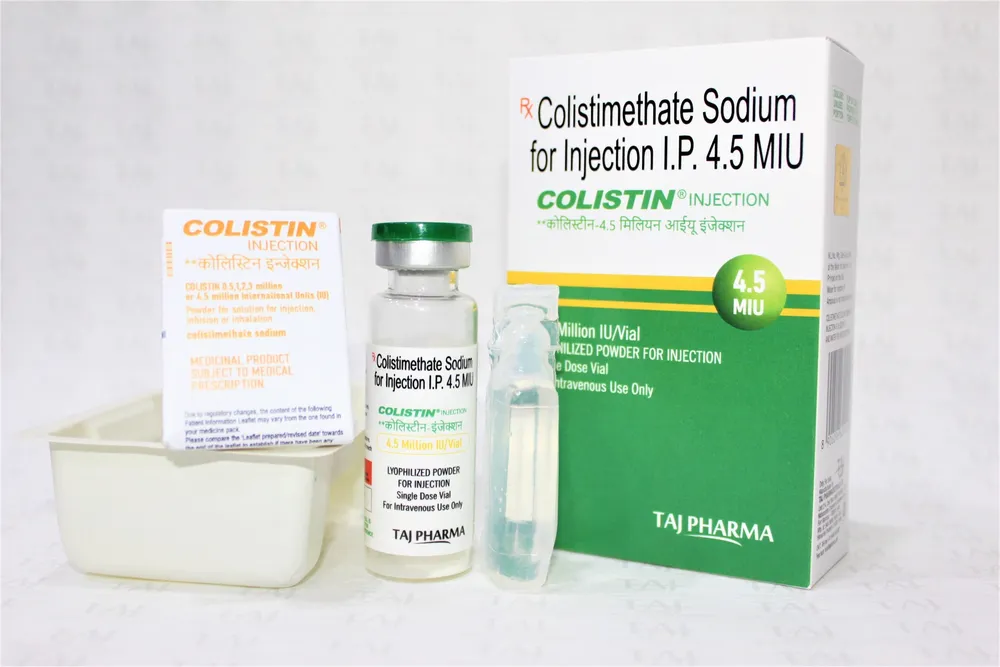
Table of Contents
Patient Information Leaflet
Colistimethate Accord, 1 000 000 i.u., powder for solution for injection/infusion
Colistimethate Accord, 2 000 000 i.u., powder for solution for injection/infusion
Colistimethatum natricum
Before taking this medicine, read this leaflet carefully, as it contains important information for you.
- Keep this leaflet, as you may need to read it again.
- If you have any further questions, ask your doctor, pharmacist, or nurse.
- This medicine has been prescribed for a specific individual. Do not pass it on to others. It may harm someone else, even if their symptoms are the same.
- If you experience any adverse effects, including any not listed in this leaflet, tell your doctor, pharmacist, or nurse. See section 4.
Table of Contents
- What Colistimethate Accord is and what it is used for
- Important information before using Colistimethate Accord
- How to use Colistimethate Accord
- Possible side effects
- How to store Colistimethate Accord
- Contents of the pack and other information
1. What Colistimethate Accord is and what it is used for
Colistimethate Accord contains the active substance called colistimethate sodium. Colistimethate sodium is an antibiotic belonging to a group of antibiotics known as polymyxins. Colistimethate Accord is administered by injection to treat certain types of serious infections caused by specific bacteria. It is used when other antibiotics are not suitable.
2. Important information before using Colistimethate Accord
When not to use Colistimethate Accord
- If you are allergic to colistimethate sodium, colistin, or other polymyxins.
Warnings and precautions
Before starting treatment with Colistimethate Accord, discuss with your doctor, pharmacist, or nurse if:
- You have or have had kidney function disorders.
- You suffer from myasthenia gravis.
- You suffer from porphyria.
- You experience muscle cramps, fatigue, or increased urination at any time during treatment, inform your doctor immediately, as these events may be related to a condition known as pseudotumor Bartter syndrome.
Children
Special caution should be exercised when administering Colistimethate Accord to premature infants and newborns, as their kidneys are not yet fully developed.
Colistimethate Accord with other medicines
Tell your doctor about all medicines you are currently taking, have recently taken, or plan to take.
Depending on the medicines you are taking, you may or may not be able to use them concurrently with Colistimethate Accord. In some cases, your doctor may decide to temporarily discontinue other medications, reduce the dose of Colistimethate Accord, or monitor you during treatment. In certain cases, monitoring blood levels of Colistimethate Accord may be necessary to ensure you are receiving the correct dose.
- Aminoglycoside antibiotics (such as gentamicin, tobramycin, amikacin, and netilmicin) and cephalosporins may affect kidney function. Taking these medicines together with Colistimethate Accord may increase the risk of kidney damage (see section 4 of this leaflet).
- Aminoglycoside antibiotics (including gentamicin, tobramycin, amikacin, and netilmicin) and cephalosporins may affect the nervous system. Taking these medicines together with Colistimethate Accord may increase the risk of adverse effects affecting the hearing organ and other parts of the nervous system (see section 4 of this leaflet).
- Muscle relaxants, often used during general anesthesia. Colistimethate Accord may enhance the effects of these medicines. If you are due to undergo general anesthesia, inform the anesthesiologist that you are taking Colistimethate Accord.
If you suffer from myasthenia gravis (muscle weakness) and are also taking other antibiotics called macrolides (such as azithromycin, clarithromycin, or erythromycin) or antibiotics called fluoroquinolones (such as ofloxacin, norfloxacin, and ciprofloxacin), taking Colistimethate Accord may further increase the risk of muscle weakness and breathing difficulties.
Pregnancy and breastfeeding
If you are pregnant or breastfeeding, think you may be pregnant, or are planning to have a baby, consult your doctor or pharmacist before using this medicine.
Pregnancy
There is insufficient data on the use of this medicine in pregnant women. Your doctor will prescribe this medicine only if the potential benefits outweigh the potential risks to the fetus.
Breastfeeding
Small amounts of Colistimethate Accord pass into breast milk. Breastfeeding is not recommended during treatment.
Driving and using machines
When Colistimethate Accord is administered intravenously, side effects such as dizziness, confusion, or visual disturbances may occur. If you experience any of these side effects, do not drive or operate machinery.
Colistimethate Accord contains sodium
This medicine contains less than 1 mmol (23 mg) of sodium per vial, which means it is considered "sodium-free".
3. How to use Colistimethate Accord
Depending on the indication (see section 1 of this leaflet), Colistimethate Accord may be administered
as a rapid injection (lasting more than 5 minutes into a special tube in a vein) or as a slow
injection (infusion lasting approximately 30 to 60 minutes) into a vein. In certain cases, Colistimethate Accord
may be given by injection into the brain chamber or spinal canal.
Colistimethate Accord must always be used exactly as directed by your doctor or pharmacist.
If you are unsure, consult your doctor or pharmacist.
For infusion or injection use:
The usual daily dose for adults is typically 9 million units, divided into 2 or 3 doses. In patients with severe illness,
an initial single dose of 9 million units may be administered at the beginning of treatment.
In some cases, your doctor may decide to administer a higher daily dose of up to 12 million units.
The usual daily dose for children weighing up to 40 kg is typically 75,000 to 150,000 IU/kg body weight,
divided into 3 doses.
Patients with impaired kidney function, including those undergoing dialysis, usually receive lower doses.
While receiving Colistimethate Accord, your doctor will regularly monitor your kidney function.
Method of administration
Colistimethate Accord is administered mainly in hospitals. Colistimethate Accord is given by a doctor as an intravenous
infusion over 30–60 minutes. If you are self-administering the treatment at home, your doctor, pharmacist, or nurse
should demonstrate how to reconstitute the powder and inject the correct dose of solution.
Duration of treatment
Your doctor will determine how long treatment should last, depending on the severity of the infection.
In treating bacterial infections, it is important to complete the full course of treatment to prevent worsening
of the existing infection.
Use of a higher than recommended dose of Colistimethate Accord
If you think you have received more Colistimethate Accord than recommended, contact your doctor or nurse immediately
for advice. If you cannot contact your doctor or nurse, go to the nearest emergency department or contact the nearest
hospital emergency department. Accidental administration of too high a dose of Colistimethate Accord may cause serious
adverse effects such as kidney dysfunction, muscle weakness, and breathing difficulties (or even respiratory arrest).
If you are being treated in hospital or at home by a doctor or nurse and think you may have missed a dose or received
too high a dose of Colistimethate Accord, inform your doctor, nurse, or pharmacist.
Missed dose of Colistimethate Accord
If you miss a dose while self-administering treatment, take the missed dose as soon as possible, then administer the next dose
after 8 hours if Colistimethate Accord is given in three daily doses, or after 12 hours if Colistimethate Accord is given in two daily doses.
Then continue with your regular dosing schedule. Do not take a double dose to make up for a missed dose.
Stopping Colistimethate Accord
Do not stop treatment prematurely unless instructed by your doctor. Your doctor will determine how long treatment should last.
If you have any further questions about the use of this medicine, consult your doctor or pharmacist.
4. Possible adverse reactions
Like all medicines, this medicine can cause adverse reactions, although not everyone will experience them.
When administered intravenously, the following symptoms may occur, which could be related to a condition
known as pseudohyperaldosteronism (see section 2):
- muscle cramps
- increased urination
- fatigue
Allergic reactions
Regardless of whether Colistimethate Accord is administered intravenously, an allergic reaction is possible.
Severe allergic reactions may occur shortly after the first dose and may include symptoms such as sudden onset of rash,
swelling of the face, tongue, and neck, difficulty breathing due to bronchospasm, and loss of consciousness.
If any allergic reaction occurs, seek immediate medical help.
Milder hypersensitivity reactions include skin rashes, which may appear later during treatment.
Adverse reactions associated with intravenous injection of Colistimethate Accord
Nervous system-related adverse reactions are more likely when the dose of Colistimethate Accord is too high,
in patients with renal impairment, or in patients concurrently receiving muscle relaxants or other medicines
with similar effects on the nervous system.
The most serious nervous system-related adverse reaction is respiratory failure due to paralysis of the chest muscles.
If any difficulty in breathing occurs, seek immediate medical help.
Other possible adverse reactions include numbness or tingling (especially around the face), dizziness or loss of balance,
sudden changes in blood pressure or blood flow (including fainting and hot flushes), slurred speech, visual disturbances,
confusion, and psychiatric disturbances (including loss of touch with reality). At the injection site, allergic reactions
such as irritation may occur.
Kidney function disorders may also occur. The likelihood is particularly high in patients who already have impaired kidney function,
in those receiving Colistimethate Accord together with other medicines that may cause kidney-related adverse reactions,
or in those receiving too high a dose. These disorders usually resolve after discontinuation of treatment or reduction of the dose of
Colistimethate Accord.
Reporting of adverse reactions
If any adverse reactions occur, including any not listed in this leaflet, inform your doctor or pharmacist.
Adverse reactions can be reported directly to the Department for Monitoring Adverse Reactions of Medicinal Products at the Office for Registration of Medicinal Products, Medical Devices and Biocidal Products,
Al. Jerozolimskie 181C PL-02 222 Warsaw,
Tel.: + 48 22 49 21 301
Faks: + 48 22 49 21 309
Website: https://smz.ezdrowie.gov.pl .
Adverse reactions can also be reported to the marketing authorization holder. Reporting adverse reactions helps to provide more information on the safety of the medicine.
5. How to store Colistimethate Accord
Keep this medicine out of the sight and reach of children.
Do not use this medicine after the expiry date stated on the label and carton following: EXP. The expiry date refers to the last day of the stated month.
This medicine does not require any special storage conditions.
Diluted solutions of this medicine should be used immediately or within 24 hours if stored in a refrigerator (2 to 8°C), depending on the concentration and method of administration.
In case of non-use, responsibility for the shelf-life and storage conditions lies with the user.
The solution should appear clear, colourless to pale yellow, and free from visible solid particles.
Any unused portions of the solution must be discarded.
Medicines must not be disposed of via wastewater or household waste. Ask your pharmacist how to dispose of medicines no longer required. Such measures help protect the environment.
6. Contents of the package and other information
What Colistimethate Accord contains
The active substance is colistimethate sodium.
Each vial contains 1,000,000 i.u. or 2,000,000 i.u. of colistimethate sodium.
It does not contain any other substances.
What Colistimethate Accord looks like and contents of the pack
Colistimethate Accord 1,000,000 i.u. is a white lyophilized powder in a transparent glass vial
with a capacity of 10 mL, packed in a cardboard box.
Colistimethate Accord 2,000,000 i.u. is a white lyophilized powder in a transparent glass vial
with a capacity of 10 mL, packed in a cardboard box.
Pack sizes:
1 x 1 vial
1 x 10 vials
Not all pack sizes may be marketed.
Marketing Authorisation Holder:
Accord Healthcare Polska Sp. z o.o.
ul. Taśmowa 7
02-677 Warsaw
Tel: +48 22 577 28 00
Manufacturer/Importer:
Accord Healthcare Polska Sp. z o.o.
ul. Lutomierska 50
95-200 Pabianice
Laboratori Fundació Dau
C/ C, 12-14 Pol. Ind.
08040, Zona Franca, Barcelona, Spain
This medicinal product is authorised in the European Economic Area countries under the following names:
Austria
Colistimethat-Natrium Accord 1 Mio. I.E. Pulver zur Herstellung einer Injektions-/Infusionslösung
Colistimethat-Natrium Accord 2 Mio. I.E. Pulver zur Herstellung einer Injektions-/Infusionslösung
Belgium
Dutch: Colistimethaat Accord 1 miljoen Internationale Eenheden (IE) poeder voor oplossing voor injectie/infusie
French: Colistimethaat Accord 1 million (UI) poudre pour solution injectable/pour perfusion
Germany
Colistimethaat Accord 1 Million (IE) Pulver zur Herstellung einer Injektions-/Infusionslösung
Bulgaria
Colistimethate sodium Accord 1 million IU powder for solution for injection/infusion
Croatia
Kolistimetatnatrij Accord 1 milijun IU prašak za otopinu za injekciju/infuziju
Kolistimetatnatrij Accord 2 milijuna IU prašak za otopinu za injekciju/infuziju
Czech Republic
Colistimethate Accord
Cyprus
Colistimethate sodium Accord 1 million IU powder for solution for injection/infusion
Denmark
Kolistimetatnatrium Accord 1 million IE, pulver til opløsning til injektion/infusion
Estonia
Colistimethate sodium Accord
France
COLISTIMETHATE SODIQUE ACCORD 1 000 000 UI, poudre pour solution injectable/pour perfusion
COLISTIMETHATE SODIQUE ACCORD 2 000 000 UI, poudre pour solution injectable/pour perfusion
Spain
Colistimetato de sodio Accordpharma 1 millón de UI polvo para solución inyectable y para perfusión EFG
Colistimetato de sodio Accordpharma 2 millones de UI polvo para solución inyectable y para perfusión EFG
Netherlands
Colistimethaatnatrium Accord 1 miljoen IE, poeder voor oplossing voor injectie / infusie
Colistimethaatnatrium Accord 2 miljoen IE, poeder voor oplossing voor injectie / infusie
Ireland
Colistimethate sodium Accord 1 million IU powder for solution for injection/infusion
Colistimethate sodium Accord 2 million IU powder for solution for injection/infusion
Lithuania
Colistimethate sodium Accord 1 000 000 TV milteliai injekciniam ar infuziniam tirpalui
Germany
Colistimethat-Natrium Accord 1 Million I.E. Pulver zur Herstellung einer Injektions-/Infusionslösung
Colistimethat-Natrium Accord 2 Millionen I.E. Pulver zur Herstellung einer Injektions-/Infusionslösung
Poland
Colistimethate Accord
Portugal
Colistimethate Accord 1 million IU
Colistimethate Accord 2 million IU
Romania
Colistimetat de sodiu Accord 1000000 UI pulbere pentru soluţie injectabilă/perfuzabilă
Slovenia
Natrijev kolistimetat Accord 1 milijon IE prašek za raztopino za injiciranje / infundiranje
Sweden
Kolistimetatnatrium Accord 1 miljon IE pulver till injektions-/infusionsvätska, lösning
Hungary
Colistimethate sodium Accord 1 000 000 NE por oldatos injekcióhoz/infúzióhoz
Italy
Colistimetato sodico Accordpharma
Information intended exclusively for medical professionals:
Special precautions for preparation and handling
For bolus injection:
Dissolve the contents of the vial in no more than 10 mL of water for injections or 0.9% sodium chloride.
For infusion:
After reconstitution, dilute the vial contents in 50 mL of 0.9% sodium chloride solution.
When administered intrathecally or into the intraventricular space, the volume administered should not exceed 1 mL (resulting concentration after reconstitution: 125,000 i.u./mL).
Any unused medicinal products or waste materials must be disposed of in accordance with local regulations.
The solution should be clear, colourless to slightly yellow, and free from visible particles.
Solutions are intended for single use only; any remaining solution should be discarded.