Claranxen
Poland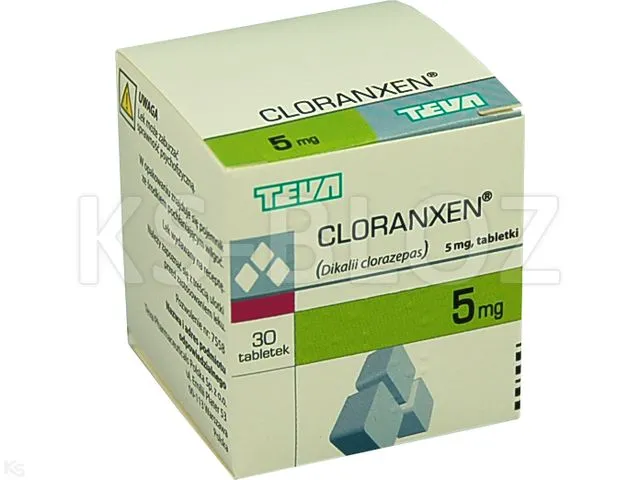
Table of Contents
Package leaflet: Information for the user
CLORANXEN, 5 mg, tablets
CLORANXEN, 10 mg, tablets
Dikalii clorazepas
Please read all of this leaflet carefully before taking this medicine because it contains important information for you.
- Keep this leaflet. You may need to read it again.
- If you have any further questions, ask your doctor or pharmacist.
- This medicine has been prescribed for you only. Do not pass it on to others. It may harm them, even if their symptoms are the same as yours.
- If you experience any side effects, including any not listed in this leaflet, tell your doctor or pharmacist. See section 4.
Contents of the leaflet:
- What Cloranxen is and what it is used for
- Before you take Cloranxen
- How to take Cloranxen
- Possible side effects
- How to store Cloranxen
- Contents of the pack and other information
1. What Cloranxen is and what it is used for
Cloranxen contains as the active substance dipotassium clorazepate. Clorazepate belongs to a group of medicines called benzodiazepines. It has anxiolytic, muscle relaxant, sedative, hypnotic, and anticonvulsant effects.
Cloranxen is used:
- In short-term anxiety and nervousness, especially as temporary supportive treatment in neurosis,
- In alcohol withdrawal syndrome (alcohol delirium, pre-delirious states).
Pharmacological treatment is indicated only when symptoms are severe, interfere with normal functioning, or are distressing to the patient.
2. Before you take Cloranxen
When not to take Cloranxen
- If you are allergic to clorazepate, other benzodiazepines, or any of the other ingredients of this medicine (listed in section 6)
- If you have severe respiratory insufficiency
- If you have sleep apnoea syndrome
- If you have myasthenia gravis (a disease characterized by rapid muscle fatigue and weakness)
- If you have severe hepatic insufficiency
- If you have narrow-angle glaucoma
- In children:
- 5 mg tablets must not be used in children under 12 years of age
- 10 mg tablets must not be used in children.
Warnings and precautions
Dependence
Treatment with benzodiazepines may lead to psychological and physical dependence. Treatment should be under strict medical supervision and, in most cases, limited in duration. Factors predisposing to dependence include: duration of treatment, dose of the medicine, concomitant use of other medicines: psychotropic, anxiolytic or hypnotic agents, concurrent alcohol consumption, history of alcohol or drug dependence, or dependence on other substances.
After discontinuation of treatment, withdrawal symptoms may occur. These may include: muscle tremor, restlessness, insomnia, hallucinations, disorientation, derealization (a feeling of altered reality), depersonalization (a feeling of altered self-perception), headache, muscle pain, anxiety, irritability, epileptic seizures, hypersensitivity to light, sound, and physical contact. These symptoms may appear 4–8 days after discontinuation of the medicine.
Stopping treatment, especially abruptly, may cause rebound insomnia and anxiety. Gradual discontinuation of the medicine is recommended.
With prolonged use, tolerance to the medicine may develop (reduced effectiveness).
Concomitant use of several benzodiazepines is not beneficial and may increase the risk of dependence.
Treatment duration
The duration of treatment should be as short as possible and should not exceed 4 weeks. Your doctor will inform you how to stop the treatment (gradual dose reduction – over several days to several weeks).
Stopping treatment: abrupt discontinuation of clorazepate may lead to withdrawal symptoms, especially after long-term treatment or if dependence on the medicine is suspected.
Anterograde amnesia
Anterograde amnesia may occur during treatment, especially when benzodiazepines are taken immediately before going to bed and sleep duration is short (early awakenings caused by external factors). To minimize the risk of amnesia, it is recommended to ensure conditions for continuous, uninterrupted 7–8 hour sleep.
Concomitant use with opioids
Concomitant use of benzodiazepines, including clorazepate, and opioids may cause sedation, respiratory depression, coma, and death. Due to these risks, your doctor will prescribe opioids and benzodiazepines together only for patients in whom other treatment options are insufficient.
If a decision is made to use clorazepate together with opioids, the medicines will be prescribed at the lowest effective dose and for the shortest possible duration of concomitant use.
Suicidal thoughts, suicide attempts, suicide, and depression
Some studies have shown an increased risk of suicidal thoughts, suicide attempts, and suicide in patients taking certain sedative and hypnotic medicines, including this medicine. However, it has not been established whether this is caused by taking this medicine or whether there are other causes.
If you have suicidal thoughts, you should contact your doctor as soon as possible to obtain further medical advice.
Anxiolytic benzodiazepines should not be used in the treatment of depression and psychiatric disorders.
Benzodiazepines may mask symptoms of depression and should not be used as the sole treatment for depression or anxiety associated with depression (antidepressants should be used).
Treatment with benzodiazepines alone may increase suicidal tendencies.
Paradoxical reactions
Paradoxical reactions are occasionally observed: anxiety, restlessness, irritability, aggression, delusions, anger, nightmares, euphoria, hallucinations, insomnia, psychoses, unusual behaviour, and other behavioural disturbances. These symptoms occur more frequently in children and elderly patients.
If any of the above symptoms occur, discontinue the medicine.
Dosage adjustment may be necessary in elderly patients and patients with renal impairment (see section 3. How to take Cloranxen).
Cloranxen should be used with extreme caution in patients with hepatic dysfunction; encephalopathy may occur in patients with hepatic insufficiency.
Elderly patients are more susceptible to adverse effects such as drowsiness, dizziness, and muscle weakness, which may lead to falls and, consequently, to serious injuries. Dose reduction is recommended.
In patients with respiratory insufficiency, the use of benzodiazepines may cause breathing difficulties (worsening of hypoxia may cause anxiety and, at the physician's discretion, may require admission to an intensive care unit).
Benzodiazepines are not recommended for use in patients with psychosis.
Cloranxen and other medicines
Tell your doctor about all medicines you are currently taking or have recently taken, including those obtained without a prescription, as well as any medicines you plan to take.
The risk of withdrawal symptoms increases with concomitant use of other anxiolytic and hypnotic benzodiazepines.
Exercise caution when using Cloranxen concomitantly with:
- Medicines with central nervous system depressant effects, such as: psychotropic medicines, opioid analgesics, barbiturates, certain antidepressants, hypnotics, sedating antihistamines (antiallergic agents), other sedatives, neuroleptics, anaesthetics, antiepileptics, anxiolytics, clonidine, and medicines with similar effects. Enhanced central nervous system depression may impair the ability to drive or operate machinery;
- Cisapride (a prokinetic agent for the gastrointestinal tract) due to the possibility of increased sedative effect of benzodiazepines;
- Clozapine (a neuroleptic medicine) due to increased risk of circulatory collapse with respiratory arrest and/or cardiac arrest;
- Curare and its derivatives (muscle relaxants) due to additive effects.
Concomitant use of Cloranxen and opioids (strong analgesics, medicines used in substitution treatment of addiction, and certain antitussive medicines) increases the risk of drowsiness, breathing difficulties (respiratory insufficiency), coma, and may be life-threatening. Therefore, concomitant use of these medicines should be considered only when other treatment methods are not possible.
If your doctor prescribes Cloranxen together with opioids, the dose and duration of concomitant treatment should be minimized.
Inform your doctor about all opioid medicines you are taking and strictly follow the dosage instructions provided by your doctor. It may be helpful to inform family members or friends about the above symptoms. If such symptoms occur, contact your doctor.
Alcohol
During treatment, avoid consuming alcohol and taking medicines containing alcohol.
Alcohol enhances the sedative effect of benzodiazepines. This may cause reduced concentration and impair the ability to drive or operate machinery.
When opioid analgesics are used concomitantly with clorazepate, euphoria may be intensified, leading to psychological dependence.
Cimetidine enhances drowsiness caused by clorazepate.
Interactions with phenytoin are difficult to predict. Increased serum concentration and worsening of adverse effects may occur. A decrease in phenytoin concentration or no interaction is also possible.
Clorazepate reduces the effect of levodopa.
The metabolism of clorazepate is generally accelerated in tobacco smokers and in patients taking antiepileptic medicines. Antacids (aluminium and magnesium hydroxides and salts) may sometimes significantly delay the absorption of clorazepate, although absolute bioavailability is usually unchanged.
Due to the increased risk of respiratory depression, concomitant use of benzodiazepines and sodium oxybate should be avoided.
Cloranxen with food, drink, and alcohol
Food does not affect the absorption of the medicine from the gastrointestinal tract.
The medicine may be taken during meals or on an empty stomach.
During treatment with clorazepate, consumption of alcoholic beverages should be avoided.
Pregnancy, breastfeeding, and fertility
Data on the use of clorazepate in pregnant women are limited. Therefore, the use of this medicine during pregnancy and in women of childbearing potential not using contraception is not recommended.
Pregnancy
If you are pregnant, suspect you may be pregnant, or are planning to become pregnant, you should consult your doctor to reassess the need for treatment.
The medicine should not be used during pregnancy, especially during the first and third trimesters.
The potential risks should be explained to women of childbearing age by the physician. If pregnancy is planned, treatment should be discontinued well in advance.
If the medicine is administered for important reasons during the last weeks of the third trimester or during delivery, the newborn may experience: drowsiness (sedation), hypothermia (lowered body temperature), hypotonia (reduced muscle tone), respiratory depression (breathing difficulties), and feeding difficulties (sucking problems leading to poor weight gain).
Newborns of mothers taking clorazepate in the late stages of pregnancy may develop physical dependence and are at risk of withdrawal syndrome.
In such cases, the newborn should be closely monitored during the postnatal period.
Breastfeeding
Before taking any medicine, consult your doctor or pharmacist.
The medicine and its metabolites pass into human milk. Clorazepate should not be used in breastfeeding mothers.
Driving and operating machinery
Do not drive or operate machinery while taking this medicine.
The ability to drive and operate machinery may be impaired during treatment with clorazepate due to disturbances in concentration, drowsiness, and anterograde amnesia.
Concomitant use of other medicines may enhance the sedative effect of clorazepate (see section "Cloranxen and other medicines").
Cloranxen contains lactose
If you have previously been diagnosed with intolerance to certain sugars, you should consult your doctor before taking this medicine.
3. How to use Cloranxen
This medicine should always be used exactly as prescribed by the physician. In case of doubt, consult
your doctor.
Treatment should be initiated at a starting dose, gradually increasing the dose to avoid unwanted
side effects. The maximum dose of 30 mg per day must not be exceeded. The duration of treatment
should be as short as possible and should not exceed 4 weeks, including the tapering-off period.
During treatment, the patient should be monitored regularly so that the dose or frequency of
administration can be reduced if necessary. Due to the possibility of withdrawal symptoms, the
medicine should be discontinued cautiously, gradually reducing the daily dose.
Adults
Therapeutic dose: from 5 mg to 30 mg per day.
Treatment should be initiated at a dose of 5 mg per day.
The daily dose may be taken once daily, in the evening.
Use in children and adolescents
Cloranxen 10 mg: Cloranxen 10 mg is intended for use in adults only.
Cloranxen 5 mg: due to limited data on use in children and adolescents for the treatment of
anxiety, Cloranxen is not recommended in this age group.
Only in exceptional cases justified by a specialist physician, use in children above 12 years of age
may be considered at a dose of 0.5 mg/kg body weight per day, given in divided doses.
Elderly patients
The dose should be halved in elderly patients; treatment should be as short as possible.
Patients with renal impairment
The dose should be halved in patients with impaired kidney function.
Patients with hepatic impairment
Patients with impaired liver function must exercise caution when using this medicine; hepatic
encephalopathy (neurological dysfunction due to toxins accumulating in the body as a result of
liver damage) may occur in patients with liver failure.
If you feel that the effect of Cloranxen is too strong or too weak, consult your doctor.
Overdose of Cloranxen
Overdose manifests as varying degrees of central nervous system depression: from moderate
drowsiness to coma.
The prognosis is favorable provided the patient has not taken other psychotropic drugs
concomitantly and receives appropriate treatment.
The patient should be admitted to a hospital intensive care unit where respiratory and
cardiovascular functions are monitored. If less than one hour has passed since ingestion and the
patient is conscious, vomiting should be induced. If the patient is unconscious, the physician should
perform gastric lavage, remembering to secure the upper airways. If at least one hour has passed
since overdose, the physician may administer activated charcoal to reduce drug absorption from
the gastrointestinal tract.
After mild overdose, symptoms include drowsiness, disorientation, and lethargy; after severe
overdose: impaired body coordination, decreased muscle tone, hypotension, respiratory
depression, rarely coma, and very rarely death.
The physician may use flumazenil to diagnose and/or treat benzodiazepine overdose.
In case of overdose, seek immediate medical help.
Use of flumazenil as an antidote is contraindicated in the following cases: concurrent use of
tricyclic antidepressants, concomitant administration of drugs that lower the seizure threshold,
or ECG abnormalities such as QRS or QT interval prolongation (suggesting concurrent use of
tricyclic antidepressants).
Although benzodiazepine overdose is rarely life-threatening, it must never be forgotten that the
patient may have consumed alcohol or other central nervous system depressants together with
the drug.
Missed dose of Cloranxen
If a dose of Cloranxen is missed, take the next dose at the usual time.
Do not take a double dose to make up for the missed dose.
If you have any doubts concerning the use of this medicine, consult your doctor or pharmacist.
4. Possible adverse effects
Like any medicinal product, this medicine can cause adverse effects, although not everybody experiences them.
The frequency and severity of adverse effects depend on the individual sensitivity
of the patient and the dose administered.
Very common (may occur in more than 1 in 10 patients):
- drowsiness (especially in elderly patients)
Common (may occur in up to 1 in 10 patients):
- dizziness
- weakness
Uncommon (may occur in up to 1 in 100 patients):
- hypersensitivity reactions
- irritability, restlessness, confusion
- reduced muscle tone
- maculopapular and itchy skin rashes
Frequency not known (frequency cannot be estimated from available data):
- slowing of mental processes
- paradoxical reactions* (especially in children and elderly patients)
- aggression, hallucinations, anxiety, euforia, insomnia, nightmares, psychosis, inappropriate behaviour. These reactions occur particularly in children and elderly patients.
- so-called rebound syndrome with increased anxiety greater than that which was the indication for treatment
- physical dependence with long-term treatment (especially at high doses), and, upon discontinuation of the medicine - withdrawal symptoms*
- cognitive disturbances, such as memory impairment (retrograde amnesia*), attention disturbances and speech disturbances, headache, feeling of fatigue, double vision; depression and disturbances of consciousness may also emerge
- falls*, sometimes accompanied by weight gain, libido changes. In addition, a decrease in blood pressure may occur
- dryness of the oral mucosa, feeling of fullness in the epigastrium, constipation
- menstrual disorders and inhibition of ovulation. * see section Warnings and precautions
Depression that was previously existing but undiagnosed may emerge during benzodiazepine use.
Psychological dependence may occur. Cases of benzodiazepine abuse have been reported.
Reporting of adverse effects
If any adverse effects occur, including any adverse effects not listed
in this leaflet, inform your doctor or pharmacist. Adverse effects can be reported
directly to the Department of Monitoring Adverse Drug Reactions of the Office for Registration of Medicinal Products, Medical Devices and Biocidal Products
Al. Jerozolimskie 181C, 02-222 Warsaw
Tel.: + 48 22 49 21 301
Fax: + 48 22 49 21 309
Website: https://smz.ezdrowie.gov.pl
Adverse effects can also be reported to the marketing authorisation holder.
Reporting adverse effects helps to provide more information on the safety of the medicine.
5. How to store Cloranxen
Store below 25°C. Keep the container tightly closed to protect from light and moisture.
Keep the medicine out of the sight and reach of children.
Do not use this medicine after the expiry date stated on the packaging. The expiry date refers to the last day of the stated month.
Medicines must not be disposed of via wastewater or household waste. Ask your pharmacist how to dispose of medicines no longer required. This will help protect the environment.
6. Contents of the pack and other information
What Cloranxen contains
- The active substance is dipotassium clorazepate. Each 5 mg tablet contains 5 mg of dipotassium clorazepate. Each 10 mg tablet contains 10 mg of dipotassium clorazepate.
- The other ingredients are: monohydrate lactose, microcrystalline cellulose, potassium chloride, anhydrous potassium carbonate, magnesium stearate, talc, quinoline yellow lake (E104).
What Cloranxen looks like and contents of the pack
Tablets.
HDPE bottle with an aluminum seal, closed with a PP cap, and an HDPE container
containing a desiccant, packed in a cardboard box. The aluminum seal must be removed after
first opening of the bottle. The bottle contains 30 tablets.
Marketing Authorisation Holder and Manufacturer
Marketing Authorisation Holder
Teva Pharmaceuticals Polska Sp. z o.o.
ul. Emilii Plater 53
00-113 Warsaw
Tel: (22) 345 93 00
Manufacturer
Teva Operations Poland Sp. z o.o.
ul. Mogilska 80
31-546 Kraków