Clopixol
Poland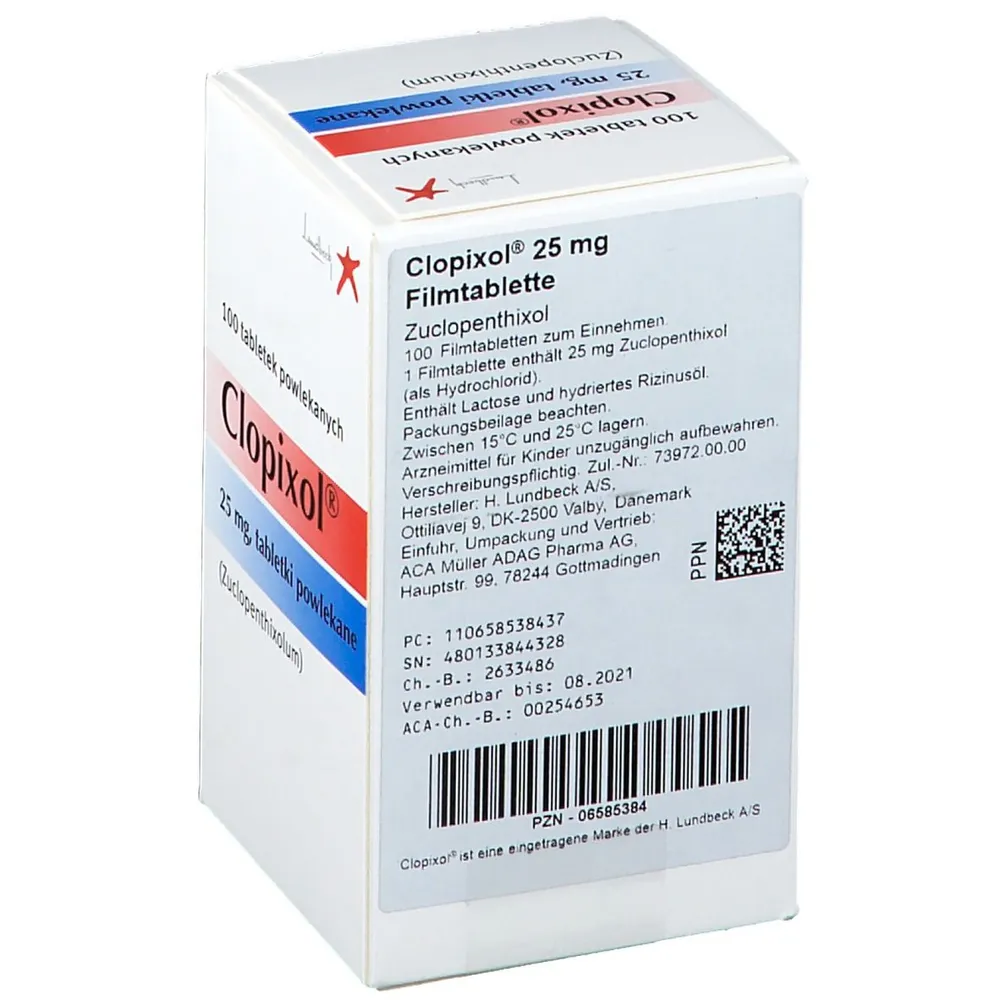
Table of Contents
Patient Information Leaflet: Instructions for Use
Clopixol, 10 mg, coated tablets
Clopixol, 25 mg, coated tablets
Zuclopenthixol
Please read this leaflet carefully before using the medicine, as it contains
important information for the patient.
- Keep this leaflet for future reference.
- If you have any questions, consult your doctor or pharmacist.
- This medicine has been prescribed for a specific individual. Do not share it with others. This medicine may harm other people, even if their symptoms are similar.
- If you experience any adverse reactions, including any not listed in this leaflet, inform your doctor or pharmacist. See section 4.
Table of Contents:
- What Clopixol is and what it is used for
- Important information before taking Clopixol
- How to take Clopixol
- Possible side effects
- How to store Clopixol
- Contents of the pack and other information
1. What Clopixol is and what it is used for
How Clopixol works
Clopixol contains the active substance zuclopenthixol. Clopixol belongs to a group of medicines called antipsychotics (also known as neuroleptics).
These medicines act on nerve pathways in specific areas of the brain and help correct certain chemical imbalances in the brain that cause disease symptoms.
When Clopixol is used
Clopixol is used in the treatment of acute and chronic schizophrenia and other psychoses, particularly those with symptoms such as: hallucinations, delusions, thought disorders, psychomotor agitation, anxiety, hostility, and aggression.
Clopixol is also used in the treatment of mania in bipolar affective disorder.
2. Important information before using Clopixol
When not to use Clopixol:
- if the patient is allergic (hypersensitive) to zuclopenthixol or any of the other ingredients of this medicine (listed in section 6);
- if the patient has circulatory collapse, reduced consciousness (e.g. due to alcohol, barbiturates or opioids) or coma.
Warnings and precautions
Before starting treatment with Clopixol, discuss the following with your doctor or pharmacist:
- if the patient has impaired liver function;
- if the patient has a history of seizures;
- if the patient has diabetes (treatment for diabetes may need to be adjusted);
- if the patient has organic brain syndrome (a medical condition that may develop as a result of alcohol or organic solvent intoxication);
- if the patient has risk factors for stroke (e.g. smoking, hypertension);
- if the patient has hypokalaemia (low blood potassium levels) or hypomagnesaemia (low blood magnesium levels), or genetic predisposition to such abnormalities;
- if the patient has a history of cardiovascular disorders;
- if the patient is taking other antipsychotic medicines;
- if the patient or someone in their family has had venous thrombosis, as use of medicines such as this one may increase the risk of blood clots.
Children and adolescents
Clopixol is not recommended for use in this patient group.
Clopixol with other medicines
Tell your doctor or pharmacist about all medicines the patient is currently taking or has recently taken, as well as any medicines the patient plans to take.
Inform your doctor if the patient is taking any of the following medicines:
- tricyclic antidepressants;
- guanethidine and similar medicines (medicines that lower blood pressure);
- barbiturates and similar medicines (medicines causing drowsiness);
- medicines used to treat epilepsy;
- levodopa and similar medicines (used to treat Parkinson's disease);
- metoclopramide (a medicine used for gastrointestinal disorders);
- piperazine (an antiparasitic medicine effective against pinworms and roundworms);
- medicines that disturb water-electrolyte balance (low potassium or magnesium levels in blood);
- medicines known to increase blood levels of zuclopenthixol, the active substance in Clopixol.
The following medicines should not be taken at the same time as Clopixol:
- medicines affecting heart rhythm (quinidine, amiodarone, sotalol, dofetilide, erythromycin, terfenadine, astemizole, gatifloxacin, moxifloxacin, cisapride, lithium);
- other antipsychotic medicines (e.g. thioridazine).
Taking Clopixol with food, drink and alcohol
Clopixol may be taken with or without food.
Clopixol may enhance the sedative effect of alcohol, causing drowsiness. Drinking alcoholic beverages during treatment with Clopixol is not recommended.
Pregnancy, breastfeeding and fertility
If the patient is pregnant or breastfeeding, thinks she may be pregnant, or is planning to have a baby, she should consult her doctor or pharmacist before using this medicine.
Pregnancy
If the patient is pregnant or suspects she may be pregnant, she should inform her doctor. Clopixol should not be used during pregnancy unless absolutely necessary.
Newborns of mothers who have taken Clopixol during the third trimester (last three months of pregnancy) may experience the following symptoms: tremors, muscle stiffness and/or weakness, drowsiness, agitation, breathing difficulties, feeding problems. If such symptoms occur in the newborn, contact a doctor immediately.
Breastfeeding
If the patient is breastfeeding, she should consult her doctor. Clopixol should not be used by breastfeeding women, as small amounts of the medicine may be excreted in breast milk.
Fertility
Animal studies have shown that Clopixol affects fertility. The patient should consult a doctor for advice.
Driving and operating machinery
There is a risk of drowsiness and dizziness after taking Clopixol, especially at the beginning of treatment. If this occurs, the patient should not drive, operate machinery or use tools until these symptoms subside.
Clopixol contains lactose and hydrogenated castor oil
This medicine contains lactose. If the patient has been previously diagnosed with intolerance to certain sugars, the patient should consult a doctor before taking this medicine.
This medicine contains hydrogenated castor oil, which may cause gastrointestinal discomfort and diarrhoea.
3. How to use Clopixol
This medicine should always be taken exactly as directed by your doctor or pharmacist. If in doubt,
contact your doctor or pharmacist.
This medicine is used in various doses, depending on the severity of the illness. Usually, at the beginning
of treatment, your doctor will prescribe a low dose, which will then be increased to an optimal effective
level, depending on your response to therapy.
For maintenance treatment, Clopixol should be taken as a single dose in the evening, before bedtime.
Recommended dose:
Adults
Acute schizophrenia and other acute psychoses. Severe acute states of agitation. Mania.
The usual dose is 10–50 mg daily.
For moderate to severe cases, the initial dose is usually 20 mg daily, increased if necessary by 10–20 mg
every 2 to 3 days up to 75 mg or more daily. The maximum single dose is 40 mg, and the total daily dose
is 150 mg.
Chronic schizophrenia and other chronic psychoses
The maintenance dose is usually 20–40 mg daily.
Use in children
Clopixol is not recommended for use in children.
Elderly patients
Elderly patients should take doses at the lower end of the recommended dose range.
Patients with kidney dysfunction
Patients with impaired kidney function should take Clopixol at the usual recommended doses.
Patients with liver dysfunction
Caution should be exercised when determining the dose, and if possible, blood levels of the drug should
be monitored.
If you feel that the effect of Clopixol is too strong or too weak, consult your doctor.
Method of administration
Clopixol may be taken with or without food.
Tablets should be swallowed whole with water. Do not chew.
Duration of treatment
The duration of treatment is determined by your doctor. Treatment should be continued for as long as
your doctor recommends, even if you feel better.
The illness may persist for a long time, and if treatment is stopped too early, symptoms may return.
Do not change the dose of this medicine without consulting your doctor.
Taking more Clopixol than recommended
If you suspect that an excessive number of Clopixol tablets has been taken, seek immediate medical
attention from your doctor or the nearest hospital emergency department, even if there are no symptoms
or signs of poisoning. Bring the medicine packaging with you.
Symptoms of overdose may include:
- drowsiness;
- loss of consciousness;
- involuntary movements or muscle rigidity;
- seizures;
- low blood pressure, weak pulse, rapid heartbeat, pallor, restlessness;
- elevated or reduced body temperature;
- changes in heart rhythm, including irregularity or slowing, especially when Clopixol has been taken in
excessively high doses in combination with medicines known to affect the heart.
If you miss a dose of Clopixol
Take the next dose at the usual time.
Do not take a double dose to make up for a missed dose.
Stopping Clopixol treatment
The decision to stop treatment should be made by your doctor. Gradual reduction of the dose is usually
recommended. Your doctor will decide when and how to discontinue treatment to avoid unpleasant
withdrawal symptoms that may occur with abrupt discontinuation of the medicine.
Withdrawal symptoms usually begin 1 to 4 days after stopping the medicine and gradually subside over
7–14 days.
Withdrawal symptoms may include: nausea, vomiting, loss of appetite, diarrhoea, watery nasal discharge,
sweating, muscle pain, paresthesia, insomnia, restlessness, anxiety, and agitation. Patients may also
experience dizziness, increased sensations of heat or cold, and tremor.
If you have any further questions about the use of this medicine, consult your doctor or pharmacist.
4. Possible adverse reactions
Like all medicines, Clopixol can cause adverse reactions, although not everyone experiences them.
If any of the symptoms described below occur, you should contact your doctor or
seek immediate hospital treatment:
Uncommon adverse reactions (occurring in between 1 in 1000 and 1 in 100 patients):
- involuntary rhythmic movements of the lips and tongue; this may be a sign of a condition called tardive dyskinesia.
Very rare but serious adverse reactions (occurring in fewer than 1 in 10,000 patients):
- high fever, excessive muscle rigidity, and disturbances in consciousness, accompanied by sweating and rapid heartbeat; these may be symptoms of a rare condition called neuroleptic malignant syndrome, which may occur after using various antipsychotic drugs.
- yellowing of the skin and whites of the eyes (jaundice), which may indicate liver damage.
The adverse reactions listed below are most pronounced at the beginning of treatment, and most of them diminish as therapy continues.
Very common adverse reactions (occurring in more than 1 in 10 patients):
- drowsiness, inability to sit or stand still for a prolonged period (akathisia), involuntary movements (hyperkinesia), slowed or impaired movements (hypokinesia);
- dry mouth.
Common adverse reactions (occurring in more than 1 and fewer than 10 in 100 patients):
- palpitations, sensation of rapid, strong, or irregular heartbeat;
- tremor, twisting or repetitive movements or unusual postures due to sustained muscle contractions (dystonia), increased muscle stiffness (hypertonia), dizziness, headache, sensation of tingling skin (paresthesia), attention disturbances, memory loss, abnormal gait;
- blurred vision of objects located close to the eyes (accommodation disorders), visual disturbances;
- sensation of spinning or swaying while the body is at rest (dizziness);
- stuffy nose, difficulty breathing or painful breathing (dyspnea);
- increased salivation (sialorrhea), constipation, vomiting, digestive problems or discomfort localized in the upper abdomen (dyspepsia), diarrhea;
- urinary disturbances, urinary retention, increased urine volume (polyuria);
- excessive sweating, itching (pruritus);
- muscle pain;
- increased appetite, weight gain;
- fatigue, feeling of weakness (asthenia), general discomfort or uneasiness, pain;
- insomnia, depression, anxiety, restlessness, unusual dreams, agitation, reduced sexual drive (decreased libido);
Uncommon adverse reactions (occurring in more than 1 in 1,000 and fewer than 1 in 100 patients):
- excessive reflexes (hyperreflexia), uncoordinated movements (dyskinesia), parkinsonism, falls (fainting), inability to coordinate muscle activity (ataxia), disturbances in speech fluency, decreased muscle tone (hypotonia), seizures, migraine;
- sudden forced upward gaze (oculogyric crisis), dilated pupils;
- hypersensitivity to certain sound frequencies or difficulty tolerating everyday sounds, ringing in the ears (tinnitus);
- abdominal pain, nausea, bloating with gas release;
- rash, skin reactions due to photosensitivity (phototoxicity), pigmentary disturbances, oily, shiny, and yellowish skin due to increased sebum secretion (seborrhea), eczema or skin inflammation, subcutaneous bleeding observed as red skin discolorations (purpura);
- muscle stiffness, inability to open the mouth normally, neck twisting, and unnatural head position (neck stiffness);
- decreased appetite, weight loss;
- low blood pressure (hypotension), hot flushes;
- thirst, abnormally low body temperature (hypothermia), fever;
- abnormal liver function test results;
- sexual disorders (delayed ejaculation, erectile dysfunction, in women orgasmic disorders, vaginal dryness);
- marked indifference to surroundings (apathy), nightmares, increased sexual drive (increased libido), confusion;
Rare adverse reactions (occurring in more than 1 in 10,000 and fewer than 1 in 1,000 patients):
- low platelet count (thrombocytopenia), low white blood cell count (neutropenia), reduced white blood cell count (leukopenia), toxic bone marrow damage (agranulocytosis);
- elevated prolactin levels in blood (hyperprolactinemia);
- elevated blood glucose levels (hyperglycemia), impaired glucose tolerance, elevated blood lipid levels (hyperlipidemia);
- hypersensitivity (allergy), acute systemic and severe allergic reaction (anaphylactic reaction);
- breast enlargement in men (gynecomastia), excessive milk production (galactorrhea), absence of menstruation, persistent, painful erection not associated with sexual stimulation (priapism).
Rare cases of the following adverse reactions have been reported with other drugs acting similarly to zuclopenthixol (the active substance in Clopixol):
- slow heart rate and changes in ECG (prolonged QT interval);
- irregular heartbeat (ventricular arrhythmias, torsade de pointes); in rare cases, irregular heartbeat (arrhythmia) may result in sudden death.
Blood clots in veins, particularly in the legs (symptoms include swelling, pain, and redness of the skin on the legs), which may travel through blood vessels to the lungs, causing chest pain and breathing difficulties. If any of these symptoms occur, you should immediately inform your doctor.
In elderly patients with dementia who are treated with antipsychotic drugs, a slightly increased number of deaths has been observed compared to patients not receiving antipsychotic medications.
Swallowing difficulties may occur as a side effect of extrapyramidal symptoms, sedation, increased saliva production, and/or neuroleptic malignant syndrome.
Reporting of adverse reactions
If any adverse symptoms occur, including any not listed in this leaflet, inform your doctor or pharmacist. Adverse reactions can be reported directly to:
Department of Monitoring Adverse Drug Reactions
Office for Registration of Medicinal Products, Medical Devices and Biocidal Products
Al. Jerozolimskie 181 C,
PL-02 222 Warsaw
Tel.: + 48 22 49 21 301
Fax: + 48 22 49 21 309
Website: https://smz.ezdrowie.gov.pl
Reporting adverse reactions helps to provide more information on the safety of the medicine.
5. How to store Clopixol
Keep this medicine out of the reach and sight of children.
Do not use this medicine after the expiry date stated on the label. The expiry date refers to the last day of the stated month.
There are no special storage instructions for this medicinal product.
Medicines must not be disposed of via wastewater or household waste. Ask your pharmacist what to do with medicines no longer required. Such measures will help protect the environment.
6. Contents of the package and other information
What Clopixol contains
The active substance is zuclopenthixol (in the form of dihydrochloride).
Each coated tablet contains 10 mg or 25 mg of zuclopenthixol.
Other ingredients are: potato starch, monohydrate lactose, microcrystalline cellulose,
copovidone, glycerol 85%, talc, hydrogenated castor oil, magnesium stearate.
Coating: hypromellose 5, macrogol 6000, colourants: titanium dioxide (E 171), red iron oxide (E 172), magnesium stearate.
What Clopixol looks like and contents of the pack
Clopixol is available as coated tablets in strengths of 10 mg and 25 mg.
10 mg coated tablets are round, biconvex, light reddish-brown.
25 mg coated tablets are round, biconvex, reddish-brown.
The coated tablets are packed in high-density polyethylene (HDPE) containers with a desiccant, inside a cardboard box.
10 mg and 25 mg coated tablets: 50 or 100 tablets in one high-density polyethylene (HDPE) container with a desiccant, in a cardboard box.
Not all pack sizes may be marketed.
Marketing Authorisation Holder and Manufacturer
H. Lundbeck A/S
Ottiliavej 9
DK-2500 Valby
Denmark
For further information, please contact the representative of the Marketing Authorisation Holder:
Swixx Biopharma Sp. z o.o.
ul. Prosta 51
00-838 Warsaw, Poland
Tel. +48 22 4600 720