Clinoleic 20%
Poland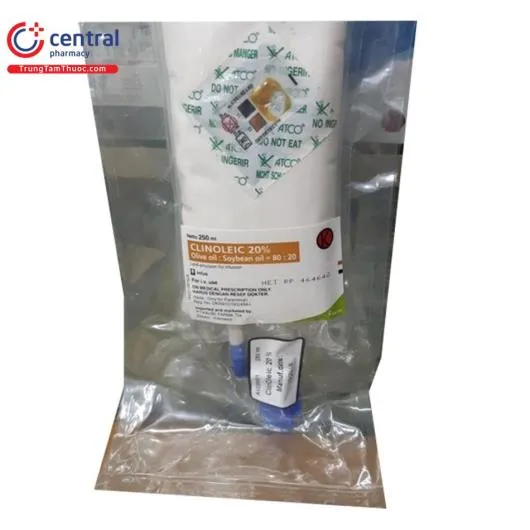
Table of Contents
Package leaflet: Information for the user
ClinOleic 20%, emulsion for infusion
Purified olive oil and purified soybean oil
Please read all of this leaflet carefully before use, as it contains important information for the patient.
- Keep this leaflet, as you may need to read it again.
- If you have any further questions, please consult your doctor or pharmacist.
- This medicine has been prescribed for a specific individual. Do not pass it on to others. The medicine may harm another person, even if their symptoms are the same.
- If the patient experiences any adverse reactions, including any not listed in this leaflet, they should inform their doctor or pharmacist. See section 4.
Table of contents:
- What CLINOLEIC is and what it is used for
- Important information before using CLINOLEIC
- How to use CLINOLEIC
- Possible side effects
- How to store CLINOLEIC
- Contents of the pack and other information
In this leaflet, ClinOleic 20% will be referred to as CLINOLEIC.
1. What CLINOLEIC is and what it is used for
CLINOLEIC is a fat emulsion for intravenous infusion, containing a mixture of olive oil (80%) and soybean oil (20%).
CLINOLEIC is used as a source of energy and essential fatty acids (fats or lipids) that cannot be synthesized by the body. CLINOLEIC is administered directly into the bloodstream, bypassing the gastrointestinal tract. This method of nutrition (parenteral nutrition) is used when, for medical reasons, food and drink cannot be taken through the gastrointestinal system.
2. Important information before using CLINOLEIC
When not to use CLINOLEIC
- If the patient is allergic (hypersensitive) to egg protein, soy protein, peanut protein, or to any of the other ingredients of this medicine (listed in section 6)
- If the patient has high levels of fat in the blood (severe hyperlipidaemia)
- If the patient has uncorrected metabolic disorders, including lactic acidosis or uncontrolled diabetes
Warnings and precautions
Close clinical monitoring is recommended at the beginning of each intravenous administration (intravenous infusion).
If unusual signs or symptoms of an allergic reaction occur, the infusion will be stopped immediately. Such symptoms include sweating, fever, chills, headache, skin rash, or dyspnoea (breathing difficulties). The medicine contains soybean oil and egg phospholipids for injection. Soy and egg proteins may cause hypersensitivity reactions. Cross-reactivity between soy and peanut proteins has been observed.
The doctor will check and monitor the patient’s triglyceride levels (a type of fat in the blood) and blood glucose levels.
Certain medicines and diseases may increase the risk of infection or sepsis (presence of bacteria in the blood). There is a particular risk of infection or sepsis after insertion of a tube (intravenous catheter) into the patient’s vein. The doctor will carefully monitor the patient for any signs of infection. Patients requiring parenteral nutrition (administration of nutrients via a tube inserted into a vein) may, due to their clinical condition, be at increased risk of developing infection. Using aseptic technique (procedures ensuring absence of microorganisms) during catheter insertion and maintenance, and during preparation of the nutritional medicine, may reduce the risk of infection.
The doctor will determine the dose and rate of administration, taking into account the use of an in-line filter.
Inform the doctor:
- About severe conditions affecting the metabolism of carbohydrates, fats, proteins, and salts (metabolic disorders)
- About severe systemic blood infection (sepsis)
- About severe liver disease
- About blood coagulation disorders
- About heart attack (myocardial infarction)
- About heart failure
- About kidney failure
- About reduced number of red blood cells (anaemia)
- About presence of fluid in the lungs
Inform the doctor if the patient develops swelling, tenderness, and redness at the site where the needle was inserted into a blood vessel (vein), as this may be a sign of inflammation (thrombophlebitis).
In newborns (infants) and young children (children under 2 years of age), serious adverse reactions such as respiratory disturbances leading to reduced oxygen levels in the body (respiratory failure) and conditions leading to increased acid levels in the body (metabolic acidosis) have been reported after rapid intravenous administration of fat emulsions (see also section 3, Administration of a higher than recommended dose of CLINOLEIC).
From the beginning of the infusion, the doctor will monitor the patient’s condition, especially if the patient has problems with the liver, kidneys, adrenal glands, heart, or circulatory system.
During administration of the medicine, the doctor will perform clinical tests and laboratory examinations to assess effectiveness and continuously monitor the safety of administration.
Children and adolescents
CLINOLEIC may be used in young children if administration is closely monitored. CLINOLEIC has been used for up to 7 days in newborns and up to 2 months in children.
When used in newborns and children under 2 years of age, the solution (in the bag and administration set) must be protected from light until administration is complete. Exposure of CLINOLEIC to light, particularly after addition of trace elements and/or vitamins, leads to the formation of peroxides and other degradation products, which can be minimized by protecting from light.
CLINOLEIC with other medicines
Inform the doctor about all medicines the patient is currently taking or has recently taken, as well as any medicines the patient plans to take.
The olive oil and soybean oil in CLINOLEIC contain vitamin K. This usually does not affect the action of anticoagulant medicines (blood thinners) such as warfarin. However, if the patient is taking anticoagulant medicines, they should inform their doctor.
Pregnancy and breastfeeding
The safety of administering CLINOLEIC to pregnant or breastfeeding women has not been established.
Therefore, CLINOLEIC should not be administered to pregnant or breastfeeding women unless specifically recommended by a doctor.
If the patient is pregnant, breastfeeding, suspects she may be pregnant, or plans to become pregnant, she should consult her doctor before using this medicine.
3. How to use CLINOLEIC
CLINOLEIC contains 200 mg of fats per 1 ml.
Dosage
Use in adults
The appropriate dosage will be determined by the physician according to the patient's clinical condition.
The dosage ranges from 1 to a maximum of 2 grams of fats/kg body weight per day.
Use in children
Administration of more than 3 g of fats/kg body weight per day is not recommended.
Use in premature infants and low birth weight infants
CLINOLEIC may be administered to premature infants born at or after 28 weeks of gestation.
Administration of more than 2 g of fats/kg body weight per day is not recommended.
Method and route of administration
CLINOLEIC will be administered through a plastic tube connected to a needle placed in the patient's vein (intravenous infusion).
When administered to neonates and children under 2 years of age, the solution (in the bag and administration set) must be protected from light until administration is completed (see section 2).
Administration of a higher than recommended dose of CLINOLEIC
Overdosage may lead to reduced ability of the body to eliminate the fats contained in CLINOLEIC (fat overload syndrome). In neonates (infants) and young children (children under 2 years of age), overdosage and/or rapid intravenous administration of the fats contained in CLINOLEIC (increased infusion rate) may lead to severe adverse reactions such as respiratory disorders resulting in reduced oxygen levels in the body (respiratory failure) and conditions leading to increased acid levels in the body (metabolic acidosis). The effects of overdosage are usually reversible when CLINOLEIC infusion is discontinued (see also section 4. Possible adverse effects).
Missed dose of CLINOLEIC
The patient should not receive a double dose to make up for a missed dose.
If there are any further doubts regarding the use of this medicine, consult a physician or pharmacist.
4. Possible adverse reactions
Like all medicines, this medicine can cause adverse reactions, although not everyone experiences them.
If any unusual symptoms occur at the beginning of the infusion, the infusion should be stopped immediately.
Such symptoms include excessive sweating, chills, headache, and difficulty breathing (dyspnoea).
Other adverse reactions have also been observed, occurring with varying frequency:
The following adverse reactions are common and affect 1 to 10 in 100 patients:
- increased blood glucose levels (hyperglycaemia)
- increased blood lipid levels (hyperlipidaemia)
- decreased protein levels (hypoproteinaemia)
- feeling of nausea, vomiting
- abdominal swelling (abdominal distension)
- decreased blood pressure
- yellowing of the skin and eyes due to gallbladder disorders (cholestasis) or elevated bilirubin levels
- increased blood triglyceride levels
The following adverse reactions are uncommon and affect 1 to 10 in 1000 patients:
-
decreased white blood cell count (leukopenia)
-
abdominal pain and discomfort in the stomach area
-
difficulty breathing (dyspnoea)
-
chills
-
hot flushes
-
liver inflammation with destruction of liver cells
-
increased activity of pancreatic enzymes
The following adverse reactions have been reported with unknown frequency (frequency cannot be estimated from the available data):
- decreased platelet count
- allergic reactions, including red, itchy rash (urticaria), itching
- diarrhoea
Adverse reactions reported during the use of similar medicinal products:
liver failure, end-stage liver disease, liver fibrosis, fatty liver infiltration, gallbladder inflammation, gallstones in the gallbladder.
Reduced ability to clear fats contained in CLINOLEIC may lead to a "fat overload syndrome". This may result from overdosing, but may also occur at the beginning of the infusion, even when the product is administered correctly. It may cause a sudden deterioration in the patient's clinical condition. Fat overload syndrome may lead to:
- excess fats in the blood (hyperlipidaemia)
- fever
- fatty infiltration of the liver
- enlarged liver (hepatomegaly)
- decreased red blood cell count (anaemia)
- decreased white blood cell and platelet counts
- coagulation disorders
- coma. These symptoms usually resolve after stopping the infusion.
Reporting of adverse reactions
If any adverse reactions occur, including any adverse reactions not listed in this leaflet, inform your doctor or nurse.
Adverse reactions can also be reported directly to the Department of Monitoring Adverse Drug Reactions at the Office for Registration of Medicinal Products, Medical Devices and Biocidal Products
Al. Jerozolimskie 181 C
02-222 Warsaw
Tel. +48 22 49 21 301
Fax: +48 22 49 21 309
Website: https://smz.ezdrowie.gov.pl
Adverse reactions can also be reported to the marketing authorization holder.
Reporting adverse reactions helps provide more information on the safety of this medicine.
5. How to store CLINOLEIC
Keep the medicine out of the sight and reach of children.
When used in newborns and children under 2 years of age, the solution (in the bag and administration set) must be protected from light until the end of administration (see section 2).
Do not use CLINOLEIC after the expiry date stated on the label after “Expiry date”. The expiry date refers to the last day of the stated month.
Store below 25°C.
Do not freeze.
Protect from light.
Store in the protective packaging.
Do not use if the bag is damaged or if the emulsion is not homogeneous and milky in appearance.
Partially used containers must be discarded. Do not reconnect bags containing residual emulsion; these should be disposed of by medical personnel.
Inside the protective packaging, there is an oxygen-absorbing sachet/oxygen indicator.
Before opening the protective packaging, check the color of the oxygen indicator on the oxygen-absorbing sachet. It should match the control color printed next to the symbol OK on the indicator and indicated on the printed surface of the indicator label. The sachet should be discarded after removing the protective packaging.
Use immediately after opening.
Do not use the product if the indicator color does not match the control color.
Do not store an opened bag for subsequent infusions.
6. Contents of the packaging and other information
What the medicine CLINOLEIC contains
- 100 ml of infusion emulsion contains the following active substances:
Purified olive oil (80%) and purified soybean oil (20%)................20.00 g, corresponding to essential fatty acids content.......................... 4.00 g - Characteristics
Energy value ……………………………………… 2000 kcal/l (8.36 MJ/l)
Osmolarity …………………………………………………………… 270 mOsm/l
pH ………………………………………………………………………………... 6–8
Density …………………………………………………………………….…... 0.986 - Other components: egg phospholipids for injection, glycerol, sodium oleate, sodium hydroxide, water for injection.
- Phospholipids provide 47 milligrams (1.5 mmol) of phosphorus per 100 ml.
What CLINOLEIC looks like and contents of the pack
CLINOLEIC is a homogeneous milky liquid.
CLINOLEIC is supplied in a plastic bag.
Bag sizes: 100 ml, 250 ml, 350 ml, 500 ml, 1000 ml.
Not all pack sizes may be marketed.
Marketing Authorisation Holder:
Baxter Polska Sp. z o.o.
ul. Kruczkowskiego 8
00-380 Warszawa
Poland
Manufacturer:
Baxter SA
Boulevard Rene Branquart 80
7860 Lessines, Belgium
Baxter and Clinoleic are trademarks of Baxter International Inc.