Cidimus
Poland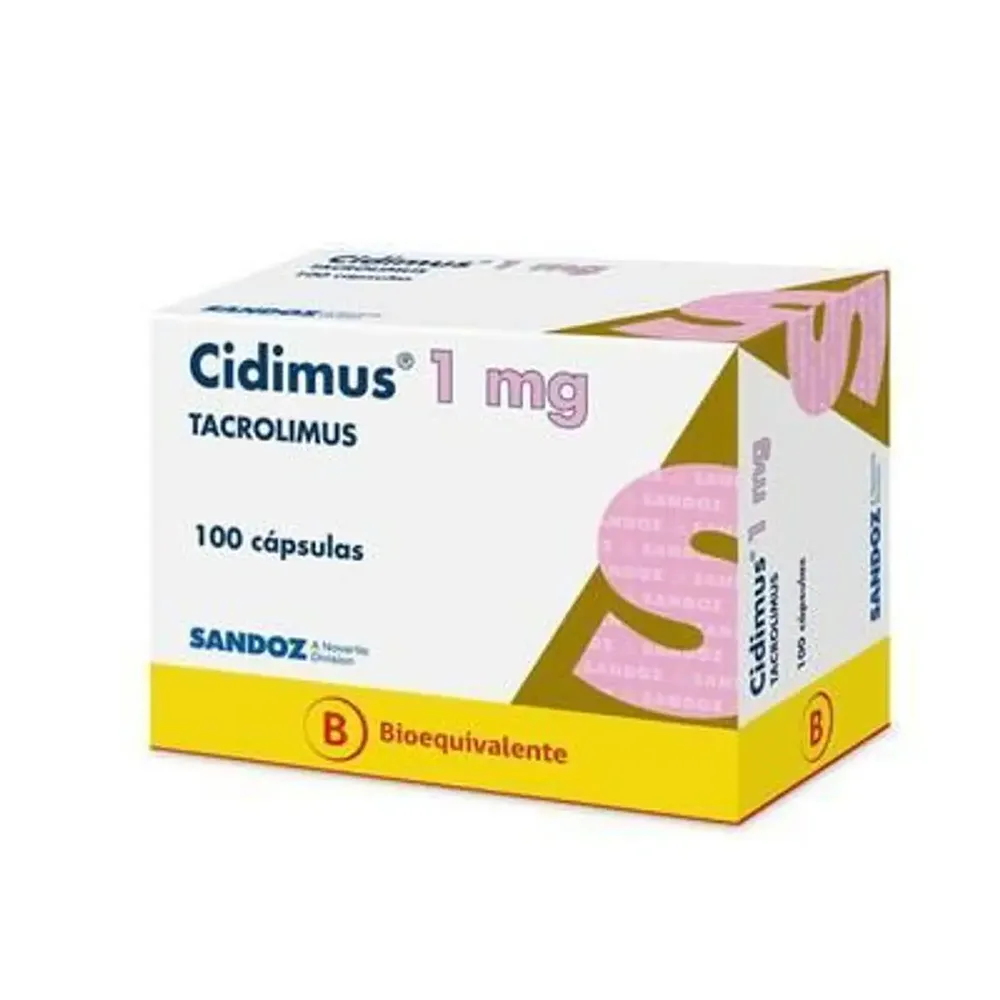
Table of Contents
Package leaflet: Information for the patient
Cidimus, 0.5 mg, hard capsules
Cidimus, 1 mg, hard capsules
Cidimus, 5 mg, hard capsules
Tacrolimusum
Please read this leaflet carefully before taking this medicine, as it contains
important information for you.
- Keep this leaflet. You may need to read it again.
- If you have any questions, please consult your doctor or pharmacist.
- This medicine has been prescribed for a specific individual. Do not pass it on to others. It may harm them, even if their symptoms are the same.
- If you experience any side effects, including any not listed in this leaflet, inform your doctor or pharmacist. See section 4.
Contents of the leaflet:
- What Cidimus is and what it is used for
- Important information before taking Cidimus
- How to take Cidimus
- Possible side effects
- How to store Cidimus
- Contents of the pack and other information
1. What Cidimus is and what it is used for
Cidimus belongs to a group of medicines known as immunosuppressants.
After an organ transplant (e.g. liver, kidney, heart), the patient's immune system may try to
reject the new organ.
Cidimus is used to control the immune response and to help the body accept the transplanted organ.
Cidimus is often used together with other medicines that also suppress the immune system.
Cidimus may also be used in cases of ongoing rejection of a transplanted liver, kidney, heart, or other organs, or when previous treatment has failed to control the immune response after transplantation.
2. Important information before using Cidimus
When not to use Cidimus
if the patient is allergic to tacrolimus or to any of the other ingredients of this medicine
(listed in section 6);
if the patient is allergic (hypersensitive) to any macrolide antibiotic (e.g.
erythromycin, clarithromycin, josamycin).
Warnings and precautions
Before taking Cidimus, discuss it with your doctor or pharmacist.
Cidimus should be taken daily for as long as immunosuppression is required to prevent rejection of the transplanted organ. Regular consultations with your doctor are necessary.
During treatment with Cidimus, your doctor may periodically recommend various tests (including blood, urine, heart function, vision, and neurological examinations). This is standard practice to help your doctor determine the appropriate dose of Cidimus.
Avoid taking herbal medicines, such as St. John's wort (Hypericum perforatum) or other herbal remedies, as they may affect the effectiveness and required dosage of Cidimus. If in doubt, consult your doctor before taking any herbal product.
Inform your doctor if you have liver function disorders or have had a disease that may have affected liver function. This may influence the dose of Cidimus prescribed.
Tell your doctor if you experience severe abdominal pain, with or without other symptoms such as chills, fever, nausea, or vomiting.
If you have diarrhoea lasting longer than 1 day, inform your doctor, as an adjustment of the Cidimus dose may be necessary.
Inform your doctor if you have been diagnosed with changes in the electrical activity of the heart, known as QT prolongation.
While taking Cidimus, limit exposure to sunlight and UV radiation by wearing protective clothing and using high-protection sunscreen. This is due to an increased risk of skin cancer during immunosuppressive therapy.
If you are due to receive any vaccination, inform your doctor in advance. Your doctor will advise on the best course of action.
Patients receiving Cidimus have shown an increased risk of lymphoproliferative disorders, see section 4. Your doctor can provide further explanation on this matter.
Cidimus and other medicines
Tell your doctor or pharmacist about all medicines you are currently taking, have recently taken, or plan to take, including over-the-counter medicines and herbal supplements.
Cidimus must not be used together with cyclosporine.
Other medicines taken concomitantly may affect blood levels of Cidimus, and Cidimus may affect blood levels of other medicines. It may therefore be necessary to discontinue, increase, or decrease the dose of Cidimus.
Especially inform your doctor if you are taking or have recently taken the following medicines:
antifungal and antibiotic medicines (especially so-called macrolide antibiotics) used to treat infections, e.g. ketoconazole, fluconazole, itraconazole, voriconazole, clotrimazole, isavuconazole, erythromycin, clarithromycin, josamycin, rifampicin, and flucloxacillin;
letermovir, used to prevent cytomegalovirus (CMV) infection;
HIV protease inhibitors (e.g. ritonavir, nelfinavir, saquinavir), the pharmacokinetic enhancer cobicistat, and combination tablets used in the treatment of HIV infection;
HCV protease inhibitors (e.g. telaprevir, boceprevir, and ombitasvir/paritaprevir/ritonavir with or without dasabuvir) used in the treatment of hepatitis C;
nilotinib and imatinib (used in the treatment of certain cancers);
mycophenolic acid, used to suppress the immune system to prevent transplant rejection;
medicines used to treat peptic ulcer and reflux (e.g. omeprazole, lanzoprazole, or cimetidine);
antiemetic medicines used to treat nausea and vomiting (e.g. metoclopramide);
antacid medicines for heartburn containing magnesium hydroxide and aluminium hydroxide (medicines that neutralize stomach acid);
hormonal therapy with ethinylestradiol (e.g. oral contraceptive pill) or danazol;
medicines used to treat high blood pressure or heart disorders, e.g. nifedipine, nicardipine, diltiazem, and verapamil;
antiarrhythmic medicines (e.g. amiodarone) used to control heart rhythm;
statins, used to treat high cholesterol and triglyceride levels;
antiepileptic medicines – phenytoin or phenobarbital;
corticosteroids prednisolone and methylprednisolone;
the antidepressant medicine nefazodone;
herbal medicines containing St. John's wort (Hypericum perforatum) or extracts of Chinese magnolia vine (Shisandra sphenanthera);
metamizole, a medicine used to treat pain and fever;
cannabidiol (a medicine used, among others, to treat seizures).
Immediately tell your doctor if you experience:
vision problems such as blurred vision, changes in colour vision, difficulty seeing details, or loss of peripheral vision.
Inform your doctor if you intend to or need to take ibuprofen, amphotericin B, or antiviral medicines (such as aciclovir). These medicines, when used together with Cidimus, may increase the risk of kidney or nervous system disorders.
Your doctor must also be informed if, during treatment with Cidimus, you are taking potassium supplements, potassium-sparing diuretics (e.g. amiloride, triamterene, or spironolactone), or antibiotics trimethoprim or cotrimoxazole, which may increase blood potassium levels, certain painkillers (non-steroidal anti-inflammatory drugs, NSAIDs, e.g. ibuprofen), anticoagulants, or oral antidiabetic medicines.
If you are due to receive any vaccination, inform your doctor in advance.
Cidimus with food and drink
Cidimus should generally be taken on an empty stomach or at least 1 hour before or 2 to 3 hours after a meal. While taking Cidimus, avoid eating grapefruit or drinking grapefruit juice.
Pregnancy and breastfeeding
If you are pregnant, think you may be pregnant, plan to become pregnant, or are breastfeeding, consult your doctor or pharmacist before using this medicine.
Cidimus passes into breast milk. Breastfeeding is not recommended during treatment with this medicine.
Driving and using machines
If after taking Cidimus you experience dizziness, drowsiness, or vision disturbances, you should not drive or operate machinery. These symptoms are more commonly observed when Cidimus is taken with alcohol.
Cidimus contains lactose and sodium
If you have been diagnosed with an intolerance to certain sugars, consult your doctor before taking this medicine.
This medicine contains less than 1 mmol (23 mg) of sodium per hard capsule, meaning the medicine is considered "sodium-free".
3. How to use Cidimus
This medicine should always be used as directed by the physician. If in doubt, consult
your doctor or pharmacist.
When filling the prescription, ensure that the same medicine containing tacrolimus is dispensed each time,
unless the transplant specialist has specifically advised switching to another medicine containing
tacrolimus.
The medicine should be taken twice daily. If the medicine looks different than usual or if dosing instructions have changed,
contact your doctor or pharmacist as soon as possible to confirm that the correct medicine has been dispensed.
The initial dose used to prevent organ rejection is determined by the doctor based on the patient's body weight.
Initial doses administered shortly after transplantation generally range from 0.075 to 0.30 mg/kg body weight per day (depending on the transplanted organ).
The recommended dose depends on the patient's general condition and on which other immunosuppressive medicines are being taken.
To determine the correct dose and adjust it appropriately, the doctor will order regular blood tests.
Once the patient's condition has stabilized, the doctor usually reduces the dose of Cidimus.
The doctor will clearly specify how many capsules to take and how often.
Cidimus is taken orally twice daily, usually in the morning and evening.
The medicine should generally be taken on an empty stomach, or at least 1 hour before or 2 to 3 hours after a meal.
Swallow the capsules whole with a glass of water.
The capsules should be taken immediately after removing them from the blister pack.
While taking Cidimus, avoid eating grapefruit or drinking grapefruit juice.
Do not swallow the desiccant contained in the foil packaging.
Taking more Cidimus than prescribed
If an overdose of Cidimus is taken by accident, contact your doctor immediately or go to the nearest hospital emergency department.
Missing a dose of Cidimus
Do not take a double dose to make up for a missed dose.
If a dose is forgotten, wait until the next scheduled dose and then continue with the regular dosing schedule.
Stopping Cidimus treatment
Discontinuing treatment with Cidimus may increase the risk of transplant organ rejection.
Do not stop treatment without consulting your doctor.
If you have any further questions about the use of this medicine, consult your doctor or pharmacist.
4. Possible adverse reactions
Like all medicines, this medicine can cause adverse reactions, although not everyone will experience them.
Cidimus suppresses the body's immune system to prevent rejection of the transplanted organ. As a result, the body will not fight infections as effectively as normal. Therefore, when taking Cidimus, you may be more susceptible to infections affecting the skin, mouth, stomach and intestines, lungs, and urinary tract. Some of these infections may be severe or life-threatening and may include infections caused by bacteria, viruses, fungi, parasites, or other pathogens.
You should immediately inform your doctor if you experience any symptoms of infection, including:
- fever, cough, sore throat, fatigue, or general malaise
- memory loss, difficulty thinking, difficulty walking, or vision loss – these may be caused by a very rare but serious brain infection (progressive multifocal leukoencephalopathy, PML), which may be fatal.
Severe adverse reactions, including those listed below, may occur. If you observe or suspect any of the following serious adverse reactions, contact your doctor immediately.
Opportunistic infections (bacterial, fungal, viral, and protozoal): prolonged diarrhoea, fever, and sore throat.
During treatment, both benign and malignant tumours due to immunosuppression have been reported, including skin cancers and a rare type of cancer known as Kaposi's sarcoma, which may present with skin lesions. Symptoms include new or changing skin discolorations, spots, or nodules (frequency unknown (frequency cannot be determined from available data)).
Thrombotic thrombocytopenic purpura – a disorder characterized by fever and the appearance of petechiae (small red spots) under the skin, which may be accompanied (or not) by: extreme fatigue of unknown origin, confusion, jaundice (yellowing of the skin or eyes), and symptoms of acute kidney failure (reduced urine output or anuria).
Cases of pure red cell aplasia (significant reduction in red blood cells), haemolytic anaemia (reduction in red blood cells due to their abnormal breakdown, associated with fatigue), and febrile neutropenia (reduction in white blood cells that fight infection, with concurrent fever) have been reported. The exact frequency of these adverse reactions is unknown. Patients may experience no symptoms, or depending on disease severity, may feel fatigued, apathetic, have unusually pale skin, shortness of breath, headache, chest pain, and feel coldness in hands and feet.
Cases of agranulocytosis (significant reduction in white blood cells, leading to mouth ulcers, fever, and increased susceptibility to infections) have been reported. This disorder may be asymptomatic or may present with sudden fever, chills, and sore throat.
Allergic and anaphylactic reactions with the following symptoms: sudden onset of itchy rash (urticaria), swelling of hands, feet, ankles, face, lips, mouth, or throat (which may cause difficulty swallowing or breathing), and feeling faint.
Reversible posterior encephalopathy syndrome: headache, mental disturbances, seizures, and visual disturbances.
Cardiac arrhythmias of the torsade de pointes type: changes in heart rate, which may (or may not) be accompanied by chest pain (angina), fainting, dizziness, nausea, palpitations (awareness of heart beating), and difficulty breathing.
Perforation of the gastrointestinal tract: severe abdominal pain, with or without other symptoms such as chills, fever, nausea, or vomiting.
Stevens-Johnson syndrome: unexplained widespread skin pain, facial swelling, severe illness with blistering of the skin, mouth, eyes, and genital organs, urticaria, tongue swelling, red or purple spreading skin rash, and skin peeling.
Toxic epidermal necrolysis: development of erosions and blisters on the skin or mucous membranes, redness and swelling of the skin, which may peel off over large areas of the body.
Haemolytic-uraemic syndrome – a disorder with the following symptoms: reduced urine output or anuria (acute kidney failure), extreme fatigue, jaundice (yellowing of the skin or eyes), abnormal bruising or bleeding, and signs of infection.
Inadequate function of the transplanted organ.
The following adverse reactions may also occur during treatment with Cidimus:
Very common adverse reactions (may affect more than 1 in 10 people):
increased blood glucose levels, diabetes, increased blood potassium levels
sleep disturbances
tremor, headache
increased blood pressure
diarrhoea, nausea
renal function disorders
Common adverse reactions (may affect less than 1 in 10 people):
decreased levels of magnesium, phosphate, potassium, calcium, or sodium in the blood, fluid retention, increased blood uric acid or lipid levels, decreased appetite, increased blood acidity, other electrolyte imbalances
anxiety, confusion and disorientation, depression, mood changes, nightmares, hallucinations, psychiatric disorders
seizures, disturbances in consciousness, tingling and numbness (sometimes painful) in hands and feet, dizziness, reduced writing ability, nervous system disorders
blurred vision, increased light sensitivity, eye disorders
tinnitus
reduced blood flow in heart vessels, increased heart rate
bleeding, partial or complete blockage of blood vessels, decreased blood pressure
shallow breathing, lung tissue changes, fluid accumulation around the lungs, sore throat, cough, flu-like symptoms
inflammation or ulcers causing abdominal pain or diarrhoea, gastrointestinal bleeding, inflammation or ulceration of the oral mucosa, fluid accumulation in the abdominal cavity, vomiting, abdominal pain, indigestion, constipation, bloating (including flatulence), loose stools, gastrointestinal problems
changes in liver enzyme activity, jaundice due to liver dysfunction, liver tissue damage, and hepatitis
itching, rash, hair loss, acne, excessive sweating
joint, limb, back, and foot pain, muscle cramps
inadequate kidney function, reduced urine production, disturbed or painful urination
general weakness, fever, fluid accumulation in the body, pain and malaise, increased blood alkaline phosphatase activity, weight gain, sensation of temperature disturbances
Uncommon adverse reactions (may affect less than 1 in 100 people):
coagulation disorders, reduction in all types of blood cells
dehydration, decreased blood protein or glucose levels, increased blood phosphate levels
coma, brain haemorrhage, stroke, paralysis, brain function disorders, speech and language abnormalities, memory problems
lens opacities
hearing impairment
irregular heartbeat, cardiac arrest, weakened heart function, myocardial disorders, myocardial hypertrophy, stronger heartbeat, abnormal ECG, abnormal heart rate and pulse
venous thrombosis in a limb, shock
breathing difficulties, respiratory disorders, bronchial asthma
intestinal obstruction, increased blood amylase activity, backflow of stomach contents into the oesophagus (reflux), delayed gastric emptying
skin inflammation, burning sensation upon exposure to sunlight
joint diseases
inability to urinate, painful menstruation, and abnormal menstrual bleeding
organ dysfunction, flu-like symptoms, increased sensitivity to heat and cold, chest tightness, nervousness or altered well-being, increased blood lactate dehydrogenase activity, weight loss
Rare adverse reactions (may affect less than 1 in 1,000 people):
minor skin bleeding due to blood clot formation
increased muscle stiffness
vision loss
hearing loss
fluid accumulation around the heart
acute shortness of breath
cyst formation in the pancreas
impaired blood flow through the liver
hirsutism (excessive hair growth)
thirst, falls, chest tightness, reduced mobility, ulcers
Very rare adverse reactions (may affect less than 1 in 10,000 people):
muscle weakness
abnormal echocardiogram
liver failure, bile duct narrowing
painful urination and presence of blood in urine
increased fatty tissue
Frequency not known (frequency cannot be determined from available data):
optic nerve abnormalities (optic neuropathy)
Reporting of adverse reactions
If any adverse reactions occur, including those not listed in this leaflet, inform your doctor or pharmacist. Adverse reactions can be reported directly to the Department of Monitoring Adverse Drug Reactions of the Office for Registration of Medicinal Products, Medical Devices and Biocidal Products:
Al. Jerozolimskie 181C, 02-222 Warsaw
Tel.: +48 22 49 21 301 / Fax: +48 22 49 21 309 / Website: https://smz.ezdrowie.gov.pl
Adverse reactions can also be reported to the marketing authorization holder.
Reporting adverse reactions helps to provide more information on the safety of the medicine.
5. How to store Cidimus
Keep the medicine out of the sight and reach of children.
Do not use this medicine after the expiry date stated on the packaging after EXP.
The expiry date refers to the last day of the stated month.
Expiry date after first opening the aluminium packaging covering the blister:
12 months. After opening the aluminium packaging, do not store at temperatures above 25°C.
The capsules should be taken immediately after removal from the blister.
Do not store above 30°C. Store in the original packaging to protect from moisture.
Medicines must not be disposed of via wastewater or household waste. Ask your pharmacist how to dispose of medicines no longer required. This will help protect the environment.
6. Contents of the pack and other information
What Cidimus contains
The active substance is tacrolimus. Each capsule contains 0.5 mg, 1 mg, or 5 mg of tacrolimus monohydrate.
The other ingredients are:
Capsule contents: hypromellose, lactose monohydrate, sodium croscarmellose (Ac Di Sol), magnesium stearate
Cidimus 0.5 mg
Capsule (body): titanium dioxide (E171), sodium lauryl sulfate, sorbitan laurate, gelatin
Capsule (cap): yellow iron oxide (E172), titanium dioxide (E171), sodium lauryl sulfate, sorbitan laurate, gelatin
Cidimus 1 mg
Capsule (body): titanium dioxide (E171), sodium lauryl sulfate, sorbitan laurate, gelatin
Capsule (cap): yellow iron oxide (E172), red iron oxide (E172), black iron oxide (E172), titanium dioxide (E171), sodium lauryl sulfate, sorbitan laurate, gelatin
Cidimus 5 mg
Capsule (body): titanium dioxide (E171), sodium lauryl sulfate, sorbitan laurate, gelatin
Capsule (cap): red iron oxide (E172), titanium dioxide (E171), sodium lauryl sulfate, sorbitan laurate, gelatin
What Cidimus looks like and contents of the pack
Cidimus 0.5 mg: hard capsules with a white, matt body and an ivory-coloured cap (14.5 mm long), containing white or almost white powder.
Cidimus 1 mg: hard capsules with a white, matt body and a light brown cap (14.5 mm long), containing white or almost white powder.
Cidimus 5 mg: hard capsules with a white, matt body and an orange cap (15.8 mm long), containing white or almost white powder.
Cidimus capsules are packed in blisters made of PVC/PE/PVDC/Aluminium foil, placed in a polyester/aluminium/PE pouch with a desiccant. The desiccant must not be swallowed.
Pack sizes: 30, 50, 60 and 100 hard capsules.
Marketing Authorisation Holder and Manufacturer
Marketing Authorisation Holder
Sandoz GmbH
Biochemiestrasse 10
6250 Kundl, Austria
Manufacturers
Lek Pharmaceuticals d.d.
Verovškova 57
1526 Ljubljana, Slovenia
Lek Pharmaceuticals d.d.
Trimlini 2D
9220 Lendava, Slovenia
Lek S.A.
ul. Domaniewska 50 C
02-672 Warszawa, Poland
Salutas Pharma GmbH
Otto-von-Guericke-Allee 1
39179 Barleben, Germany
S.C. Sandoz, S.R.L.
Livezeni Street no 7A
Targu Mures, Romania
For further information about the medicine and its trade names in the European Economic Area countries, please contact:
Sandoz Polska Sp. z o.o.
ul. Domaniewska 50 C
02-672 Warszawa
tel. 22 209 70 00