Ceroxim
Poland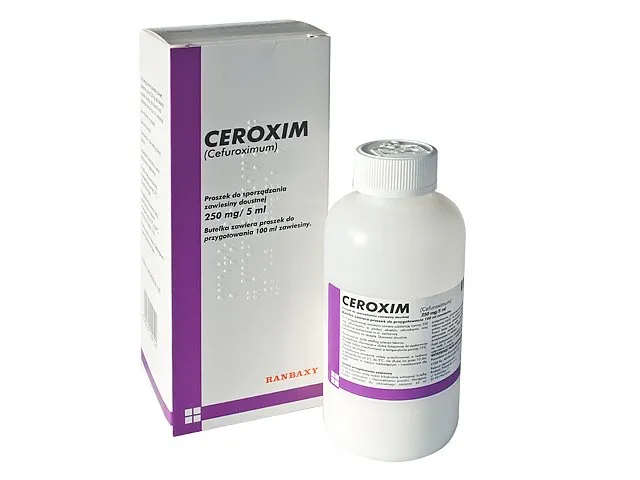
Table of Contents
Patient Information Leaflet
Ceroxim, 125 mg/5 ml, powder for oral suspension
Ceroxim, 250 mg/5 ml, powder for oral suspension
Cefuroximum
Please read all of this leaflet carefully before taking this medicine, because it contains
important information for you.
- Keep this leaflet. You may need to read it again.
- If you have any further questions, please ask your doctor or pharmacist.
- This medicine has been prescribed for you personally. Do not pass it on to others. It may harm them even if their symptoms are the same as yours.
- If you experience any side effects, including any not listed in this leaflet, please inform your doctor or pharmacist. See section 4.
Leaflet Contents:
- What Ceroxim is and what it is used for
- Important information before taking Ceroxim
- How to take Ceroxim
- Possible side effects
- How to store Ceroxim
- Contents of the pack and other information
1. What Ceroxim is and what it is used for
Ceroxim is an antibiotic used in adults and children. It works by killing the bacteria that cause infections. It belongs to a group of medicines called cephalosporins.
Ceroxim is used to treat infections of:
- throat
- sinuses
- middle ear
- lungs or chest
- urinary tract
- skin and soft tissues
Ceroxim may also be used:
- in the treatment of early-stage Lyme disease (borreliosis – an infection transmitted by ticks).
Your doctor may perform tests to identify the type of bacteria causing your infection and may check during treatment whether the bacteria are sensitive to Ceroxim.
2. Information before taking Ceroxim
When not to take Ceroxim:
- if the patient is allergic to acetyl cefuroxime, to any of the cephalosporin antibiotics, or to any of the other ingredients of this medicine (listed in section 6);
- if the patient has ever had a severe allergic reaction (hypersensitivity) to any other type of beta-lactam antibiotics (penicillins, monobactams or carbapenems);
- if the patient has ever developed severe skin rash or peeling skin, blisters and/or oral ulcers after treatment with cefuroxime or other antibiotics from the cephalosporin group.
If any of the above situations apply to the patient, he/she must not take Ceroxim without
consulting a doctor.
Warnings and precautions
Talk to your doctor or pharmacist before starting treatment with Ceroxim.
Severe skin reactions have occurred during treatment with cefuroxime, such as:
Stevens-Johnson syndrome, toxic epidermal necrolysis, and drug reaction with eosinophilia and systemic symptoms (DRESS).
If any of the symptoms associated with severe skin reactions described in section 4 occur, seek immediate medical advice.
Children
Ceroxim is not recommended for use in children under 3 months of age, because the safety and efficacy of the medicine in this age group have not been established.
During treatment with Ceroxim, watch for adverse effects such as allergic reactions, fungal infections (e.g. candidiasis), or severe diarrhoea (pseudomembranous colitis). This will help reduce the risk of complications. See “Symptoms to watch for” in section 4.
Blood tests
Ceroxim may affect the results of blood sugar tests and a blood test known as the Coombs test. If the patient is due to have blood tests, he/she should:
inform the person taking the blood sample that he/she is taking Ceroxim.
Ceroxim and other medicines
Tell your doctor or pharmacist about all medicines the patient is currently taking or has recently taken, as well as any medicines the patient plans to take.
- Medicines reducing stomach acid (e.g. antacids used to treat heartburn) may affect the action of Ceroxim.
- Probenecid.
- Oral anticoagulants. If the patient is taking any of the above (or similar) medicines, he/she should inform the doctor or pharmacist.
Oral contraceptives
Ceroxim may reduce the effectiveness of oral contraceptives. If the patient is taking oral contraceptives during treatment with Ceroxim, additional mechanical methods of contraception (e.g. condoms) should be used. If in doubt, consult a doctor.
Pregnancy, breastfeeding and fertility
If the patient is pregnant or breastfeeding, suspects she may be pregnant, or is planning to have a baby, she should consult her doctor or pharmacist before taking this medicine.
Driving and using machines
Ceroxim may cause dizziness and other side effects that may impair the patient's alertness.
The patient should not drive or operate machinery if he/she does not feel well.
Important information about certain ingredients of Ceroxim
Ceroxim, powder for oral suspension, contains sugar (sucrose)
5 ml of the prepared 125 mg/5 ml oral suspension contains 2.7819 g of sucrose.
5 ml of the prepared 250 mg/5 ml oral suspension contains 2.4998 g of sucrose.
This should be taken into account in patients with diabetes.
Ceroxim, powder for oral suspension, contains glucose (component of maltodextrin)
If the patient has previously been diagnosed with intolerance to certain sugars, he/she should contact the doctor before taking the medicine.
Ceroxim, powder for oral suspension, contains aspartame (E 951)
The medicine contains 8 mg of aspartame in every 5 ml of the prepared suspension.
Aspartame is a source of phenylalanine. It may be harmful to patients with phenylketonuria.
This is a rare genetic disorder in which phenylalanine accumulates in the body due to improper excretion.
If the patient does not tolerate aspartame or has phenylketonuria, he/she should:
consult a doctor about whether Ceroxim can be used.
Ceroxim, powder for oral suspension, contains sodium
The medicine contains less than 1 mmol (23 mg) of sodium in 5 ml of suspension, meaning the medicine is considered "sodium-free".
Ceroxim, powder for oral suspension, contains mannitol
The medicine may have a mild laxative effect.
Ceroxim, powder for oral suspension, contains sodium benzoate (E 211)
The medicine contains 5 mg of sodium benzoate in 5 ml of suspension, equivalent to 1 mg/ml.
Ceroxim, powder for oral suspension, contains benzyl alcohol
The medicine contains 0.45 mg of benzyl alcohol in 5 ml of suspension, equivalent to 0.09 mg/ml.
Benzyl alcohol may cause allergic reactions.
Pregnant or breastfeeding women should contact their doctor before using the medicine, as large amounts of benzyl alcohol may accumulate in their body and cause adverse effects (so-called metabolic acidosis).
Patients with liver or kidney disease should contact their doctor before using the medicine, as large amounts of benzyl alcohol may accumulate in their body and cause adverse effects (so-called metabolic acidosis).
Do not administer to young children (under 3 years of age) for longer than one week without a doctor's or pharmacist's recommendation.
Ceroxim, powder for oral suspension, contains ethanol
This medicine contains 0.001 mg of alcohol (ethanol) in 5 ml of suspension, equivalent to 0.0002 mg/ml. The amount of alcohol in 5 ml of this medicine's suspension is equivalent to less than 1 ml of beer or 1 ml of wine.
The small amount of alcohol in this medicine will not cause noticeable effects.
Ceroxim, powder for oral suspension contains flavouring agents - citral, geraniol and citronellol.
3. How to use Ceroxim
This medicine should always be used exactly as recommended by your doctor or pharmacist. If in doubt,
consult your doctor or pharmacist.
Ceroxim should be taken after a meal. This will help increase the effectiveness of treatment.
Shake the bottle well before use.
Ceroxim suspension may be diluted with cold fruit juice or a milk-based drink,
but it should be taken immediately after preparation.
Ceroxim must not be mixed with hot liquids.
Detailed instructions for preparing the Ceroxim suspension are provided at the end of this leaflet (see Instructions
for preparing the suspension).
Recommended dose
Adults
The recommended dose of Ceroxim is 250 mg to 500 mg twice daily, depending on the severity and
type of infection.
Children
The recommended dose of Ceroxim is 10 mg/kg body weight (not exceeding 125 mg) to 15 mg/kg body weight (not
exceeding 250 mg) twice daily, depending on:
- severity and type of infection
- child's body weight and age, not exceeding 500 mg per day.
Ceroxim is not recommended for use in children under 3 months of age, as the safety and efficacy of the medicine have not been established in this age group.
Depending on the disease and the patient's response to treatment, the initial dose may be adjusted or more than one treatment cycle may be required.
Patients with kidney problems
If the patient has impaired kidney function, the doctor may adjust the dosage.
If this applies to the patient, they should inform their doctor.
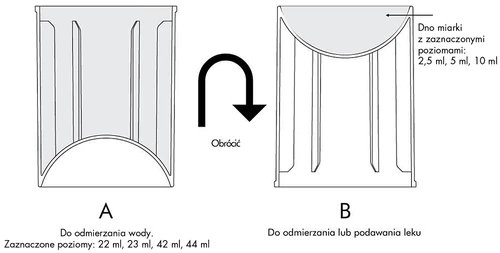
A measuring device is provided with the medicine package to ensure accurate dosing. The measuring device allows for measuring the appropriate volume of water required to dissolve the powder. The measuring device, when turned upside down, can be used for measuring or administering the medicine (as an alternative to a spoon).
Taking more than the recommended dose of Ceroxim
If a patient takes more than the recommended dose of Ceroxim, neurological disturbances may occur, particularly increasing the risk of seizures (epileptic fits).
Seek immediate medical advice or call emergency services. If possible, show the Ceroxim medicine packaging.
Missing a dose of Ceroxim
Do not take a double dose to make up for a missed dose. Take the next dose at the usual time.
Stopping treatment with Ceroxim
Do not stop taking Ceroxim unless instructed by your doctor.
It is important not to shorten the prescribed duration of treatment with Ceroxim. Do not discontinue treatment without medical advice, even if the patient feels better. Shortening the recommended treatment period may lead to recurrence of the illness.
If you have any further questions about the use of this medicine, consult your doctor or pharmacist.
4. Possible side effects
Like all medicines, this medicine can cause side effects, although not everyone will experience them.
Symptoms to watch for
A small number of people taking Ceroxim have experienced an allergic reaction or potentially
severe skin reaction. Symptoms may include the following.
- Severe allergic reaction. Symptoms include: raised, itchy rash, swelling, sometimes of the face or lips, which may make breathing difficult.
- Skin rash, which may develop into blisters and look like small rings (a dark spot in the centre surrounded by a lighter ring with a dark edge).
- Widespread skin lesions with blisters and peeling skin. (This may be a sign of Stevens-Johnson syndrome or toxic epidermal necrolysis - Lyell's disease).
- Extensive rash, high fever, and swollen lymph nodes (DRESS syndrome or drug hypersensitivity syndrome).
- Chest pain associated with an allergic reaction, which may be a symptom of an allergy-induced heart attack (Kounis syndrome).
Other symptoms to watch for while taking Ceroxim
- Fungal infections. Medicines such as Ceroxim may cause overgrowth of yeast ( Candida ) in the body, leading to fungal infection (e.g. thrush). The risk of this side effect is higher if Ceroxim is used for a long time.
- Severe diarrhoea (pseudomembranous colitis). Medicines such as Ceroxim may cause inflammation of the colon (large intestine), resulting in severe diarrhoea, usually with blood and mucus, abdominal pain, and fever.
- Jarisch-Herxheimer reaction. When Ceroxim is used to treat Lyme disease (borreliosis), some patients may experience high temperature (fever), chills, muscle and headache, and skin rash. This is known as the Jarisch-Herxheimer reaction. These symptoms usually last from several hours to one day.
If any of these symptoms occur in the patient, contact a doctor or nurse immediately.
Common side effects (may occur in not more than 1 in 10 patients):
- fungal infections (e.g. candidiasis)
- headache
- dizziness
- diarrhoea
- nausea
- stomach pain
Common side effects that may be revealed in blood tests:
- increased number of white blood cells (eosinophilia)
- increased activity of liver enzymes
Uncommon side effects
May occur in not more than 1 in 100 patients:
- vomiting
- skin rashes
Uncommon side effects that may be revealed in blood tests:
- decreased number of platelets (cells involved in blood clotting)
- decreased number of white blood cells (leukopenia)
- positive Coombs test
Other side effects
Other side effects occur in a very small number of patients, but the exact frequency is unknown:
- severe diarrhoea (pseudomembranous colitis)
- allergic reactions
- skin reactions (including severe)
- high temperature (fever)
- yellowing of the whites of the eyes or skin
- hepatitis
Side effects that may be revealed in blood tests:
- excessive breakdown of red blood cells (haemolytic anaemia)
Reporting of side effects
If any side effects occur, including any not listed in this leaflet, tell your doctor, pharmacist, or nurse. Side effects can be reported directly to the Department of Monitoring Adverse Reactions of Medicinal Products at the Office for Registration of Medicinal Products, Medical Devices and Biocidal Products:
Al. Jerozolimskie 181C, 02-222 Warsaw
Tel.: 22 49-21-301
Fax: 22 49-21-309
Website: https://smz.ezdrowie.gov.pl
Side effects can also be reported to the marketing authorisation holder.
Reporting side effects helps to provide more information on the safety of the medicine.
5. How to store Ceroxim
Keep the medicine out of sight and reach of children.
Do not use this medicine after the expiry date stated on the packaging. The expiry date refers to the last day of the stated month.
Store the powder below 25°C. Protect from moisture.
The prepared suspension should be stored in the refrigerator at a temperature between 2°C and 8°C and used within 10 days.
Medicines should not be disposed of via wastewater or household waste. Ask your pharmacist how to dispose of medicines no longer in use. This will help protect the environment.
6. Contents of the pack and other information
What Ceroxim contains
- The active substance is cefuroxime in the form of cefuroxime axetil (in a mixture: crystalline cefuroxime axetil, hypromellose phthalate, methacrylic acid-ethyl acrylate copolymer). 5 ml of reconstituted suspension contains 125 mg or 250 mg of cefuroxime.
- Other ingredients are:
- sucrose, aspartame (E 951), xanthan gum, silicon dioxide (Syloid Al-1 FP), monosodium citrate, sodium benzoate (E 211), Tutti Frutti flavour [51.880/AP05.51; containing, among others, sodium, corn maltodextrin, propylene glycol (E 1520), benzyl alcohol, ethanol, citral, geraniol and citronellol], peppermint flavour (517 SD; containing modified starch), sodium chloride, mannitol (Pearlitol SD 200). See also the composition of the mixture with the active substance, above.
For further important information on certain ingredients of Ceroxim, see section 2.
What Ceroxim looks like and contents of the pack
Powder for oral suspension. The powder is white to cream-coloured. After addition of water, a white to cream-coloured suspension is formed.
Ceroxim is available in bottles containing powder for the preparation of 50 ml or 100 ml of oral suspension at a strength of 125 mg/5 ml or 250 mg/5 ml.
A measuring device is supplied with the bottle, allowing measurement of 22 ml, 23 ml, 42 ml or 44 ml of water. When inverted, it may be used to measure or administer 2.5 ml, 5 ml or 10 ml of the reconstituted suspension.
Marketing Authorisation Holder and Manufacturer
Marketing Authorisation Holder
Ranbaxy (Poland) Sp. z o.o.
Idzikowskiego Street 16
00-710 Warsaw
Tel. +48 22 642 07 75
Manufacturer
Sun Pharmaceutical Industries Europe B.V.
Polarisavenue 87
2132 JH Hoofddorp
The Netherlands
Instructions for preparing the suspension
Ceroxim, 125 mg/5 ml
Bottle for preparation of 50 ml suspension
Before adding water, shake the bottle several times to loosen and aerate the powder. Then measure 23 ml of boiled, cooled water into a separate container (the supplied measuring device may be used for measuring). Slowly add approximately half of the measured water to the powder in the bottle and shake well. Then slowly add the remaining water and shake until a homogeneous suspension is obtained. The prepared suspension should be stored in the refrigerator.
Before use, leave at room temperature for about 5 minutes, then shake vigorously until the suspension liquefies. Shake well before each use.
Bottle for preparation of 100 ml suspension
Before adding water, shake the bottle several times to loosen and aerate the powder. Then measure 44 ml of boiled, cooled water into a separate container (the supplied measuring device may be used for measuring). Slowly add approximately half of the measured water to the powder in the bottle and shake well. Then slowly add the remaining water and shake until a homogeneous suspension is obtained. The prepared suspension should be stored in the refrigerator.
Before use, leave at room temperature for about 5 minutes, then shake vigorously until the suspension liquefies. Shake well before each use.
Ceroxim, 250 mg/5 ml
Bottle for preparation of 50 ml suspension
Before adding water, shake the bottle several times to loosen and aerate the powder. Then measure 22 ml of boiled, cooled water into a separate container (the supplied measuring device may be used for measuring). Slowly add approximately half of the measured water to the powder in the bottle and shake well. Then slowly add the remaining water and shake until a homogeneous suspension is obtained. The prepared suspension should be stored in the refrigerator.
Before use, leave at room temperature for about 5 minutes, then shake vigorously until the suspension liquefies. Shake well before each use.
Bottle for preparation of 100 ml suspension
Before adding water, shake the bottle several times to loosen and aerate the powder. Then measure 42 ml of boiled, cooled water into a separate container (the supplied measuring device may be used for measuring). Slowly add approximately half of the measured water to the powder in the bottle and shake well. Then slowly add the remaining water and shake until a homogeneous suspension is obtained. The prepared suspension should be stored in the refrigerator.
Before use, leave at room temperature for about 5 minutes, then shake vigorously until the suspension liquefies. Shake well before each use.