Celiprolol vitabalans
Poland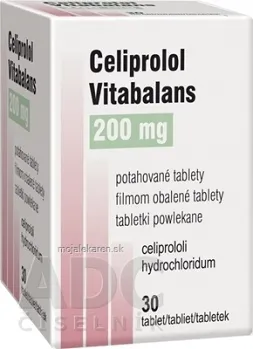
Table of Contents
Patient Information Leaflet
Celiprolol Vitabalans, 200 mg, film-coated tablets
Celiprolol Vitabalans, 400 mg, film-coated tablets
Celiprololi hydrochloridum
Please read all of this leaflet carefully before taking this medicine, because it contains
important information for you.
- Keep this leaflet. You may need to read it again.
- If you have any further questions, please ask your doctor or pharmacist.
- This medicine has been prescribed for a specific individual. Do not pass it on to others. This medicine may harm other people, even if their symptoms are the same.
- If you experience any side effects, including any not listed in this leaflet, tell your doctor or pharmacist. See section 4.
Contents of the leaflet:
- What Celiprolol Vitabalans is and what it is used for
- What you need to know before taking Celiprolol Vitabalans
- How to take Celiprolol Vitabalans
- Possible side effects
- How to store Celiprolol Vitabalans
- Contents of the pack and other information
1. What Celiprolol Vitabalans is and what it is used for
Celiprolol Vitabalans belongs to a group of medicines called beta-adrenolytic agents.
Celiprolol Vitabalans is used to treat hypertension (high blood pressure) and to prevent
episodes of stable angina pectoris. Angina pectoris is chest pain caused by reduced oxygen
supply to the heart muscle (ischaemic heart disease). Celiprolol Vitabalans also dilates blood
vessels, thereby reducing blood pressure at rest and during physical exertion in patients with
hypertension.
2. Important information before using Celiprolol Vitabalans
When not to use Celiprolol Vitabalans
- if the patient is allergic to celiprolol hydrochloride or to other beta-adrenolytic drugs or to any of the other ingredients of this medicine (listed in section 6);
- if the patient has heart failure or significant bradycardia (less than 50 beats per minute);
- if the patient has a phaeochromocytoma (high blood pressure caused by a tumour, usually in the area of the kidneys) which has not been previously treated;
- if the patient has metabolic acidosis (increased level of acids in the blood);
- if the patient has attacks of rest angina;
- if the patient has low blood pressure (hypotension);
- if the patient suffers from kidney failure;
- if the patient suffers from chronic obstructive pulmonary disease (impaired airflow in the bronchi which is irreversible);
- if the patient has severe asthma attacks;
- if the patient has bronchospasm (sudden contraction of the muscles in the bronchial walls) or bronchial asthma;
- if the patient has heart conduction or rhythm disorders;
- if the patient has circulatory disorders in blood vessels which may cause tingling, paleness or blueness of fingers on hands and feet;
- if the patient has acute liver failure;
- if the patient is concurrently taking medicines used to treat depression, so-called MAO inhibitors (except MAO-B inhibitors), e.g. phenelzine.
Warnings and precautions
Before starting to use Celiprolol Vitabalans, discuss this with your doctor or
pharmacist
- if the patient has impaired kidney function (creatinine clearance between 15 and 40 ml/min);
- if the patient has liver failure;
- if the patient is elderly, the doctor will regularly monitor their condition during celiprolol treatment;
- if the patient has ischaemic heart disease;
- if the patient has peripheral circulatory disorders (intermittent claudication);
- if the patient has previously had angina pectoris (chest pain);
- if the patient has a slow heart rate (bradycardia);
- if the patient has first-degree atrioventricular block (a disorder in the conduction of electrical signals that stimulate heart contractions);
- if the patient suffers from diabetes or hyperthyroidism;
- if the patient has reversible obstructive pulmonary disease;
- if the patient has or has previously had psoriasis (a skin condition);
- if the patient has previously experienced anaphylactic reactions (sudden, life-threatening allergic reactions);
- if the patient develops dry eye or a rash without obvious cause, treatment with celiprolol should be gradually discontinued.
If the patient is scheduled for surgery or a procedure under general anaesthesia, they should inform the anaesthesiologist about the use of Celiprolol Vitabalans.
Celiprolol Vitabalans and other medicines
Tell your doctor or pharmacist about all medicines the patient is currently taking or has recently taken, as well as any medicines the patient plans to take.
In particular, inform the doctor if the patient is taking the following medicines:
- clonidine, hydrochlorothiazide and other medicines that lower blood pressure;
- calcium antagonists (medicines used to treat heart conditions or high blood pressure), e.g. verapamil, diltiazem and nifedipine. Diltiazem may increase the risk of depression;
- antiarrhythmic drugs (medicines used to treat arrhythmias), e.g. disopyramide, quinidine, flecainide and amiodarone;
- cardiac glycosides (medicines used to treat heart conditions), e.g. digoxin;
- insulin and oral antidiabetic medicines (medicines that lower blood glucose levels);
- non-steroidal anti-inflammatory drugs (medicines used for inflammatory conditions and pain), e.g. ibuprofen, indomethacin;
- adrenaline (used to stimulate heart activity in severe allergic reactions, including anaphylactic shock);
- theophylline (used to treat asthma or chronic bronchitis);
- tricyclic antidepressants (used to treat depression, anxiety states and chronic pain), e.g. amitriptyline, nortriptyline and doxepin;
- barbiturates (used to treat epilepsy), e.g. phenobarbital;
- phenothiazines (medicines used in certain psychiatric disorders, severe nausea and painful conditions), e.g. levomepromazine, chlorpromazine, fluphenazine, perphenazine and pimozide;
- MAO inhibitors (used to treat depression), e.g. phenelzine;
- cyclosporine (a medicine used to prevent organ rejection after transplantation, or used in psoriasis, acute atopic dermatitis, rheumatoid arthritis);
- medicines that alter immune system function, e.g. fingolimod;
- astemizole (an antihistamine used to treat allergies);
- cisapride (used to treat heartburn and constipation);
- dihydroergotamine, ergotamine (medicines used to prevent and treat migraine);
- sirolimus, tacrolimus (medicines used to prevent organ rejection after transplantation);
- terfenadine (an antihistamine used to treat allergies);
- lithium (used in certain psychiatric disorders);
- HMG-CoA reductase inhibitors (statins, medicines used to lower cholesterol levels);
- antiepileptic medicines, e.g. phenytoin;
- warfarin (a medicine that reduces blood clotting);
- erythromycin, clarithromycin (antibiotics used to treat bacterial infections);
- ketoconazole and itraconazole (used to treat fungal infections);
- rifampicin (used to treat tuberculosis);
- St. John's wort (a herbal medicine used to treat depression).
Taking Celiprolol Vitabalans with food and drink
Celiprolol should be taken half an hour before or two hours after a meal, with a glass of water.
The effect of celiprolol is reduced when taken with food.
Pregnancy and breastfeeding
If the patient is pregnant or breastfeeding, suspects she may be pregnant, or is planning to have a child, she should consult her doctor or pharmacist before using this medicine.
The use of celiprolol during pregnancy and breastfeeding is not recommended, as there is insufficient data on its use during pregnancy and its passage into breast milk.
Driving and using machines
It should be taken into account that dizziness or fatigue may occasionally occur.
If the patient feels dizzy or tired, they should not drive, use tools or operate machinery.
3. How to use Celiprolol Vitabalans
This medicine should always be taken exactly as directed by your doctor or pharmacist.
If you are unsure, consult your doctor or pharmacist.
Celiprolol Vitabalans is intended for use in adults.
Hypertension
The initial dose is 200 mg taken once daily. If the response to treatment is inadequate, the dose may be increased after 2 to 4 weeks to 400 mg taken once daily. Blood pressure may decrease gradually, and it may take several weeks to achieve the desired values.
Stable angina pectoris
The recommended daily dose is 200 mg. If necessary, the physician may increase the dose to 400 mg daily after a period of 2 to 4 weeks. In patients with cardiovascular disorders, gradual discontinuation of the medicine over 1–2 weeks is recommended. Sudden discontinuation of the medicine may cause cardiac disturbances, especially in patients with ischemic heart disease.
The tablet may be divided into equal doses.
Use in children
Celiprolol Vitabalans is not indicated for use in children.
Taking more Celiprolol Vitabalans than recommended
If you take more than the recommended dose, contact your doctor immediately or go to the nearest emergency department or hospital.
Symptoms of overdose include bradycardia (slow heart rate), hypotension (low blood pressure), acute heart failure, and bronchospasm. In addition, the heart may beat very slowly or may stop beating.
If you miss a dose of Celiprolol Vitabalans
Do not take a double dose to make up for a missed dose. Take the next tablet according to your regular dosing schedule.
Stopping Celiprolol Vitabalans
Although no adverse effects have been observed in clinical studies following abrupt discontinuation of celiprolol, the dose should be gradually reduced over 1–2 weeks. If necessary, alternative treatment should be initiated to prevent worsening of angina symptoms.
If you have any further questions about the use of this medicine, consult your doctor or pharmacist.
4. Possible adverse reactions
Like all medicines, this medicine can cause adverse reactions, although not everyone will experience them.
Common (occur in 1 to 10 out of 100 patients):
- fatigue, dizziness, drowsiness
- headache, confusion, nervousness
- excessive sweating
- insomnia, nightmares
- depression, psychiatric disorders, hallucinations
- numbness and cold extremities
- nausea, vomiting, constipation, diarrhoea
- low blood pressure (hypotension), slow heart rate (bradycardia), sudden and brief loss of consciousness (fainting), palpitations, heart conduction disorders, heart failure
- allergic skin reactions (redness, itching, rash) and hair loss
Uncommon (occur in 1 to 10 out of 1,000 patients):
- reduced number of blood platelets (thrombocytopenia) or minor bleeding into the skin and mucous membranes (purpura)
- muscle weakness, extreme fatigue, muscle cramps
- dryness of the eye conjunctiva (important if the patient wears contact lenses), conjunctivitis
- dry mouth
Rare (occur in 1 to 10 out of 10,000 patients):
- bronchospasm, exacerbation of symptoms of bronchial asthma, lung inflammation (interstitial lung disease)
Very rare (occur in less than 1 out of 10,000 patients):
- onset of diabetes (latent diabetes) or worsening of diagnosed diabetes
- exacerbation of pre-existing abnormal muscle weakness and fatigue (myasthenia gravis)
- corneal and conjunctival inflammation (dry eye syndrome), visual disturbances
- hearing impairment, tinnitus
- worsening of angina attacks in patients with angina pectoris
- peripheral circulatory disorders (intermittent claudication, Raynaud's disease)
- psoriasis, worsening of psoriasis symptoms, skin rashes resembling psoriasis
- long-term chronic joint disorders (mono- and polyarthritis)
- worsening of kidney function in patients with existing severe renal impairment
- disturbances in libido and potency
- abnormal liver function test results (transaminases, AlAT, AspAT)
Frequency unknown (frequency cannot be estimated from available data):
- low blood sugar (hypoglycaemia), high blood sugar (hyperglycaemia)
- tremors, hot flushes
- drying of conjunctiva and cornea
- heart failure, cardiac arrhythmias
- sinus block (the heart begins to beat very slowly or stops beating). This may particularly occur in individuals over 65 years of age or in those with other heart rhythm problems
- abdominal pain
- reversible lupus-like symptoms
- impotence
- antinuclear antibodies
In patients with hyperthyroidism, clinical symptoms of thyrotoxicosis (tachycardia, tremors) may be masked.
Prolonged fasting or physical stress may lead to hypoglycaemic states.
Warning symptoms of hypoglycaemia (tachycardia, tremors) may be diminished.
Fat metabolism may be impaired. Despite normal total cholesterol levels, a decrease in HDL cholesterol and an increase in plasma triglycerides may be observed.
In patients predisposed to bronchospasm (especially those with obstructive lung disease), breathlessness may worsen.
Reporting of adverse reactions
If any adverse reactions occur, including any possible adverse reactions not listed in this leaflet, inform your doctor or pharmacist. Adverse reactions can be reported directly to the Department of Monitoring Adverse Drug Reactions, Office for Registration of Medicinal Products, Medical Devices and Biocidal Products
Al. Jerozolimskie 181C
PL-02 222 Warsaw
Tel.: + 48 22 49 21 301
Fax: + 48 22 49 21 309
e-mail: [email protected]
Adverse reactions can also be reported to the marketing authorization holder.
Reporting adverse reactions helps provide more information on the safety of this medicine.
5. How to store Celiprolol Vitabalans
Keep this medicine out of sight and reach of children.
There are no special requirements for storage temperature.
Do not use this medicine after the expiry date stated on the container and carton following the label EXP. The expiry date refers to the last day of the specified month.
Medicines must not be disposed of via wastewater or household waste. Ask your pharmacist how to dispose of medicines no longer required. Such measures help protect the environment.
6. Contents of the packaging and other information
What Celiprolol Vitabalans contains
The active substance is celiprolol hydrochloride.
One tablet contains 200 mg or 400 mg of celiprolol hydrochloride.
Other ingredients:
Tablet core: microcrystalline cellulose, mannitol (E 241), sodium croscarmellose, colloidal anhydrous silica, magnesium stearate.
Tablet coating: polydextrose, hypromellose, titanium dioxide (E 171), macrogol 4000.
What Celiprolol Vitabalans looks like and contents of the pack
Celiprolol Vitabalans 200 mg: white, film-coated, round, convex tablets with a division line on one side, 10 mm in diameter.
Celiprolol Vitabalans 400 mg: white, film-coated, round, convex tablets with a division line on one side, 12 mm in diameter.
Pack sizes:
30, 60 or 100 film-coated tablets in a container.
Not all pack sizes may be marketed.
Marketing Authorisation Holder and Manufacturer:
Vitabalans Oy
Varastokatu 8
13500 Hämeenlinna
Finland
Tel.: +358 3 615 600
Fax.: +358 3 618 3130
This medicinal product is authorised for sale in the European Economic Area countries under the following names:
Celiprolol Vitabalans 200 mg (CZ, FI, HU, LT, LV, PL, SK)
Celitin 200 mg (DE)
Celiprolol Vitabalans 400 mg (FI, LT, PL)
Celitin 400 mg (DE)
14.01.2021.