Cefuroxime kabi
Poland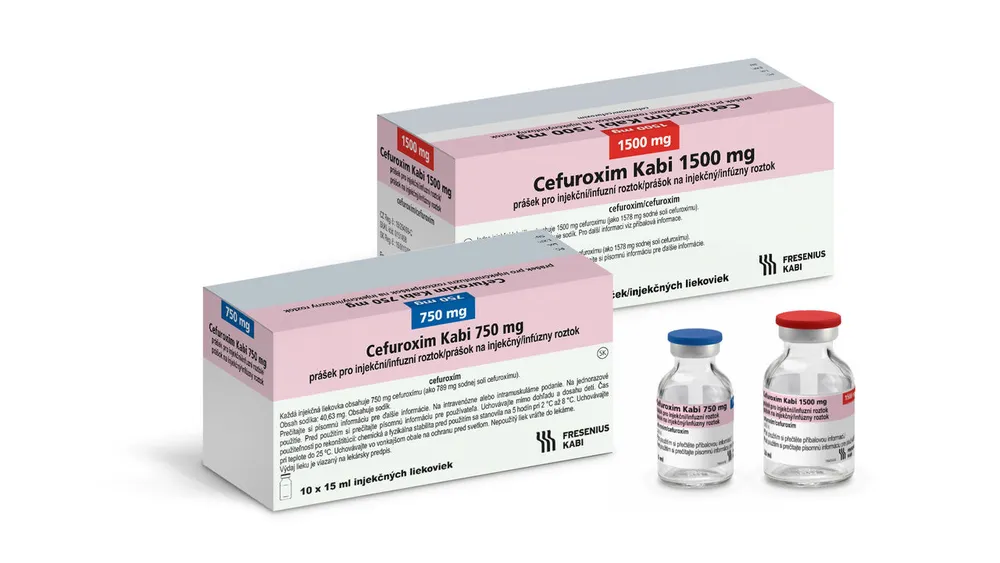
Table of Contents
Package leaflet: Information for the user
Cefuroxim Kabi, 750 mg, powder for solution for injection or infusion
Cefuroxim Kabi, 1500 mg, powder for solution for injection or infusion
Cefuroximum
Please read this leaflet carefully before using this medicine because it contains important
information for the patient.
Keep this leaflet as you may need to read it again.
If you have any further questions, please consult your doctor or pharmacist.
If you experience any adverse reactions, including any not listed in this leaflet, inform your doctor or nurse.
See section 4.
Table of contents of the leaflet
- What Cefuroxim Kabi is and what it is used for
- Important information before using Cefuroxim Kabi
- How to use Cefuroxim Kabi
- Possible side effects
- How to store Cefuroxim Kabi
- Contents of the pack and other information
1. What Cefuroxim Kabi is and what it is used for
Cefuroxim Kabi is an antibiotic used in adult and paediatric patients. It works by killing bacteria that cause infections. It belongs to a group of medicines called cephalosporins.
Cefuroxim Kabi is used to treat infections of:
the lungs or chest;
the urinary tract;
the skin and soft tissues;
the abdomen.
Cefuroxim Kabi is also used:
to prevent infections during surgery.
Your doctor may test which type of bacteria caused your infection and may monitor during treatment whether the bacteria are sensitive to Cefuroxim Kabi.
2. Important information before using Cefuroxim Kabi
When not to use Cefuroxim Kabi:
if the patient is allergic to any of the cephalosporin antibiotics or
any of the other ingredients of Cefuroxim Kabi (listed in section 6);
if the patient has ever had a severe allergic reaction (hypersensitivity) to
any other type of beta-lactam antibiotics (penicillins, monobactams or
carbapenems).
if the patient has ever developed severe skin rash or skin peeling,
blisters and (or) oral mucosal ulcers after treatment with cefuroxime or other
cephalosporin antibiotics.
→ If the patient thinks any of the above situations apply, they should tell their
doctor before starting treatment with Cefuroxim Kabi. The patient must not take
Cefuroxim Kabi.
Warnings and precautions
Before starting treatment with Cefuroxim Kabi, consult a doctor, pharmacist or
nurse. During treatment with Cefuroxim Kabi, be alert for symptoms such as
allergic reactions, skin rashes, gastrointestinal disturbances (e.g. diarrhoea)
or fungal infections. This will reduce the risk of complications (see "Symptoms to
which attention should be paid" in section 4). If the patient has previously experienced
any allergic reactions to other antibiotics, such as penicillin, they may also be
allergic to Cefuroxim Kabi.
Severe skin adverse reactions have occurred during treatment with cefuroxime, such as:
Stevens-Johnson syndrome, toxic epidermal necrolysis, and drug reaction with
eosinophilia and systemic symptoms (DRESS). If any of the symptoms associated with
severe skin reactions described in section 4 are observed, medical advice should be
sought immediately.
Blood and urine tests
Cefuroxim Kabi may affect the results of tests for detecting sugar in urine or blood, as well as
a blood test known as the Coombs test. If the patient is due to have such tests, they should:
→ inform the person taking the sample that they are taking Cefuroxim Kabi.
Cefuroxim Kabi and other medicines
Tell the doctor about all medicines the patient is currently taking or has recently taken, as well as
any medicines the patient plans to take. This includes medicines available without a prescription.
Some medicines may affect the action of Cefuroxim Kabi or may increase the risk of
adverse effects. These include:
antibiotics of the group known as aminoglycosides;
diuretic tablets (diuretics), e.g. furosemide;
probenecid;
oral anticoagulants (blood thinners).
→ If this applies to the patient, they should tell their doctor. Additional monitoring of
kidney function may be necessary during treatment with Cefuroxim Kabi.
Pregnancy, breastfeeding and fertility
Inform the doctor before taking Cefuroxim Kabi:
if the patient is pregnant, suspects she may be pregnant, or is planning to have a child;
if the patient is breastfeeding.
The doctor will assess whether the benefits of treatment with Cefuroxim Kabi for the patient outweigh the potential risks to the child.
Driving and operating machinery
The patient should not drive or operate machinery if they do not feel well.
Cefuroxim Kabi contains sodium.
Cefuroxim Kabi, 750 mg: this medicine contains 40.63 mg of sodium (the main component of table salt) in each vial. This corresponds to 2% of the maximum recommended daily sodium intake in the adult diet.
Cefuroxim Kabi, 1500 mg: this medicine contains 81.26 mg of sodium (the main component of table salt) in each vial. This corresponds to 4.1% of the maximum recommended daily sodium intake in the adult diet.
3. How to use Cefuroxim Kabi
Cefuroxim Kabi is usually administered by a doctor or nurse. It may be given as an
intravenous infusion (IV infusion) or as an injection directly into a vein or into a muscle.
Typical dosage
The doctor will decide on the appropriate dose of Cefuroxim Kabi for the patient, taking into account
the severity and type of infection, whether the patient is taking any other antibiotics, body weight,
age, and kidney function.
Newborns and infants (aged 0–3 weeks)
A dose of 30 to 100 mg of Cefuroxim Kabi per kilogram of body weight per day is given, divided into two or three doses.
Infants (over 3 weeks of age) and children
A dose of 30 to 100 mg of Cefuroxim Kabi per kilogram of body weight per day is given, divided into three or four doses.
Adults and adolescents
750 mg to 1.5 g of Cefuroxim Kabi two, three or four times daily. Maximum dose: 6 g per day.
Patients with kidney problems
If the patient has impaired kidney function, the doctor may adjust the dosage.
→ If this applies to the patient, inform the doctor.
4. Possible adverse reactions
Like any medicine, this medicine can cause adverse reactions, although not everyone will experience them.
Symptoms to be aware of
In a small number of patients receiving Cefuroxim Kabi, an allergic reaction or potentially severe skin reaction has been reported. Symptoms may include:
- Severe allergic reaction. Symptoms include: raised, itchy rash, swelling, sometimes of the face or lips, which may make breathing difficult.
- Skin rash, which may develop into blisters and look like small rings (a dark spot in the centre, surrounded by a lighter ring, with a dark ring around the edge).
- Widespread skin lesions, with blisters and peeling skin (this may be a sign of Stevens-Johnson syndrome or toxic epidermal necrolysis).
- Extensive rash, high fever and swollen lymph nodes (DRESS syndrome or drug hypersensitivity syndrome).
- Chest pain associated with an allergic reaction, which may be a symptom of an allergy-induced heart attack (Kounis syndrome).
Other symptoms to be aware of during treatment with Cefuroxim Kabi
- Fungal infections. Medicines such as Cefuroxim Kabi may rarely cause overgrowth of yeast ( Candida ) in the body, which may lead to fungal infection (e.g. thrush). The risk of this adverse reaction is higher if Cefuroxim Kabi is used for a long time.
- Severe diarrhoea (pseudomembranous colitis). Medicines such as Cefuroxim Kabi may cause inflammation of the colon (large intestine), leading to severe diarrhoea, usually with blood and mucus, abdominal pain and fever.
→ If the patient experiences any of these symptoms, contact a doctor, pharmacist or nurse immediately.
Common adverse reactions
May occur in not more than 1 in 10 patients:
- Pain at the injection site, swelling and redness along the vein.
→ If the patient experiences any of these adverse reactions, inform the doctor.
Common adverse reactions that may be revealed in blood tests:
- Increased activity of substances (enzymes) produced by the liver;
- Change in the number of white blood cells (neutropenia or eosinophilia);
- Decrease in the number of red blood cells (anaemia).
Uncommon adverse reactions
May occur in not more than 1 in 100 patients:
- Skin rash, itchy raised rash (urticaria);
- Diarrhoea, nausea, abdominal pain.
→ If the patient experiences any of these adverse reactions, inform the doctor.
Uncommon adverse reactions that may be revealed in blood tests:
- Decrease in the number of white blood cells (leukopenia);
- Increased concentration of bilirubin (a substance produced by the liver);
- Positive Coombs test.
Other adverse reactions
Other adverse reactions occur in a very small number of patients, but the exact frequency is unknown:
- Fungal infection;
- High temperature (fever);
- Allergic reactions;
- Inflammation of the colon (large intestine), causing diarrhoea, usually with blood and mucus, abdominal pain;
- Inflammation of the kidneys and blood vessels;
- Excessive breakdown of red blood cells (haemolytic anaemia);
- Skin rash, which may develop into blisters and look like small rings (dark spot in the centre, surrounded by a lighter ring, with a dark ring around the edge) (erythema multiforme).
→ If the patient experiences any of these adverse reactions, inform the doctor.
Adverse reactions that may be revealed in blood tests:
- Decrease in the number of platelets (cells involved in blood clotting – thrombocytopenia);
- Increased serum urea and creatinine levels.
Reporting of adverse reactions
If any adverse reactions occur, including any not listed in this leaflet, inform your doctor or nurse. Adverse reactions can be reported directly to the Department of Monitoring of Adverse Drug Reactions of the Office for Registration of Medicinal Products, Medical Devices and Biocidal Products
Al. Jerozolimskie 181C
02-222 Warsaw
Tel: +48 22 49 21 301
Fax: +48 22 49 21 309
Website: https://smz.ezdrowie.gov.pl
Adverse reactions can also be reported to the responsible entity.
By reporting adverse reactions, more information on the safety of this medicine can be collected.
5. How to store Cefuroxim Kabi
Keep this medicine out of sight and reach of children.
Do not use this medicine after the expiry date stated on the packaging after EXP.
The expiry date refers to the last day of the stated month.
Do not store above 25°C. Store the vial in the outer cardboard box
to protect it from light.
The reconstituted suspension or injection solution of Cefuroxim Kabi should be used immediately.
If not used immediately, the prepared suspension or solution must be stored in a refrigerator
(at 2°C to 8°C) and used within 5 hours.
Do not use this medicine if you notice any visible signs of deterioration, such as solid particles or discoloration.
Any unused portion of the suspension or solution should be discarded.
Medicines must not be disposed of via wastewater or household waste. Unused medicines will be
disposed of by a doctor or nurse. This helps protect the environment.
6. Contents of the pack and other information
What Cefuroxim Kabi contains
Cefuroxim Kabi, 750 mg: The active substance is cefuroxime. Each vial contains 750 mg
of cefuroxime in the form of cefuroxime sodium (789 mg).
Cefuroxim Kabi, 1500 mg: The active substance is cefuroxime. Each vial contains 1500 mg
of cefuroxime in the form of cefuroxime sodium (1578 mg).
What Cefuroxim Kabi looks like and contents of the pack
Cefuroxim Kabi is a powder which is usually mixed with water for injections to obtain
a clear solution for intravenous injection or infusion, or to obtain a suspension for
intramuscular injection. After reconstitution, the physician may mix the cefuroxime solution
with other appropriate infusion fluids. Solutions and suspensions may vary in colour: from
colourless to yellow, depending on concentration, diluent used, and storage conditions.
Cefuroxim Kabi, 750 mg, powder for solution for injection or infusion, is available in packs
containing 1 or 10 glass vials with powder, closed with a bromobutyl rubber stopper with an
aluminium seal and a blue plastic "flip-off" cap.
Cefuroxim Kabi, 1500 mg, powder for solution for injection or infusion, is available in packs
containing 1 or 10 glass vials with powder, closed with a bromobutyl rubber stopper with an
aluminium seal and a red plastic "flip-off" cap.
Not all pack sizes may be marketed.
Marketing Authorisation Holder
Fresenius Kabi Polska Sp. z o.o.
Al. Jerozolimskie 134
02-305 Warsaw
Poland
Manufacturer
Labesfal – Laboratórios Almiro S.A.
Lagedo, 3465-157 Santiago de Besteiros
Portugal
For further information, please contact the Marketing Authorisation Holder:
Fresenius Kabi Polska Sp. z o.o.
Al. Jerozolimskie 134
02-305 Warsaw
Poland
Tel.: +48 22 345 67 89
This medicinal product is authorised for marketing in the European Economic Area under the following names:
-
Belgium
Cefuroxim Fresenius Kabi 750 mg, poeder voor oplossing voor injectie of infusie,
poudre pour solution injectable ou pour perfusion, Pulver zur Herstellung einer
Injektionslösung/Infusionslösung
Cefuroxim Fresenius Kabi 1500 mg, poeder voor oplossing voor injectie of infusie,
poudre pour solution injectable ou pour perfusion, Pulver zur Herstellung einer
Injektionslösung/Infusionslösung -
Czech Republic
Cefuroxim Kabi 750 mg
Cefuroxim Kabi 1500 mg -
Denmark
Cefuroxim Fresenius Kabi 750 mg
Cefuroxim Fresenius Kabi 1,5 g -
France
CEFUROXIME KABI 750 mg, poudre pour solution injectable ou pour perfusion -
Greece
Cefuroxime Kabi, κόνις για παρασκευή διαλύματος για ένεση/έγχυση, 750 mg
Cefuroxime Kabi, κόνις για παρασκευή διαλύματος για ένεση/έγχυση, 1500 mg -
Netherlands
Cefuroxim Fresenius Kabi 750 mg, poeder voor oplossing voor injectie/infusie
Cefuroxim Fresenius Kabi 1500 mg, poeder voor oplossing voor injectie/infusie -
Ireland
Cefuroxime 750 mg powder for solution for injection/infusion
Cefuroxime 1.5 g powder for solution for injection/infusion -
Norway
Cefuroxim Fresenius Kabi 750 mg
Cefuroxim Fresenius Kabi 1.5 g -
Poland
Cefuroxim Kabi 750 mg
Cefuroxim Kabi 1500 mg -
Slovakia
Cefuroxim Kabi 750 mg
Cefuroxim Kabi 1500 mg -
Sweden
Cefuroxim Fresenius Kabi 750 mg, pulver till injektions-/infusionsvätska, lösning
Cefuroxim Fresenius Kabi 1500 mg, pulver till injektions-/infusionsvätska, lösning -
Hungary
Cefuroxim Kabi 750 mg por oldatos injekcióhoz vagy infúzióhoz
Cefuroxim Kabi 1500 mg por oldatos injekcióhoz vagy infúzióhoz -
United Kingdom
Cefuroxime 750 mg powder for solution for injection/infusion
Cefuroxime 1.5 g powder for solution for injection/infusion
Information intended for healthcare professionals only:
Instructions for reconstitution
Volumes of added water and resulting concentrations of solution or suspension, useful when fractional dosing is required.
| Volumes of water to be added and concentrations of solution or suspension useful when fractional doses are required | ||||
| Content of vial | Route of administration | Volume of water to be added [mL] | Approximate concentration of cefuroxime [mg/mL]** | Resulting product |
| 750 mg | intramuscular | 3 mL | 216 | suspension |
| intravenous injection | at least 6 mL | 116 | solution | |
| intravenous infusion | at least 6 mL* | 116 | solution | |
| 1.5 g | intramuscular | 6 mL | 216 | suspension |
| intravenous injection | at least 15 mL | 94 | solution | |
| intravenous infusion | 15 mL* | 94 | solution | |
As with all parenterally administered medicinal products, the prepared solution or suspension should be inspected visually for particulate matter and discoloration prior to administration.
Intramuscular injection: after adding the appropriate volume of solvent for intramuscular injection, a suspension is formed.
Intravenous injection (bolus) or intravenous infusion: the solution may only be used if it is clear and free from particulate matter.
Solutions and suspensions may vary in color from colorless to yellow, depending on concentration, diluent used, and storage conditions.
Preparation of solution for intravenous infusion
Cefuroxim Kabi should be prepared according to the following dilution instructions for intravenous injection using water for injections (see table above).
Prior to intravenous infusion, the resulting solution should be further diluted in 50–100 mL of one of the following compatible infusion fluids listed below.
Sodium cefuroxime is compatible with the following infusion fluids. Its activity is maintained for up to 5 hours at a temperature of 2°C to 8°C:
- water for injections;
- 0.9% sodium chloride solution;
- 5% glucose solution.
Cefuroxime administered as an intravenous injection should be given over 3 to 5 minutes.
Cefuroxime administered as an intravenous infusion should be given over 30 to 60 minutes.
For single use only.
Any unused medicinal product or waste material should be disposed of in accordance with local regulations.
Chemical and physical stability has been demonstrated for 5 hours after reconstitution when stored at 2°C to 8°C.
From a microbiological standpoint, the product should be used immediately. If not used immediately after preparation, the user is responsible for the storage duration and conditions prior to use.
Special precautions for storage
Do not store above 25°C.
Store the vial in the outer packaging to protect from light.