Ceftazidim aptapharma
Poland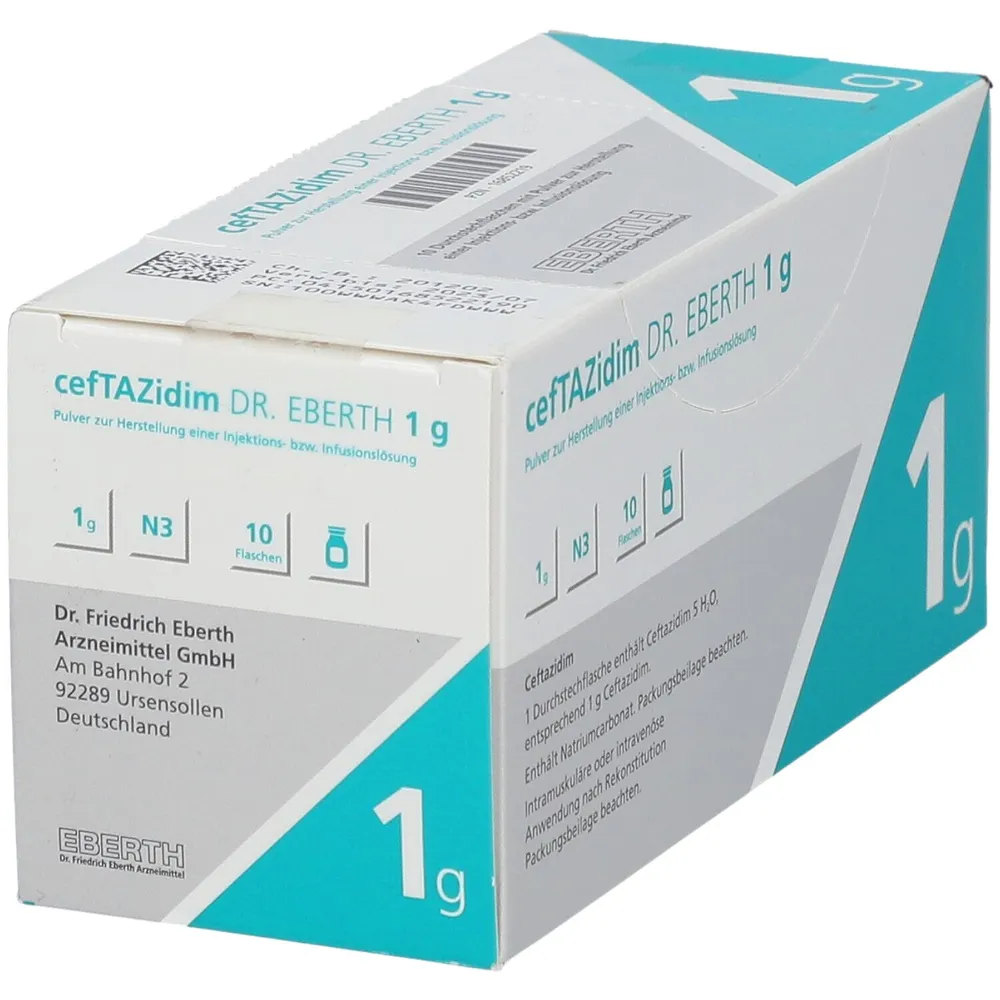
Table of Contents
- Package leaflet: Information for the user
- 1. What Ceftazidim AptaPharma is and what it is used for
- 2. Information before using Ceftazidim AptaPharma
- 3. How to use Ceftazidim AptaPharma
- 4. Possible adverse reactions
- 5. How to store Ceftazidim AptaPharma
- 6. Contents of the package and other information
- Information intended exclusively for medical professionals:
Package leaflet: Information for the user
Ceftazidim AptaPharma, 1 g, powder for solution for injection/infusion
Ceftazidim AptaPharma, 2 g, powder for solution for injection/infusion
Ceftazidimum
Please read this leaflet carefully before using this medicine because it contains important information for you.
- Keep this leaflet so that you can read it again if necessary.
- If you have any questions, please consult your doctor or nurse.
- If you experience any adverse reactions, including any not listed in this leaflet, inform your treating doctor or nurse. See section 4.
Table of contents of the leaflet
- What Ceftazidim AptaPharma is and what it is used for
- What you need to know before using Ceftazidim AptaPharma
- How to use Ceftazidim AptaPharma
- Possible side effects
- How to store Ceftazidim AptaPharma
- Contents of the pack and other information
1. What Ceftazidim AptaPharma is and what it is used for
Ceftazidim AptaPharma is an antibiotic used in adults and children (including newborns).
It acts bactericidally against bacteria causing infections. It belongs to a group of medicines called
cephalosporins.
Ceftazidim AptaPharma is used to treat serious bacterial infections:
- of the lungs or lower respiratory tract;
- of the lungs and bronchi in patients with cystic fibrosis;
- of the brain (meningitis);
- of the ear;
- of the urinary tract;
- of the skin and soft tissues;
- of the abdominal cavity and peritoneum (peritonitis);
- of bones and joints.
Ceftazidim AptaPharma may also be used:
- to prevent infections during transurethral resection of the prostate in men;
- in the treatment of patients with low white blood cell count (neutropenia) who have fever due to bacterial infection.
2. Information before using Ceftazidim AptaPharma
When not to give Ceftazidim AptaPharma to the patient
- if the patient is allergic to ceftazidime or to any of the other ingredients of this medicine (listed in section 6);
- if the patient has ever had a severe allergic reaction to any other antibiotic (penicillins, monobactams or carbapenems), because the patient may also be allergic to Ceftazidim AptaPharma.
→ If the patient suspects that any of the above circumstances apply, they should inform
their doctor before starting treatment with Ceftazidim AptaPharma.
The patient must not be given Ceftazidim AptaPharma.
When to take special care with Ceftazidim AptaPharma
Care should be taken to monitor whether the patient experiences any specific symptoms during treatment with Ceftazidim AptaPharma, such as allergic reactions, nervous system disorders, or gastrointestinal disturbances including diarrhoea. This will reduce the risk of potential problems (see "Symptoms to watch for" in section 4). If the patient has ever had an allergic reaction to another antibiotic, they may also be allergic to Ceftazidim AptaPharma.
Serious skin reactions have been reported during treatment with ceftazidime, including Stevens-Johnson syndrome, toxic epidermal necrolysis, drug reaction with eosinophilia and systemic symptoms (DRESS), and acute generalized exanthematous pustulosis (AGEP). If the patient develops any symptoms related to these serious skin reactions, as described in section 4, medical advice must be sought immediately.
Blood and urine tests
Ceftazidim AptaPharma may alter the results of urine glucose (sugar) tests and blood tests known as the Coombs test. If the patient is due to have such tests:
→ The person collecting the sample should be informed that the patient has been treated with Ceftazidim AptaPharma.
Ceftazidim AptaPharma and other medicines
Tell the doctor about all medicines the patient is currently taking or has recently taken, including medicines obtained without a prescription, as well as any medicines the patient plans to take.
The patient should not take Ceftazidim AptaPharma without consulting their doctor if they are also taking:
- an antibiotic called chloramphenicol;
- an antibiotic from a group called aminoglycosides, i.e. gentamicin, tobramycin;
- a diuretic called furosemide. → If any of the above circumstances apply to the patient, the doctor should be informed.
Pregnancy, breastfeeding and fertility
Consult the doctor before taking Ceftazidim AptaPharma:
- if the patient is pregnant, suspects she may be pregnant, or is planning to become pregnant;
- if the patient is breastfeeding.
The doctor will assess whether the benefits of taking Ceftazidim AptaPharma during pregnancy or breastfeeding outweigh the risks to the unborn or breastfed child.
Driving and using machines
Ceftazidim AptaPharma may cause adverse effects affecting the ability to drive, such as dizziness. The patient should not drive or operate machinery unless they are certain that these adverse effects have not occurred.
Ceftazidim AptaPharma contains sodium
Ceftazidim AptaPharma, 1 g
The medicine contains approximately 2.28 mmol (about 52.44 mg) of sodium (the main component of table salt) in one gram. This corresponds to 2.62% of the maximum recommended daily dietary intake of sodium for adults. This should be taken into account in patients who are controlling their dietary sodium intake.
Ceftazidim AptaPharma, 2 g
The medicine contains approximately 4.56 mmol (about 104.88 mg) of sodium (the main component of table salt) in two grams. This corresponds to 5.24% of the maximum recommended daily dietary intake of sodium for adults. This should be taken into account in patients who are controlling their dietary sodium intake.
3. How to use Ceftazidim AptaPharma
Ceftazidim AptaPharma is usually administered by a doctor or nurse. It may be given as an intravenous infusion (IV infusion) or as an injection directly into a vein or muscle.
Ceftazidim AptaPharma is prepared by a doctor, pharmacist, or nurse using water for injections or another suitable infusion fluid.
Recommended dose
Your doctor will decide the appropriate dose of Ceftazidim AptaPharma based on the severity and type of infection, whether you are taking any other antibiotics, your body weight, age, and kidney function.
Newborns and infants (aged 0–2 months)
The daily dose is 25 to 60 mg of Ceftazidim AptaPharma per kg of body weight, given in two divided doses.
Infants (over 2 months of age) and children weighing less than 40 kg
The daily dose is 100 to 150 mg of Ceftazidim AptaPharma per kg of body weight, given in three divided doses. Maximum dose: 6 g per day.
Adults and adolescents weighing 40 kg or more
1 g to 2 g of Ceftazidim AptaPharma three times daily. Maximum dose: 9 g per day.
Patients over 65 years of age
The total daily dose should usually not exceed 3 g, especially in patients over 80 years of age.
Patients with kidney disease
Patients may require a different dose than usual. Your doctor or nurse will determine the appropriate dose of Ceftazidim AptaPharma based on the severity of kidney impairment. Your doctor will closely monitor you and may order more frequent kidney function tests.
Use of a higher than recommended dose of Ceftazidim AptaPharma
If you accidentally receive more Ceftazidim AptaPharma than prescribed: contact your doctor immediately or go to the nearest hospital.
Missed dose of Ceftazidim AptaPharma
If a dose is missed, it should be administered as soon as possible. Do not give a double dose (two injections at the same time) to make up for a missed dose. Take the next dose at the usual time.
Do not stop using Ceftazidim AptaPharma
Do not stop taking Ceftazidim AptaPharma without your doctor's advice. If you have any further questions about the use of this medicine, consult your doctor or nurse.
4. Possible adverse reactions
Like all medicines, this medicine can cause adverse reactions, although not everyone will experience them.
Symptoms to be aware of
The serious adverse reactions described below have occurred in a small number of people, but their exact frequency is unknown.
If the patient experiences any of the following symptoms, seek medical advice immediately:
- Red spots on the trunk, target-like or circular rashes, often with central blisters, peeling of the skin, and ulceration of the mouth, throat, nose, genital organs, and eyes. These severe skin rashes may be preceded by fever and flu-like symptoms (Stevens-Johnson syndrome, toxic epidermal necrolysis).
- Widespread rash, high fever, and swollen lymph nodes (DRESS syndrome or drug hypersensitivity syndrome).
- Red, peeling, widespread rash with subcutaneous nodules and blisters, accompanied by fever. Symptoms usually occur at the beginning of treatment (acute generalized exanthematous pustulosis).
- Severe allergic reaction. Symptoms include: raised, itchy rash, swelling, sometimes of the face or lips, which may cause difficulty breathing.
- Neurological disorders: tremors, seizures, and sometimes coma. These disorders occurred in patients who received excessive doses, particularly in patients with kidney disease.
- Cases of severe hypersensitivity reactions with severe rash have been reported, which may be accompanied by fever, fatigue, facial swelling and swollen lymph nodes, increased eosinophil count (a type of white blood cell), and involvement of the liver, kidneys, and lungs (drug reaction with eosinophilia and systemic symptoms, so-called DRESS syndrome).
Common adverse reactions
May occur in no more than 1 in 10 patients:
- diarrhoea
- swelling and redness along the vein
- red, raised rash on the skin, which may be itchy
- pain, burning, swelling, or inflammation at the injection site. → If any of the above symptoms concern the patient, the patient should inform the doctor.
Common adverse reactions that may be revealed in blood tests:
- increased number of one type of white blood cells (eosinophilia)
- increased number of platelets, which are involved in blood clotting
- increased activity of liver enzymes.
Uncommon adverse reactions
May occur in no more than 1 in 100 patients:
- inflammation of the intestine, which may cause abdominal pain or diarrhoea, possibly containing blood
- fungal infections (candidiasis) of the mouth or vagina
- headache
- dizziness
- abdominal pain
- nausea or vomiting
- fever and chills. → Inform the doctor if the patient experiences any of the above symptoms.
Uncommon adverse reactions that may be revealed in blood tests:
- decreased number of white blood cells
- decreased number of platelets (cells involved in blood clotting)
- increased levels of urea, blood urea nitrogen, or creatinine in blood serum.
Very rare adverse reactions
May occur in no more than 1 in 10,000 patients:
- inflammation or kidney failure.
Other adverse reactions
Other adverse reactions that occurred in a small number of patients, but their exact frequency is unknown:
- tingling and pricking sensations
- unpleasant taste in the mouth
- yellowing of the whites of the eyes and skin.
Other adverse reactions that may be revealed in blood tests:
- red blood cells breaking down too quickly
- increased number of one type of white blood cells in the blood
- significant decrease in the number of white blood cells.
Reporting of adverse reactions
If any adverse reactions occur, including any adverse reactions not listed in this leaflet, inform the doctor, pharmacist, or nurse. Adverse reactions can be reported directly to the Department of Monitoring Adverse Drug Reactions of the Office for Registration of Medicinal Products, Medical Devices and Biocidal Products
Al. Jerozolimskie 181C, 02-222 Warsaw
Tel.: +48 22 49 21 301
Fax: +48 22 49 21 309
Website: https://smz.ezdrowie.gov.pl
Adverse reactions can also be reported to the marketing authorization holder.
By reporting adverse reactions, additional information on the safety of the medicine can be collected.
5. How to store Ceftazidim AptaPharma
Keep this medicine out of the sight and reach of children.
- Do not use this medicine after the expiry date stated on the vial label and the outer carton after: EXP. The expiry date refers to the last day of the stated month.
- This medicine does not require any special storage temperature conditions.
- Store the vial in its outer packaging to protect it from light.
- Ceftazidim AptaPharma is prepared by a doctor, pharmacist, or nurse using water for injections or compatible infusion fluids. The prepared solution should be used within 24 hours if stored in a refrigerator (at a temperature of 2°C to 8°C), or immediately after preparation, depending on the route of administration.
- Medicines must not be disposed of via the sewage system or household waste. Ask your pharmacist how to dispose of medicines no longer in use. This will help protect the environment.
6. Contents of the package and other information
What Ceftazidim AptaPharma contains
- The active substance is 1 g or 2 g of ceftazidime (as ceftazidime pentahydrate).
- The only other ingredient is: sodium carbonate.
- For other important information regarding sodium, one of the components of Ceftazidim AptaPharma, see section 2.
What Ceftazidim AptaPharma looks like and contents of the pack
Ceftazidim AptaPharma, 1 g, powder for solution for injection/infusion is a sterile powder, white to cream-coloured. It is packed in 10 mL glass vials with a bromobutyl rubber stopper and aluminium cap.
The pack contains 10 vials.
Ceftazidim AptaPharma, 2 g, powder for solution for injection/infusion is a sterile powder, white to cream-coloured. It is packed in 50 mL glass vials with a bromobutyl rubber stopper and aluminium cap.
The pack contains 10 vials in a cardboard box.
Ceftazidim AptaPharma is prepared by a doctor, pharmacist, or nurse using water for injections or an appropriate infusion fluid. After reconstitution, the solution ranges in colour from pale yellow to amber. This is normal.
Marketing Authorisation Holder
Apta Medica Internacional d.o.o.
Likozarjeva ulica 6
1000 Ljubljana
Slovenia
Tel.: 00386 51 615 015
e-mail: [email protected]
Manufacturer
ACS Dobfar S.p.A.
Nucleo Industriale S. Atto, S. Nicolò a Tordino
64100 Teramo (TE)
Italy
ACS DOBFAR S.p.A.
Via Alessandro Fleming 2
37135 Verona
Italy
This medicinal product is authorised for marketing in the Member States of the European Economic Area under the following names:
| Country name | Brand name |
| Austria | Ceftazidim AptaPharma 1 g Powder for the preparation of an injection/infusion solution Ceftazidim AptaPharma 2 g Powder for the preparation of an injection/infusion solution |
| Bulgaria | Ceftazidim AptaPharma 1 g powder for injection/infusion solution Ceftazidim AptaPharma 2 g powder for injection/infusion solution |
| Croatia | Ceftazidim AptaPharma 1 g powder for solution for injection/infusion Ceftazidim AptaPharma 2 g powder for solution for injection/infusion |
| Czech Republic | Ceftazidim AptaPharma |
| Poland | Ceftazidim AptaPharma |
| Romania | Ceftazidim AptaPharma, 1 g powder for injectable/perfusable solution Ceftazidim AptaPharma, 2 g powder for injectable/perfusable solution |
| Slovenia | Ceftazidim AptaPharma 1 g powder for solution for injection/infusion Ceftazidim AptaPharma 2 g powder for solution for injection/infusion |
Information intended exclusively for medical professionals:
Ceftazidim AptaPharma, 1 g, powder for solution for injection/infusion
Ceftazidim AptaPharma, 2 g, powder for solution for injection/infusion
For further information, please refer to the Summary of Product Characteristics
Shelf life
Unopened vials: 3 years.
Reconstituted/diluted solution:
Physical and chemical stability of the reconstituted/diluted solution for intravenous administration has been demonstrated to be 24 hours at a temperature of 2°C to 8°C.
From a microbiological point of view, the solution prepared after reconstitution/dilution should be used immediately. If not used immediately, the responsibility for storage conditions and duration prior to use lies with the user, and such storage should generally not exceed 24 hours at a temperature of 2°C to 8°C.
Instructions for preparation of the medicinal product for administration
Please refer to Table 1 and Table 2 regarding added volumes and resulting concentrations, which may be useful when partial doses are required.
Table 1. Powder for solution for injection
| Vial content and route of administration | Solvent volume to be added [mL] | Approximate concentration of ceftazidime [mg/mL] | |
| 1 g | |||
| Intramuscular injection Intravenous injection (bolus) | 3 mL 10 mL | 260 90 | |
| 2 g | |||
| Intravenous injection (bolus) | 10 mL | 170 | |
Note:
- The resulting volume of the ceftazidime solution in the solvent increases due to the displacement factor of the active substance, resulting in the concentrations [mg/mL] shown in the table above. Ceftazidime at a concentration of 90 mg/mL is compatible with:
- Water for injections
- Sodium chloride 9 mg/mL (0.9%) for injections
Table 2. Powder for solution for infusion
Volume of solvent to be added [mL] Approximate concentration of ceftazidime [mg/mL]
Vial content and route of administration
1 g
intravenous infusion 50 mL* 20
2 g
intravenous infusion 50 mL* 40
- Reconstitution should be performed in two steps.
Note:
- The resulting volume of the ceftazidime solution in the solvent increases due to the displacement factor of the active substance, resulting in the concentrations [mg/mL] shown in the table above.
The solution may vary in color from pale yellow to amber, depending on concentration, type of solvent, and storage conditions. If recommended storage conditions are met, variation in color does not adversely affect the efficacy of the product.
Ceftazidime at concentrations between 1 mg/mL and 40 mg/mL is compatible with:
- Sodium chloride 9 mg/mL (0.9%) for injections
- Sodium lactate M/6 for injections
- Compound sodium lactate solution for injections (Hartmann's solution)
- Glucose 5% for injections
- Sodium chloride 0.225% with glucose 5% for injections
- Sodium chloride 0.45% with glucose 5% for injections
- Sodium chloride 0.9% with glucose 5% for injections
- Sodium chloride 0.18% with glucose 4% for injections
- Glucose 10% for injections
- Dextran 40 10% for injections in sodium chloride 0.9% for injections
- Dextran 40 10% for injections in glucose 5% for injections
- Dextran 70 6% for injections in sodium chloride 0.9%
- Dextran 70 6% for injections in glucose 5% for injections
Ceftazidime at concentrations between 0.05 mg/mL and 0.25 mg/mL is compatible with peritoneal dialysis fluid (lactate-based).
Ceftazidime at concentrations specified in Table 1 for intramuscular injection may be reconstituted with a solution containing 0.5% or 1% lidocaine hydrochloride for injection.
Preparation of solution for rapid intravenous injection (bolus)
- Pierce the stopper with a needle and inject the recommended volume of solvent into the vial. The vacuum inside the vial may assist solvent entry. Withdraw the syringe with the needle.
- Shake until dissolved: carbon dioxide is released and a clear solution is obtained within 1 to 2 minutes.
- Invert the vial. While keeping the syringe plunger fully depressed, pierce the vial stopper with the needle and withdraw the entire volume of solution into the syringe (increased pressure inside the vial facilitates this process). Keep the needle tip submerged in the solution to avoid drawing in air. Small bubbles of carbon dioxide in the syringe may be ignored. This solution may be administered directly into the vein or into an intravenous infusion set if the patient is receiving intravenous fluids. Ceftazidime is compatible with the intravenous fluids listed above.
Preparation of intravenous infusion solution of ceftazidime in a standard vial (mini-bag or burette set)
Prepare using a total of 50 mL of compatible solvent (listed above), added in TWO steps as described below:
- Pierce the stopper with a needle and inject 10 mL of solvent into the 1 g vial.
- Remove the needle and shake the vial until a clear solution is obtained.
- Do not insert the venting needle before the drug is completely dissolved. Insert the venting needle through the stopper to reduce internal pressure in the vial.
- Transfer the solution to the final container (mini-bag or burette set), ensuring a total volume of at least 50 mL, and administer by intravenous infusion over 15 to 30 minutes. Note: To ensure sterility of the product, do not insert the venting needle through the vial stopper before the drug is completely dissolved.
Any unused antibiotic solution should be discarded.
Solutions of Ceftazidim AptaPharma range in color from pale yellow to amber.
For single use only.
Any unused medicinal product or waste material should be disposed of in accordance with local regulations.