Cefobid
Poland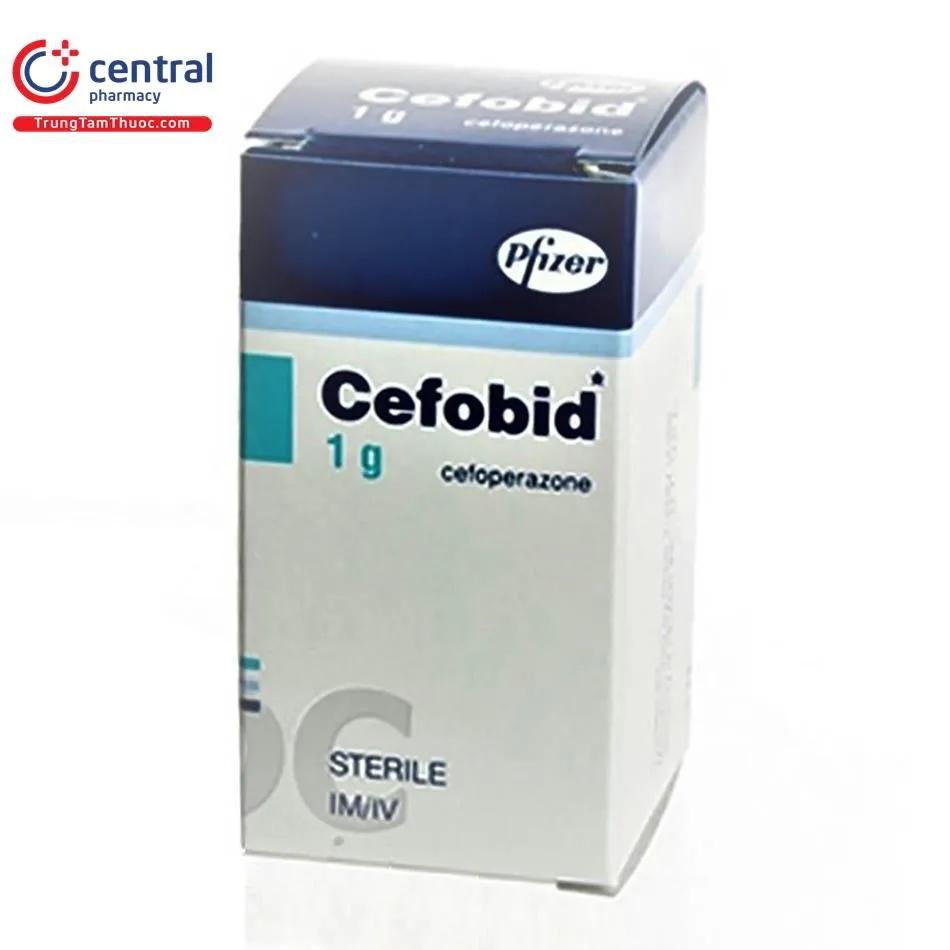
Table of Contents
- Package leaflet: Information for the patient
- 1. What Cefobid is and what it is used for
- 2. Important information before using Cefobid
- 3. How to use Cefobid
- 4. Possible adverse reactions
- 5. How to store Cefobid
- 6. Contents of the pack and other information
- Information intended exclusively for medical professionals
Package leaflet: Information for the patient
Cefobid, 1 g, powder for solution for injection and infusion
Cefoperazone
Please read this leaflet carefully before using this medicine, because it contains
important information for the patient.
- Keep this leaflet, so that you can read it again if necessary.
- If you have any questions, please consult your doctor or pharmacist.
- This medicine has been prescribed for a specific individual. Do not pass it on to others. This medicine may harm others, even if their symptoms are the same.
- If the patient experiences any adverse reactions, including any not listed in this leaflet, inform the doctor or pharmacist. See section 4.
Table of contents of the leaflet
- What Cefobid is and what it is used for
- Important information before using Cefobid
- How to use Cefobid
- Possible side effects
- How to store Cefobid
- Contents of the pack and other information
1. What Cefobid is and what it is used for
The active substance in Cefobid is cefoperazone – a semi-synthetic antibiotic from the cephalosporin group,
with a broad spectrum of antibacterial activity, intended exclusively for administration
by injection and infusion.
Cefobid is indicated:
- for the treatment of the following infections caused by susceptible microorganisms:
- respiratory tract infections (upper and lower),
- urinary tract infections (upper and lower),
- peritonitis, cholecystitis, cholangitis and other intra-abdominal infections,
- sepsis,
- skin and soft tissue infections,
- pelvic inflammatory conditions, endometritis, gonorrhea and other genital tract infections,
- prevention of postoperative infections in patients undergoing abdominal and pelvic surgery, cardiac surgery and orthopedic surgery.
Combination therapy
Due to the broad antibacterial spectrum of Cefobid, this antibiotic can be used as monotherapy in most infections. However, Cefobid may be used concomitantly with other antibiotics when indicated. When aminoglycosides are used simultaneously, the doctor will recommend monitoring of kidney function.
2. Important information before using Cefobid
When not to use Cefobid
- If the patient is allergic to cefoperazone (the active substance in this medicine) or to any other medicine in the same group, or has severe hypersensitivity to beta-lactam antibiotics (see section Warnings and precautions).
Warnings and precautions
Before starting treatment with Cefobid, consult a doctor or pharmacist.
- If the patient has previously experienced hypersensitivity reactions to beta-lactam antibiotics, cephalosporins, or other antibiotics. The risk of such reactions is higher in patients with a history of sensitivity to multiple allergens.
- Severe skin reactions, in some cases leading to death, have been reported in patients receiving Cefobid (see section 4). If skin reactions occur, medical advice should be sought immediately, as treatment with the medicine must be discontinued and appropriate therapy initiated.
- In patients with impaired liver function and/or biliary obstruction. Monitoring of plasma concentrations of the drug and possible dose adjustment may be necessary, especially if renal function is also impaired.
- If the patient is on a nutritionally inadequate diet, is receiving long-term parenteral nutrition, or has malabsorption. Cefoperazone – the active substance in Cefobid – may impair blood clotting. Serious bleeding, sometimes fatal, has been reported during treatment with Cefobid. If bleeding symptoms occur, medical advice should be sought immediately.
- If the patient is taking anticoagulant medicines (medicines that inhibit blood clotting).
- If the patient develops diarrhoea, medical advice should be sought to determine further management. Diarrhoea may be a sign of pseudomembranous colitis, a rare complication that may occur during antibiotic treatment. In mild cases of pseudomembranous colitis, discontinuation of the antibiotic may be sufficient; in severe cases, specific treatment is required. Antiperistaltic antidiarrhoeal medicines are contraindicated. Pseudomembranous colitis may occur even more than two months after administration of antibacterial agents.
- If Cefobid is used for prolonged periods, overgrowth of resistant microorganisms may occur. Therefore, patients should be carefully monitored during treatment. The doctor may recommend periodic monitoring of kidney, liver, and haematological function.
- Particular caution is required when administering the medicine to neonates, especially preterm infants, as well as infants and young children.
Children and adolescents
Before starting treatment with Cefobid in preterm infants and newborns, the doctor will weigh the potential benefits of treatment against the risks associated with its use.
Cefobid with other medicines
Inform the doctor or pharmacist about all medicines currently used, recently taken, or planned for use.
Effect on laboratory tests – false positive results may occur in urine glucose tests using Benedict's or Fehling's method.
Cefobid and alcohol
Do not consume alcohol during treatment with Cefobid. In patients who consumed alcohol during treatment or within 5 days after the last dose of the medicine, a disulfiram-like reaction has been observed: facial flushing, sweating, headache, and rapid heartbeat. Similar reactions have been observed with some other cephalosporins.
In patients receiving enteral or parenteral nutrition, solutions containing ethanol should be avoided.
Pregnancy, breastfeeding, and effects on fertility
If the patient is pregnant or breastfeeding, suspects she may be pregnant, or is planning to have a child, she should consult a doctor before using this medicine.
Cefobid crosses the placental barrier.
There are no data on the safety of use in pregnant women; therefore, this medicine should be used during pregnancy only if clearly necessary.
Although Cefobid passes into human milk only to a minor extent, caution should be exercised when administering the medicine to breastfeeding women.
Preclinical studies in rats showed no impairment of fertility. Clinical data on fertility in men and women are not available. Since effects observed in animals do not always reflect human responses, caution should be exercised when men or women are planning to have children.
Driving and operating machinery
It is unlikely that Cefobid will affect the ability to drive or operate machinery.
Cefobid contains sodium
This medicine contains 35.6 mg of sodium (a main component of table salt) per vial. This corresponds to 1.8% of the maximum recommended daily dietary sodium intake for adults.
The maximum recommended daily dose of this medicine contains 569.6 mg of sodium (present in table salt). This corresponds to 28.5% of the maximum recommended daily dietary sodium intake for adults. Consult a pharmacist or doctor if the patient is taking Cefobid daily for a prolonged period, especially if following a low-salt diet.
Patients receiving 11 or more vials per day for a prolonged period, particularly those monitoring sodium intake, should consult their doctor or pharmacist.
This medicine may be prepared for administration using a sodium-containing solution (see "Information intended exclusively for healthcare professionals"). This should be taken into account when calculating total sodium intake, especially if the patient is on a low-salt (low-sodium) diet.
3. How to use Cefobid
This medicine should always be used as prescribed by the physician. In case of doubts, consult your
doctor.
Dosage in adults
The usual daily dose of Cefobid in adults is 2 to 4 grams administered in equally divided doses every
12 hours. In severe infections, the physician may increase this dose to 8 grams per day, given in equally
divided doses every 12 hours. A dose of 12 grams per day divided into three doses has been administered
every 8 hours. Cefobid may be administered in 2, 3, or 4 divided doses.
A single dose exceeding 4 grams should not be administered. Patients with impaired immunity have
received up to 16 grams per day in divided doses administered as continuous intravenous infusion,
without complications observed.
The physician may decide to start treatment before obtaining the results of the antibiogram.
Dosage in patients with renal impairment
Excretion in urine is not the main route of elimination of Cefobid; therefore, in patients with impaired
renal function, dose adjustment of Cefobid is not necessary when the drug is administered at commonly
used doses (2–4 grams per day). In patients with glomerular filtration rate less than 18 ml/min or serum
creatinine concentration greater than 3.5 mg/dl, the maximum dose of cefoperazone is 4 grams per day.
Hemodialysis slightly shortens the serum half-life of Cefobid. Therefore, the drug should be administered
immediately after dialysis.
Dosage in patients with hepatic impairment
The physician may recommend dose adjustment in patients with severe biliary obstruction, severe liver
disease, or concomitant renal dysfunction. In this patient group, doses exceeding 2 grams of Cefobid per
day should not be administered unless serum drug concentrations are monitored.
Method of administration
The medicine may be administered intramuscularly – by deep intramuscular injection (into the gluteus
maximus muscle or the anterior thigh) or intravenously – by short-term intravenous infusion or by
continuous intravenous infusion.
Instructions for preparation and administration of the solution are described at the end of this leaflet,
under the section “The following information is intended exclusively for medical personnel or healthcare
professionals.”
Administration of a higher than recommended dose of Cefobid
Overdose may intensify adverse reactions described later in this leaflet.
Hemodialysis may accelerate drug elimination in cases of overdose in patients with renal impairment.
If a higher than recommended dose has been administered, seek immediate medical advice from a
doctor or pharmacist.
Missed dose of Cefobid
Cefobid is administered under strict medical supervision. If a dose is suspected to have been missed, always
inform the doctor or nurse.
Discontinuation of Cefobid
Do not stop treatment without consulting your doctor.
4. Possible adverse reactions
Like any medicine, this medicine can cause adverse reactions, although not everyone will experience them.
Very common (may occur in more than 1 in 10 people):
- decrease in haemoglobin concentration (the red pigment in blood cells that carries oxygen),
- decrease in haematocrit (the ratio of blood cell volume to total blood volume).
Common (may occur in no more than 1 in 10 people):
- neutropenia (reduced number of granulocytes),
- positive direct Coombs test (a diagnostic test detecting incomplete antibodies),
- thrombocytopenia (reduced number of blood platelets)*,
- eosinophilia (increased number of one type of white blood cells),
- phlebitis at injection site,
- diarrhoea,
- increased liver enzyme activity in blood (alanine aminotransferase, aspartate aminotransferase, and alkaline phosphatase),
- jaundice*,
- itching*,
- urticaria,
- maculopapular rash.
Uncommon (may occur in no more than 1 in 100 people):
- vomiting*,
- pain at injection site,
- fever.
Rare (may occur in no more than 1 in 1,000 people):
- hypoprothrombinaemia (deficiency of prothrombin, involved in blood coagulation),
- haemorrhage*.
Frequency not known (frequency cannot be estimated from available data):
- coagulopathy (blood coagulation disorders)*,
- anaphylactic shock (a type of sudden, severe allergic or non-allergic reaction, which may occasionally lead to death)*,
- anaphylactic reaction*,
- anaphylactoid reaction (severe allergic reaction), including shock*,
- hypersensitivity (allergy)*,
- pseudomembranous colitis (a specific type of colon infection)*,
- toxic epidermal necrolysis (detachment of the outer layer of skin over the entire body)*,
- Stevens-Johnson syndrome (a severe systemic allergic reaction with skin blisters and redness affecting skin and mucous membranes)*,
- exfoliative dermatitis*,
- blood in urine (haematuria)*.
*Adverse reactions reported after marketing authorization.
Reporting of adverse reactions
If any adverse reactions occur, including any adverse reactions not listed in this
leaflet, inform your doctor or pharmacist. Adverse reactions can be reported
directly to the Department of Monitoring Adverse Drug Reactions, Office for Registration of Medicinal Products, Medical Devices and Biocidal Products
Al. Jerozolimskie 181C
02-222 Warsaw
Tel.: + 48 22 49 21 301
Fax: + 48 22 49 21 309
Website: https://smz.ezdrowie.gov.pl
Adverse reactions can also be reported to the marketing authorization holder or its representative.
Reporting adverse reactions helps to provide more information on the safety of the medicine.
5. How to store Cefobid
Keep this medicine out of sight and reach of children.
Store vials of powder at a temperature not exceeding 25 °C.
The prepared solution may be stored for 24 hours in a refrigerator, i.e. at a temperature between 2 °C and 8 °C.
Do not use this medicine after the expiry date stated on the packaging after EXP. The expiry date refers to the last day of the stated month.
Medicines must not be disposed of via wastewater or household waste. Ask your pharmacist how to dispose of medicines no longer in use. This will help protect the environment.
6. Contents of the pack and other information
What Cefobid contains
- The active substance is cefoperazone in the form of sodium salt. One vial contains 1 g of cefoperazone.
The medicine does not contain other ingredients.
What Cefobid looks like and contents of the pack
1 glass vial with powder for the preparation of solution for injection and infusion, in a cardboard box.
Marketing Authorisation Holder
Pfizer Europe MA EEIG, Boulevard de la Plaine 17, 1050 Bruxelles, Belgium
Manufacturer
Haupt Pharma Latina S.r.l., Latina (LT), Strada Statale 156 Km 47,600, 04100 Borgo San Michele, Italy
For further information about this medicine, please contact the local representative of the Marketing Authorisation Holder:
Pfizer Polska Sp. z o.o.
tel. 22 335 61 00
Information intended exclusively for medical professionals
Instructions for administration and preparation of the medicinal product for use
Shake the vial before use.
Intramuscular administration
The medicinal product is administered by deep intramuscular injection into the gluteus maximus muscle or the anterior thigh.
To prepare a cefoperazone solution for intramuscular injection, water for injections may be used. To achieve a concentration of cefoperazone of 250 mg/ml or higher, a lidocaine solution should also be used, prepared by mixing water for injections with a 2% solution of lidocaine hydrochloride to obtain approximately a 0.5% solution of lidocaine hydrochloride.
The following two-step dilution procedure is recommended:
- Add the required volume of water for injections to the vial containing cefoperazone, and shake until the medicinal product is completely dissolved.
- Add the required volume of the 2% lidocaine hydrochloride solution and mix thoroughly.
| Contents of the vial | Final concentration of cefoperazone | Step 1. Volume of water for injection to be added | Step 2. Volume of added 2% lidocaine solution | Volume to be discarded* |
| 1.0 g cefoperazone | 250 mg/ml 333 mg/ml | 2.6 ml 1.8 ml | 0.9 ml 0.6 ml | 4.0 ml 3.0 ml |
* The vial contains a sufficient overage of the drug, so only a specified volume is administered, and a specified
amount is discarded.
Intravenous administration
- To prepare a short-term intravenous infusion, the contents of a 1-gram vial of cefoperazone should be dissolved in 20 to 100 ml of a suitable sterile intravenous infusion fluid and administered over a period of 15 minutes to 1 hour. If water for injections is the preferred diluent, volumes exceeding 20 ml per vial of cefoperazone should not be used.
- For administration by continuous intravenous infusion, each 1 gram of cefoperazone should be dissolved in 5 ml of water for injections, and the resulting solution should be added to a suitable intravenous infusion fluid.
- For administration by direct intravenous injection, the maximum dose of cefoperazone in adults is 2 g. The drug should be dissolved in a suitable fluid to obtain a concentration of 100 mg/ml and administered by injection lasting no less than 3 to 5 minutes.
First, a concentrated solution of cefoperazone for intravenous injection is prepared. For this purpose,
cefoperazone in the form of sterile powder is dissolved in one of the intravenous administration solutions
listed below in Table 1, using a minimum of 2.8 ml of solvent per 1 gram of cefoperazone.
To facilitate preparation, it is recommended to use 5 ml of a suitable solution per 1 gram of cefoperazone.
Table 1. Solutions for preparing the concentrated solution for intravenous injection
- 5% glucose solution
- 5% glucose solution with 0.9% sodium chloride solution
- 5% glucose solution with 0.2% sodium chloride solution
- 10% glucose solution
- 0.9% sodium chloride solution
- water for injections
Prior to administration, the entire volume of the concentrated solution prepared as described above should be further diluted
in one of the following intravenous injection solutions (Table 2):
Table 2. Solutions for intravenous administration
- 5% glucose solution
- 5% glucose solution with Ringer's lactate
- 5% glucose solution with 0.9% sodium chloride solution
- 5% glucose solution with 0.2% sodium chloride solution
- 10% glucose solution
- Ringer's lactate solution
- 0.9% sodium chloride solution