Cavinton
Poland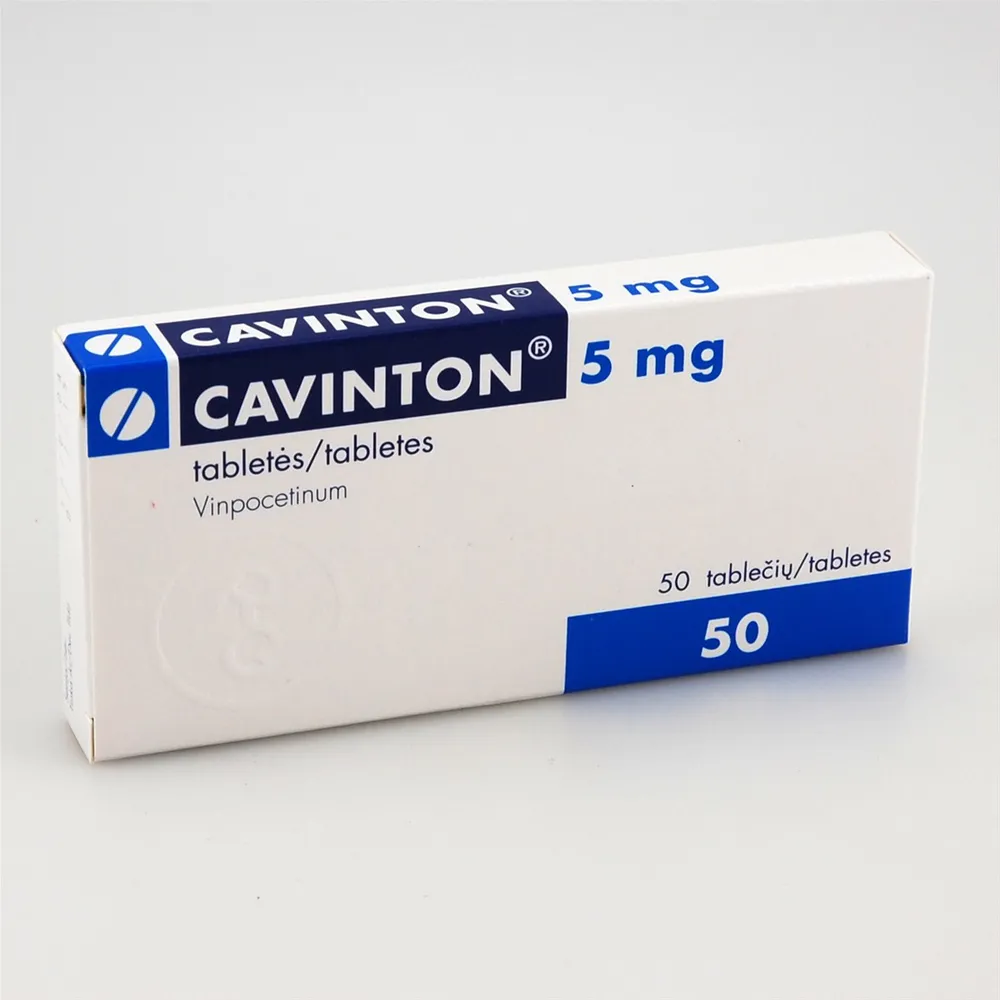
Table of Contents
Package leaflet: Information for the user
Cavinton, 5 mg, tablets
Vinpocetinum
Please read the entire leaflet carefully before using the medicine, as it contains important
information for the patient.
- Keep this leaflet, so that you can read it again if necessary.
- If you have any further questions, please consult your doctor or pharmacist.
- This medicine has been prescribed for a specific individual. Do not pass it on to others. The medicine may harm someone else, even if their symptoms are the same.
- If you experience any adverse reactions, including any not listed in this leaflet, inform your doctor or pharmacist. See section 4.
Leaflet contents:
- What Cavinton is and what it is used for
- Important information before taking Cavinton
- How to take Cavinton
- Possible side effects
- How to store Cavinton
- Contents of the pack and other information
1. What Cavinton is and what it is used for
Cavinton contains the active substance vinpocetinum.
Vinpocetin is a compound used in the treatment of diseases or relief of symptoms associated with
cerebral circulation disorders.
Indications for Cavinton:
- Treatment of chronic cerebral circulation insufficiency, including post-ischaemic stroke states and vascular dementia.
- Relief of psychological and neurological symptoms of cerebral circulation insufficiency.
- Treatment of chronic circulatory disorders in the choroid and retina of the eye.
- Treatment of hearing disorders of vascular origin.
2. Important information before taking Cavinton
When not to take Cavinton
- If you are allergic to vinpocetin or to any of the other ingredients of this medicine (listed in section 6);
- If you are pregnant or breastfeeding;
- If you are of childbearing age and are not using effective contraceptive methods;
- If you have certain heart conditions, i.e. severe ischaemic heart disease or severe cardiac arrhythmias;
- In the acute phase of haemorrhagic stroke;
- In children, due to insufficient clinical data in this age group.
Warnings and precautions
Before starting treatment with Cavinton, discuss it with your doctor or pharmacist.
If you have certain heart conditions, your doctor may recommend regular ECG monitoring
(electrocardiographic examination – assessment of heart function). This is particularly important for patients
in whom QT interval prolongation has been diagnosed, or for patients concurrently taking medications
that may cause QT interval prolongation.
Children and adolescents
The use of this medicine is contraindicated in children and adolescents due to insufficient clinical data
in this age group.
Cavinton and other medicines
Tell your doctor or pharmacist about all medicines you are currently taking, have recently taken, or
plan to take.
Cavinton may interfere with the action of other medicines, or other medicines may affect its efficacy.
Please inform your doctor, especially if you are taking the following medicines:
- alpha-methyldopa (a medicine used to treat high blood pressure);
- anticoagulants (medicines used to prevent excessive blood clotting);
- antiarrhythmics (medicines used to treat cardiac arrhythmias);
- medicines acting on the central nervous system.
Cavinton with food and drink
This medicine should be taken after meals.
Pregnancy and breastfeeding
If you are pregnant or breastfeeding, suspect you may be pregnant, or are planning to have a child,
you should consult your doctor or pharmacist before using this medicine.
If you are of childbearing age, you must use an effective method of contraception during treatment
with Cavinton. Otherwise, the use of vinpocetin is contraindicated.
Cavinton is contraindicated during pregnancy and breastfeeding.
Driving and operating machinery
There is no data available regarding the effects of vinpocetin on the ability to drive or operate machinery.
Cavinton contains lactose (milk sugar)
If you have previously been diagnosed with an intolerance to certain sugars, you should consult your doctor before taking this medicine.
3. How to use Cavinton
This medicine should always be used as directed by a physician. If in doubt, consult
your doctor or pharmacist.
The usual dose of Cavinton is 1 or 2 tablets (5–10 mg) three times daily (15–30 mg).
The maintenance dose is 1 tablet three times daily.
Tablets should be taken after meals.
There is no need to adjust the dosage if the patient has renal or hepatic impairment.
There is no need to adjust the dosage if the patient is over 65 years of age.
Taking more Cavinton than recommended
If more Cavinton tablets have been taken than recommended, seek immediate medical advice
from a doctor or go to the nearest hospital.
Missing a dose of Cavinton
Do not take a double dose to make up for a missed dose. Take the next dose at the usual time.
If you have any further doubts regarding the use of this medicine, consult your
doctor or pharmacist.
4. Possible adverse reactions
Like all medicines, this medicine can cause adverse reactions, although not everyone experiences them.
The adverse reactions listed below are grouped according to frequency of occurrence.
Uncommon adverse reactions (may occur in up to 1 in 100 people):
- sleep disturbances (insomnia, drowsiness);
- dizziness and headache, weakness – these symptoms may be related to the underlying disease;
- changes in ECG recording (ST segment depression, QT interval prolongation), tachycardia, and extrasystoles; these symptoms occurred spontaneously, therefore it is not certain whether the use of Cavinton could have caused them;
- changes in blood pressure (mainly lower blood pressure than usual), hot flushes;
- nausea, heartburn, and dry mouth;
- increased liver enzyme activity;
- allergic skin reactions.
Rare adverse reactions (may occur in up to 1 in 1000 people):
- leukopenia (reduced number of white blood cells, which may lead to frequent infections);
- abdominal pain.
Reporting of adverse reactions
If any adverse symptoms occur, including any adverse symptoms not listed in this leaflet, inform your doctor, pharmacist, or nurse. Adverse reactions can be reported directly to the Department of Monitoring Adverse Drug Reactions at the Office for Registration of Medicinal Products, Medical Devices and Biocidal Products
Al. Jerozolimskie 181C
02-222 Warsaw
Phone: 22 49-21-301
Fax: 22 49-21-309
Website: https://smz.ezdrowie.gov.pl
Adverse reactions can also be reported to the marketing authorization holder.
Reporting adverse reactions helps to provide more information on the safety of the medicine.
5. How to store Cavinton
Keep the medicine out of the sight and reach of children.
Store in the original packaging to protect from light.
Do not use this medicine after the expiry date stated on the packaging. The expiry date refers to the last day of the stated month.
Medicines must not be disposed of via wastewater or household waste. Ask your pharmacist how to dispose of medicines no longer in use. This will help protect the environment.
6. Contents of the packaging and other information
What the medicine Cavinton contains
- The active substance is vinpocetine.
- The other ingredients are: anhydrous colloidal silicon dioxide, magnesium stearate, talc, maize starch, lactose monohydrate.
What Cavinton looks like and contents of the pack
Flat, disc-shaped tablets with bevelled edges, white or almost white, approximately 9 mm in diameter, with the imprint "CAVINTON" stamped on one side of the tablet.
The medicine is packed in aluminium/PVC blisters.
The carton pack contains 50 or 100 tablets.
Not all pack sizes may be marketed.
Marketing Authorisation Holder and Manufacturer
Gedeon Richter Plc.
Gyömrői út 19-21
1103 Budapest, Hungary.
For further information, please contact the local representative of the Marketing Authorisation Holder.
GEDEON RICHTER POLSKA Sp. z o.o.
Medical Department
ul. ks. J. Poniatowskiego 5
05-825 Grodzisk Mazowiecki, Poland
Tel. +48 (22) 755 96 48
[email protected]
Fax: +48 (22) 755 96 24