Capecitabine glenmark
Poland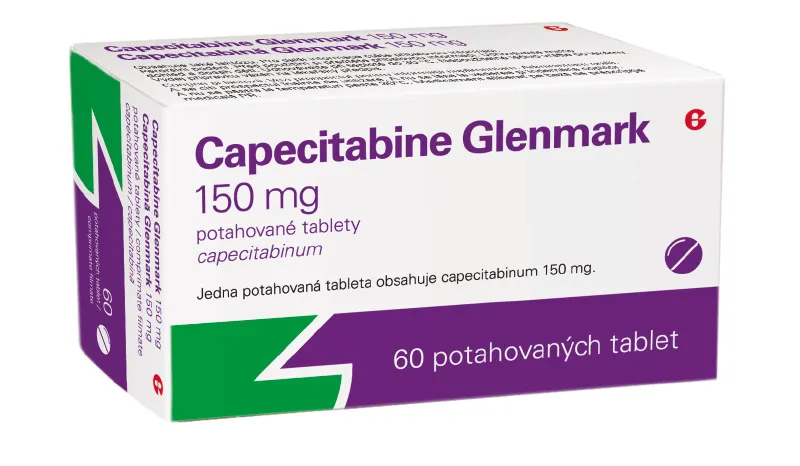
Table of Contents
- Package leaflet: Information for the patient
- 1. What Capecitabine Glenmark is and what it is used for
- 2. Important information before using Capecitabine Glenmark
- 3. How to take Capecitabine Glenmark
- 4. Possible adverse reactions
- 5. How to store Capecitabine Glenmark
- 6. Contents of the pack and other information
Package leaflet: Information for the patient
Capecitabine Glenmark, 150 mg, film-coated tablets
Capecitabine Glenmark, 500 mg, film-coated tablets
Capecitabinum
Please read all of this leaflet carefully before taking this medicine, because it contains
important information for you.
- Keep this leaflet as you may need to read it again.
- If you have any further questions, please ask your doctor or pharmacist.
- This medicine has been prescribed for a specific individual. Do not pass it on to others. It may harm other people, even if their symptoms are the same as yours.
- If you experience any adverse reactions, including any not listed in this leaflet, tell your doctor or pharmacist (See section 4).
Table of contents
- What Capecitabine Glenmark is and what it is used for
- Important information before taking Capecitabine Glenmark
- How to take Capecitabine Glenmark
- Possible side effects
- How to store Capecitabine Glenmark
- Contents of the pack and other information
1. What Capecitabine Glenmark is and what it is used for
Capecitabine Glenmark is a medicine belonging to the group of "cytostatic agents", which inhibit the growth of cancer cells. Capecitabine Glenmark contains capecitabine, which is not itself a cytostatic drug. It is converted in the body into an active anticancer drug (this drug accumulates more in tumour tissue than in healthy tissues).
Capecitabine Glenmark is used in the treatment of colon, rectal, gastric or breast cancer.
Furthermore, it is also used to prevent recurrence of colon cancer after complete surgical removal of the tumour.
Capecitabine Glenmark may be used alone or in combination with other medicines.
2. Important information before using Capecitabine Glenmark
When not to use Capecitabine Glenmark:
- if the patient is allergic to capecitabine or any of the other ingredients of this medicine (listed in section 6). If the patient knows they have an allergy or hypersensitivity to this medicine, they must inform their doctor immediately.
- if the patient has had severe reactions to previous treatment with fluoropyrimidine drugs (a group of anticancer medicines such as fluorouracil),
- if the patient is pregnant or breastfeeding,
- if the patient has very low levels of white blood cells or platelets (leukopenia, neutropenia or thrombocytopenia),
- if the patient has severe liver or kidney disease,
- if the patient lacks dihydropyrimidine dehydrogenase (DPD) enzyme activity (complete DPD deficiency),
- if the patient is currently being treated or has been treated within the last 4 weeks with brivudine, used to treat shingles or chickenpox.
Warnings and precautions:
Before starting treatment with Capecitabine Glenmark, discuss the following with the doctor or
pharmacist:
- if the patient has been diagnosed with partial reduction in dihydropyrimidine dehydrogenase (DPD) enzyme activity,
- if a family member of the patient has partial or complete deficiency of dihydropyrimidine dehydrogenase (DPD) enzyme,
- if the patient has liver or kidney disease,
- if the patient has or has had heart disease (e.g. irregular heartbeat or chest, jaw and back pain worsening with physical exertion due to reduced blood flow to the heart),
- if the patient has brain disease (e.g. brain metastases or nerve damage (neuropathy)),
- if the patient has been diagnosed with calcium imbalance (identified by blood laboratory tests),
- if the patient has diabetes,
- if the patient is unable to retain fluids and food due to severe nausea and vomiting,
- if the patient has diarrhoea,
- if the patient is dehydrated or becomes dehydrated,
- if the patient has electrolyte imbalance (electrolyte disturbances, identified by blood laboratory tests),
- if the patient has previously had eye problems, as additional eye monitoring may be required,
- if the patient has severe skin reactions.
Dihydropyrimidine dehydrogenase (DPD) deficiency: DPD deficiency is a genetic condition which
usually does not cause health problems until the patient receives certain medications. If the
patient has DPD deficiency and takes Capecitabine Glenmark, the risk of severe adverse reactions (listed in section 4. Possible side effects) increases.
It is recommended to test the patient for DPD deficiency before starting treatment. If the patient is found to have no activity of this enzyme, they should not be treated with Capecitabine Glenmark. If enzyme activity is reduced (partial enzyme deficiency), the doctor may prescribe a reduced dose. Even if the DPD deficiency test result is negative, severe and life-threatening adverse reactions may still occur.
Children and adolescents
Capecitabine Glenmark is not indicated for use in children and adolescents. Do not give Capecitabine Glenmark to children and adolescents.
Capecitabine Glenmark and other medicines
Before starting treatment, tell the doctor or pharmacist about all medicines the patient is currently taking or has recently taken, as well as any medicines the patient plans to take. This is particularly important because taking more than one medicine at the same time may increase or decrease their effects.
Do not take brivudine (an antiviral medicine used to treat shingles or chickenpox) at the same time as capecitabine treatment (including during treatment breaks when no tablets are taken).
If the patient has taken brivudine, they must wait at least 4 weeks after stopping brivudine before starting capecitabine. See section "When not to use Capecitabine Glenmark".
Special caution is also advised if the patient is taking any of the following medicines:
- medicines used to treat gout (allopurinol),
- anticoagulants (acenocoumarol, warfarin),
- medicines used to treat epilepsy or seizures (phenytoin),
- interferon alfa,
- if the patient is undergoing radiotherapy and taking other anticancer medicines (folinic acid, oxaliplatin, bevacizumab, cisplatin, irinotecan),
- medicines used to treat folic acid deficiency.
Capecitabine Glenmark with food and drink
Capecitabine Glenmark should be taken no later than 30 minutes after a meal.
Pregnancy and breastfeeding
If the patient is pregnant or breastfeeding, suspects she may be pregnant, or is planning to have a child, she should consult her doctor or pharmacist before using this medicine.
Do not take Capecitabine Glenmark if the patient is pregnant or suspects she may be pregnant.
Breastfeeding must not be undertaken during treatment with Capecitabine Glenmark and for 2 weeks after the last dose.
Women of childbearing potential should use effective contraception during treatment with Capecitabine Glenmark and for 6 months after the last dose.
Men whose partners are of childbearing potential should use effective contraception during treatment with Capecitabine Glenmark and for 3 months after the last dose.
Driving and operating machinery
Capecitabine Glenmark may cause dizziness, nausea or fatigue. Therefore, taking Capecitabine Glenmark may impair the ability to drive or operate machinery.
Capecitabine Glenmark contains anhydrous lactose
If the doctor has previously diagnosed the patient with an intolerance to certain sugars, the patient should contact their doctor before taking this medicine.
3. How to take Capecitabine Glenmark
This medicine should always be taken exactly as your doctor or pharmacist has advised. If you are unsure,
you should consult your doctor or pharmacist.
Capecitabine Glenmark should be prescribed by a doctor experienced in the use of anticancer medicines.
Your doctor will determine the dose and treatment schedule appropriate for you. The dose of
Capecitabine Glenmark is based on your body surface area, which is calculated from your height and weight.
The usual dose for adults is 1250 mg/m^2 of body surface area, taken twice daily (in the morning and evening).
Here are two examples: a person weighing 64 kg and 164 cm tall has a body surface area of 1.7 m^2, and should therefore take 4 tablets of 500 mg and 1 tablet of 150 mg twice daily. A person weighing 80 kg and 180 cm tall has a body surface area of 2.00 m^2, and should therefore take 5 tablets of 500 mg twice daily.
Your doctor will tell you what dose to take, when to take it, and how long to continue taking the tablets.
Your doctor may recommend taking a combination of tablets containing 150 mg and 500 mg of the medicine for each dose.
- Take the tablets in the morning and evening, as directed by your doctor.
- Swallow the tablets whole with water within 30 minutes after finishing a meal (breakfast and dinner). Do not crush or cut the tablets. If you are unable to swallow Capecitabine Glenmark tablets whole, inform your doctor.
- It is important to take this medicine exactly as directed by your doctor.
Capecitabine Glenmark tablets are usually taken for 14 days, followed by a 7-day break (during which no tablets are taken). This 21-day period constitutes one treatment cycle.
When used in combination with other medicines, the usual dose for adults may be lower than 1250 mg/m^2 body surface area, and the duration of tablet intake may differ (e.g., daily without interruption).
Taking more Capecitabine Glenmark than prescribed
If you take more Capecitabine Glenmark than prescribed, contact your doctor as soon as possible before taking the next dose.
If you take a significantly higher dose than recommended, the following symptoms may occur:
nausea or vomiting, diarrhoea, inflammation or ulceration of the intestines or mouth, abdominal pain or gastrointestinal bleeding, or bone marrow suppression (reduction in certain types of blood cells). Inform your doctor if any of these symptoms occur.
Missing a dose of Capecitabine Glenmark
Do not take a missed dose. Do not take a double dose to make up for a missed dose. Continue treatment according to the prescribed schedule and contact your doctor.
Stopping Capecitabine Glenmark
There are no withdrawal symptoms associated with stopping capecitabine. However, if you are taking anticoagulant medicines (including phenprocoumon), stopping capecitabine may require your doctor to adjust the dose of your anticoagulant medicine.
If you have any further questions about the use of this medicine, consult your doctor or pharmacist.
4. Possible adverse reactions
Like all medicines, this medicine can cause adverse reactions, although not everybody gets them.
You should IMMEDIATELY STOP using Capecitabine Glenmark and contact your
attending physician if any of the following symptoms occur:
- Diarrhoea: if you have 4 or more bowel movements per day or nocturnal diarrhoea.
- Vomiting: if vomiting occurs more than once within 24 hours.
- Nausea: if you experience loss of appetite and the amount of food consumed daily is significantly less than usual.
- Stomatitis: if you have pain, redness, swelling, or ulcers in the mouth.
- Hand-foot skin reaction: if you experience pain, swelling, redness, or tingling in the hands and/or feet.
- Fever: if body temperature exceeds 38°C.
- Infections: if symptoms of infection caused by bacteria, viruses, or other pathogens occur.
- Chest pain: if you experience pain in the middle of the chest, especially during physical exertion.
- Stevens-Johnson syndrome: if painful redness or purpuric rash appears and spreads, accompanied by blistering and/or development of other mucosal lesions (e.g. in the mouth or on the lips), particularly if the patient previously experienced photosensitivity, respiratory infections (e.g. bronchitis), and/or fever.
- Angioedema: if any of the following symptoms occur, seek immediate medical help, as urgent treatment may be required: swelling, particularly of the face, lips, tongue, or throat, making swallowing or breathing difficult, itching, and skin rash. These may be symptoms of angioedema.
If these adverse reactions are recognized early, they usually resolve within 2–3 days after discontinuation of treatment. If adverse reactions persist longer, you should immediately contact your attending physician. The doctor may recommend continuing treatment at a reduced dose.
If severe stomatitis (oral and/or pharyngeal ulcers), mucositis, diarrhoea, neutropenia (increased risk of infections), or neurotoxicity occur during the first treatment cycle, this may be related to DPD deficiency (see section 2: "Warnings and precautions").
Skin reactions on the palms and soles may lead to loss of dermatoglyphics (fingerprint patterns), which may affect patient identification when fingerprints are collected.
Additionally, when Capecitabine Glenmark is used as the sole anticancer agent, very common adverse reactions, which may affect more than 1 in 10 people, include:
- abdominal pain,
- skin rash, dryness or itching of the skin,
- fatigue,
- loss of appetite (anorexia).
Adverse reactions may become significantly worse; therefore, it is important to always contact your doctor immediately as soon as they appear. In such cases, the doctor may recommend reducing the dose and/or temporarily interrupting treatment with Capecitabine Glenmark. This approach helps shorten the duration or reduce the severity of these symptoms.
Other adverse reactions:
Common adverse reactions (which may occur in up to 1 in 10 people) include:
- decreased number of white blood cells or red blood cells (detected in blood laboratory tests),
- dehydration, weight loss,
- insomnia, depression,
- headache, drowsiness, dizziness, abnormal skin sensations (numbness or tingling), taste alterations,
- eye irritation, excessive tearing, eye redness (conjunctivitis),
- vein inflammation (venous thromboembolic disease),
- shortness of breath, nosebleeds, cough, nasal congestion,
- cold sores (herpes labialis) or other herpes infections,
- lung or respiratory tract infections (e.g. pneumonia or bronchitis),
- gastrointestinal bleeding, constipation, epigastric pain, indigestion, excessive flatulence, dry mouth,
- skin rash, hair loss (alopecia), skin redness, dry skin, itching (pruritus), skin discoloration, skin peeling, dermatitis, nail appearance changes,
- joint or limb pain, chest or back pain,
- fever, limb swelling, general malaise,
- liver function abnormalities (detected in blood laboratory tests) and increased blood bilirubin levels (excreted by the liver).
Uncommon adverse reactions (which may occur in up to 1 in 100 people) include:
- blood infections, urinary tract infections, skin infections, nose and throat infections, fungal infections (including in the oral cavity), influenza, gastroenteritis, dental abscess,
- subcutaneous nodules (lipomas),
- decreased blood cell counts, including platelets, blood thinning (detected in blood laboratory tests),
- allergy (hypersensitivity),
- diabetes, decreased blood potassium levels, malnutrition, increased blood triglyceride levels,
- disorientation, panic attacks, depressive mood, decreased libido,
- speech difficulties, memory impairment, lack of motor coordination, balance disturbances, fainting, nerve damage (neuropathy) and sensory problems,
- blurred or double vision,
- vertigo, ear pain,
- irregular heartbeat and palpitations (arrhythmias), chest pain, myocardial infarction,
- deep vein thrombosis, high or low blood pressure, hot flushes, cold extremities, purple skin spots,
- pulmonary embolism (pulmonary artery blockage), lung collapse, coughing up blood, asthma, exertional dyspnoea,
- intestinal obstruction, fluid accumulation in the abdominal cavity, inflammation of the small or large intestine, stomach or oesophagus, lower abdominal pain, abdominal discomfort, heartburn (regurgitation of stomach contents), blood in stool,
- jaundice (yellowing of the skin and eyes),
- skin ulcers and blisters, photosensitivity reaction, redness of the palms, facial swelling or pain,
- joint swelling or stiffness, bone pain, muscle weakness or stiffness,
- fluid accumulation in the kidneys, increased frequency of urination at night, urinary incontinence, blood in urine, increased blood creatinine levels (indicating kidney dysfunction),
- unusual vaginal bleeding,
- swelling, chills, and muscle stiffness.
Some of these adverse reactions occur more frequently when capecitabine is used in combination with other anticancer drugs. The following are additional adverse reactions observed under these conditions:
Common adverse reactions (which may occur in up to 1 in 10 people) include:
- decreased blood sodium, magnesium or calcium levels, increased blood glucose levels,
- nerve pain,
- ringing or buzzing (tinnitus), hearing loss,
- vein inflammation,
- hiccups, voice changes,
- pain or altered/abnormal sensation in the mouth, jaw pain,
- sweating, night sweats,
- muscle cramps,
- difficulty urinating, presence of blood or protein in urine,
- bruising or reaction at the injection site (caused by concomitantly administered injectable drugs).
Rare adverse reactions (which may occur in up to 1 in 1,000 people) include:
- narrowing or blockage of the tear drainage duct (lacrimal duct stenosis),
- liver function disturbances,
- inflammation leading to impaired bile secretion or obstruction of bile ducts (cholestatic hepatitis),
- specific electrocardiogram (ECG) changes - QT interval prolongation,
- certain types of cardiac arrhythmias (including ventricular fibrillation, torsade de pointes, and bradycardia),
- inflammatory eye conditions causing eye pain and possible visual disturbances,
- skin inflammation causing red, peeling lesions, associated with autoimmune disease,
- angioedema (swelling, particularly of the face, lips, tongue or throat, itching and rash).
Very rare adverse reactions (which may occur in up to 1 in 10,000 people) include:
- severe skin reactions such as skin rash, ulceration and blistering, including blisters in the mouth, nose, genital organs, hands, feet and eyes (red and swollen eyes).
Reporting of adverse reactions
If any adverse reactions occur, including any possible adverse reactions not listed in this leaflet, inform your doctor, pharmacist, or nurse. Adverse reactions can be reported directly to the Department of Monitoring of Adverse Drug Reactions, Office for Registration of Medicinal Products, Medical Devices and Biocidal Products
Al. Jerozolimskie 181C, 02-222 Warsaw; tel.: +48 22 49 21 301; fax: +48 22 49 21 309
e-mail: [email protected].
Adverse reactions can also be reported to the marketing authorization holder.
Reporting adverse reactions helps provide more information on the safety of the medicine.
5. How to store Capecitabine Glenmark
Keep this medicine out of the sight and reach of children.
Aluminium/Aluminium blister
No special storage precautions are required.
PVC/PVDC/Aluminium blister
Do not store above 30°C.
Do not use this medicine after the expiry date stated on the cardboard box after:
Expiry (EXP) or on the blister after: EXP. The expiry date refers to the last day of the stated month.
Medicines should not be disposed of via wastewater or household waste. Ask your pharmacist how to dispose of medicines no longer required. These measures will help protect the environment.
6. Contents of the pack and other information
What Capecitabine Glenmark contains
- The active substance is capecitabine. Each Capecitabine Glenmark tablet contains 150 mg or 500 mg of capecitabine.
- The other ingredients are:
- Tablet core: anhydrous lactose, sodium croscarmellose, hypromellose, microcrystalline cellulose, magnesium stearate.
- Tablet coating: hypromellose, titanium dioxide (E171), yellow iron oxide and red iron oxide (E172), talc.
What Capecitabine Glenmark looks like and contents of the pack
Capecitabine Glenmark 150 mg are light peach-coloured, elongated, biconvex film-coated tablets with the imprint "150" on one side and smooth on the other side.
Capecitabine Glenmark 500 mg are peach-coloured, elongated, biconvex film-coated tablets with the imprint "500" on one side and smooth on the other side.
Capecitabine Glenmark is available in the following pack sizes:
Aluminium/Aluminium blisters or PVC/PVDC/Aluminium blisters, packed in cardboard boxes containing 30, 60 or 120 film-coated tablets.
Not all pack sizes may be marketed.
Marketing Authorisation Holder
Glenmark Pharmaceuticals s.r.o.
Hvĕzdova 1716/2b
140 78 Prague 4
Czech Republic
Manufacturer
Glenmark Pharmaceuticals s.r.o.
Hvĕzdova 1716/2b
140 78 Prague 4
Czech Republic
For further information about this medicinal product and its trade names in the European Economic Area countries, please contact the local representative of the Marketing Authorisation Holder:
Glenmark Pharmaceuticals Sp. z o.o.
Osmańska 14
02-823 Warsaw
Poland