Calcium hasco
Poland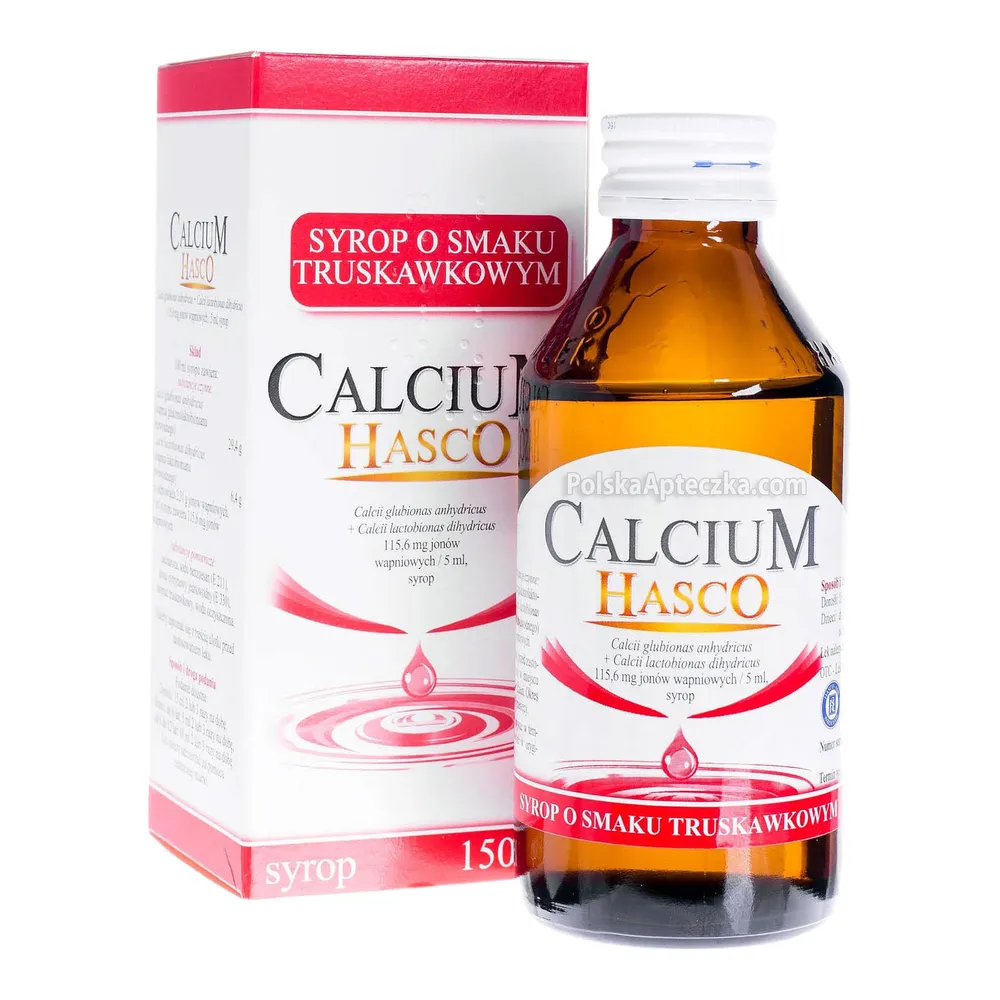
Table of Contents
Package leaflet: Information for the patient
CALCIUM HASCO
115.6 mg calcium ions / 5 ml, syrup
Calcii glubionas anhydricus + Calcii lactobionas dihydricus
Banana-flavoured syrup
Please read all of this leaflet carefully before taking this medicine, because it contains
important information for you.
This medicine should always be taken exactly as described in this patient leaflet or as directed by your
doctor, pharmacist, or nurse.
- Keep this leaflet so that you can read it again if necessary.
- If you need advice or further information, please contact your pharmacist.
- If you experience any side effects, including any not listed in this leaflet, tell your doctor, pharmacist, or nurse. See section 4.
- If your symptoms do not improve or if you feel worse, you should consult your doctor.
Leaflet contents
- What Calcium HASCO is and what it is used for
- Important information before taking Calcium HASCO
- How to take Calcium HASCO
- Possible side effects
- How to store Calcium HASCO
- Contents of the pack and other information
1. What Calcium HASCO is and what it is used for
Calcium HASCO is a medicinal product containing calcium salts. Calcium is a structural component of the body and plays an important role in many physiological processes (maintaining normal blood coagulation, muscle contractility, nerve conduction, and cell membrane function). Calcium also reduces the permeability of blood vessel walls, exerting anti-edematous and anti-swelling effects. Calcium crosses the placenta and is excreted into breast milk.
Indications for use of Calcium HASCO include prevention and supplementation of calcium deficiency in the body, e.g. during pregnancy or breastfeeding, treatment of osteoporosis, and adjunctive treatment of allergy symptoms.
2. Important information before using Calcium HASCO
When not to use Calcium HASCO
- if the patient is allergic to the active substances (calcium salts) or to any of the other ingredients of this medicine (listed in section 6),
- if the patient has elevated calcium levels in the blood (hypercalcemia, e.g. in patients with hyperparathyroidism, severe renal failure, or vitamin D overdose),
- in case of increased calcium excretion in urine (hypercalciuria),
- in severe renal failure,
- in kidney stone disease (nephrolithiasis),
- in atrioventricular block.
Warnings and precautions
Before starting treatment with Calcium HASCO, consult your doctor, pharmacist, or nurse.
Exercise caution when using this medicine in patients with renal insufficiency or those taking high doses of vitamin D.
Calcium HASCO with other medicines
Inform your doctor or pharmacist about all medicines the patient is currently taking or has recently taken, as well as any medicines planned for future use.
High doses of calcium taken concomitantly with certain cardiac medications (digitalis glycosides or calcium channel blockers) may cause serious disturbances in heart function.
Calcium significantly reduces the absorption of certain antibiotics (tetracyclines and quinolones), levothyroxine, nitrofurantoin, bisphosphonates, chlorpromazine, penicillamine, anticoagulants, and fluoride compounds. Therefore, it is recommended that a time interval of approximately 3 hours be maintained between the administration of Calcium HASCO syrup and these medicines.
Thiazide diuretics reduce calcium excretion, while vitamin D enhances calcium absorption.
Pregnancy and breastfeeding
If the patient is pregnant, breastfeeding, suspects she might be pregnant, or is planning to have a child, she should consult a doctor or pharmacist before using this medicine.
This medicine may be used during pregnancy or lactation under medical supervision.
Driving and operating machinery
Calcium HASCO has no effect on the ability to drive or operate machinery.
Calcium HASCO contains sucrose, sodium benzoate (E 211), propylene glycol (E 1520), ethanol, and sodium
Sucrose
This medicine contains 1.5 g of sucrose in each 5 ml of syrup. This should be taken into account in patients with diabetes. If the patient has previously been diagnosed with intolerance to certain sugars, the patient should consult a doctor before taking this medicine.
Sodium benzoate (E 211)
This medicine contains 10 mg of sodium benzoate in each 5 ml of syrup. Sodium benzoate may increase the risk of jaundice (yellowing of the skin and whites of the eyes) in newborns (up to 4 weeks of age).
Propylene glycol (E 1520)
This medicine contains 1.35 mg of propylene glycol in each 5 ml of syrup. Before administering this medicine to children under 4 weeks of age, consult a doctor or pharmacist, especially if the child is taking other medicines containing propylene glycol or alcohol.
Ethanol
This medicine contains 0.75 mg of ethanol in each 5 ml of syrup. The amount of alcohol in 5 ml of this medicine is equivalent to less than 1 ml of beer or 1 ml of wine. The small amount of alcohol in this medicine will not cause noticeable effects.
Sodium
This medicine contains less than 1 mmol (23 mg) of sodium per 5 ml of syrup, meaning the medicine is considered "sodium-free".
3. How to use Calcium HASCO
This medicine should always be taken exactly as described in this patient leaflet, or as directed by a doctor, pharmacist, or nurse. If in doubt, consult a doctor, pharmacist, or nurse.
Calcium HASCO is intended for oral administration. The syrup should be dosed using the measuring device provided in the package. The recommended dose is:
Adults: 15 ml two or three times daily.
Children up to 6 years: 5 ml two or three times daily.
Children from 6 to 12 years: 10 ml two or three times daily.
4. Possible adverse reactions
Like all medicines, this medicine can cause adverse reactions, although not everybody will experience them.
Gastrointestinal disturbances (constipation, diarrhoea) occur rarely. Increased calcium levels in the blood (hypercalcaemia, accompanied by nausea, abdominal pain, bone pain, muscle weakness) may occur mainly in individuals with impaired kidney function.
Reporting of adverse reactions
If any adverse reactions occur, including any possible adverse reactions not listed in this leaflet, inform your doctor, pharmacist, or nurse. Adverse reactions can be reported directly to the Department of Monitoring of Adverse Drug Reactions of the Office for Registration of Medicinal Products, Medical Devices and Biocidal Products:
Aleje Jerozolimskie 181C, 02-222 Warsaw
Tel.: +48 22 49 21 301, Fax: +48 22 49 21 309
Website: https://smz.ezdrowie.gov.pl
Adverse reactions can also be reported to the marketing authorization holder.
Reporting adverse reactions helps to provide more information on the safety of the medicine.
5. How to store Calcium HASCO
Keep in closed containers at a temperature not exceeding 25°C.
Keep the medicine out of sight and reach of children.
Do not use this medicine after the expiry date stated on the packaging. The expiry date refers to the last day of the stated month.
Medicines should not be disposed of via wastewater or household waste. Ask your pharmacist how to dispose of medicines no longer in use. This will help protect the environment.
6. Contents of the package and other information
What Calcium HASCO contains
- The active substances of the medicinal product are organic calcium salts (gluconolactobionate and lactobionate), in an amount corresponding to 115.6 mg of calcium ions in 5 ml of syrup.
- The other components (excipients) are: sucrose, sodium benzoate (E 211), monohydrate citric acid (E 330), banana flavour (containing propylene glycol (E 1520) and ethanol), purified water.
What Calcium HASCO looks like and contents of the pack
One package contains 150 ml of clear syrup (opalization permissible), yellowish in colour.
Marketing Authorisation Holder and Manufacturer
„PRZEDSIĘBIORSTWO PRODUKCJI FARMACEUTYCZNEJ HASCO-LEK” S.A.
51-131 Wrocław, ul. Żmigrodzka 242 E
Medicinal product information
tel.: (22) 742 00 22
e-mail: [email protected]