Bisoratio asa
Poland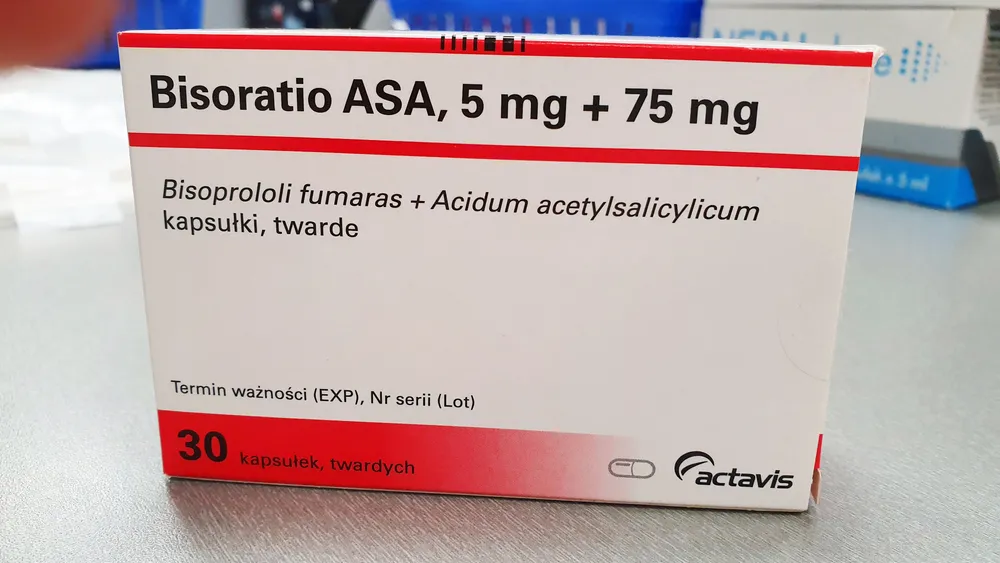
Table of Contents
Package leaflet: Information for the patient
Bisoratio ASA, 5 mg + 75 mg, hard capsules
Bisoratio ASA, 10 mg + 75 mg, hard capsules
Bisoprolol fumarate + Acetylsalicylic acid
Please read the entire leaflet carefully before using the medicine, as it contains
important information for the patient.
- Keep this leaflet, as you may need to read it again.
- If you have any further questions, please consult your doctor or pharmacist.
- This medicine has been prescribed for a specific individual. Do not pass it on to others. It may harm other people, even if their symptoms are the same.
- If you experience any adverse reactions, including any not listed in this leaflet, inform your doctor or pharmacist. See section 4.
Table of contents of the leaflet
- What is Bisoratio ASA and what is it used for
- Important information before taking Bisoratio ASA
- How to take Bisoratio ASA
- Possible side effects
- How to store Bisoratio ASA
- Contents of the pack and other information
1. What is Bisoratio ASA and what is it used for
Bisoratio ASA capsules contain two active substances: bisoprolol fumarate and acetylsalicylic acid.
Bisoprolol belongs to a group of medicines called beta-blockers. It works by affecting the body's response to certain nerve impulses, particularly in the heart, and helps lower blood pressure. Acetylsalicylic acid is an antiplatelet agent that prevents the formation of blood clots. Acetylsalicylic acid is also known as aspirin.
Bisoratio ASA capsules are used in the treatment of high blood pressure or in patients at risk of heart disease, myocardial infarction, or stroke, who have previously been treated with the individual active substances contained in this medicine.
Bisoratio ASA hard capsules may also be used to prevent complications following certain types of heart surgery.
2. Important information before using Bisoratio ASA
When not to use Bisoratio ASA
- if the patient is allergic to bisoprolol fumarate or acetylsalicylic acid or any of the other ingredients of this medicine (listed in section 6)
- if the patient has severe heart failure or cardiogenic shock causing breathlessness and circulatory collapse
- if the patient has certain severe heart rhythm disorders, such as sinoatrial block, sick sinus syndrome, or second- or third-degree atrioventricular block (without a pacemaker)
- if the patient has a slow heart rate causing problems. If the patient is unsure whether this applies, they should consult their doctor
- if the patient has very low blood pressure (which may cause dizziness upon standing)
- if the patient has ever experienced an asthma attack or swelling of certain body parts, e.g. face, lips, throat, or tongue (angioedema) after taking non-steroidal anti-inflammatory drugs (NSAIDs)
- if the patient has severe asthma or wheezing
- if the patient has severe circulatory disorders in fingers, toes, arms, or legs, i.e. Raynaud's syndrome
- if the patient has untreated phaeochromocytoma – a rare tumour of the adrenal gland
- if the patient has acid-base imbalance in the body (metabolic acidosis)
- if the patient has or has had peptic ulcer disease of the stomach or duodenum (peptic ulcers), or bleeding from the stomach or duodenum, or other types of bleeding such as cerebral haemorrhage
- if the patient previously experienced indigestion or stomach problems after taking acetylsalicylic acid
- if the patient has severe liver or severe kidney disease
- if the patient has ever had a haemorrhagic stroke
- if the patient suffers from haemophilia or hypoprothrombinaemia (rare blood disorders)
- if the patient is taking anticoagulant medicines (e.g. warfarin, heparin, or acenocoumarol)
- if the patient has glucose-6-phosphate dehydrogenase deficiency (an inherited disorder characterised by low activity of the enzyme glucose-6-phosphate dehydrogenase (G6PD))
- if the patient is being treated with methotrexate (a medicine used to treat psoriasis, rheumatoid arthritis, Crohn's disease, and certain types of cancer) at doses exceeding 15 mg per week
- if the patient has gout or has had gout in the past
- if the patient is breastfeeding
- if the patient is in the third trimester of pregnancy – acetylsalicylic acid must not be used at doses exceeding 100 mg per day (see section "Pregnancy and breastfeeding")
The patient should inform their doctor if any of the above conditions apply.
Bisoratio ASA hard capsules contain soya lecithin.
Do not use this medicine if allergic to soya or peanuts.
Warnings and precautions
Before starting Bisoratio ASA, discuss with your doctor or pharmacist if:
- the patient has breathing difficulties or a family history of asthma. Dose monitoring may be required, and any new symptoms (e.g. cough, exercise intolerance, or breathlessness) should be reported to the doctor.
- the patient has diabetes (bisoprolol may mask symptoms of low blood sugar)
- the patient is not consuming solid food or is on a strict diet (fluids and liquid diet only)
- the patient has heart problems, such as chest pain or coexisting heart failure
- the patient is being treated for hypersensitivity reactions (allergic), as bisoprolol may increase the likelihood of allergic reactions or worsen their severity
- the patient has any conduction disorders of the heart
- the patient has Prinzmetal's angina, a type of chest pain caused by spasm of the coronary arteries supplying the heart muscle
- the patient has any circulation problems in the hands or feet
- the patient is scheduled for anaesthesia – the anaesthesiologist must be informed about the use of bisoprolol and acetylsalicylic acid
- the patient has previously had peptic ulcer disease (peptic ulcers) or disorders related to blood clotting
- the patient has (or has had) psoriasis, a recurring skin disorder involving skin scaling and dry skin rash
- the patient has an adrenal tumour (phaeochromocytoma); this medicine may only be used together with certain other medicines (so-called alpha-adrenolytics)
- the patient has thyroid dysfunction, as this medicine may mask symptoms of hyperthyroidism
- the patient has mild or moderate liver or kidney disease
- the patient has urticaria or nasal congestion and rhinitis caused by allergy (allergic rhinitis)
- the patient has peptic ulcer disease of the stomach or duodenum
- the female patient has heavy menstrual periods
- the patient is undergoing surgery or a dental procedure
- if the patient is dehydrated
Ensure that the doctor is informed about any of the above conditions.
There is a potential association between the use of acetylsalicylic acid in children
and the development of Reye's syndrome. Reye's syndrome is a very rare but potentially fatal illness.
Therefore, do not use capsules containing bisoprolol and acetylsalicylic acid
in children under 16 years of age, unless specifically prescribed by a doctor.
Generally, non-steroidal anti-inflammatory drugs such as acetylsalicylic acid should be used
with caution in elderly patients who are prone to adverse effects such as
gastrointestinal bleeding. Treatment should be reviewed at regular intervals.
Athletes should be aware that this medicine contains an active substance that may lead to
positive results in doping tests.
Bisoratio ASA and other medicines
Inform your doctor or pharmacist about all medicines currently taken or recently taken,
as well as any medicines the patient plans to take, because the effect of these
medicines and (or) Bisoratio ASA capsules may be altered. This also applies to
medicines available without a prescription.
In particular, inform the doctor if the patient is taking the following medicines:
- medicines used to control blood pressure or for heart conditions (such as: amiodarone, amlodipine, clonidine, digoxin, diltiazem, disopyramide, felodipine, flecainide, lidocaine, methyldopa, moxonidine, propafenone, quinidine, rilmenidine, verapamil, and beta-blockers)
- medicines used for anaesthesia during surgery (see also "Warnings and precautions")
- medicines used to treat epilepsy, e.g. phenobarbital, valproate, or phenytoin
- anti-inflammatory medicines known as NSAIDs (e.g. diclofenac, ibuprofen, naproxen)
- medicines used for asthma or nasal congestion
- medicines used to treat certain eye conditions such as glaucoma (increased eye pressure) or to dilate pupils (e.g. acetazolamide)
- certain medicines used in shock treatment (e.g. adrenaline, dobutamine, noradrenaline)
- mefloquine, a medicine used for malaria
- medicines used for diabetes, including insulin and sulfonylureas (e.g. glibenclamide, glipidone, gliclazide, glipizide, glimepiride, or tolbutamide). Bisoprolol taken together with these medicines may increase the risk of significantly lowering blood glucose levels.
- medicines used for tuberculosis, e.g. rifampicin
- medicines used for migraine, e.g. ergotamine
- anticoagulant medicines used to thin the blood, e.g. warfarin
- medicines used for gout, e.g. probenecid or sulfinpyrazone
- medicines used for severe depression (e.g. moclobemide) and psychiatric disorders, such as: tricyclic antidepressants, selective serotonin reuptake inhibitors, phenothiazines, lithium, and monoamine oxidase inhibitors (except MAO-B inhibitors)
- other medicines used to thin the blood (heparin and derivatives: hirudin, fondaparinux), medicines that reduce blood clot formation (clopidogrel, ticlopidine, tirofiban, and eptifibatide), or medicines used to dissolve blood clots during myocardial infarction or stroke
- spironolactone or other medicines used for fluid retention (e.g. diuretics)
- ACE inhibitors used to treat high blood pressure (e.g. captopril, enalapril, ramipril)
- medicines containing corticosteroids
- methotrexate used to treat psoriasis (skin disease) or cancer
- metoclopramide (used to treat nausea and digestive disorders)
- alkalising medicines, neutralising gastric acid
- iron salts (used for iron-deficiency anaemia)
- carbonates (used for stomach ulcers and reflux)
- medicines used to prevent transplant rejection (e.g. cyclosporine, tacrolimus)
- metamizole (a substance with analgesic and antipyretic effects) may reduce the effect of acetylsalicylic acid on platelet aggregation (clumping of blood cells and clot formation) when used together. Therefore, caution is advised when using metamizole in patients receiving acetylsalicylic acid.
Bisoratio ASA with food, drink, and alcohol
Bisoratio ASA hard capsules may be taken with or without food; the capsules
should be swallowed whole with water.
Bisoratio ASA hard capsules should not be taken by patients who
regularly consume large amounts of alcohol.
Bisoratio ASA hard capsules should not be taken by patients who
are allergic to soya or peanuts.
Pregnancy and breastfeeding
If the patient is pregnant or breastfeeding, suspects she may be pregnant, or is planning to become pregnant, she should consult her doctor or pharmacist before using this medicine.
The use of Bisoratio ASA hard capsules during pregnancy is not recommended unless absolutely necessary, as the potential risk to the unborn child is unknown. Bisoratio ASA must not be used if the patient is in the last three months of pregnancy.
If the patient continues or starts treatment with Bisoratio ASA capsules during pregnancy on medical advice, the capsules should be taken exactly as directed by the doctor, and the patient should not exceed the recommended dose.
Pregnancy – third trimester
Do not take acetylsalicylic acid in doses exceeding 100 mg per day if the patient is in the last three months of pregnancy, as this may harm the unborn child or cause complications during delivery. Kidney and heart problems may occur in the unborn child. It may affect the bleeding tendency of both the mother and the child and may delay or prolong labour.
If the patient takes acetylsalicylic acid in low doses (up to 100 mg per day inclusive), close obstetric monitoring is required as directed by the doctor.
Pregnancy – first and second trimester
Do not take Bisoratio ASA capsules during the first 6 months of pregnancy unless absolutely necessary and prescribed by a doctor. If treatment is required during this period or when trying to conceive, the lowest possible dose should be used for the shortest possible duration.
If acetylsalicylic acid is taken for more than a few days beyond the 20th week of pregnancy, it may cause kidney problems in the unborn child, leading to low amniotic fluid volume surrounding the baby (oligohydramnios) or narrowing of a blood vessel (ductus arteriosus) in the baby's heart. If longer-term treatment is needed, the doctor may recommend additional monitoring.
Breastfeeding
It is not known whether bisoprolol passes into human milk, but acetylsalicylic acid may be present in human milk. Therefore, breastfeeding is not recommended during treatment with this medicine.
Before taking any medicine, consult a doctor or pharmacist.
Driving and operating machinery
Bisoratio ASA capsules generally should not impair the ability to drive
or operate machinery. If the patient experiences fatigue or dizziness, they should wait until
symptoms subside before driving or operating machinery.
3. How to take Bisoratio ASA
Bisoratio ASA hard capsules should be swallowed whole with water.
Recommended dose
The usual dose for adults is one capsule per day, taken at the same time each day. The physician will determine the appropriate dose for the patient.
Bisoratio ASA hard capsules are not suitable for use in children.
Elderly patients
Dose adjustment is usually not necessary. It is recommended to initiate treatment with the lowest possible dose.
Patients with severe renal or hepatic impairment
Patients should not take this medicine if they have severe kidney or liver disease.
Particular caution should be exercised in patients with mild or moderate renal or hepatic dysfunction.
Treatment with bisoprolol is usually long-term. If treatment needs to be discontinued entirely, the physician will usually recommend gradually reducing the dose, because otherwise the patient's condition may worsen.
Taking more Bisoratio ASA than recommended
If the medicine is accidentally taken in excess of the recommended dose, consult a doctor or pharmacist immediately. Bring any remaining capsules or this leaflet with you so that healthcare professionals know exactly which medicine has been taken. Probable symptoms of overdose include sudden slowing of the heart rate and/or reduction in blood pressure, which may cause dizziness, feeling faint, disorientation, shortness of breath, nausea or even vomiting. Other symptoms may include vertigo (spinning sensation), headache, tinnitus, and abdominal pain. Severe overdose may cause: rapid breathing (hyperventilation), breathing difficulties, heat stroke, sweating, motor restlessness, seizures, hallucinations, low blood sugar levels, and consequently loss of consciousness or coma. Patients with heart failure may be more sensitive to these effects.
Missing a dose of Bisoratio ASA
If the patient forgets to take a capsule, they should take it as soon as they remember, provided it is within 12 hours. If more than 12 hours have passed, the patient should wait until the next scheduled dose. Do not take a double dose to make up for a missed dose.
If you have any further questions about the use of this medicine, consult your doctor or pharmacist.
Stopping Bisoratio ASA
Do not suddenly stop taking Bisoratio ASA capsules, as the patient may feel worse and blood pressure may rise again. Instead, the dose must be gradually reduced over a period of at least one or two weeks, as directed by the physician. If you have any further questions about the use of this medicine, consult your doctor or pharmacist.
4. Possible adverse effects
Like all medicines, this medicine may cause adverse effects, although not everyone will experience them.
All medicines can cause allergic reactions, although severe allergic reactions are rare.
If the patient notices any of the following serious adverse effects, treatment with Bisoratio ASA should be discontinued immediately and medical advice should be sought without delay:
- worsening of heart failure leading to increased breathlessness and/or fluid retention
- unusual bleeding, such as: coughing up blood, vomiting blood, blood in urine, or black, tarry stools
- sudden wheezing, difficulty breathing, swelling of the eyelids, face or lips, swelling of the limbs
- rash or itching (especially affecting the whole body).
The following terms have been used to describe how frequently adverse effects have been observed:
Common (affects 1 to 10 in 100 patients):
- sensation of coldness or numbness in hands or feet
- nausea or vomiting
- diarrhoea or constipation
- increased risk of bleeding
- inflammation of the stomach mucosa
- feeling of fatigue
- dizziness
- headache
- indigestion
- mild to moderate gastrointestinal bleeding; with long-term or frequent use of the medicine, this bleeding may lead to anaemia.
Uncommon (affects 1 to 10 in 1,000 patients):
- low blood pressure
- slow heart rate
- feeling of weakness
- irregular heartbeat
- breathing difficulties in patients with asthma or chronic lung disease
- sleep disturbances
- depression
- muscle weakness, muscle cramps
- urticaria (hives)
- allergic rhinitis.
Rare (affects 1 to 10 in 10,000 patients):
- severe skin reactions, including rash known as erythema multiforme and its life-threatening forms: Stevens-Johnson syndrome and Lyell's syndrome
- severe bleeding in the stomach or intestines, cerebral haemorrhage (bleeding in the brain, which may cause sudden, severe headache, seizure or stroke), changes in blood cell counts
- increased liver enzyme activity
- hepatitis, which may cause abdominal pain, loss of appetite and sometimes jaundice with yellowing of the skin or whites of the eyes and dark urine
- changes in blood test results (e.g. increased blood lipid levels (triglycerides), increased liver enzyme activity)
- nightmares, hallucinations
- hearing disturbances
- reduced tear production (important if the patient wears contact lenses)
- decreased libido
- fainting
- nosebleeds, bleeding gums, vomiting blood, blood in stool, increased menstrual bleeding
- narrowing of the airways causing breathing difficulties or asthma attacks
- vasculitis (inflammation of blood vessels)
- bruising and petechiae (subcutaneous bleeding)
- painful red nodules or nodules on the lower legs (erythema nodosum).
Very rare (affects less than 1 in 10,000 patients):
- onset or worsening of psoriasis or psoriasiform rash
- eye irritation or redness (conjunctivitis)
- hair loss
- low blood sugar levels
- liver diseases
- worsening of food allergy symptoms.
Adverse effects with unknown frequency:
- ringing in the ears (tinnitus)
- high blood levels of uric acid
- gastric or small intestinal ulceration and perforation
- prolonged bleeding time; effects may persist for 4–8 days after stopping acetylsalicylic acid; increased risk of bleeding during surgical procedures
- fluid and salt retention in the body
- kidney disorders.
If any of the above symptoms occur, a doctor should be informed as soon as possible.
Reporting of adverse effects
If any adverse effects occur, including any not listed in this leaflet, inform a doctor or pharmacist. Adverse effects can be reported directly to the Department of Monitoring of Adverse Drug Reactions at the Office for Registration of Medicinal Products, Medical Devices and Biocidal Products, Al. Jerozolimskie 181C, 02-222 Warsaw, tel.: +48 22 49 21 301, fax: +48 22 49 21 309,
Website: https://smz.ezdrowie.gov.pl
Adverse effects can also be reported directly to the marketing authorisation holder.
Reporting adverse effects helps to provide more information on the safety of the medicine.
5. How to store Bisoratio ASA
Keep this medicine out of sight and reach of children.
Do not store above 25°C.
Do not use this medicine after the expiry date stated on the carton and blister after:
EXP. The expiry date refers to the last day of the stated month.
Medicines should not be disposed of via wastewater or household waste. Ask your pharmacist
how to dispose of medicines no longer required. This will help protect the environment.
6. Contents of the pack and other information
What Bisoratio ASA hard capsules contain
Bisoratio ASA, 5 mg + 75 mg, hard capsules:
Each capsule contains 5 mg of bisoprolol fumarate and 75 mg of acetylsalicylic acid.
Bisoratio ASA, 10 mg + 75 mg, hard capsules:
Each capsule contains 10 mg of bisoprolol fumarate and 75 mg of acetylsalicylic acid.
Other ingredients: maize starch, stearic acid, microcrystalline cellulose, magnesium stearate, polyvinyl alcohol, titanium dioxide (E 171), talc, lecithin, xanthan gum.
Capsule shell: gelatin, titanium dioxide (E 171).
Printing ink: shellac, iron oxide black (E 172), propylene glycol, ammonium hydroxide.
What Bisoratio ASA looks like and contents of the pack
Bisoratio ASA, 5 mg + 75 mg, hard capsules: White capsule marked with print "5/75".
Bisoratio ASA, 10 mg + 75 mg, hard capsules: White capsule marked with print "10/75".
Bisoratio ASA, 5 mg + 75 mg, hard capsules and Bisoratio ASA, 10 mg + 75 mg, hard capsules are supplied in packs containing 14, 28, 30 or 90 capsules.
The capsules are packed in PVC/PE/PVDC/Aluminium blisters in a cardboard box.
Not all pack sizes may be marketed.
Marketing Authorisation Holder
Actavis Group PTC ehf.
Dalshraun 1
220 Hafnarfjörður
Iceland
Manufacturer
Zakłady Farmaceutyczne Polpharma S.A.
ul. Pelplińska 19
83-200 Starogard Gdański
Poland
Uni-Pharma Kleon Tsetis Pharmaceutical Laboratories S.A,
14 km National road 1, Kato Kifisia Attiki. 145 64
Greece
Hennig Arzneimittel GmbH & Co. KG
Liebigstraße 1-2
65439 Flörsheim am Main
Germany
Inpharmasci
Zone Industrielle No. 2, 1 rue Nungesser
59121 Prouvy
France
For further information about this medicinal product and its names in other European Economic Area countries, please contact the representative of the Marketing Authorisation Holder:
Teva Pharmaceuticals Polska Sp. z o.o., ul. Emilii Plater 53, 00-113 Warsaw, tel. (22) 345 93 00.