Atropine sulfuricum wzf
Poland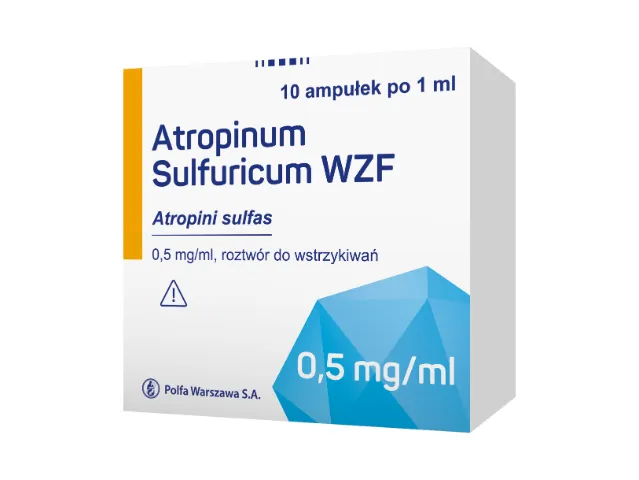
Table of Contents
- Package leaflet: Information for the patient
- 1. What Atropinum Sulfuricum WZF is and what it is used for
- 2. Important information before using Atropinum Sulfuricum WZF
- 3. How to use Atropinum Sulfuricum WZF
- 4. Possible adverse reactions
- 5. How to store Atropinum Sulfuricum WZF
- 6. Contents of the pack and other information
Package leaflet: Information for the patient
Atropinum Sulfuricum WZF, 0.5 mg/ml, solution for injection
Atropinum Sulfuricum WZF, 1 mg/ml, solution for injection
Atropini sulfas
Please read all of this leaflet carefully before using this medicine, because it contains
important information for you.
- Keep this leaflet, as you may need to read it again.
- If you have any further questions, please ask your doctor, pharmacist, or nurse.
- This medicine has been prescribed for a specific individual. Do not pass it on to others. It may harm them even if their symptoms are the same.
- If you experience any side effects, including any not listed in this leaflet, tell your doctor, pharmacist, or nurse. See section 4.
Contents of the leaflet
- What Atropinum Sulfuricum WZF is and what it is used for
- Important information before using Atropinum Sulfuricum WZF
- How to use Atropinum Sulfuricum WZF
- Possible side effects
- How to store Atropinum Sulfuricum WZF
- Contents of the pack and other information
1. What Atropinum Sulfuricum WZF is and what it is used for
Atropinum Sulfuricum WZF contains atropine sulfate, which belongs to a group of medicines called anticholinergics (cholinolytics). Atropine acts on receptors present in exocrine glands, smooth muscles, the heart muscle, and the central nervous system. Atropine increases heart rate, reduces secretion of saliva and sweat, decreases bronchial, nasal, and gastric secretions, reduces lacrimal fluid production, decreases intestinal peristalsis, and inhibits urination.
Atropine accelerates sinus rhythm and increases the conduction velocity between the atria and ventricles of the heart.
Atropinum Sulfuricum WZF is used:
- in sinus bradycardia (marked slowing of heart rate due to vagus nerve conduction disturbances, which mediates between the brain and the sinoatrial node in controlling the heart), and in arrhythmias;
- as premedication prior to general anesthesia;
- in poisoning with organophosphorus insecticides or cholinomimetic drugs;
- in poisoning with mushrooms containing muscarine;
- to reverse neuromuscular blockade;
- as an adjunct in spastic conditions of smooth muscle in the abdominal cavity (e.g. biliary or renal colic);
- in radiological diagnostics, when relaxation of smooth muscle and slowing of intestinal transit are desired.
2. Important information before using Atropinum Sulfuricum WZF
When not to use Atropinum Sulfuricum WZF:
- if the patient is allergic to atropine sulfate or any of the other ingredients of this medicine (listed in section 6);
- if the patient has urinary bladder outlet obstruction, e.g. due to benign prostatic hyperplasia (symptoms: difficulty passing urine);
- if the patient has reflux esophagitis (symptoms: heartburn, damage to the esophageal mucosa);
- if the patient has myasthenia gravis (muscle weakness);
- if the patient has paralytic ileus (symptoms: fever, severe abdominal pain, bloating);
- if the patient has severe ulcerative colitis (symptoms: presence of blood and mucus in stool);
- if the patient has diseases causing gastrointestinal obstruction;
- if the patient has narrow-angle glaucoma (elevated intraocular pressure (in the eye(s))).
Warnings and precautions
Before starting treatment with Atropinum Sulfuricum WZF, discuss this with your doctor or
pharmacist.
- Exercise particular caution when using Atropinum Sulfuricum WZF in patients:
- over 40 years of age due to the risk of benign prostatic hyperplasia and urinary tract disorders;
- with respiratory diseases, as atropine may worsen shortness of breath;
- with hyperthyroidism, arterial hypertension, tachyarrhythmia (fast, irregular heartbeat), congestive heart failure, angina pectoris, autonomic neuropathy, gastrointestinal disorders (e.g. gastric ulcer disease, gastroesophageal reflux);
- in elderly patients;
- with impaired kidney and/or liver function.
- When administering atropine to children, caution should be exercised and the patient should be monitored.
- Administration of the drug in susceptible individuals may trigger an acute attack of glaucoma or accelerate the onset of complete obstruction in case of pyloric stenosis.
- Caution should be exercised when administering atropine to patients with elevated body temperature, as atropine may further increase body temperature. During administration of atropine, the patient should not remain in an environment with high ambient temperature.
- Cases of severe bradycardia (slowing of heart rate) caused by hyperkalemia (increased blood potassium concentration), unresponsive to atropine administration, have been reported.
- Paradoxical atrioventricular block or sinus inhibition has been observed after atropine administration in several heart transplant recipients.
- Atropine should be used with particular caution during therapeutic or diagnostic procedures in heart transplant recipients. ECG monitoring is recommended, and resuscitation equipment should be readily available.
- Doses of atropine not exceeding 1 mg slightly stimulate the central nervous system. Higher doses may cause psychiatric disturbances and depression of central nervous system function. Children and elderly patients are especially sensitive.
Atropinum Sulfuricum WZF and other medicines
Inform your doctor or pharmacist about all medicines currently used or recently used, as well as any medicines you plan to use.
Medicines which enhance the effects of atropine:
- tricyclic antidepressants,
- antispasmodic drugs (e.g. used in irritable bowel syndrome),
- drugs used in Parkinson's disease,
- certain first-generation antihistamines,
- phenothiazines (medicines used in psychiatric disorders),
- disopyramide, quinidine (medicines used in heart diseases).
Atropine, by delaying gastric emptying, may slow down or accelerate the absorption of certain orally administered drugs.
During anesthesia with propofol and concomitant use of atropine, the heart rate response to intravenous atropine may be reduced (and this effect cannot be effectively counteracted by administering high doses of atropine).
Particular caution is required during stress echocardiography using dobutamine and atropine, or during concomitant administration of catecholamine amines with atropine in patients who appear to be under significant stress or who have a condition known as hyperadrenergic state (autonomic nervous system dysfunction, potentially leading to severe complications such as sudden drops in blood pressure, tachycardia, syncope, dehydration due to chronic diarrhea), due to the risk of Tako-tsubo syndrome. Symptoms of this syndrome include: chest pain, worsening shortness of breath, restlessness, pallor, cold sweat, decreased arterial blood pressure, disturbances in consciousness, ventricular fibrillation, cardiac arrest.
Pregnancy and breastfeeding
If the patient is pregnant or breastfeeding, suspects she may be pregnant, or is planning to have a child, she should consult a doctor or pharmacist before using this medicine.
This medicine may be used during pregnancy only when, in the opinion of the physician, the benefit to the mother outweighs the potential risk to the fetus.
Intravenous administration of atropine to a pregnant woman or during labor may cause fetal tachycardia.
Small amounts of atropine pass into breast milk and may cause adverse effects in the infant. Use of atropine in breastfeeding women requires caution. Suppression of milk secretion may occur.
Driving and operating machinery
This medicine impairs the ability to drive and operate machinery.
3. How to use Atropinum Sulfuricum WZF
This medicine should always be used as directed by the physician. In case of doubt, consult
your doctor or pharmacist.
Atropinum Sulfuricum WZF is administered exclusively by medical personnel.
The medicine may be given subcutaneously, intramuscularly, or intravenously.
Detailed dosage information is provided in the section "Information intended exclusively
for medical professionals".
Administration of a higher than recommended dose of Atropinum Sulfuricum WZF
Symptoms of overdose: dryness of the mouth accompanied by a burning sensation, difficulty
in swallowing, photophobia, redness and dryness of the skin, elevated body temperature,
rash, nausea and vomiting, increased heart rate, and elevated arterial pressure.
Due to central nervous system stimulation, symptoms such as restlessness, tremors, confusion,
excitation, hallucinations, and delirium may occur. These symptoms may progress to drowsiness,
stupor (a state of near-unconsciousness), respiratory and circulatory failure, sometimes life-threatening.
Treatment of severe cases consists of intravenous, intramuscular, or subcutaneous administration
of 1 mg to 4 mg of physostigmine; the dose may be repeated if necessary.
If required, the physician will administer oxygen to the patient, provide respiratory support,
and ensure adequate fluid supply. In case of photophobia, the patient should be moved to a dark room.
Missed dose of Atropinum Sulfuricum WZF
Do not use a double dose to make up for a missed dose.
Discontinuation of Atropinum Sulfuricum WZF
If you have any further doubts regarding the use of this medicine, consult your doctor,
pharmacist, or nurse.
4. Possible adverse reactions
Like all medicines, this medicine can cause adverse reactions, although not everybody will experience them.
Adverse reactions are related to the dose of atropine administered and usually resolve after
discontinuation of the drug.
After administration of relatively small doses, atropine reduces salivary, sweat and bronchial
secretions. Dryness of the mouth and decreased or inhibited sweating may occur. Reduced bronchial
secretion may lead to thickening of retained mucus and formation of a bronchial plug, difficult to
remove from the respiratory tract. The above adverse reactions intensify with increasing atropine
doses.
After administration of large doses of atropine, dilated pupils, accommodation disturbances,
increased heart rate with possible occurrence of flutter or atrial fibrillation, atrioventricular
dissociation and additional ventricular contractions have been reported; urinary retention and
constipation may also occur. Increasing doses of atropine inhibit gastric secretion.
In some patients, anaphylaxis, urticaria and rash, sometimes with exfoliation of the epidermis, may
occur.
Other adverse reactions: hallucinations, increased intraocular pressure, loss of taste, headache,
nervousness, drowsiness, weakness, fatigue, dizziness, facial flushing, insomnia, nausea, vomiting and
flatulence. Disorientation and (or) excitation may occur, especially in elderly patients.
Cases of severe bradycardia caused by hyperkalemia, unresponsive to atropine administration, have
been reported.
Reporting of adverse reactions
If any adverse reactions occur, including any adverse reactions not listed in this leaflet, inform your
doctor, pharmacist or nurse. Adverse reactions can be reported directly to the Department of
Monitoring Adverse Drug Reactions of the Office for Registration of Medicinal Products, Medical
Devices and Biocidal Products
Al. Jerozolimskie 181C
02-222 Warsaw
Phone: +48 22 49 21 301
Fax: +48 22 49 21 309
Website: https://smz.ezdrowie.gov.pl
Adverse reactions can also be reported to the marketing authorization holder.
Reporting adverse reactions helps to provide more information on the safety of using the medicine.
5. How to store Atropinum Sulfuricum WZF
Store below 25°C.
Keep ampoules in the outer packaging to protect from light; do not freeze.
Keep the medicine out of sight and reach of children.
Do not use this medicine after the expiry date stated on the carton and on the ampoule. The expiry date refers to the last day of the stated month.
The marking on the packaging: EXP indicates the expiry date, and Lot indicates the batch number.
Medicines should not be disposed of via wastewater or household waste. Ask your pharmacist how to dispose of medicines no longer in use. This will help protect the environment.
6. Contents of the pack and other information
What Atropinum Sulfuricum WZF contains
- The active substance is atropine sulfate. Each ml of solution contains 0.5 mg or 1 mg of atropine sulfate.
- Other components: diluted hydrochloric acid (for pH adjustment), water for injections.
What Atropinum Sulfuricum WZF looks like and contents of the pack
Atropinum Sulfuricum WZF is a clear, transparent liquid.
The pack contains 10 ampoules of 1 ml capacity in a cardboard box.
Marketing Authorisation Holder and Manufacturer
Zakłady Farmaceutyczne POLPHARMA S.A.
ul. Pelplińska 19, 83-200 Starogard Gdański
tel. +48 22 364 61 01
Information intended solely for healthcare professionals:
Atropinum Sulfuricum WZF, 0.5 mg/ml, solution for injection
Atropinum Sulfuricum WZF, 1 mg/ml, solution for injection
Atropini sulfas
Instructions for opening the ampoule
Before opening the ampoule, ensure that the entire solution is in the lower part of the ampoule.
Gently shake the ampoule or tap it with your finger to help the solution flow down.
Each ampoule has a coloured dot (see Figure 1) indicating the score line located beneath it.
- To open the ampoule, hold it vertically in both hands, with the coloured dot facing towards you – see Figure 2. The upper part of the ampoule should be held so that the thumb is positioned above the coloured dot.
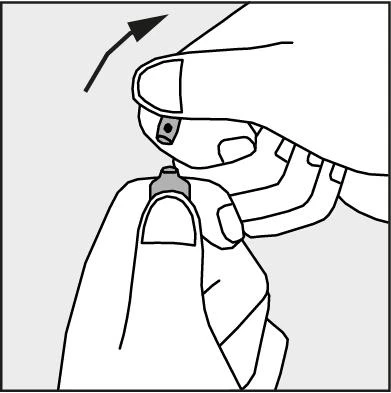
- Press in the direction of the arrow shown in Figure 3. Ampoules are intended for single use only and should be opened immediately before use. Any unused portion of the product must be disposed of in accordance with applicable regulations.
Figure 1.
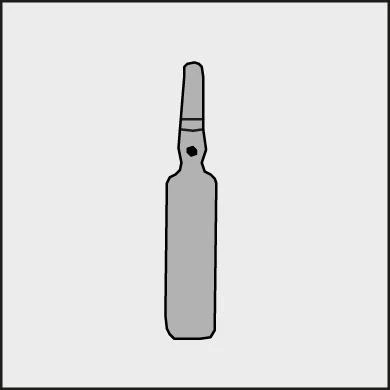
Figure 2.
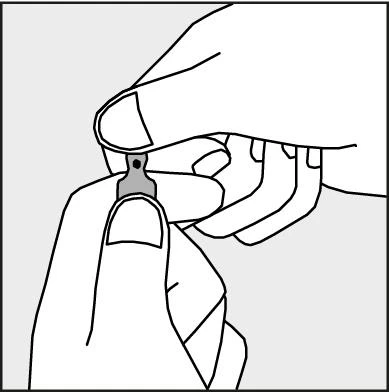
Figure 3.
The medicine may be administered subcutaneously, intramuscularly, or intravenously.
Dosage
Adults, adolescents over 12 years of age, and elderly patients
Sinus bradycardia, arrhythmia
Intramuscularly or intravenously: 0.3 to 0.6 mg every 4–6 hours up to a total dose of 2 mg.
In resuscitation: 0.5 mg; the dose may be repeated at 5-minute intervals until heart rhythm stabilizes.
In cardiac arrest, administer a single intravenous dose of 3 mg. If atropine cannot be administered intravenously during resuscitation, administer via endotracheal tube a dose 2–3 times higher than the intravenous dose.
Premedication for general anaesthesia
Subcutaneously or intramuscularly: 0.3 to 0.6 mg administered 30–60 minutes before the procedure, or the same dose administered intravenously immediately before the procedure.
Poisoning with organophosphorus insecticides, cholinomimetic drugs, or muscarine-containing mushrooms
Intramuscularly or intravenously: 1 to 2 mg; the dose may be repeated every 5 to 60 minutes until symptoms of poisoning resolve; do not exceed a maximum dose of 100 mg within the first 24 hours.
Reversal of neuromuscular blockade
Intravenously: 0.6 mg to 1.2 mg, administered several minutes before or simultaneously with neostigmine at a dose of 0.5 mg to 2 mg (using separate syringes).
Adjunct in smooth muscle spasm of the abdominal cavity (hepatic, renal colic)
Intramuscularly or intravenously: 0.5 mg to 1 mg.
In radiological diagnostics, when relaxation of smooth muscle and increased intestinal transit are desired
Intramuscularly: 1 mg.
Children under 12 years of age
The usual intramuscular, intravenous, or subcutaneous dose is 10 micrograms/kg body weight (0.01 mg/kg); do not exceed 0.4 mg. If necessary, the dose may be repeated every 4–6 hours.
In life-threatening situations involving severe cardiac disturbances
For life-saving purposes: intravenously 20 micrograms/kg (0.02 mg/kg); minimum dose: 0.01 mg, which may be repeated every 5 minutes up to a maximum dose of 0.1 mg.
Premedication for general anaesthesia
Subcutaneously or intramuscularly; administer 30–60 minutes before surgery.
Infants up to 3 kg body weight: 100 micrograms (0.1 mg).
Children with body weight 7–9 kg: 200 micrograms (0.2 mg).
Children with body weight 12–16 kg: 300 micrograms (0.3 mg).
Children with body weight above 20 kg: adult doses apply.
Reversal of neuromuscular blockade
Intravenously; neonates, infants, and children: 20 micrograms/kg (0.02 mg/kg).
Maximum dose: 0.6 mg.
Poisoning with organophosphorus insecticides, cholinomimetic drugs, or muscarine-containing mushrooms
Intramuscularly or intravenously: 50 micrograms/kg (0.05 mg/kg) every 10–30 minutes; administer until symptoms of poisoning resolve.