Aprokam
Poland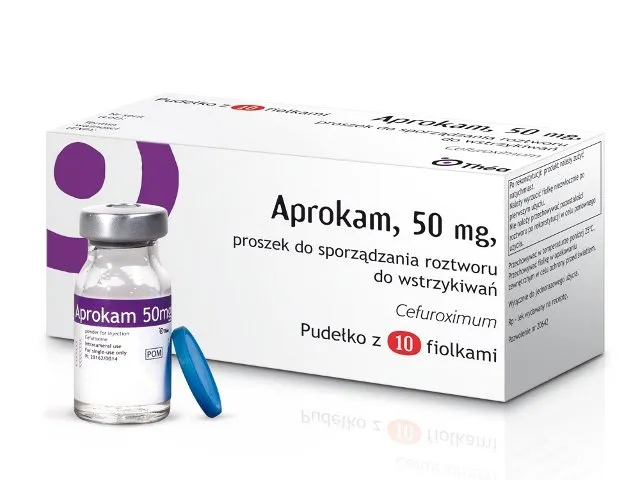
Table of Contents
Package leaflet: Information for the patient
APROKAM, 50 mg, powder for solution for injection
Cefuroximum
Read the entire leaflet carefully before using the medicine, as it contains important information for the patient.
- Keep this leaflet, so that you may read it again if necessary.
- If you have any doubts, consult your doctor, pharmacist, or nurse.
- This medicine has been prescribed for a specific person only. Do not pass it on to others. The medicine may harm another person, even if their symptoms are the same.
- If you experience any adverse reactions, including any adverse reactions not listed in this leaflet, inform your doctor, pharmacist, or nurse. See section 4.
Table of contents:
- What APROKAM is and what it is used for
- Important information before using APROKAM
- How to use APROKAM
- Possible side effects
- How to store APROKAM
- Contents of the package and other information
1. What APROKAM is and what it is used for
- APROKAM contains the active substance cefuroxime (in the form of cefuroxime sodium), which belongs to a group of antibiotics called cephalosporins. Antibiotics are used to kill bacteria or "pathogenic microorganisms" that cause infections.
- This medicine will be used when the patient undergoes cataract surgery (clouding of the lens).
- The ophthalmic surgeon will administer this medicine as an intraocular injection at the end of the surgical procedure (cataract surgery) to prevent eye infection.
2. Important information before using APROKAM
When not to use APROKAM
- If the patient is allergic to cefuroxime or any other antibiotics belonging to the cephalosporin group.
Warnings and precautions
Before using APROKAM, tell the doctor, pharmacist, or nurse:
- if the patient is allergic to other antibiotics such as penicillin,
- if the patient is at risk of infection caused by bacteria known as methicillin-resistant Staphylococcus aureus,
- if the patient is at risk of severe infection,
- if the patient has been diagnosed with complicated cataract,
- if a combined eye surgery procedure is planned,
- if the patient has severe thyroid disease.
APROKAM is administered only by injection into the eye (injection into the anterior chamber of the eyeball).
APROKAM should be administered under aseptic conditions (meaning clean and free from microorganisms) during cataract surgery.
Each vial of APROKAM is intended for single-patient use only.
APROKAM and other medicines
Tell the doctor or pharmacist about all medicines the patient is currently taking or has recently taken, as well as any medicines the patient plans to use.
Pregnancy and breastfeeding
- If the patient is pregnant or breastfeeding, suspects she may be pregnant, or is planning to have a baby, she should consult a doctor or pharmacist before using this medicine.
- APROKAM will be administered to the patient only if the benefits outweigh the potential risks.
APROKAM contains sodium
The medicine contains less than 1 mmol (23 mg) of sodium per dose, meaning the medicine is considered "sodium-free".
3. How to use APROKAM
- APROKAM injections will be administered by an ophthalmic surgeon at the end of the cataract surgical procedure.
- APROKAM is supplied as a sterile powder and must be reconstituted with saline solution for injection before administration.
Use of a higher or lower than recommended dose of APROKAM
The medicine will usually be administered by healthcare professionals.
If there are any further doubts regarding the use of this medicine, consult a doctor, pharmacist, or nurse.
4. Possible adverse reactions
Like all medicines, APROKAM can cause adverse reactions, although not everyone will experience them.
The following adverse reaction is very rare (may affect up to 1 in 10,000 people):
- Severe allergic reaction causing difficulty in breathing or dizziness.
The following adverse reaction has been reported with "unknown" frequency (frequency cannot be determined from available data):
- Macular edema (blurred or wavy vision in the center of the visual field or near it).
Reporting of adverse reactions
If any adverse reactions occur, including any adverse reactions not listed in this leaflet, inform your doctor, pharmacist, or nurse. Adverse reactions can be reported directly to the Department of Monitoring Adverse Drug Reactions of the Office for Registration of Medicinal Products, Medical Devices and Biocidal Products, Al. Jerozolimskie 181C, 02-222 Warsaw,
tel.: +48 22 49 21 301, fax: +48 22 49 21 309.
e-mail: [email protected]
Adverse reactions can also be reported to the marketing authorization holder.
Reporting adverse reactions helps to provide more information on the safety of the medicine.
5. How to store APROKAM
Keep this medicine out of sight and reach of children.
Do not use APROKAM after the expiry date stated on the carton and vial label after EXP. The expiry date refers to the last day of the stated month.
Store below 25°C. Keep the vial in the outer packaging to protect from light.
For single use only.
After reconstitution: the product should be used immediately.
Medicines should not be disposed of via wastewater or household waste. Ask your pharmacist how to dispose of medicines no longer required. These measures will help protect the environment.
6. Contents of the pack and other information
What APROKAM contains
The active substance is cefuroxime (in the form of cefuroxime sodium).
One vial contains 50 mg of cefuroxime.
After reconstitution, 0.1 ml of solution contains 1 mg of cefuroxime.
The medicine does not contain any other ingredients.
What APROKAM looks like and contents of the pack
APROKAM is a white to almost white powder for solution for injection, supplied in glass vials.
One pack contains ten or twenty vials, or ten vials with ten sterile filter needles of 5 micrometres.
Not all pack sizes may be marketed.
Marketing Authorisation Holder and Manufacturer
Marketing Authorisation Holder:
LABORATOIRES THEA
12 rue Louis Blériot
63017 CLERMONT-FERRAND Cedex 2
France
Manufacturer:
BIOPHARMA S.R.L.
Via Delle Gerbere, 22/30 (loc. S. PALOMBA)
00134 ROMA (RM)
Italy
LABORATOIRES THEA
12 rue Louis Blériot
63017 CLERMONT-FERRAND Cedex 2
France
This medicinal product is authorised in the European Economic Area countries under the following names:
Austria, Belgium, Czech Republic, Denmark, Finland, France, Germany, Italy, Iceland, Luxembourg, Netherlands, Norway, Poland, Portugal, Romania, Slovakia, Slovenia, Sweden, United Kingdom................................................................................................................................APROKAM
Cyprus, Greece, Spain..........................................................................................................PROKAM
Ireland………............................................................................................................................APROK
For further information, contact the representative of the Marketing Authorisation Holder:
Thea Polska Sp. z o.o.
ul. Cicha 7
00-353 Warsaw
www.thea.pl
Information intended exclusively for medical professionals:
Pharmaceutical incompatibilities
There are no reported incompatibilities with the most commonly used products during cataract surgery described in the literature. This medicinal product must not be mixed with other medicinal products except those listed below [sodium chloride 9 mg/ml (0.9%) solution for injection].
How to prepare and administer APROKAM
Single-use vial for intracameral administration only.
APROKAM must be administered after solution preparation, as an injection into the anterior chamber of the eye by an ophthalmic surgeon under recommended aseptic conditions during cataract surgery.
The prepared solution should be inspected visually and used only if it is colorless to slightly yellow and free from visible particles.
The product should be used immediately after solution preparation and must not be reused.
The recommended dose of cefuroxime is 1 mg in 0.1 ml of sodium chloride (solution for injection) at a concentration of 9 mg/ml (0.9%).
DO NOT INJECT A HIGHER DOSE THAN RECOMMENDED.
Vials for single use only.
Each vial is intended for use in a single patient only. The vial label (stick-on label) must be attached to the patient's medical record.
To prepare APROKAM for administration into the anterior chamber of the eye, follow the instructions below: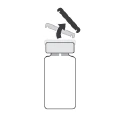 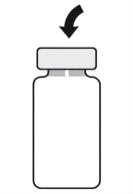 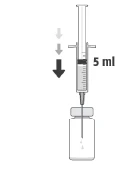 | |
Disinfect the area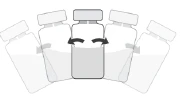 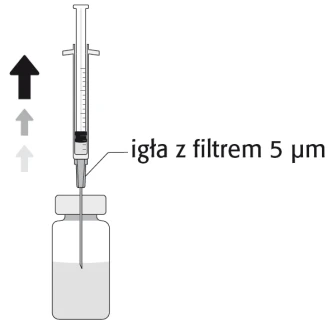 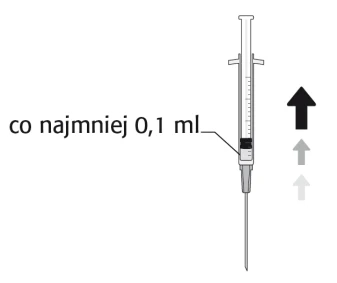 |
|
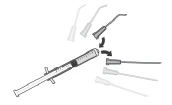 |
|
After use, any remaining prepared solution must be discarded. Do not store any leftover solution after preparation for subsequent use.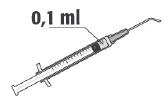 | |
Any unused portions of the medicinal product or its waste must be disposed of in accordance with local regulations. Used needles must be placed in a sharps medical waste container.