Apo-napro
Poland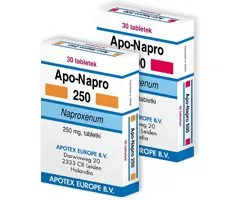
Table of Contents
Patient Information Leaflet
Apo-Napro, 250 mg, tablets
Apo-Napro, 500 mg, tablets
Naproxenum
Please read the entire leaflet carefully before using this medicine, as it contains
important information for the patient.
- Keep this leaflet for future reference.
- If you have any further questions, please consult your doctor or pharmacist.
- This medicine has been prescribed for a specific individual. Do not share it with others. This medicine may harm other people, even if their symptoms are the same.
- If the patient experiences any adverse reactions, including any adverse reactions not listed in this leaflet, inform a doctor or pharmacist immediately. See section 4.
Table of Contents:
- What Apo-Napro is and what it is used for
- Important information before taking Apo-Napro
- How to take Apo-Napro
- Possible side effects
- How to store Apo-Napro
- Contents of the pack and other information
| 1. | What is Apo-Napro and what is it used for |
Apo-Napro belongs to the group of non-steroidal anti-inflammatory drugs (NSAIDs).
Apo-Napro is used in the treatment of:
rheumatoid arthritis and other rheumatic diseases
musculoskeletal problems (acute musculoskeletal disorders)
painful menstruation
acute gouty arthritis
fever of various origins.
2. Important information before using Apo-Napro
When not to use Apo-Napro:
if the patient is allergic to naproxen, sodium naproxen, or any of the other
ingredients of this medicine (listed in section 6)
if the patient has or has had stomach or intestinal disorders, e.g. ulcer
or bleeding
if the patient has severe heart, liver or kidney failure
if the patient is allergic to drugs from the NSAID group or other painkillers, such as
acetylsalicylic acid (aspirin)
if the woman is in the last three months of pregnancy.
If any of the situations described above apply to the patient, the medicine should be discontinued and the patient should contact
their doctor.
Warnings and precautions
Before starting to use Apo-Napro, discuss this with your doctor or pharmacist:
if the patient has any hypersensitivity reactions
if the patient has kidney, liver or heart disease
if the patient has stomach or intestinal disorders (gastrointestinal disorders), including
ulcers, ulcerative colitis, Crohn's disease
if the patient has asthma
if the patient has any blood disorders
if the patient has undergone liver or adrenal function tests
if the patient has systemic lupus erythematosus or mixed connective tissue disease,
which are immune system disorders with symptoms such as joint pain, fatigue and rash
if the woman is planning pregnancy, has difficulty becoming pregnant, or is undergoing fertility investigations
if the patient is elderly.
Risk of heart attack: Medicines such as Apo-Napro may slightly increase the risk of heart attack
(myocardial infarction) or stroke. This risk increases with long-term use of high doses of the medicine. Do
not exceed the recommended dose or prolong the duration of treatment.
If the patient has heart problems, has had a stroke, or suspects a risk of such conditions (for example, if the patient has high blood pressure,
diabetes, elevated cholesterol levels, or smokes), the treatment method should be discussed with
the doctor or pharmacist.
Children and adolescents
Apo-Napro is not recommended for use in children under 16 years of age for any indication, except for juvenile rheumatoid arthritis.
Apo-Napro and other medicines
Tell your doctor or pharmacist about all medicines the patient is currently taking or has taken recently, as well as any medicines the patient plans to take. This is important because naproxen
may affect the action of other medicines. Inform the doctor, especially if the patient
is taking the following medicines:
medicines used to treat acute gout, such as probenecid
medicines used to treat epilepsy, such as hydantoin derivatives
medicines used to treat or prevent increased blood clotting, such as anticoagulants or antiplatelet
drugs
medicines used to treat infections, such as sulfonamides or fluoroquinolones
medicines used to treat heart failure, such as furosemide, other diuretics or
cardiac glycosides
medicines used to treat depression, such as lithium salts or selective serotonin reuptake inhibitors, such as fluoxetine
medicines used to treat high blood pressure, such as propranolol and other beta-blockers or
angiotensin-converting enzyme (ACE) inhibitors
medicines used to treat psoriasis, such as methotrexate
medicines used to treat arthritis, such as corticosteroids
medicines used to prevent transplant rejection, such as cyclosporine and tacrolimus
other NSAIDs or painkillers, such as acetylsalicylic acid
mifepristone, which is usually used in hospital treatment. At least 8 to 12 days should elapse after administration of
mifepristone before starting treatment with naproxen.
zidovudine, an antiviral medicine used to treat HIV infection
acetylsalicylic acid used to prevent blood clots.
If any of the above situations apply or if you have any doubts, contact your doctor or pharmacist before using
Apo-Napro.
Apo-Napro with food, drink and alcohol
Taking Apo-Napro with food or drink does not affect its action.
Pregnancy, breastfeeding and effect on fertility
If the patient is pregnant or breastfeeding, suspects she may be pregnant, or is planning to have a
child, she should consult her doctor or pharmacist before using this medicine.
Do not take Apo-Napro during the last three months of pregnancy, as it may
harm the unborn child or cause problems during delivery. It may
cause kidney and heart problems in the unborn child. It may increase
the tendency to bleeding in both the mother and the child and may cause delay or prolongation of
labor. During the first 6 months of pregnancy, do not use Apo-Napro unless the doctor
considers its use absolutely necessary. If treatment is necessary during this period or when trying to conceive, the lowest possible dose should be used for the shortest possible time. From
the 20th week of pregnancy, Apo-Napro may cause kidney function disorders in the unborn child if taken for longer than a few days. This may lead to reduced amniotic fluid volume surrounding the child (oligohydramnios) or narrowing of the blood vessel (ductus arteriosus) in the child's heart. If treatment is required for longer than a few days, the doctor may recommend additional monitoring.
Driving and operating machinery
While taking Apo-Napro, the patient may have difficulty concentrating. The medicine may
cause dizziness, fatigue, visual disturbances or depression. If such symptoms occur,
do not drive or operate machinery.
Apo-Napro contains sodium.
The medicine contains less than 1 mmol (23 mg) of sodium per tablet, meaning the medicine is considered "sodium-free".
3. How to take Apo-Napro
This medicine should always be taken as directed by the physician. If in doubt, consult
your doctor or pharmacist.
Tablets should be taken as instructed. The medicine should be taken with a glass of water, during
or after a meal.
Recommended daily dose:
In rheumatic diseases:
The dose ranges from 500 mg to 1 g, divided into two doses every 12 hours.
If the patient experiences severe night pain or morning stiffness, the doctor may recommend
adjusting the dose.
In musculoskeletal disorders and painful menstruation:
The initial dose is 500 mg (two 250 mg tablets).
Then, one tablet (250 mg) should be taken every 6 to 8 hours, as needed.
In fever of various origins:
The recommended dose is:
250 mg (1 tablet of 250 mg) every 8 hours, as needed. The duration of
treatment should not exceed 3–5 days.
In acute gout attack:
The initial dose is 750 mg (three 250 mg tablets).
Then, one tablet (250 mg) should be taken every 8 hours until the attack subsides.
Children (over 5 years of age) with juvenile rheumatoid arthritis:
The dose is 10 mg/kg body weight per day, divided into two doses.
Consult your doctor or pharmacist for assistance in calculating the child's dose.
The doctor should determine the most appropriate pharmaceutical form and strength, depending on the child's age, body weight, and dosing requirements.
Elderly patients
The patient may receive a lower dose of the medicine. The doctor will decide which dose is best for
the patient.
Use in children and adolescents
Apo-Napro is not recommended for use in children under 16 years of age for any indication,
except for juvenile rheumatoid arthritis.
Patients with impaired kidney or liver function
The patient may receive a lower dose of the medicine. The doctor will decide which dose is best for
the patient.
Taking more than the recommended dose of Apo-Napro
If an overdose is taken by accident, go immediately to the nearest hospital emergency department or contact your doctor. Bring the medicine packaging along with any remaining tablets.
Symptoms of overdose may include: headache, drowsiness, heartburn, indigestion,
nausea or vomiting.
Missed dose of Apo-Napro
If the patient forgets to take a dose, it should be taken as soon as possible, and the next dose
should be taken at the usual time. Do not take a double dose to make up for a missed dose.
Stopping Apo-Napro
Apo-Napro should be taken for as long as directed by the doctor. Discontinuing the medicine without consulting the doctor may be dangerous.
If you have any further doubts regarding the use of this medicine, consult your doctor or pharmacist.
4. Possible adverse reactions
Like all medicines, this medicine can cause adverse reactions, although not everybody will get them.
You should stop taking Apo-Napro and immediately contact your doctor if any of the following adverse reactions occur:
vomiting blood or dark, coffee-ground-like vomit
passing black, tarry stools or blood in the stool
stomach ulceration
severe diarrhoea
abdominal pain (colitis)
mouth ulceration
worsening of ulcerative colitis or Crohn's disease, e.g. increased pain, diarrhoea or vomiting
rash
signs of hypersensitivity reactions such as difficulty breathing, wheezing, chest tightness, swelling of the eyelids, face, lips, throat or tongue, rash or itching.
The following may also occur:
Seizures, headache, drowsiness, dizziness, feeling of emptiness in the head, sleep disturbances, nightmares, difficulty concentrating and memory problems, tingling, disorientation, hallucinations, aseptic meningitis (non-infectious inflammation of the meninges).
Feeling of depression.
Visual disturbances.
If a patient experiences visual disturbances, inform the doctor, who may recommend an eye examination.
Disturbances of balance and hearing, tinnitus (ringing in the ears).
High blood pressure (hypertension), heart attack or stroke.
Taking medicines such as Apo-Napro may be associated with a small increased risk of heart attack (myocardial infarction) or stroke.
Asthma, pneumonia, pulmonary effusion (lung oedema).
Nausea, vomiting, abdominal discomfort, bloating, constipation, pancreatitis.
Skin reactions, including rash, itching, redness, bruising, swelling of the neck and face, swelling of hands and feet, excessive sweating, blisters on the hands or feet (Stevens-Johnson syndrome), painful bruises that are tender to pressure and appear as swellings, purulent exudates, skin peeling, photosensitivity reactions.
Liver function disorders, hepatitis, jaundice causing yellowing of the skin and whites of the eyes.
Kidney function disorders, including presence of blood in urine, kidney inflammation.
Difficulty becoming pregnant.
Patients should inform their doctor if they are planning to become pregnant or are experiencing difficulty becoming pregnant.
Increased thirst, fever, swelling, weakness or muscle pain, allergic reactions, hair loss.
Blood abnormalities: reduced platelet count (blood cells involved in blood clotting) or white blood cells, reduced haemoglobin concentration—the oxygen-carrying pigment (anaemia)—caused by reduced bone marrow production (aplasia) or increased breakdown of red blood cells (haemolysis), increased blood potassium levels.
Vasculitis (inflammation of blood vessels).
Feeling of fatigue or general malaise.
Reporting of adverse reactions
If any adverse reactions occur, including any not listed in this leaflet, inform your doctor or pharmacist. Adverse reactions can be reported directly to the Department of Monitoring Adverse Drug Reactions at the Office for Registration of Medicinal Products, Medical Devices and Biocidal Products, Al. Jerozolimskie 181C, PL-02 222 Warsaw, tel.: + 48 22 49 21 301, fax: + 48 22 49 21 309, website: https://smz.ezdrowie.gov.pl .
Adverse reactions can also be reported to the marketing authorisation holder or its representative in Poland. Reporting adverse reactions helps provide more information on the safety of the medicine.
5. How to store Apo-Napro
Keep this medicine out of sight and reach of children.
Do not store above 25°C.
Store in the original packaging.
Do not use this medicine after the expiry date stated on the carton and blister after:
Expiry date (EXP). The expiry date refers to the last day of the stated month.
The batch number follows the abbreviation "Lot".
Medicines must not be disposed of via wastewater or household waste. Ask your pharmacist how to dispose of medicines no longer required. Proper disposal helps protect the environment.
6. Contents of the pack and other information
What Apo-Napro contains
- The active substance is naproxen.
- The other ingredients are: methylcellulose, sodium croscarmellose, magnesium stearate, colloidal anhydrous silica.
What Apo-Napro looks like and contents of the pack
Apo-Napro 250 mg: white, oval, biconvex tablets [12.7 mm x 7.9 mm], smooth on both sides.
Apo-Napro 500 mg: white, biconvex, capsule-shaped tablets [17.5 mm x 7.1 mm], with a dividing line on one side and smooth on the other side. The dividing line on the tablet is intended only to facilitate breaking for easier swallowing and does not allow for division into equal doses.
Apo-Napro is available in blister packs containing 30 or 90 tablets.
Not all pack sizes may be marketed.
Marketing Authorisation Holder and Manufacturer
Marketing Authorisation Holder:
Aurovitas Pharma Polska Sp. z o.o.
Sokratesa 13D lok.27
01-909 Warszawa
Poland
Manufacturer/Importer:
APL Swift Services (Malta) Limited
HF26, Hal Far Industrial Estate
Hal Far, Birzebbugia, BBG 3000
Malta
Generis Farmacêutica, S.A.
Rua João de Deus, no 19
Venda Nova, 2700-487 Amadora
Portugal