Anapran
Poland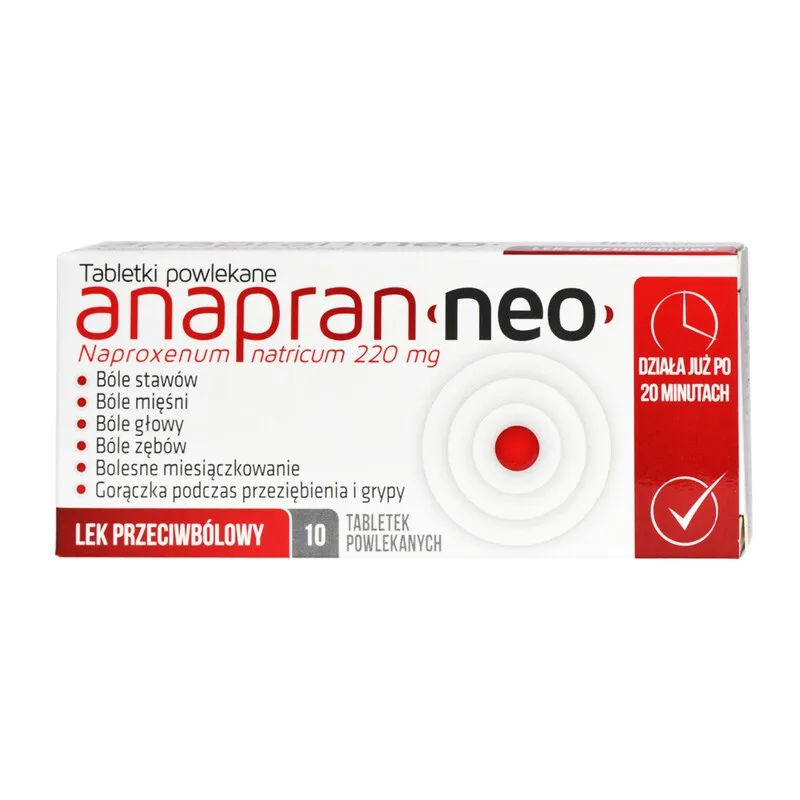
Table of Contents
Patient Information Leaflet
Anapran, 275 mg, coated tablets
Anapran, 550 mg, coated tablets
Naproxenum natricum
Please read this leaflet carefully before taking the medicine, as it contains important information for the patient.
- Keep this leaflet for future reference.
- If you have any questions, please consult your doctor, pharmacist, or nurse.
- This medicine has been prescribed for a specific individual. Do not share it with others. The medicine may harm another person, even if their symptoms are the same.
- If you experience any adverse reactions, including any not listed in this leaflet, inform your doctor, pharmacist, or nurse. See section 4.
Table of Contents
- What Anapran is and what it is used for
- Important information before taking Anapran
- How to take Anapran
- Possible side effects
- How to store Anapran
- Contents of the pack and other information
1. What Anapran is and what it is used for
Anapran contains naproxen sodium (sodium salt of naproxen). Naproxen is a non-steroidal anti-inflammatory drug (NSAID) with analgesic and antipyretic properties. Its anti-inflammatory action is based on inhibition of prostaglandin synthesis; however, other mechanisms cannot be excluded.
Therapeutic indications:
- Rheumatoid arthritis, juvenile rheumatoid arthritis, ankylosing spondylitis, osteoarticular inflammation, degenerative joint disease;
- Acute musculoskeletal inflammatory conditions, such as bursitis, tenosynovitis;
- Acute gout attack;
- Mild to moderate pain of various origins, acute or chronic, including postoperative, traumatic and other pain, muscle, bone, joint pain, headache including migraine, toothache, neuralgia;
- Dysmenorrhoea;
- Fever of various origins.
2. Important information before taking Anapran
When not to use Anapran
- if the patient is allergic to the active substance or to any of the other ingredients of this medicine (listed in section 6);
- if the patient has hypersensitivity to acetylsalicylic acid or other non-steroidal anti-inflammatory drugs (NSAIDs), manifested by asthma, rhinitis, nasal polyps, or urticaria;
- if gastrointestinal bleeding or perforation of the gastrointestinal tract has occurred after using non-steroidal anti-inflammatory drugs;
- if the patient has active or past peptic ulcer disease of the stomach and/or duodenum, with or without bleeding (two or more separate episodes of confirmed ulceration or bleeding);
- if the patient has severe heart, liver, and/or kidney failure;
- if the patient has a bleeding disorder;
- in pregnant women during the third trimester of pregnancy.
Warnings and precautions
Before starting to take Anapran, discuss this with your doctor or pharmacist.
Do not take Anapran together with medicines containing naproxen, as they contain the same active substance.
There is a risk of gastrointestinal bleeding, ulceration, or perforation, which may be fatal and may occur without warning symptoms or in patients who previously experienced such warning symptoms. In patients with gastrointestinal disorders such as ulcerative colitis or Crohn's disease, symptoms may worsen. Inform your doctor or pharmacist if the patient is taking medicines that may increase the risk of ulcers or bleeding, such as corticosteroids, anticoagulants (e.g. warfarin), certain antidepressants (selective serotonin reuptake inhibitors), or acetylsalicylic acid.
If gastrointestinal bleeding or ulceration occurs, discontinue sodium naproxen. Patients with previous gastrointestinal disorders, especially elderly patients, should inform their doctor about any unusual gastrointestinal symptoms (especially bleeding), particularly during the initial treatment period. Such patients should use the lowest effective dose for the shortest possible duration.
Taking medicines such as Anapran may be associated with a small increased risk of heart attack (myocardial infarction) or stroke. This risk increases with long-term use of high doses. Do not use higher doses or longer treatment duration than recommended.
In patients with heart disease, history of stroke, or suspected risk of these conditions (e.g. high blood pressure, diabetes, elevated cholesterol, smoking), discuss treatment options with your doctor or pharmacist.
Due to its anti-inflammatory and antipyretic effects, naproxen may mask signs of infection and complicate diagnosis.
Bronchospasm may occur in patients with bronchial asthma or allergic disorders.
Very rarely, patients taking naproxen may experience abnormalities in laboratory test results (e.g. liver function tests).
Naproxen reduces platelet aggregation and prolongs bleeding time. Inform your doctor if you are taking anticoagulant medicines or have a history of coagulation disorders.
Hypersensitivity reactions may occur in some individuals.
Anapran may affect kidney and/or liver function. If the patient has impaired kidney and/or liver function, discuss treatment options with your doctor or pharmacist.
If eye disturbances occur during treatment, contact your doctor immediately.
Patients with systemic lupus erythematosus (SLE) or mixed connective tissue disorders may have an increased risk of aseptic meningitis.
Severe skin reactions, some of which have been fatal, including exfoliative dermatitis, Stevens-Johnson syndrome (SJS), toxic epidermal necrolysis (TEN), and drug reaction with eosinophilia and systemic symptoms (DRESS), have been very rarely reported with NSAIDs. The greatest risk of these severe reactions occurs at the beginning of treatment, usually within the first month. Discontinue the medicine immediately upon the first signs of skin rash, mucosal lesions, or other hypersensitivity symptoms.
Anti-inflammatory drug doses should be tapered gradually, especially after long-term treatment.
Naproxen should not be used concomitantly with other non-steroidal anti-inflammatory drugs or glucocorticosteroids due to increased risk of serious adverse effects.
Talk to your doctor, even if the above warnings refer to conditions that occurred in the past.
Children and adolescents
The safety of naproxen use in children under 5 years of age has not been established.
In children and adolescents under 16 years of age, naproxen may be used only for the treatment of juvenile rheumatoid arthritis.
Use of Anapran in elderly patients
Anapran should be used with caution, as the risk of adverse effects is higher than in younger individuals.
Anapran with other medicines
Inform your doctor or pharmacist about all medicines currently or recently taken, as well as any medicines you plan to take.
Antacids, cholestyramine:
Concurrent use of antacids or cholestyramine may delay naproxen absorption.
Hydantoins, anticoagulants, sulfonamides:
Concomitant use of naproxen with hydantoins, anticoagulants, or sulfonamides increases their effects.
Warfarin, heparin:
Concurrent use of NSAIDs and warfarin or heparin should be closely monitored by a physician.
Furosemide:
Non-steroidal anti-inflammatory drugs reduce the diuretic effect of furosemide.
Lithium:
Naproxen reduces lithium excretion, leading to increased plasma lithium concentrations.
Antihypertensive medicines:
NSAIDs may reduce the effectiveness of antihypertensive drugs (including propranolol and other beta-blockers). They may also increase the risk of renal impairment associated with angiotensin-converting enzyme (ACE) inhibitors.
Probenecid:
Probenecid increases plasma naproxen concentrations.
Methotrexate:
Naproxen and other anti-inflammatory drugs may reduce methotrexate excretion, increasing its toxic effects.
Cardiac glycosides:
Naproxen may exacerbate symptoms of heart failure and increase plasma concentrations of cardiac glycosides.
Cyclosporine:
Concomitant use of non-steroidal anti-inflammatory drugs and cyclosporine increases the risk of nephrotoxicity.
Mifepristone:
NSAIDs used 8 to 12 days after mifepristone administration may reduce its efficacy.
Glucocorticosteroids:
Concomitant administration of non-steroidal anti-inflammatory drugs and glucocorticosteroids may increase the risk of gastrointestinal bleeding.
Other NSAIDs:
Avoid concomitant use of two or more non-steroidal anti-inflammatory drugs due to the risk of adverse effects.
Quinolone antibiotics:
Patients taking NSAIDs and quinolone antibiotics simultaneously have an increased risk of seizures.
Acetylsalicylic acid:
Concomitant administration of naproxen and acetylsalicylic acid may reduce plasma naproxen concentrations.
Concurrent (on the same day) use of naproxen for more than one day may reduce the antiplatelet effect of low-dose acetylsalicylic acid used for thrombosis prevention on platelet activity.
Antiplatelet agents and serotonin reuptake inhibitors:
Antiplatelet agents and serotonin reuptake inhibitors, when used concomitantly with naproxen, may increase the risk of gastrointestinal bleeding.
Tacrolimus, used to prevent rejection of transplanted organs, may have increased nephrotoxic effects when used concomitantly with Anapran.
Zidovudine, used in the treatment of HIV infection, may increase the risk of hematoma formation.
Anapran with food and drink
Take the medicine during or after meals.
Pregnancy, breastfeeding, and fertility
If the patient is pregnant, breastfeeding, suspects she may be pregnant, or is planning to become pregnant, she should consult her doctor or pharmacist before using this medicine.
Pregnancy
Do not take naproxen during the last three months of pregnancy, as it may harm the unborn child or cause complications during delivery. It may cause kidney and heart problems in the unborn child. It may also increase the risk of bleeding in both mother and child and may delay or prolong labor. During the first 6 months of pregnancy, naproxen should not be used unless the doctor considers it absolutely necessary. If treatment is required during this period or when trying to conceive, use the lowest effective dose for the shortest possible time. From week 20 of pregnancy, Anapran may cause kidney dysfunction in the unborn child; if used for longer than a few days, it may lead to reduced amniotic fluid volume (oligohydramnios) or narrowing of the blood vessel (ductus arteriosus) in the child's heart. If treatment is required for longer than a few days, the doctor may recommend additional monitoring.
Breastfeeding
Naproxen passes into breast milk. Do not use the medicine during breastfeeding.
Fertility
The use of naproxen may adversely affect fertility in women and is not recommended in women trying to conceive. Naproxen may impair fertility. If the patient is planning to become pregnant or has difficulty conceiving, she should inform her doctor.
Driving and operating machinery
During treatment, reaction to external stimuli may be reduced, and coordination disorders (drowsiness, visual disturbances, dizziness) may occur. Consult your doctor regarding the ability to drive or operate machinery while taking naproxen.
Effect on laboratory test results
It is recommended that adrenal cortex function tests be performed at least 48 hours after the last dose of naproxen, as naproxen may interfere with laboratory test results.
The medicine contains lactose and sodium
Lactose
If the patient has previously been diagnosed with intolerance to certain sugars, consult a doctor before taking this medicine.
Sodium
This medicine contains 25.1 mg (275 mg strength) or 50.2 mg (550 mg strength) of sodium (the main component of table salt) per dosage unit. This corresponds to 1.26% (275 mg strength) or 2.51% (550 mg strength) of the maximum recommended daily dietary sodium intake for adults.
3. How to take Anapran
This medicine should always be taken as directed by a doctor or pharmacist. If in
doubt, consult a doctor or pharmacist.
Do not split the tablets.
The maximum daily dose is 1375 mg.
Adults
Rheumatoid arthritis, ankylosing spondylitis, polyarthritis, osteoarthritis
The usual dose is 550 mg to 1100 mg daily, divided into two doses every 12 hours.
When a dose of 1100 mg is required, one 550 mg tablet may be taken twice daily or two 550 mg tablets may be administered as a single dose (in the morning or evening).
In the following cases, during the acute phase of the disease, a loading dose of 825 mg or 1100 mg daily should be administered:
- in patients reporting increased night pain or morning stiffness;
- in patients who have switched treatment from a high dose of another anti-rheumatic drug to naproxen;
- in osteoarthritic inflammation when pain is the main symptom.
Acute musculoskeletal inflammatory conditions, mild to moderate pain of various origins, painful
menstruation, fever of various causes
The initial dose is 550 mg, followed by 275 mg every 6 to 8 hours as needed, without exceeding 1375 mg on the first day and 1100 mg on subsequent days of treatment.
Acute gout attack
The recommended initial dose is 825 mg, followed by 275 mg every 8 hours until pain subsides.
Migraine headaches
The recommended dose is 825 mg at the first signs of an impending attack. Additionally, during the day, a dose of 275 mg to 550 mg may be taken if necessary, but not earlier than half an hour after the first dose.
Renal and/or hepatic impairment
This medicine should be used with caution in patients with impaired renal and/or hepatic function.
In patients receiving long-term treatment, kidney and liver function should be monitored regularly.
Children and adolescents
Children over 5 years of age:
Juvenile idiopathic arthritis
The recommended dose is 10 mg of naproxen per kilogram of body weight per day, divided into two doses (5 mg/kg twice daily).
The use of this medicine is not recommended in children under 16 years of age for other indications.
Taking the medicine at the lowest effective dose for the shortest duration necessary to relieve symptoms reduces the risk of adverse effects.
If you feel that the effect of Anapran is too strong or too weak, consult your doctor.
Overdose of Anapran
Symptoms include headache, heartburn, nausea, vomiting, epigastric pain, gastrointestinal bleeding, rarely diarrhea, confusion, restlessness, drowsiness, dizziness, tinnitus, fainting. In cases of severe poisoning, acute renal failure and liver damage may occur. Respiratory depression and coma may occur after ingestion of NSAIDs, but are rare. Seizures may also occur.
In case of accidental or intentional ingestion of large amounts of naproxen, the drug should be removed from the stomach and a doctor should be contacted immediately. Due to the high degree of protein binding, hemodialysis is ineffective.
In case of overdose, seek immediate medical advice from a doctor or pharmacist.
Missed dose of Anapran
Take the missed dose as soon as possible.
Do not take a double dose to make up for a missed dose.
4. Possible adverse reactions
Like all medicines, this medicine can cause adverse reactions, although not everyone will experience them.
Adverse reactions are listed according to their frequency of occurrence
Common (may affect up to 1 in 10 people):
- dizziness, headache, feeling of emptiness in the head;
- nausea, dyspepsia, heartburn, abdominal pain.
Uncommon (may affect up to 1 in 1,000 people):
- somnolence, insomnia, drowsiness;
- vomiting, constipation, diarrhoea, abdominal discomfort;
- skin rash, itching, urticaria.
Rare (may affect up to 1 in 10,000 people):
- gastrointestinal bleeding, gastric and/or duodenal ulcer disease (with or without bleeding and perforation);
- angioedema;
- renal failure;
- peripheral edema, fever.
Very rare (may affect less than 1 in 10,000 people):
- blood disorders (thrombocytopenia, granulocytopenia, agranulocytosis, eosinophilia, leukopenia), aplastic anaemia, haemolytic anaemia;
- photosensitivity, anaphylactic reactions, including fatal anaphylactic shock;
- seizures, sleep disturbances, depression, aseptic meningitis, disturbances in concentration and cognitive function;
- visual disturbances, corneal opacities, optic neuritis, retrobulbar optic neuritis, optic disc edema;
- tinnitus, hearing disturbances, including hearing loss;
- dyspnoea, oedema, palpitations, heart failure, arterial hypertension; treatment with NSAIDs has been associated with the occurrence of oedema, arterial hypertension and heart failure; use of medicines such as Anapran, particularly at high doses, may be associated with a small increased risk of myocardial infarction or stroke;
- vasculitis, arterial hypertension;
- dyspnoea, bronchial asthma, eosinophilic pneumonia, pulmonary oedema;
- pancreatitis, gastritis or enteritis;
- jaundice, hepatitis;
- alopecia, erythema multiforme, Stevens-Johnson syndrome, toxic epidermal necrolysis, erythema nodosum, lichen planus, systemic lupus erythematosus, bullous reactions, epidermal detachment, purpura, petechiae, haemorrhagic diathesis, excessive sweating;
- muscle pain or weakness;
- glomerulonephritis, interstitial nephritis, nephrotic syndrome, haematuria, increased plasma creatinine concentration, necrosis of renal papillae;
- excessive thirst, fatigue, stomatitis with ulceration, esophagitis;
- increased creatinine concentration, abnormal liver function tests, hyperkalemia (excess potassium in blood).
Frequency not known (frequency cannot be estimated from available data):
- increased potassium levels in blood;
- insomnia, sleep disturbances, depression, disorientation and hallucinations;
- impaired fertility in women.
If any of the following adverse reactions occur, discontinue use of
the medicine Anapran and contact your doctor immediately:
- extensive rash, high fever, elevated liver enzymes, blood disorders (eosinophilia), swollen lymph nodes and involvement of other organs (drug reaction with eosinophilia and systemic symptoms, also known as DRESS syndrome). See also section 2.
- characteristic skin allergic reaction called fixed drug eruption, which usually recurs in the same location(s) upon re-exposure to the drug and may present as round or oval red patches and swelling of the skin, blisters (urticaria), itching;
In some individuals, other adverse reactions may occur during treatment with Anapran.
If any adverse reactions not listed in this leaflet occur,
inform your doctor.
Reporting of adverse reactions
If any adverse effects occur, including any adverse effects not listed
in this leaflet, tell your doctor, pharmacist, or nurse. Adverse reactions can be reported directly to the Department of Monitoring Adverse Drug Reactions of the Office for Registration of Medicinal Products, Medical Devices
and Biocidal Products:
Al. Jerozolimskie 181C, 02-222 Warsaw, tel.: 22 49-21-301, fax: 22 49-21-309, website:
https://smz.ezdrowie.gov.pl
Adverse reactions can also be reported to the marketing authorization holder.
By reporting adverse reactions, additional information on the safety of this medicine can be collected.
5. How to store Anapran
Keep the medicine out of the sight and reach of children.
Store below 25 °C. Keep in the original packaging to protect from light.
Do not use this medicine after the expiry date stated on the carton. The expiry date refers to the last day of the stated month.
Medicines must not be disposed of via the sewage system or in household waste. Ask your pharmacist how to dispose of medicines no longer required. These measures will help protect the environment.
6. Contents of the package and other information
What Anapran contains
- The active substance is sodium naproxen. Each tablet contains 275 mg or 550 mg of sodium naproxen.
- The other ingredients are: microcrystalline cellulose, povidone, talc, magnesium stearate, low-substituted hydroxypropyl cellulose, monohydrate lactose, stearic acid, hypromellose, macrogol 8000, Opaspray K-1R-4210A coating containing: indigo carmine (E132), aluminium hydroxide, titanium dioxide, hydroxypropyl cellulose.
What Anapran looks like and contents of the pack
Anapran 275 mg: blue, round, biconvex tablets, smooth on both sides.
Anapran 550 mg: blue, round, biconvex tablets with the mark “-” imprinted on one side, smooth on the other side.
Anapran, 275 mg coated tablets
Polyethylene container in a cardboard box:
20 tablets (1 container with 20 tablets) or
40 tablets (1 container with 40 tablets)
PVC/Aluminium blisters in a cardboard box:
20 tablets (2 blisters with 10 tablets each) or
40 tablets (4 blisters with 10 tablets each) or
60 tablets (6 blisters with 10 tablets each)
Anapran, 550 mg coated tablets
Polyethylene container in a cardboard box:
20 tablets (1 container with 20 tablets)
PVC/Aluminium blisters in a cardboard box:
20 tablets (2 blisters with 10 tablets each) or
60 tablets (6 blisters with 10 tablets each)
Marketing Authorisation Holder
Adamed Pharma S.A.
Pieńków, ul. M. Adamkiewicza 6A
05-152 Czosnów
tel. +48 22 732 77 00
Manufacturer
Adamed Pharma S.A.
Pieńków, ul. M. Adamkiewicza 6A
05-152 Czosnów