Ambrisentan aop
Poland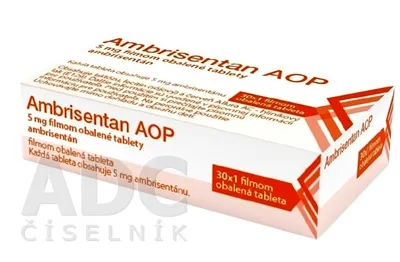
Table of Contents
Package leaflet: Information for the user
Ambrisentan AOP, 5 mg, film-coated tablets
Ambrisentan AOP, 10 mg, film-coated tablets
Ambrisentan
Please read all of this leaflet carefully before taking this medicine, because it contains
important information for you.
- Keep this leaflet. You may need to read it again.
- If you have any further questions, ask your doctor, pharmacist, or nurse.
- This medicine has been prescribed for a specific person. Do not pass it on to others. It may harm them, even if their symptoms are the same.
- If you experience any side effects, including any not listed in this leaflet, tell your doctor, pharmacist, or nurse. See section 4.
Contents of the leaflet
- What Ambrisentan AOP is and what it is used for
- What you need to know before taking Ambrisentan AOP
- How to take Ambrisentan AOP
- Possible side effects
- How to store Ambrisentan AOP
- Contents of the pack and other information
1. What Ambrisentan AOP is and what it is used for
Ambrisentan AOP contains the active substance ambrisentan. It belongs to a group of medicines known as antihypertensives (used to treat high blood pressure).
This medicine is used for the treatment of pulmonary arterial hypertension (PAH) in adults, adolescents, and children aged 8 years and older. PAH means increased blood pressure in the blood vessels (pulmonary arteries) that carry blood from the heart to the lungs. In people with PAH, these arteries become narrowed, causing the heart to work harder to pump blood through them. This leads to symptoms such as fatigue, dizziness, and shortness of breath.
Ambrisentan AOP widens the pulmonary arteries, making it easier for the heart to pump blood through them. This reduces blood pressure and helps relieve symptoms.
Ambrisentan AOP may also be used in combination with other medicines used to treat PAH.
2. Important information before taking Ambrisentan AOP
When not to take Ambrisentan AOP
- if the patient has hypersensitivity to ambrisentan, soya, or any of the other ingredients of this medicine (listed in section 6),
- if the patient is pregnant, intends to become pregnant, or could become pregnant and is not using effective contraception. Please refer to the information provided in the section "Pregnancy",
- if the patient is breastfeeding. Please refer to the information provided in the section "Breast-feeding",
- in case of liver disease. In such cases, the patient should consult their doctor, who will decide whether this medicine is suitable,
- if the patient has lung damage (fibrosis) of unknown cause (idiopathic pulmonary fibrosis).
Warnings and precautions
Before starting treatment with Ambrisentan AOP, discuss with the doctor:
- if the patient has impaired liver function,
- if the patient has anaemia (reduced number of red blood cells),
- if the patient has swelling of hands, ankles or feet due to fluid retention ( peripheral oedema ),
- if the patient has lung disease causing blockage of blood vessels in the lungs ( pulmonary veno-occlusive disease ).
→ The doctor will decide whether Ambrisentan AOP is suitable for the patient.
Regular blood tests are required
Before starting treatment with Ambrisentan AOP and at regular intervals during treatment, the doctor will order blood tests to check:
- whether the patient has anaemia,
- whether liver function is normal.
→ It is important to have the above blood tests performed regularly while taking Ambrisentan AOP.
The following symptoms may indicate impaired liver function:
- loss of appetite
- nausea
- vomiting
- elevated body temperature (fever)
- stomach (abdominal) pain
- yellowing of the skin or whites of the eyes (jaundice)
- dark-coloured urine
- itching of the skin.
If any of these symptoms occur:
→ Contact the doctor immediately.
Children
This medicine must not be given to children under 8 years of age, as its safety and efficacy have not been established in this age group.
Ambrisentan AOP and other medicines
Tell the doctor or pharmacist about all medicines the patient is currently taking, has recently taken, or plans to take.
Dosage adjustment of Ambrisentan AOP may be necessary if the patient starts taking cyclosporine A (a medicine used after organ transplantation or in the treatment of psoriasis).
If the patient is taking rifampicin (an antibiotic used in severe infections), the doctor will monitor the patient after the first dose of Ambrisentan AOP.
If the patient is taking other medicines used in the treatment of PAH (e.g. iloprost, epoprostenol, sildenafil), monitoring of the patient's condition may be required.
→ Inform the doctor or pharmacist if taking any of these medicines.
Pregnancy
Ambrisentan AOP may harm the unborn child if pregnancy occurs before, during, or shortly after treatment.
→ If pregnancy is possible, effective contraception methods must be used throughout treatment with Ambrisentan AOP. Discuss this with the doctor.
→ Do not take Ambrisentan AOP if the patient is pregnant or intends to become pregnant.
→ If pregnancy occurs or is suspected during treatment with Ambrisentan AOP, contact the doctor immediately.
For women who could become pregnant, the doctor will require a pregnancy test before starting Ambrisentan AOP and will recommend regular testing during treatment.
Breast-feeding
There are no data on whether Ambrisentan AOP passes into human milk.
→ Breastfeeding must not be undertaken during treatment with Ambrisentan AOP. Discuss this with the doctor.
Effect on fertility
In men taking Ambrisentan AOP, the medicine may reduce sperm count. Discuss any questions or concerns with the doctor.
Driving and using machines
Ambrisentan AOP may cause adverse effects such as low blood pressure, dizziness, and fatigue (see section 4), which may affect the ability to drive or operate machinery. The symptoms of the patient's underlying disease may also negatively affect the ability to drive and operate machinery.
→ If the patient feels unwell, driving and operating machinery should be avoided.
Ambrisentan AOP contains lactose, soya lecithin, Allura red AC aluminium lake (E129), and sodium.
Ambrisentan AOP tablets contain a small amount of a sugar called lactose. If the patient has previously been diagnosed with intolerance to certain sugars:
→ The patient should contact their doctor before taking Ambrisentan AOP.
Ambrisentan AOP tablets contain lecithin derived from soya.
In case of hypersensitivity to soya, this medicine must not be used (see section 2 "When not to use Ambrisentan AOP").
Ambrisentan AOP tablets contain Allura red AC aluminium lake (E129), which may cause allergic reactions (see section 4).
This medicine contains less than 1 mmol sodium (23 mg) per tablet, i.e. the medicine is considered "sodium-free".
3. How to take Ambrisentan AOP
This medicine should always be taken exactly as prescribed by your doctor or pharmacist.
If in doubt, consult your doctor or pharmacist.
How much Ambrisentan AOP to take
Adults
The usual dose of Ambrisentan AOP is one 5 mg tablet once daily. Your doctor may increase the dose to 10 mg once daily.
If you are taking cyclosporine A, do not take more than one 5 mg tablet of Ambrisentan AOP once daily.
Adolescents and children aged 8 to less than 18 years
| The usual starting dose of Ambrisentan AOP | |
| Body weight 35 kg or more | One 5 mg tablet once daily |
| Body weight at least 20 kg and less than 35 kg | One 2.5 mg tablet once daily |
| * For the 2.5 mg dose, 2.5 mg tablets of other medicinal products containing ambrisentan are available. | |
The doctor may decide to increase the dose. It is important that children attend regular visits to the doctor, as their dose of medication must be adjusted according to age or increasing body weight.
When used concomitantly with cyclosporine A, the dose of Ambrisentan AOP in adolescents and children with body weight below 50 kg will be limited to 2.5 mg once daily or 5 mg once daily if the patient's body weight is 50 kg or more.
How to take Ambrisentan AOP
Try to take the tablet at the same time each day. The tablet should be swallowed whole with a glass of water, without dividing, crushing, or chewing.
Ambrisentan AOP may be taken with food or independently of meals.
Taking more Ambrisentan AOP than recommended
If more than the recommended dose of the medicine is taken, adverse effects such as headache, hot flushes (skin reddening), dizziness, nausea, or low blood pressure—which may cause a feeling of emptiness in the head—are more likely to occur:
→ Seek advice from your doctor or pharmacist if you have taken more tablets than recommended.
Missing a dose of Ambrisentan AOP
If a dose of Ambrisentan AOP is missed, take it as soon as possible, then continue treatment as before.
→ Do not take a double dose to make up for a missed dose.
Do not stop taking Ambrisentan AOP without your doctor's advice.
Ambrisentan AOP should be taken regularly, as it helps control the pulmonary hypertension the patient has.
→ Do not stop taking Ambrisentan AOP without discussing it with your doctor.
If you have any further questions about the use of this medicine, consult your doctor or pharmacist.
4. Possible adverse effects
Like all medicines, this medicine can cause adverse effects, although they do not occur in everyone.
Symptoms that the patient and doctor should pay special attention to:
Allergic reactions
This symptom is common and may occur in no more than 1 in 10 patients. It may present as rash,
itching, and swelling (usually of the face, mouth, tongue, or throat), which may cause difficulty
breathing or swallowing.
Swelling (edema), particularly of the ankles and feet
This is a very common adverse effect and may occur in more than 1 in 10 patients.
Heart failure
This symptom results from the heart's inability to pump sufficient blood, leading to shortness of breath,
severe fatigue, and swelling of the ankles and feet. This is a common adverse effect and may occur
in no more than 1 in 10 patients.
Anaemia (reduced number of red blood cells)
This blood disorder may cause fatigue, weakness, shortness of breath, and general malaise.
Sometimes it may necessitate blood transfusion. This is a very common adverse effect,
which may occur in more than 1 in 10 patients.
Hypotension (low blood pressure)
This symptom may cause dizziness. It is a common adverse effect and may occur
in no more than 1 in 10 patients.
→ Contact your doctor immediately if any of these symptoms occur, or if they appear suddenly after taking Ambrisentan AOP.
It is important to have regular blood tests to detect possible anaemia or liver function abnormalities. You should also read the information provided in
section 2 “Necessary regular blood tests” and “The following symptoms indicate liver function disorders”.
Other adverse effects include
Very common adverse effects (may occur in more than 1 in 10 patients):
- headache
- dizziness
- palpitations (rapid or irregular heartbeat)
- worsening of breathlessness soon after starting treatment with Ambrisentan AOP
- nasal congestion or stuffy nose, mucosal congestion, or sinus pain
- nausea
- diarrhoea
- fatigue.
In combination therapy with tadalafil (another medicine used to treat PAH)
In addition to the above:
- hot flushes (skin redness)
- vomiting
- chest pain or discomfort.
Common adverse effects (may occur in less than 1 in 10 patients):
- blurred vision or other visual disturbances
- fainting
- abnormal liver function test results
- nasal congestion
- constipation
- stomach (abdominal) pain
- chest pain or discomfort
- hot flushes (skin redness)
- vomiting
- weakness
- nosebleeds
- rash.
In combination therapy with tadalafil
In addition to the above, excluding abnormal blood test results used to assess liver function:
- ringing in the ears ( tinnitus ), only during combination therapy.
Uncommon adverse effects (may occur in less than 1 in 100 patients):
- liver damage
- liver inflammation caused by the body's own immune system ( autoimmune hepatitis ).
In combination therapy with tadalafil
- sudden hearing loss.
Adverse effects in children and adolescents
These are expected to be similar to the adverse effects listed above for adults.
Reporting of adverse effects
If any adverse effects occur, including any not listed in this leaflet, inform your doctor or pharmacist. Adverse effects can be reported directly to the Department of Monitoring Adverse Drug Reactions of the Office for Registration of Medicinal Products, Medical Devices and Biocidal Products, Al. Jerozolimskie 181C, 02-222 Warsaw, tel.: + 48 22 49 21 301,
fax: + 48 22 49 21 309, website: https://smz.ezdrowie.gov.pl.
Adverse effects can also be reported to the responsible entity.
Reporting adverse effects helps to provide more information on the safety of the medicine.
5. How to store Ambrisentan AOP
Keep this medicine out of the sight and reach of children.
Do not use this medicine after the expiry date stated on the carton and blister after:
Expiry date (EXP). The expiry date refers to the last day of the stated month.
White PVC/PVDC/Aluminium blister: No special requirements regarding the storage temperature
of the medicinal product. Store in the original blister to protect from light.
Transparent PVC/PE/PVDC/Aluminium blister: No special requirements regarding the storage temperature
of the medicinal product. Store in the original packaging to protect from light.
Medicines should not be disposed of via wastewater or household waste. Ask your pharmacist how to
dispose of medicines no longer required. These measures will help protect the environment.
6. Contents of the pack and other information
What Ambrisentan AOP contains
The active substance is ambrisentan. Each coated tablet contains 5 mg or 10 mg of ambrisentan.
The other ingredients are: monohydrate lactose, microcrystalline cellulose, sodium croscarmellose,
magnesium stearate, polyvinyl alcohol, talc, titanium dioxide (E 171), macrogol 3350, soy lecithin,
Allura red AC, aluminium lake (E 129).
What Ambrisentan AOP looks like and contents of the pack
Ambrisentan AOP 5 mg are light pink, square-shaped, convex coated tablets with an imprint "5" on one side and smooth on the other side, with a nominal length and width of approximately 5.9 mm.
Ambrisentan AOP 10 mg are pink, oblong, biconvex coated tablets with an imprint "10" on one side and smooth on the other side, with a nominal length of approximately 11.1 mm and a nominal width of approximately 5.6 mm.
Ambrisentan AOP is available in 5 mg and 10 mg coated tablets supplied in unit packs in blisters containing 30 x 1 tablet.
Marketing Authorisation Holder and Manufacturer
Marketing Authorisation Holder
AOP Orphan Pharmaceuticals GmbH
Leopold-Ungar-Platz 2
1190 Vienna
Austria
Manufacturer
Genepharm S.A.
18th Km. Marathonos Ave.
153 51, Pallini Attiki
Greece
Delorbis Pharmaceuticals Ltd.
17 Athinon str.
Ergates Industrial Area
2643 Ergates
Nicosia
Cyprus
This medicinal product is authorised in the European Economic Area member states under the following names:
Austria Ambrisentan AOP 5 mg, 10 mg, Filmtabletten
Croatia Ambrisentan AOP 5 mg, 10 mg, filmom obložene tablete
Czech Republic Ambrisentan AOP
Denmark Ambrisentan AOP
Estonia Ambrisentan AOP
Finland Ambrisentan AOP 5 mg, 10 mg, tabletti, kalvopäällysteinen
Netherlands Ambrisentan AOP 5 mg, 10 mg, filmomhulde tabletten
Lithuania Ambrisentan AOP 5 mg, 10 mg, plėvele dengtos tabletės
Latvia Ambrisentan AOP 5 mg, 10 mg, apvalkotās tabletes
Germany Ambrisentan AOP 5 mg, 10 mg, Filmtabletten
Norway Ambrisentan AOP
Poland Ambrisentan AOP
Romania Ambrisentan AOP 5 mg, 10 mg, comprimate filmate
Slovakia Ambrisentan AOP 5 mg, 10 mg, filmom obalené tablety
Slovenia Ambrisentan AOP Orphan 5 mg, 10 mg, filmsko obložene tablete
Sweden Ambrisentan AOP 5 mg, 10 mg, filmdragerade tabletter
Hungary Ambrisentan AOP 5 mg, 10 mg, filmtabletta