Actimodan
Poland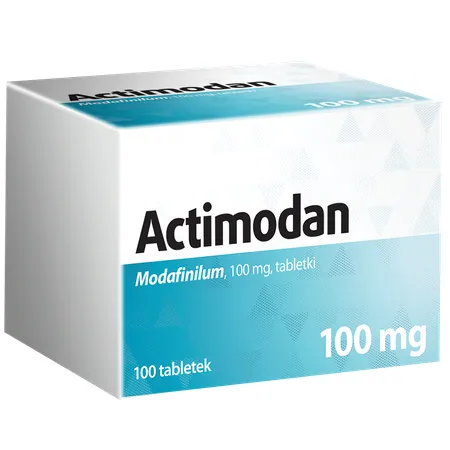
Table of Contents
Package leaflet: Information for the patient
Actimodan, 100 mg, tablets
Actimodan, 200 mg, tablets
Modafinilum
Please read the entire leaflet carefully before taking this medicine, as it contains
important information for the patient.
- Keep this leaflet, as you may need to read it again.
- If you have any further questions, please consult your doctor or pharmacist.
- This medicine has been prescribed for a specific individual. Do not pass it on to others. It may harm other people, even if their symptoms are the same.
- If you experience any adverse reactions, including any not listed in this leaflet, inform your doctor or pharmacist. See section 4.
Table of contents
- What Actimodan is and what it is used for
- What you need to know before taking Actimodan
- How to take Actimodan
- Possible side effects
- How to store Actimodan
- Contents of the pack and other information
1. What Actimodan is and what it is used for
Actimodan contains the active substance – modafinil.
Actimodan is indicated for use in adults for the treatment of excessive sleepiness associated
with narcolepsy with or without cataplexy (loss of muscle tone).
Excessive sleepiness is defined as difficulty maintaining wakefulness and an increased
risk of falling asleep in inappropriate situations.
Modafinil may be taken by adult patients with narcolepsy to help maintain wakefulness. Narcolepsy is a disorder causing excessive daytime sleepiness and a tendency to sudden episodes of sleep (sleep attacks). Taking modafinil may improve symptoms of narcolepsy and reduce the likelihood of sleep attacks. Improvement may also be achieved through other treatment methods; information about these can be obtained from your doctor.
2. Important information before taking Actimodan
When not to take Actimodan:
- if the patient is allergic to modafinil or any of the other ingredients of this medicine (listed in section 6);
- if the patient has uncontrolled, moderate to severe high blood pressure (hypertension);
- if the patient has heart rhythm disorders.
Warnings and precautions
Before starting to take Actimodan, discuss this with your doctor or pharmacist:
- if the patient has heart diseases or high blood pressure. During treatment with modafinil, the doctor will need to regularly monitor the patient's heart condition and blood pressure;
- if the patient has ever had depression, low mood, severe anxiety disorders, psychosis (loss of contact with reality), manic excitement (excessive arousal or feeling of unusual well-being), psychomotor agitation, insomnia, or bipolar affective disorder, as modafinil may worsen the condition;
- if the patient has liver disease (as a lower dose of the medicine may be required);
- if the patient has previously had problems with alcohol, drugs, or abused psychoactive substances.
Some patients taking modafinil have reported suicidal thoughts, aggressive thoughts, or aggressive behaviour. The treating doctor should be informed immediately if depression, feelings of aggression or hostility towards others, suicidal thoughts, or any other changes in the patient's behaviour occur (see section 4). The patient may ask a family member or close friend to watch for signs of depression or other changes in behaviour.
This medicine may have addictive properties when used long-term. If prolonged treatment is necessary, the doctor will regularly review whether this medicine remains the best option for the patient.
Serious skin reactions have been reported with modafinil use, including severe rash, such as Stevens-Johnson Syndrome (SJS), Toxic Epidermal Necrolysis (TEN), and Drug Rash with Eosinophilia and Systemic Symptoms (DRESS).
If a rash occurs, treatment with Actimodan must be discontinued immediately and not restarted, and the patient should contact their doctor immediately.
Children and adolescents
This medicine must not be used in children and adolescents under 18 years of age.
Actimodan and other medicines
Inform your doctor or pharmacist about all medicines the patient is currently taking, has recently taken, or plans to take.
Modafinil may interact with certain other medicines.
The doctor may need to adjust the doses of concomitantly used medicines.
This is particularly important if the patient (female patient) is taking any of the following medicines together with Actimodan:
- hormonal contraceptives (including pills, implants, intrauterine systems, and contraceptive patches). Alternative contraceptive methods should be considered during treatment with Actimodan and for 2 months after stopping treatment, as modafinil reduces the effectiveness of these contraceptive methods;
- omeprazole (a medicine used for acid reflux, indigestion, or peptic ulcer disease);
- antiviral medicines used in the treatment of HIV infection (protease inhibitors, e.g. indinavir or ritonavir);
- cyclosporine (a medicine used to prevent organ transplant rejection or in the treatment of arthritis or psoriasis);
- medicines used to treat epilepsy (e.g. carbamazepine, phenobarbital, or phenytoin);
- medicines used to treat depression (e.g. amitriptyline, citalopram, or fluoxetine) or anxiety disorders (e.g. diazepam);
- anticoagulant medicines (e.g. warfarin). During treatment, the doctor will monitor the patient's blood clotting time;
- calcium channel blockers or beta-blockers used for high blood pressure or heart problems (e.g. amlodipine, verapamil, or propranolol);
- statins used to lower cholesterol levels (e.g. atorvastatin or simvastatin);
- psychotropic medicines (e.g. diazepam, midazolam).
Pregnancy, breastfeeding, and effects on fertility
If the patient is pregnant or breastfeeding, suspects she may be pregnant, or is planning to have a baby, she should consult her doctor or pharmacist before using this medicine.
If the patient is pregnant (or thinks she may be pregnant), she should not take Actimodan. It is unknown whether the medicine may harm the unborn child.
If the patient is breastfeeding, she should not take Actimodan. It is unknown whether the medicine passes into breast milk.
Women of childbearing potential should discuss with their doctor appropriate contraceptive methods suitable for them during treatment with modafinil (and for two months after stopping the medicine) or if they have any other concerns.
Driving and operating machinery
This medicine may cause blurred vision or dizziness. If these symptoms occur, or if the patient still feels very sleepy while taking this medicine, the patient should not drive or operate machinery.
Actimodan contains monohydrate lactose and sodium
Monohydrate lactose
If the patient has previously been diagnosed with intolerance to certain sugars, the patient should consult their doctor before taking this medicine.
Sodium
This medicine contains less than 1 mmol (23 mg) of sodium per tablet; therefore, this medicine is considered "sodium-free".
3. How to take Actimodan
This medicine should always be taken according to the recommendations of your doctor or pharmacist. In case of
doubt, consult your doctor or pharmacist.
Recommended dose
Adults
The usual dose of this medicine is 200 mg per day. This dose can be taken once daily (in the morning)
or in two divided doses (100 mg in the morning and 100 mg at midday).
In some cases, your doctor may decide to increase the daily dose up to 400 mg, taken as a single dose or in two divided doses.
Elderly patients (over 65 years of age)
The usual dose of this medicine is 100 mg per day.
Patients with impaired liver function
The usual dose of this medicine is 100 mg per day.
Your doctor will regularly review your treatment to ensure it remains appropriate for you.
Method of administration
Tablets should be swallowed whole with water.
Taking more Actimodan than recommended
If you take more than the recommended dose, contact the nearest hospital department or inform your doctor immediately.
Bring this leaflet and any remaining tablets with you.
Symptoms of overdose may include: insomnia, central nervous system effects such as motor restlessness, disorientation, confusion, mental agitation, and hallucinations; gastrointestinal disturbances such as nausea and diarrhea; and cardiovascular changes such as tachycardia, bradycardia, hypertension, and chest pain.
Missing a dose of Actimodan
If you miss a dose, take the next dose at your usual time. Do not take a double dose to make up for the missed dose.
If you have any further doubts about the use of this medicine, consult your doctor or pharmacist.
4. Possible adverse reactions
Like all medicines, this medicine can cause adverse reactions, although not everybody gets them.
You should stop taking this medicine immediately and contact your doctor or go to the
nearest hospital emergency department if you experience:
- angioedema (a serious allergic reaction – sudden swelling of the face, limbs or joints without itching or pain). Swelling in the head and neck area may cause difficulty in swallowing and breathing;
- sudden shortness of breath or wheezing, or if swelling of the lips or throat begins to occur;
- skin rash or itching (especially affecting the whole body). Severe rash may lead to blistering or peeling of the skin, development of mouth, eye, nose or genital ulcers. Fever or abnormal blood test results may also occur;
- any change in mental health or well-being. Symptoms may include:
- mood swings or disturbances in thinking;
- aggression or hostility;
- forgetfulness or confusion;
- excessive excitement or euphoria – symptoms of mania;
- anxiety or nervousness;
- depression, suicidal thoughts or behaviours;
- agitation or psychosis (loss of contact with reality, which may include delusions) or hallucinations (perceiving things that are not there), depersonalization (feeling detached or numb or personality disturbance).
Other adverse reactions:
Very common (occur in more than 1 in 10 people):
- headache.
Common (occur in less than 1 in 10 people):
- dizziness;
- drowsiness or sleep problems (insomnia);
- palpitations, tachycardia (feeling of irregular and faster heartbeat than usual);
- chest pain;
- vasodilation (flushing of the face);
- dry mouth;
- loss of appetite, nausea, abdominal pain, indigestion, diarrhoea, constipation;
- general weakness, numbness or tingling in hands or feet ("pins and needles");
- blurred vision;
- abnormal blood test results indicating liver function (dose-dependent increase in liver enzyme activity);
- irritability.
Uncommon (occur in less than 1 in 100 people):
- CNS stimulation;
- back pain, neck pain, muscle pain, muscle weakness, calf cramps, joint pain;
- vertigo (spinning sensation);
- difficulty with smooth muscle movement or other movement difficulties, including muscle tension and coordination problems (increased muscle tone, tremor, lack of coordination, movement disorders);
- hyperkinesia, dyskinesia (uncoordinated and involuntary movements of limbs or entire body, twisting and writhing, involuntary lip movements, protrusion and retraction of the tongue);
- hay fever-like symptoms including itchy nose, runny nose or watery eyes;
- increased cough, asthma, shortness of breath;
- skin rash, acne or skin itching;
- sweating;
- hypertension, hypotension, abnormal electrocardiogram (ECG) and irregular or extremely slow heartbeat;
- difficulty in swallowing (dysphagia), glossitis, oral ulcers;
- bloating, reflux (regurgitation of stomach fluid), increased appetite, changes in body weight, changes in thirst or taste sensation;
- nausea (vomiting);
- migraine;
- speech disorders;
- diabetes;
- increased blood glucose levels – hyperglycaemia;
- high blood cholesterol levels – hypercholesterolaemia;
- swelling of hands and feet;
- sleep disturbances, unusual dreams;
- decreased libido;
- nosebleeds, pharyngitis, sinusitis, rhinitis;
- visual disturbances, dry eye syndrome;
- abnormal urination, frequent urination;
- menstrual disorders;
- abnormal blood tests showing changes in white blood cell count;
- psychomotor hyperactivity;
- hypoesthesia – sensory disturbances.
Frequency not known (frequency cannot be estimated from available data):
- urticaria, hypersensitivity reactions (characterized by fever, rash, swollen lymph nodes and signs of simultaneous involvement of other organs), anaphylaxis;
- delusions;
- skin reactions including erythema multiforme, Stevens-Johnson syndrome, toxic epidermal necrolysis, and drug rash with eosinophilia and systemic symptoms (DRESS).
Reporting of adverse reactions
If any adverse reactions occur, including any adverse reactions not listed
in this leaflet, inform your doctor or pharmacist. Adverse reactions can be
reported directly to the Department of Monitoring of Adverse Drug Reactions of the Office for Registration of Medicinal Products, Medical Devices and Biocidal Products:
Al. Jerozolimskie 181C, 02-222 Warsaw
Tel.: + 48 22 49 21 301
Faks: + 48 22 49 21 309
Website: https://smz.ezdrowie.gov.pl
Adverse reactions can also be reported to the marketing authorization holder.
Reporting adverse reactions helps to provide more information on the safety of the medicine.
5. How to store Actimodan
Keep the medicine out of the sight and reach of children.
No special storage conditions are required for this medicine.
Do not use this medicine after the expiry date stated on the packaging. The expiry date refers to the last day of the stated month.
Information on the blister pack: Lot – batch number, EXP – expiry date.
Medicines must not be disposed of via wastewater or household waste. Ask your pharmacist how to dispose of medicines no longer in use. This will help protect the environment.
6. Contents of the pack and other information
What Actimodan contains
- The active substance is modafinil. Each tablet contains 100 mg or 200 mg of modafinil.
- Other components of the medicine are: monohydrate lactose, sodium croscarmellose, povidone K 30, magnesium stearate.
What Actimodan looks like and contents of the pack
Actimodan 100 mg is in the form of white or almost white uncoated tablets, with embossed
markings “41” on one side and “J” on the other side, sized 12.6 mm × 5.5 mm.
The medicine is packed in blisters within a cardboard box. The pack contains 30 or 100 tablets.
Actimodan 200 mg is in the form of white or almost white uncoated tablets, with embossed
markings “4” and “2” separated by a division line on one side and “J” on the other side,
sized 16.0 mm × 7.0 mm.
The tablet can be divided into equal doses.
The medicine is packed in blisters within a cardboard box. The pack contains 30 or 100 tablets.
Not all pack sizes may be marketed.
Marketing Authorisation Holder
Aflofarm Farmacja Polska Sp. z o.o.
ul. Partyzancka 133/151
95-200 Pabianice
Poland
Tel. +48 (42) 22-53-100
Importer/Manufacturer
APL Swift Services (Malta) Ltd,
HF26, Hal Far Industrial Estate, Hal Far
Birzebbugia, BBG 3000
Malta
23.02.2022