Accupro 20
Poland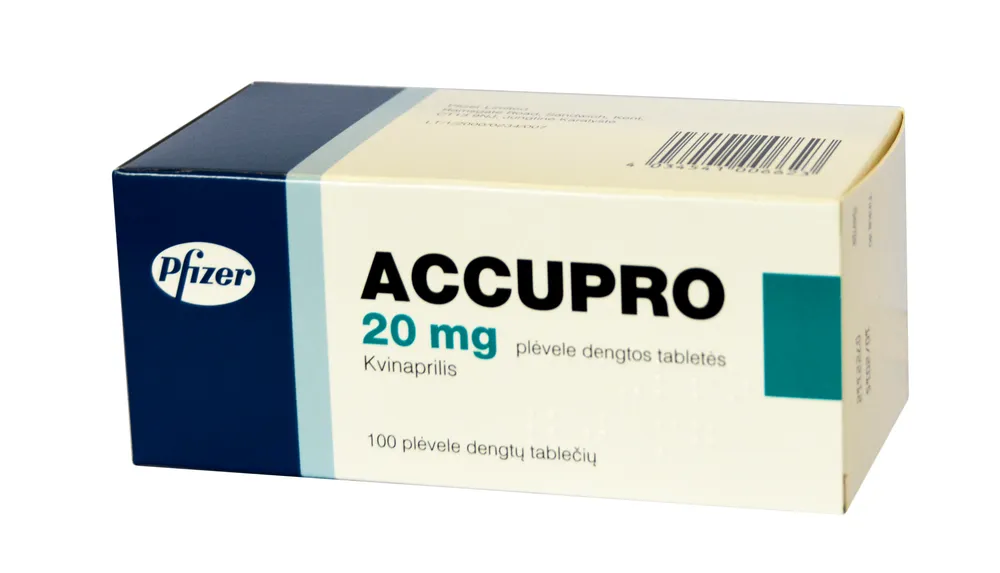
Table of Contents
Package leaflet: Information for the patient
ACCUPRO 5, 5 mg, film-coated tablets
ACCUPRO 10, 10 mg, film-coated tablets
ACCUPRO 20, 20 mg, film-coated tablets
ACCUPRO 40, 40 mg, film-coated tablets
Quinaprilum
Please read the entire leaflet carefully before using the medicine, as it contains important information for the patient.
- Keep this leaflet, so that you can read it again if necessary.
- If you have any questions, please consult your doctor or pharmacist.
- This medicine has been prescribed for a specific individual. Do not pass it on to others. The medicine may harm someone else, even if their symptoms are the same.
- If any adverse reactions occur in the patient, including any adverse reactions not listed in this leaflet, inform your doctor or pharmacist. See section 4.
Table of contents of the leaflet
- What is ACCUPRO and what is it used for
- Important information before taking ACCUPRO
- How to take ACCUPRO
- Possible side effects
- How to store ACCUPRO
- Contents of the pack and other information
1. What is ACCUPRO and what is it used for
ACCUPRO belongs to a group of medicines known as angiotensin-converting enzyme inhibitors (ACE inhibitors).
ACCUPRO is indicated for the treatment of:
- Hypertension (may be used alone or in combination with thiazide diuretics or beta-blockers).
- Congestive heart failure (used in combination with diuretics and (or) digitalis glycosides).
2. Important information before using ACCUPRO
When not to use ACCUPRO
-
if the patient is allergic to the active substance or to any of the other ingredients of this medicine (listed in section 6),
-
if the patient previously experienced swelling of any part of the body (angioedema) during treatment with other medicines from the ACE inhibitor class,
-
if the patient or a family member has ever had angioedema (hereditary angioedema or of unknown cause),
-
if the patient has aortic stenosis or obstruction of blood flow from the left ventricle of the heart,
-
after the 3rd month of pregnancy (it is also recommended to avoid using ACCUPRO in early pregnancy - see section "Pregnancy"),
-
if the patient has diabetes or kidney impairment and is being treated with a blood pressure-lowering medicine containing aliskiren,
-
if the patient is taking sacubitril + valsartan (used in heart failure).
Warnings and precautions
Before starting treatment with ACCUPRO, discuss this with your doctor or pharmacist.
Consult your doctor:
- if symptoms such as hoarseness, shortness of breath, swelling of the face, tongue or larynx occur (stop taking ACCUPRO immediately and contact your doctor without delay).
- if abdominal pain occurs (with or without nausea or vomiting), which may be related to intestinal angioedema (symptoms resolve after discontinuation of the drug).
- before undergoing desensitization procedures or low-density lipoprotein apheresis (mechanical removal of cholesterol from blood vessels). Inform your doctor about taking ACCUPRO due to an increased risk of allergic reactions.
- before hemodialysis. Inform your doctor about taking ACCUPRO due to an increased risk of allergic reactions. In such cases, your doctor will prescribe another antihypertensive drug or use a different dialysis membrane.
- if dehydration or sodium deficiency occurs (e.g. due to diarrhea, vomiting, or renin-dependent hypertension), as there is an increased risk of excessive drop in blood pressure.
- in case of congestive heart failure, due to the risk of low blood pressure. In such patients, the doctor will closely monitor dosing.
- if connective tissue disease affecting blood vessels and/or kidney function disorders are present, as there is an increased risk of agranulocytosis or neutropenia (excessive reduction in white blood cell count).
- if kidney function is impaired (creatinine clearance < 60 ml/min). The doctor will prescribe a lower dose (see below).
- if the patient has unilateral or bilateral renal artery stenosis. In such patients, the doctor will recommend regular monitoring of kidney function.
- in patients with liver dysfunction, the use of diuretics may lead to water and electrolyte imbalance, which may trigger hepatic encephalopathy.
- if the patient is taking potassium-sparing diuretics.
- if the patient has diabetes, as hypoglycemia (low blood glucose) may occur.
- if surgery and/or anesthesia are planned.
- if the patient is taking any of the following medicines used to treat high blood pressure:
- an angiotensin II receptor antagonist (AIIRA), also known as a sartan – for example, valsartan, telmisartan, irbesartan, especially if the patient has kidney impairment related to diabetes,
- aliskiren. The doctor may recommend regular monitoring of kidney function, blood pressure, and blood electrolyte levels (e.g. potassium). See also the section "When not to use ACCUPRO".
- if the patient is concurrently taking an mTOR inhibitor (e.g. temsirolimus), a DPP-IV inhibitor (e.g. vildagliptin), or a neutral endopeptidase (NEP) inhibitor, due to an increased risk of angioedema.
- in patients taking medicines or having conditions that may reduce blood sodium levels.
Inform your doctor:
- about pregnancy, suspected pregnancy, or plans to become pregnant. Use of ACCUPRO is not recommended during early pregnancy and must not be used after the 3rd month of pregnancy, as it may seriously harm the unborn child (see the section on pregnancy).
- if symptoms such as swelling of the face, limbs, eyelids, lips, tongue, difficulty swallowing or breathing, abdominal pain (possibly indicating angioedema), sore throat or fever (which may indicate infection associated with reduced white blood cell count), dizziness or fainting occur. If such symptoms occur, the patient should contact a doctor immediately.
- about any planned surgical procedure and/or anesthesia.
ACCUPRO and other medicines
Tell your doctor or pharmacist about all medicines the patient is currently taking or has recently taken, as well as any medicines the patient plans to take.
Especially inform your doctor if the patient is taking:
- tetracyclines (antibiotics),
- diuretics,
- potassium supplements, potassium-containing salt substitutes, medicines that may increase potassium levels (e.g. heparin), potassium-sparing diuretics (spironolactone, triamterene, amiloride), and antibacterial agents such as sulfamethoxazole and trimethoprim,
- anesthetic agents,
- lithium, used in the treatment of certain psychiatric disorders,
- non-steroidal anti-inflammatory drugs (NSAIDs), including COX-2 inhibitors,
- mTOR inhibitors, e.g. temsirolimus (used after organ transplantation and in cancer treatment), DPP-IV inhibitors, e.g. vildagliptin (used in the treatment of type II diabetes), or neutral endopeptidase (NEP) inhibitors, e.g. racecadotril, as the risk of angioedema may increase,
- gold preparations (e.g. sodium aurothiomalate),
- other antihypertensive medicines,
- an angiotensin II receptor antagonist (AIIRA) or aliskiren (see also sections "When not to use ACCUPRO" and "Warnings and precautions"). The doctor may recommend adjusting the dose and/or taking additional precautions.
ACCUPRO with food and drink
The absorption of ACCUPRO may be moderately reduced (by about 25–30%) if taken with a high-fat meal.
Pregnancy and breastfeeding
Pregnancy
If the patient is pregnant or breastfeeding, suspects she may be pregnant, or is planning to become pregnant, she should consult her doctor or pharmacist before using this medicine.
The doctor will usually advise stopping ACCUPRO before becoming pregnant or as soon as pregnancy is confirmed, and will recommend an alternative medicine to ACCUPRO. ACCUPRO is not recommended during early pregnancy and must not be used after the 3rd month of pregnancy, as it may seriously harm the unborn child.
Breastfeeding
Tell your doctor if the patient is breastfeeding or intends to start breastfeeding.
Breastfeeding is not recommended while taking ACCUPRO, especially during the first few weeks after birth and particularly in preterm infants. For older infants, the doctor will inform the patient about the potential benefits and risks of using ACCUPRO during breastfeeding compared to other treatment options.
Driving and operating machinery
The ability to drive and operate machinery may be impaired, especially at the beginning of treatment.
ACCUPRO contains lactose
If the patient has previously been diagnosed with intolerance to certain sugars, the patient should consult a doctor before taking this medicine.
3. How to use ACCUPRO
This medicine should always be taken exactly as directed by your doctor or pharmacist. In case of doubt,
consult your doctor or pharmacist.
Your doctor will determine the appropriate dose of ACCUPRO depending on your condition and individual
response to treatment.
Hypertension
Monotherapy: The recommended initial dose of ACCUPRO in patients not taking diuretics is 10 mg or 20 mg
once daily. Depending on the treatment response, the dose may be increased (by doubling) to a maintenance
dose of 20 mg or 40 mg daily, usually administered once daily or in two divided doses. Your doctor may
recommend gradual dose escalation over several weeks. In most patients, ACCUPRO effectively lowers
arterial blood pressure. Maximum doses of up to 80 mg of ACCUPRO per day have been used in patients.
Use of ACCUPRO together with diuretics
In patients who are simultaneously taking diuretics, your doctor usually recommends a lower initial dose
of ACCUPRO, which is 5 mg. This dose may be increased (as described above) until effective blood pressure
control is achieved.
Congestive heart failure
ACCUPRO is used concomitantly with diuretics and (or) digitalis glycosides.
The recommended initial dose in patients with heart failure is 5 mg once or twice daily. After administration
of ACCUPRO, your doctor will usually monitor cardiovascular function, particularly arterial blood pressure.
If the initial dose is well tolerated, your doctor will recommend gradually increasing the dose until the
desired therapeutic effect is achieved.
Use in children
ACCUPRO must not be given to children.
Use in elderly patients
Age does not appear to influence the efficacy and safety of ACCUPRO. Therefore, your doctor will usually
recommend the same doses as in younger patients. The initial dose of ACCUPRO is 10 mg once daily and
may be increased until effective blood pressure control is achieved.
Use in patients with renal impairment
The recommended initial dose in patients with creatinine clearance below 60 ml/min and above 30 ml/min
is 5 mg, and in patients with creatinine clearance below 30 ml/min it is 2.5 mg. If the initial dose is well
tolerated, ACCUPRO may be administered starting the next day according to a regimen of two doses per day.
If there are no symptoms of reduced blood pressure or significant renal dysfunction, the dose may be
increased at weekly intervals according to the patient's response to treatment.
In patients with impaired renal function, the following dosing of ACCUPRO is recommended:
| Crcreat (ml/min) | Maximum recommended initial dose (mg) |
| >60 | 10 |
| 30-60 | 5 |
| 10-30 | 2.5 |
| <10 | * |
* Currently, there are insufficient data available to determine specific indications for the use of ACCUPRO in hemodialysis patients due to severe renal insufficiency.
Use in patients with hepatic impairment
ACCUPRO should be used with caution in patients with liver insufficiency or progressive liver disease, particularly when used concomitantly with diuretics.
Method and route of administration
The medicine should be taken orally. It is recommended to take the medicine at the same time(s) each day, regardless of meals.
Use of a higher than recommended dose of ACCUPRO
If a higher than recommended dose of ACCUPRO is taken and symptoms indicating a significant drop in blood pressure occur (dizziness, fainting), medical advice should be sought immediately. Depending on the symptoms present, the physician will initiate appropriate treatment.
Missed dose of ACCUPRO
The missed dose should be taken as soon as possible, except when it is almost time for the next dose. A double dose should not be taken to make up for the missed dose.
Discontinuation of ACCUPRO treatment
Do not stop treatment without consulting your doctor.
If you have any further doubts regarding the use of this medicine, consult your doctor or pharmacist.
4. Possible adverse reactions
Like all medicines, this medicine can cause adverse reactions, although not everyone experiences them.
The most commonly occurring adverse reactions include: headache, dizziness, cough,
fatigue, nasal congestion, nausea, vomiting, and muscle pain.
Common (may occur in up to 1 in 10 people)
- pharyngitis, nasal congestion
- increased serum potassium concentration
- decreased sodium concentration in blood
- insomnia
- dizziness, headache, paresthesia
- hypotension
- cough, dyspnea
- nausea, vomiting, diarrhea, dyspepsia, abdominal pain
- back pain, muscle pain
- chest pain, fatigue, asthenia
- increased serum creatinine concentration, increased blood urea nitrogen concentration
Uncommon (may occur in up to 1 in 100 people)
- bronchitis, upper respiratory tract infection, urinary tract infection, sinusitis
- nervousness, depression, disorientation
- somnolence, transient ischemic attack (TIA)
- transient impairment of vision in one eye
- tinnitus, vestibular dizziness
- palpitations, angina pectoris, tachycardia, myocardial infarction
- vasodilation
- dry throat
- dryness of the oral or pharyngeal mucosa, flatulence
- pruritus, rash, increased sweating, angioedema
- renal function disorders, proteinuria
- impotence
- fever, generalized edema, peripheral edema
Rare (may occur in up to 1 in 1,000 people)
- balance disorders, fainting
- eosinophilic pneumonia
- taste disturbances, constipation, glossitis
Very rare (may occur in up to 1 in 10,000 people)
- visual disturbances
- intestinal obstruction, intestinal angioedema
- psoriasiform eruption
Frequency not known (cannot be estimated from available data)
- decreased neutrophil count in blood, decreased granulocyte count, hemolytic anemia, thrombocytopenia
- anaphylactic reactions
- dark urine, nausea, vomiting, muscle cramps, confusion and seizures. These may be symptoms of a condition called syndrome of inappropriate antidiuretic hormone secretion (SIADH)
- intracerebral hemorrhage
- orthostatic hypotension
- bronchospasm
- pancreatitis
- jaundice, hepatitis
- Stevens-Johnson syndrome, exfoliative dermatitis, alopecia, epidermal necrolysis, photosensitivity, skin changes, onset or worsening of symptoms of psoriasis (a skin disease characterized by red patches covered with silvery scales)
- decreased hemoglobin concentration, decreased hematocrit and white blood cell count, increased liver enzyme activity and bilirubin concentration, isolated cases of hemolytic anemia in patients with congenital G-6-PDH deficiency
Reporting of adverse reactions
If any adverse reactions occur, including any possible adverse reactions
not listed in this leaflet, inform your doctor or pharmacist. Adverse reactions can be reported directly to the Department of Monitoring Adverse Drug Reactions of the Office for Registration of Medicinal Products, Medical Devices
and Biocidal Products
Al. Jerozolimskie 181C
02-222 Warsaw
Tel.: +48 22 49 21 301
Fax: +48 22 49 21 309
Website: https://smz.ezdrowie.gov.pl
Adverse reactions can also be reported to the marketing authorization holder or its representative.
By reporting adverse reactions, additional information on the safety of the medicine can be collected.
5. How to store the medicine ACCUPRO
Store below 25°C.
Keep the medicine out of the sight and reach of children.
Do not use this medicine after the expiry date stated on the packaging following: EXP.
The expiry date refers to the last day of the stated month.
Medicines should not be disposed of via wastewater or household waste. Ask your pharmacist how to dispose of medicines no longer required. This will help protect the environment.
6. Contents of the pack and other information
What Accupro contains
- The active substance is quinapril in the form of quinapril hydrochloride.
- 1 coated tablet of Accupro 5 contains 5.416 mg of quinapril hydrochloride (corresponding to 5 mg of quinapril).
- 1 coated tablet of Accupro 10 contains 10.832 mg of quinapril hydrochloride (corresponding to 10 mg of quinapril).
- 1 coated tablet of Accupro 20 contains 21.664 mg of quinapril hydrochloride (corresponding to 20 mg of quinapril).
- 1 coated tablet of Accupro 40 contains 43.328 mg of quinapril hydrochloride (corresponding to 40 mg of quinapril).
- Other components:
Excipients: magnesium carbonate, gelatin, crospovidone, lactose, magnesium stearate.
Coating composition: titanium dioxide, hypromellose, hydroxypropylcellulose, polyethylene glycol 400, Candelilla wax.
The coating of Accupro 40 also contains red iron oxide.
What Accupro looks like and contents of the pack
Accupro 5 are white, oval, film-coated tablets marked with the symbol "5" on both sides of the tablet and with a score line allowing the tablet to be divided into two equal parts.
Accupro 10 are white, triangular, film-coated tablets marked with the symbol "10" on one side of the tablet and with a score line allowing the tablet to be divided into two equal parts.
Accupro 20 are white, round, film-coated tablets marked with the symbol "20" on one side of the tablet and with a score line allowing the tablet to be divided into two equal parts.
Accupro 40 are red, oval, film-coated tablets marked with the symbol "40" on one side and "PD535" on the other side.
Accupro 5, Accupro 10, Accupro 20:
Aluminum blisters covered with PVC/PVDC-Polyamide/Al/PVC in cardboard boxes containing: 30, 50 or 100 film-coated tablets.
Accupro 40:
Aluminum blisters covered with PVC/PVDC-Polyamide/Al/PVC in cardboard boxes containing: 28 or 56 film-coated tablets.
Marketing Authorisation Holder:
Pfizer Europe MA EEIG
Boulevard de la Plaine 17
1050 Bruxelles
Belgium
Manufacturer:
Pfizer Manufacturing Deutschland GmbH
Betriebsstätte Freiburg
Mooswaldallee 1
79090 Freiburg
Germany
For further information about this medicine, please contact the local representative of the Marketing Authorisation Holder:
Pfizer Polska Sp. z o.o.
tel. 22 335 61 00