VaqtA
Italy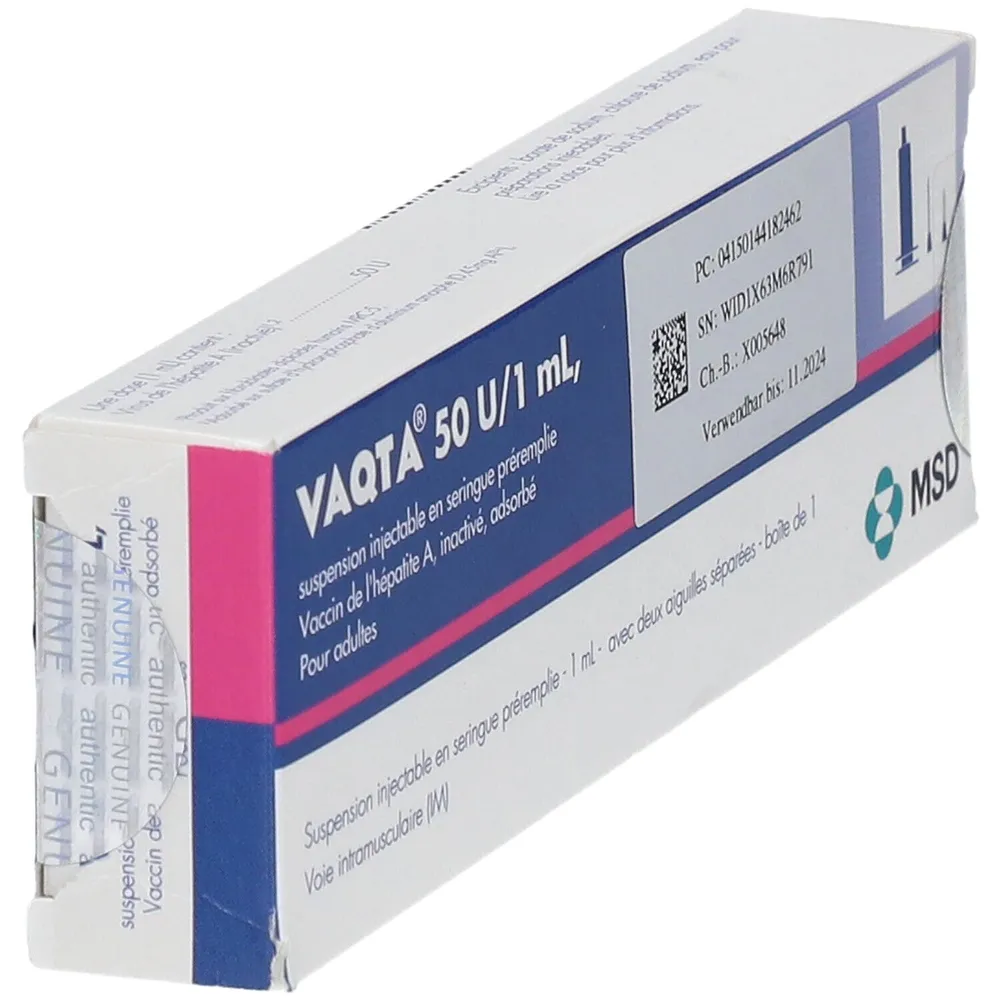
Table of Contents
- Package insert: information for the user
- VAQTA 50 U/1 mL
- 1. What VAQTA 50 U/1 mL is and what it is used for
- 2. What you should know before you are given VAQTA 50 U/1 mL
- 3. How VAQTA 50 U/1 mL is administered
- 4. Possible side effects
- 5. How to store VAQTA 50 U/1 mL
- 6. Package contents and other information
- The following information is intended exclusively for healthcare professionals:
- Patient Information Leaflet: Information for the User
- VAQTA
- 1. What VAQTA 25 U/0.5 mL is and what it is used for
- 2. What you should know before you are given VAQTA 25 U/0.5 mL
- 3. How VAQTA 25 U/0.5 mL is administered
- 4. Possible side effects
- 5. How to store VAQTA 25U/0.5 mL
- 6. Package contents and other information
- The following information is intended exclusively for healthcare professionals:
PACKAGE INSERT
Package insert: information for the user
VAQTA 50 U/1 mL
Injectable suspension in a pre-filled syringe
Inactivated adsorbed hepatitis A vaccine
For adults
Please read this leaflet carefully before you or your child are vaccinated, as it contains
important information for you.
- Keep this leaflet. You may need to read it again.
- If you have any questions, consult your doctor, pharmacist, or nurse.
- This vaccine has been prescribed for you only. Do not give it to others.
- If you experience any side effects, including those not listed in this leaflet, contact your doctor, pharmacist, or nurse. See section 4.
Contents of this leaflet:
- What VAQTA 50 U/1 mL is and what it is used for
- What you need to know before you are given VAQTA 50 U/1 mL
- How VAQTA 50 U/1 mL is administered
- Possible side effects
- How to store VAQTA 50 U/1 mL
- Contents of the pack and other information
1. What VAQTA 50 U/1 mL is and what it is used for
VAQTA 50 U/1 mL is a vaccine. Vaccines are used to protect against infectious diseases.
They work by stimulating the body to produce its own protection against the disease for which the vaccine is specific.
VAQTA 50 U/1 mL helps protect adults (18 years of age and older) against disease caused by the hepatitis A virus.
Hepatitis A is an infection caused by a virus that affects the liver. It can be contracted through food or drinks contaminated with the virus. Symptoms include jaundice (yellowing of the skin and eyes) and a general feeling of being unwell.
Once you receive an injection of VAQTA 50 U/1 mL, your body's natural defenses will begin producing protection (antibodies) against the hepatitis A virus. However, it generally takes from 2 to 4 weeks after the injection before you become protected.
VAQTA 50 U/1 mL will not prevent hepatitis caused by infectious agents other than the hepatitis A virus.
Additionally, if you are already infected with the hepatitis A virus at the time of receiving VAQTA 50 U/1 mL, vaccination may not prevent the disease.
VAQTA 50 U/1 mL protects against hepatitis A, but cannot cause hepatitis A infection.
2. What you should know before you are given VAQTA 50 U/1 mL
It is important that you inform your doctor or nurse if any of the following apply to you. If there is anything you do not understand, please ask your doctor or nurse for clarification.
VAQTA 50 U/1 mL must not be administered
- if you are allergic to the active substance or to any of the other components of VAQTA 50 U/1 mL (listed in section 6) or to neomycin and formaldehyde (see "Consult your doctor, pharmacist, or nurse before receiving VAQTA 50 U/1 mL").
- if you currently have a severe infection with fever. Your doctor will decide when the vaccine can be administered.
Warnings and precautions
Talk to your doctor, pharmacist, or nurse before you are given VAQTA 50 U/1 mL
- if you have previously experienced an allergic reaction after receiving a dose of VAQTA 50 U/1 mL.
- This vaccine may contain traces of an antibiotic called neomycin and a substance called formaldehyde, both of which are used during the vaccine production process and may remain in trace amounts in the final product.
- if you have any blood clotting disorder that causes you to bruise easily or bleed for prolonged periods after minor cuts (e.g., due to bleeding disorders or treatment with anticoagulant medicines).
- if you have a weakened immune system due to cancer, treatments affecting the immune system, or any other illness. The vaccine may not be as effective as in individuals with a healthy immune system. If possible, vaccination should be postponed until recovery from such conditions or completion of treatment.
The container of this medicine contains rubber latex. Rubber latex may cause severe allergic reactions.
As with other vaccines, VAQTA 50 U/1 mL may not fully protect all vaccinated individuals.
Inform your doctor if you have a history of jaundice or if you have lived in an area where hepatitis A is common. Your doctor may consider performing a test to measure hepatitis A antibodies before vaccination.
Other medicines and VAQTA 50 U/1 mL
Inform your doctor or pharmacist if you are taking, have recently taken, or might take any other medicines.
Other vaccines
Since VAQTA 50 U/1 mL does not contain any live bacteria or virus, it can generally be administered simultaneously with other vaccines, provided different injection sites are used (e.g., the other arm or leg). VAQTA 50 U/1 mL must not be mixed in the same syringe with other vaccines.
Studies have shown that VAQTA 50 U/1 mL can be administered concurrently with the yellow fever vaccine and the typhoid polysaccharide vaccine.
Studies conducted with the pediatric formulation have demonstrated that the vaccine can be administered simultaneously with measles, mumps, rubella, varicella, 7-valent conjugate pneumococcal, and inactivated polio vaccines.
Immunoglobulins (antibodies)
In some cases, it may be necessary to administer an injection of human immunoglobulins (antibodies) to provide protection until the vaccine starts to take effect. VAQTA 50 U/1 mL may be administered at the same time as human immunoglobulins (antibodies), provided the two injections are given at different injection sites.
Medicines affecting the immune system or blood
Refer to the section "Warnings and precautions."
Pregnancy, breastfeeding, and fertility
If you are pregnant, suspect you may be pregnant, planning to become pregnant, or are breastfeeding, please consult your doctor or pharmacist before receiving this vaccination.
Driving and using machines
There are no data suggesting that VAQTA 50 U/1 mL may affect the ability to drive vehicles or operate machinery.
VAQTA contains sodium
This medicine contains less than 1 mmol (23 mg) of sodium per dose, i.e., it is essentially "sodium-free".
3. How VAQTA 50 U/1 mL is administered
Dosage
VAQTA 50 U/1 mL must be administered by doctors or nurses trained in the use of vaccines and equipped to manage any rare severe allergic reactions. Individuals to be vaccinated will receive a first dose followed by a second dose (booster).
First dose
Adults aged 18 years and older must receive a single 1.0 mL injection (50 U). The first dose of vaccine will protect you against hepatitis A infection within 2–4 weeks.
Second dose (booster)
Individuals who have received a first dose of vaccine must receive the second dose (booster) of 1.0 mL (50 U) after 6–18 months.
Long-term protection requires a second dose of vaccine (booster dose). Healthy adults who received two doses of vaccine have shown persistent antibody levels for at least 6 years. Hepatitis A antibodies are expected to persist for at least 25 years after vaccination.
Use in children and adolescents
VAQTA 50 U/1 mL is not recommended for individuals under 18 years of age.
Method and route of administration
Your doctor or nurse will administer VAQTA 50 U/1 mL by intramuscular injection into the upper arm (deltoid muscle).
Individuals at risk of bleeding following an injection (e.g., hemophiliacs) may receive VAQTA 50 U/1 mL by subcutaneous injection rather than intramuscular to reduce the risk of bleeding.
VAQTA 50 U/1 mL must not be administered into a blood vessel.
4. Possible side effects
Like all medicines and vaccines, this vaccine may cause side effects, although not everybody gets them.
As with all vaccines, allergic reactions may occur, which in rare cases can lead to shock. These reactions may include:
- urticaria
- difficulty breathing
- swelling of the face, tongue and throat
- dizziness
- collapse
When these signs or symptoms occur, they usually develop immediately after the injection is given and while you are still in the hospital or medical office. If any of these symptoms occur after you have left the place where the vaccine was administered, consult a doctor IMMEDIATELY.
| Frequency of adverse reactions | Adverse reactions |
| Very common: may affect more than 1 in 10 people | injection site tenderness, pain, warmth, swelling, redness |
| Common: may affect up to 1 in 10 people |
|
| Uncommon: may affect up to 1 in 100 people |
|
| Rare: may affect up to 1 in 1,000 people |
|
| |
| Not known: frequency cannot be estimated from the available data |
|
Reporting of adverse reactions
If you experience any adverse reaction, including those not listed in this leaflet, contact your doctor or pharmacist.
You may also report adverse reactions directly through the national reporting system at the following website: https://www.aifa.gov.it/content/segnalazioni-reazioni-avverse.
By reporting adverse reactions, you can help provide more information on the safety of this medicine.
5. How to store VAQTA 50 U/1 mL
Keep this vaccine out of the sight and reach of children.
Do not use this vaccine after the expiry date which is stated on the label after "EXP". The expiry date refers to the last day of that month.
Store in a refrigerator (2°C - 8°C). Do not freeze.
Do not use this vaccine if it looks unusual (see section 6) or if you notice the presence of foreign particles.
Do not dispose of any medicine via wastewater or household waste. Ask your pharmacist how to dispose of medicines you no longer use. This will help protect the environment.
6. Package contents and other information
What VAQTA 50 U/1 mL contains
The active substance is: inactivated hepatitis A virus (produced on human diploid MRC-5 cells,
adsorbed on amorphous aluminium hydroxyphosphate sulfate).
One dose (1 mL) contains 50 U of hepatitis A virus (inactivated), adsorbed on amorphous aluminium hydroxyphosphate sulfate (0.45 milligrams as aluminium).
The other excipients are: Boric acid, sodium chloride and water for injections.
Description of the appearance of VAQTA 50 U/1 mL and contents of the pack
VAQTA 50 U/1 mL is an injectable suspension (1 mL in a pre-filled syringe)
- without needle – pack size: 1
- with one or two separate needles – pack size: 1
- with pre-attached needle – pack size: 1
Not all pack sizes may be marketed.
After thorough shaking, VAQTA 50 U/1 mL appears as a white, opaque suspension.
Marketing Authorisation Holder and Manufacturer
Marketing Authorisation Holder
MSD Italia S.r.l.
Via Vitorchiano, 151
00189 Rome
Italy
Manufacturer
Merck Sharp & Dohme, Netherlands BV
Waarderweg 39
2031 BN Haarlem (The Netherlands)
This medicinal product is authorised in the Member States of the European Economic Area under the following names:
| Austria | VAQTA |
| Belgium, Luxembourg, Finland | VAQTA 50 U/1 mL |
| Germany, Portugal | VAQTA |
| Denmark | VAQTA (50 E/1mL) |
| France | VAQTA 50 U/1 mL |
| Greece | VAQTA 50 U |
| Ireland, Netherlands | VAQTA Adult |
| Italy | VAQTA 50 U/1 mL, injectable suspension in pre-filled syringe |
| Sweden | Vaqta |
| Spain | VAQTA 50 Unidades/1ml injectable suspension in pre-filled syringe |
The following information is intended exclusively for healthcare professionals:
Incompatibilities
In the absence of compatibility studies, this medicinal product must not be mixed with other medicinal products.
Instructions for use and handling
The vaccine should be used as supplied.
The vaccine should be inspected visually before administration to detect the presence of any foreign particles and/or changes in physical appearance. Discard the product if particulate matter is present or if discoloration occurs. The syringe must be shaken thoroughly until a white, slightly opaque suspension is obtained.
Thorough shaking is necessary to maintain the vaccine in suspension. For the syringe without a pre-attached needle, hold the syringe barrel and attach the needle by rotating it clockwise until the needle is securely fixed to the syringe, then administer the vaccine immediately.
Patient Information Leaflet: Information for the User
VAQTA
25 U/0.5 mL
Injectable suspension in a pre-filled syringe
Inactivated, adsorbed hepatitis A vaccine
For children and adolescents
Please read this leaflet carefully before you or your child are vaccinated, as it contains important information for you.
- Keep this leaflet. You may need to read it again.
- If you have any questions, ask your doctor, pharmacist, or nurse.
- This vaccine has been prescribed only for you or your child. Do not give it to others.
- If you experience any side effects, including those not listed in this leaflet, tell your doctor, pharmacist, or nurse. See section 4.
Contents of this leaflet:
- What VAQTA 25 U/0.5 mL is and what it is used for
- What you need to know before being given VAQTA 25 U/0.5 mL
- How VAQTA 25 U/0.5 mL is administered
- Possible side effects
- How to store VAQTA 25 U/0.5 mL
- Package contents and other information
1. What VAQTA 25 U/0.5 mL is and what it is used for
VAQTA 25 U/0.5 mL is a vaccine. Vaccines are used to protect against infectious diseases.
They work by stimulating the body to produce its own protection against the specific disease for which the vaccine is intended.
VAQTA 25 U/0.5 mL helps protect children from 12 months up to 17 years of age against the disease caused by the hepatitis A virus.
Hepatitis A is an infection caused by a virus that affects the liver. It can be contracted through food or drinks contaminated with the virus. Symptoms include jaundice (yellowing of the skin and eyes) and a general feeling of being unwell.
Once you or your child receives an injection of VAQTA 25 U/0.5 mL, the body's natural defenses will begin to produce protection (antibodies) against the hepatitis A virus.
However, it generally takes from 2 to 4 weeks after the injection before you or your child becomes protected.
VAQTA 25 U/0.5 mL will not prevent hepatitis caused by infectious agents other than the hepatitis A virus.
Furthermore, if you or your child are already infected with the hepatitis A virus at the time of administration of VAQTA 25 U/0.5 mL, vaccination may not prevent the disease.
VAQTA 25 U/0.5 mL protects against hepatitis A, but cannot cause hepatitis A infection.
2. What you should know before you are given VAQTA 25 U/0.5 mL
It is important that you inform your doctor or healthcare professional if any of the following apply to you or your child. If there is anything you do not understand, please ask your doctor or nurse for clarification.
VAQTA 25 U/0.5 mL must not be administered
- if you or your child are allergic to the active substance or to any of the other ingredients of VAQTA 25 U/0.5 mL (listed in section 6), or to neomycin and formaldehyde (see "Consult your doctor, pharmacist, or nurse before you are given VAQTA 25 U/0.5 mL").
- if you or your child currently have a severe infection with fever. Your doctor will decide when the vaccine can be administered.
Warnings and precautions
Talk to your doctor, pharmacist, or nurse before you are given VAQTA 25 U/0.5 mL
- if you or your child have had an allergic reaction after receiving a previous dose of VAQTA 25 U/0.5 mL.
- This vaccine may contain traces of an antibiotic called neomycin and a substance called formaldehyde, both of which are used during the vaccine production process and may be present in trace amounts in the final product.
- if you or your child have any blood clotting disorders causing you to bruise easily or bleed for a prolonged period after minor cuts (e.g. due to bleeding disorders or treatment with anticoagulant medicines).
- if you or your child have a weakened immune system due to cancer, treatments affecting the immune system, or any other illness. The vaccine may not be as effective as in individuals with a healthy immune system. If possible, vaccination should be postponed until recovery from these conditions or completion of treatment.
The container of this medicinal product contains dry natural rubber latex. Latex can cause severe allergic reactions.
As with other vaccines, VAQTA 25 U/0.5 mL may not fully protect all vaccinated individuals.
Inform your doctor if you or your child have a history of jaundice or have lived in an area where hepatitis A is common. Your doctor may consider performing a test to measure hepatitis A antibodies before vaccination.
Other medicines and VAQTA 25 U/0.5 mL
Inform your doctor or pharmacist if you or your child are taking, have recently taken, or might take any other medicines.
Other vaccines
Since VAQTA 25 U/0.5 mL does not contain any live bacteria or viruses, it can generally be administered simultaneously with other vaccines, provided different injection sites are used (e.g. a different limb, such as the other arm or leg). VAQTA 25 U/0.5 mL must not be mixed in the same syringe with other vaccines.
Studies have shown that VAQTA 25 U/0.5 mL can be given concurrently with measles, rubella, mumps, varicella, 7-valent conjugated pneumococcal, inactivated polio, and vaccines containing diphtheria toxoid, tetanus toxoid, acellular pertussis, and Haemophilus influenzae type b.
In adults, VAQTA can be administered simultaneously with the yellow fever vaccine and the typhoid polysaccharide vaccine.
Immunoglobulins (Antibodies)
Sometimes it may be necessary to administer an injection of human immunoglobulins (antibodies) to protect you or your child until the vaccine starts providing protection.
VAQTA 25 U/0.5 mL can be administered at the same time as human immunoglobulins (antibodies), provided the two injections are given at different injection sites.
Medicines affecting the immune system or blood
Refer to the section "Warnings and precautions".
Pregnancy, breastfeeding and fertility
If you or your daughter are pregnant, suspect you may be pregnant, planning to become pregnant, or are breastfeeding, consult your doctor or pharmacist before receiving this vaccination.
Driving and using machines
There are no data suggesting that VAQTA 25 U/0.5 mL may affect the ability to drive or operate machinery.
VAQTA contains sodium
This medicine contains less than 1 mmol (23 mg) of sodium per dose, i.e. it is essentially "sodium-free".
3. How VAQTA 25 U/0.5 mL is administered
Dosage
VAQTA 25 U/0.5 mL must be administered by doctors or nurses trained in the use of vaccines and equipped to manage any uncommon severe allergic reactions. Individuals to be vaccinated will receive an initial dose followed by a second dose (booster).
First dose
Children aged 12 months to 17 years should receive a single 0.5 mL (25U) injection. The first vaccine dose will protect you or your child against hepatitis A infection within 2–4 weeks.
The safety and efficacy in infants under 12 months of age has not been established.
Second dose (booster)
Individuals who have received an initial vaccine dose should receive a second dose (booster) of 0.5 mL (25U) 6–18 months later.
Long-term protection requires a second vaccine dose (booster dose). Healthy children who received two vaccine doses have shown persistent antibody levels for at least 10 years. It is expected that hepatitis A antibodies will persist for at least 25 years after vaccination.
VAQTA 25U/0.5mL is not recommended for individuals over 18 years of age.
Method and route of administration
Your doctor or nurse will administer VAQTA 25 U/0.5 mL as an intramuscular injection into the upper arm (deltoid muscle). In children, if the deltoid muscle is not sufficiently developed, the anterolateral thigh muscle may be used instead.
Individuals at risk of extensive bleeding following an injection (e.g., haemophiliacs) may receive VAQTA 25 U/0.5 mL via subcutaneous injection rather than intramuscularly, in order to reduce the risk of bleeding.
VAQTA 25 U/0.5 mL must not be administered into a blood vessel.
4. Possible side effects
Like all medicines and vaccines, VAQTA 25 U/0.5 mL can cause side effects, although not everybody experiences them.
As with all vaccines, allergic reactions may occur, which in rare cases can lead to shock. These reactions may include:
- urticaria
- difficulty breathing
- swelling of the face, tongue, and throat
- dizziness
- collapse
When these signs or symptoms occur, they usually develop immediately after the injection is given and while you or your child are still in the hospital or medical office. If any of these symptoms occur after leaving the place where the vaccine was administered to you or your child, seek IMMEDIATE medical attention.
Side effects reported in children aged between 12 and 23 months
| Frequency of adverse reactions | Adverse reactions |
| Very common: may affect more than 1 in 10 children | pain/tenderness and redness at the injection site |
| Common: may affect up to 1 in 10 children |
|
| Uncommon: may affect up to 1 in 100 children |
|
| Rare: may affect up to 1 in 1,000 children |
|
| |
| Not known: frequency cannot be estimated from the available data *Rii dli lii |
|
Adverse effects reported in children aged between 2 and 17 years
| Frequency of adverse reactions | Adverse reactions |
| Very common: may affect more than 1 in 10 children | pain/tenderness and redness at the injection site |
| Common: may affect up to 1 in 10 children |
|
| Uncommon: may affect up to 1 in 100 children |
|
| Rare reactions: may affect up to 1 in 1,000 children |
|
| |
| Not known: frequency cannot be estimated from the available data |
|
Reporting of adverse reactions
If you experience any adverse reaction, including those not listed in this leaflet, contact your doctor or pharmacist.
You can also report adverse reactions directly via the national reporting system at https://www.aifa.gov.it/content/segnalazioni-reazioni-avverse .
By reporting adverse reactions, you can help provide more information on the safety of this medicine.
5. How to store VAQTA 25U/0.5 mL
Keep this vaccine out of the sight and reach of children.
Do not use this vaccine after the expiry date stated on the label after "EXP". The expiry date refers to the last day of that month.
Store in a refrigerator (2 °C - 8 °C). Do not freeze.
Do not use this vaccine if it looks unusual (see section 6) or if you notice the presence of foreign particles.
Do not dispose of any medicine via wastewater or household waste. Ask your pharmacist how to dispose of medicines no longer in use. This will help protect the environment.
6. Package contents and other information
What VAQTA 25 U/0.5 mL contains
The active substance is: inactivated hepatitis A virus (produced on human diploid cells MRC-5,
adsorbed onto amorphous aluminium hydroxyphosphate sulfate).
One dose (0.5 mL) contains 25 U of hepatitis A virus (inactivated), adsorbed onto aluminium
hydroxyphosphate sulfate (0.225 milligrams as amorphous aluminium).
The other excipients are:
Boric acid sodium salt, sodium chloride and water for injections.
Description of the appearance of VAQTA 25 U/0.5 mL and contents of the pack
VAQTA 25 U/0.5 mL is an injectable suspension (0.5 mL in a pre-filled syringe)
- without needle - pack of 1
- with one or two separate needles - pack of 1
- with pre-attached needle - pack of 1
Not all pack sizes may be marketed.
After thorough shaking, VAQTA 25 U/0.5 mL appears as a white, opaque suspension.
Marketing Authorisation Holder and Manufacturer
Marketing Authorisation Holder
MSD Italia S.r.l.
Via Vitorchiano, 151
00189 Rome
Italy
Manufacturer
Merck Sharp & Dohme, Netherlands BV
Waarderweg 39
2031 BN Haarlem (The Netherlands)
This medicinal product is authorised in the Member States of the European Economic Area under the following names:
| Austria | VAQTA K pro infantibus |
| Belgium, Luxembourg | VAQTA JUNIOR 25 U/0.5 mL |
| Portugal | VAQTA |
| Denmark, Finland, France | VAQTA 25 U/0.5 mL |
| Germany | VAQTA Kinder |
| Greece | VAQTA 25 U |
| Ireland | VAQTA PAEDIATRIC |
| Italy | VAQTA 25 U/0.5 mL, injectable suspension in pre-filled syringe |
| Netherlands | VAQTA JUNIOR |
| Sweden | Vaqta |
| Spain | VAQTA 25 Units/0.5 mL injectable suspension in pre-filled syringe |
The following information is intended exclusively for healthcare professionals:
Incompatibilities
In the absence of compatibility studies, this medicinal product must not be mixed with other medicinal products.
Instructions for use and handling
The vaccine should be used as supplied.
The vaccine should be inspected visually prior to administration for the presence of any foreign particles and/or changes in physical appearance. Discard the product if particulate matter is present or if discoloration is observed. The syringe must be shaken thoroughly until a white, slightly opaque suspension is obtained.
Thorough shaking is necessary to maintain the vaccine in suspension.
For the syringe without a pre-attached needle, hold the syringe barrel and attach the needle by rotating it clockwise until firmly secured to the syringe, then administer the vaccine immediately.