Tobradex
Italy
Table of Contents
- Patient information leaflet
- TobraDex 0.3% + 0.1% ear drops, suspension
- 1. What TobraDex is and what it is used for
- 2. What you need to know before using TobraDex
- 3. How to use TobraDex
- 4. Possible side effects
- 5. How to store TobraDex
- 6. Package contents and other information
- 3. How to use TobraDex
- 4. Possible side effects
Patient information leaflet
TobraDex 0.3% + 0.1% ear drops, suspension
tobramycin + dexamethasone
Please read all of this leaflet carefully before you start using this medicine because it contains important information for you
- Keep this leaflet. You may need to read it again.
- If you have any questions, ask your doctor or pharmacist.
- This medicine has been prescribed for you only. Do not give it to other people, even if they have the same symptoms as you, because it could be harmful.
- If you experience any side effects, including those not listed in this leaflet, talk to your doctor or pharmacist. See section 4.
Contents of this leaflet
- What TobraDex is and what it is used for
- What you need to know before using TobraDex
- How to use TobraDex
- Possible side effects
- How to store TobraDex
- Contents of the pack and other information
1. What TobraDex is and what it is used for
TobraDex contains a combination of two medicines: dexamethasone, which belongs to the class of corticosteroids and has an anti-inflammatory effect, and tobramycin, which belongs to the class of aminoglycoside antibiotics and acts against various bacteria that can cause ear infections.
TobraDex is used in adults and children over 2 years of age for the treatment of inflammation of the external auditory canal (otitis externa) and of the middle ear (otitis media) when an anti-inflammatory agent (corticosteroid) is required, in the presence of infection caused by bacteria sensitive to tobramycin or when there is a risk of infection.
2. What you need to know before using TobraDex
Do NOT use TobraDex
- If you are allergic (hypersensitive) to tobramycin, dexamethasone, or any of the other ingredients of this medicine (listed in section 6).
- If you have tuberculosis of the skin, Herpes simplex, or another viral skin disease, or a fungal ear infection (otomycosis).
- If you have, or suspect you have, a perforated eardrum.
- If you are breastfeeding.
- In children under 2 years of age.
Warnings and precautions
-
Consult your doctor before using TobraDex.
-
Use TobraDex only in the ear; do not inject it.
-
Before applying TobraDex drops, clean the ear canal.
-
During treatment with TobraDex, follow the usual precautions related to corticosteroid use as advised by your doctor.
-
Consult your doctor if you have or have ever had conditions such as severe myasthenia or Parkinson's disease. This type of antibiotic may worsen muscle weakness.
-
In patients who have received systemic (injected) aminoglycoside antibiotics such as tobramycin, serious toxic effects on the nervous system, ears, and kidneys have occurred. Be cautious and consult your doctor if you are using TobraDex together with systemic (injected) aminoglycoside antibiotics.
-
Adverse effects typically associated with systemic (oral or injected) corticosteroid use—such as suppression of adrenal gland activity—may also occur with local corticosteroid administration, especially in children (see section “Children”).
-
The tobramycin contained in TobraDex may cause ear-related toxic effects: if, after instillation of TobraDex, you experience symptoms such as dizziness, vertigo, tinnitus (ringing in the ear), or hearing loss, stop treatment immediately and consult your doctor.
-
To reduce the risk of toxic effects, do not apply TobraDex on wounds or burns, and do not use the medicine for longer than 7 days.
-
Prolonged use of antibiotics such as tobramycin may promote the growth of microorganisms, including fungi, that are no longer sensitive to the medicine. If you do not notice improvement in your condition within a short time, discontinue use and consult your doctor.
-
If you are simultaneously using TobraDex and systemic (injected) tobramycin or other aminoglycoside antibiotics, your doctor may perform blood tests to monitor the total antibiotic levels in your blood.
-
If irritation or sensitization (allergic reaction) occurs, stop treatment and consult your doctor. Sensitization may also occur with the use of other antibiotics belonging to the aminoglycoside class, whether administered locally or systemically (by injection).
-
More careful medical monitoring is required in elderly patients, patients already receiving aminoglycoside antibiotics, patients with kidney disease, and those receiving concomitant treatment with loop diuretics.
-
Contact your doctor if you experience blurred vision or other visual disturbances.
Children
TobraDex may be used in children aged 2 years and older.
Children may be more sensitive than adults to the adverse effects of corticosteroids, even after local administration.
Possible effects include suppression of the hypothalamic-pituitary-adrenal axis, Cushing's syndrome, failure to gain weight, growth retardation, and increased intracranial pressure with headache and bulging fontanelles.
Follow your doctor's instructions exactly when administering TobraDex to a child.
Other medicines and TobraDex
Inform your doctor or pharmacist if you are taking, have recently taken, or might take any other medicines.
Incompatibilities
The ingredient tyloxapol, contained in TobraDex ear drops, is incompatible with tetracyclines.
Do not use TobraDex together with other ear medicines containing tetracyclines.
Driving and using machines
No effects of TobraDex on the ability to drive or operate machinery are known.
Fertility, pregnancy, and breastfeeding
If you are pregnant, think you may be pregnant, are planning to become pregnant, or are breastfeeding, consult your doctor or pharmacist before using this medicine.
Fertility
No studies have been conducted to evaluate the effect of TobraDex on human fertility.
Pregnancy
Data on the use of corticosteroids in the ears during pregnancy are lacking or limited. Therefore, during pregnancy, the use of TobraDex should be decided by the doctor, who will weigh the benefits for the mother against the potential risks for the fetus.
Breastfeeding
It is not known whether tobramycin or dexamethasone administered in the ears is excreted in breast milk. Corticosteroids and tobramycin are excreted in breast milk following oral or injected administration. The risk to infants cannot be excluded. The use of TobraDex is contraindicated during breastfeeding.
TobraDex contains 0.5 mg of benzalkonium chloride per 5 ml, equivalent to 0.1 mg/ml.
3. How to use TobraDex
Use TobraDex ear drops only in the ears.
Always use this medicine exactly as your doctor has told you. If you are unsure, consult your
doctor or pharmacist.
Recommended dose
Adults and children over 2 years of age
Instill four drops into the external ear canal three times a day, or as directed by your doctor. Do not use the medicine for longer than 7 days (see the section “Warnings and precautions”).
How to apply TobraDex
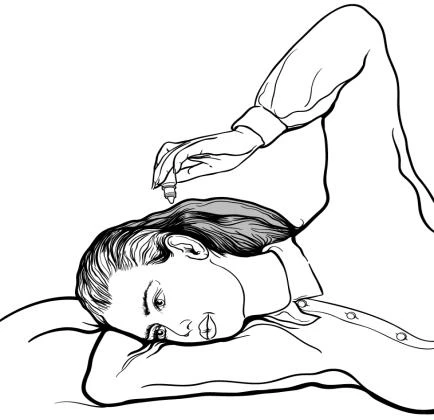
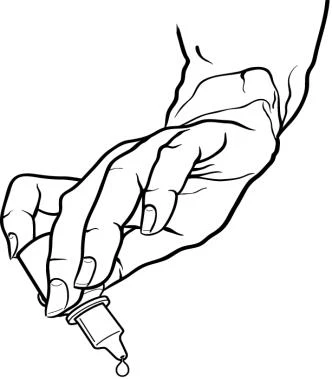
1 2
- Wash your hands.
- Take the bottle and unscrew the cap.
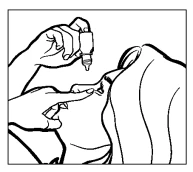
- Hold the bottle with the opening facing downwards, using your thumb and middle finger.
- Lie down with the affected ear facing upwards (Figure 1).
- Bring the tip of the bottle close to the ear canal.
- Avoid contact between the dropper tip and the earlobe, ear canal, surrounding areas, or any other surfaces: this could contaminate the drops.
- Gently press on the base of the bottle to release one drop of TobraDex at a time.
- Do not squeeze the bottle; it is designed so that light pressure at the bottom is sufficient (Figure 2).
- If using drops in both ears, repeat the procedure for the other ear.
- Immediately after use, screw the cap back tightly onto the bottle and keep the bottle securely closed when not in use.
- If a drop does not enter the ear, try again.
If you use more TobraDex than you should
If you use more TobraDex than recommended, consult your doctor or pharmacist.
Excessive or prolonged use of topical corticosteroids may lead to Cushing's syndrome, particularly weakness, fatigue, high blood pressure, heart rhythm disturbances, decreased blood potassium levels, and metabolic alkalosis (increased blood pH).
If you forget to use TobraDex
If you forget to use TobraDex, do not worry; apply it as soon as you remember. However, if it is almost time for your next dose, skip the missed dose and return to your regular dosing schedule.
Do not use a double dose to make up for a forgotten dose.
If you have any doubts about how to use this medicine, consult your doctor or pharmacist
4. Possible side effects
Like all medicines, TobraDex can cause side effects, although not everybody gets them.
Following local use of aminoglycoside antibiotics, reactions of ear toxicity (ototoxicity) have occurred; the frequency of this is unknown.
Cases of local allergy (hypersensitivity) may occur. In such cases, discontinue treatment and consult your doctor.
Side effects with unknown frequency (frequency cannot be estimated from the available data): blurred vision.
Reporting of side effects
If you experience any side effect, including those not listed in this leaflet, talk to your doctor or pharmacist. You may also report side effects directly through the national reporting system at the following website: https://www.aifa.gov.it/content/segnalazioni-reazioni-avverse. By reporting side effects, you can help provide more information on the safety of this medicine.
5. How to store TobraDex
Keep this medicine out of the sight and reach of children.
Do not store above 25°C. Do not freeze.
Do not use this medicine after the expiry date stated on the bottle and carton after "Expiry". The expiry date refers to the last day of that month.
The expiry date applies to the product in its original, unopened packaging and stored correctly.
Do not use the product more than 30 days after first opening the container.
Do not dispose of any medicine via wastewater or household waste. Ask your pharmacist how to dispose of medicines no longer in use. This will help protect the environment.
6. Package contents and other information
What TobraDex contains
The active substances are tobramycin and dexamethasone.
- 1 ml of ear drops contains 3 mg of tobramycin and 1 mg of dexamethasone.
- The other components are: benzalkonium chloride, edetate disodium, sodium chloride, sodium sulfate, tyloxapol, hydroxyethylcellulose, purified water.
Description of the appearance of TobraDex and contents of the pack
TobraDex is a white to off-white suspension, contained in an 8 ml plastic dropper bottle. Each bottle contains 5 ml of ear drops.
Marketing Authorization Holder
Novartis Farma S.p.A.
Viale Luigi Sturzo 43
20154 Milan MI
Italy
Sales Licensee
Fidia Farmaceutici S.p.A.
Via Ponte della Fabbrica 3/A
35031 Abano Terme (PD)
Italy
Manufacturer
Novartis Farmacéutica, S.A.
Gran Via de les Corts Catalanes, 764
08013 Barcelona
Spain
Novartis Manufacturing NV
Rijksweg 14
2870 Puurs-Sint-Amands
Belgium
Other medicines and TobraDex
3. How to use TobraDex
4. Possible side effects
Uncommon (may affect up to 1 in 100 people)
- increased pressure in the eye(s), eye pain, eye itching, eye discomfort, eye irritation.
Rare (may affect up to 1 in 1,000 people)
- inflammation of the surface of the eye (keratitis), eye allergy, blurred vision, dry eye, eye redness, unpleasant taste.
Not known (frequency cannot be estimated from the available data)
-
eyelid swelling, eyelid redness, increased pupil size, increased tear production, blurred vision, increased body hair growth (especially in women), muscle weakness and atrophy, purple stretch marks on the skin of the body, increased blood pressure, irregular or absent menstrual cycle, changes in protein and calcium levels in the body, delayed growth in children and adolescents, and swelling and weight gain of the body and face (called “Cushing's syndrome”) (see section 2, “Warnings and precautions”); severe allergic reactions (hypersensitivity), dizziness, headache, nausea, abdominal discomfort, skin rash, severe skin reactions (erythema multiforme), facial swelling, itching.
-
1 ml of eye drops contains 3 mg of tobramycin and 1 mg of dexamethasone.
-
The other components are: benzalkonium chloride, disodium edetate, sodium chloride, sodium sulphate, tyloxapol, hydroxyethylcellulose, sulphuric acid and sodium hydroxide (to adjust pH), purified water.
-
1 g of ointment contains 3 mg of tobramycin and 1 mg of dexamethasone.
-
The other components are: chlorobutanol, liquid paraffin, white soft paraffin.
Description of the appearance of Tobradex and contents of the pack