Tenoretic
Italy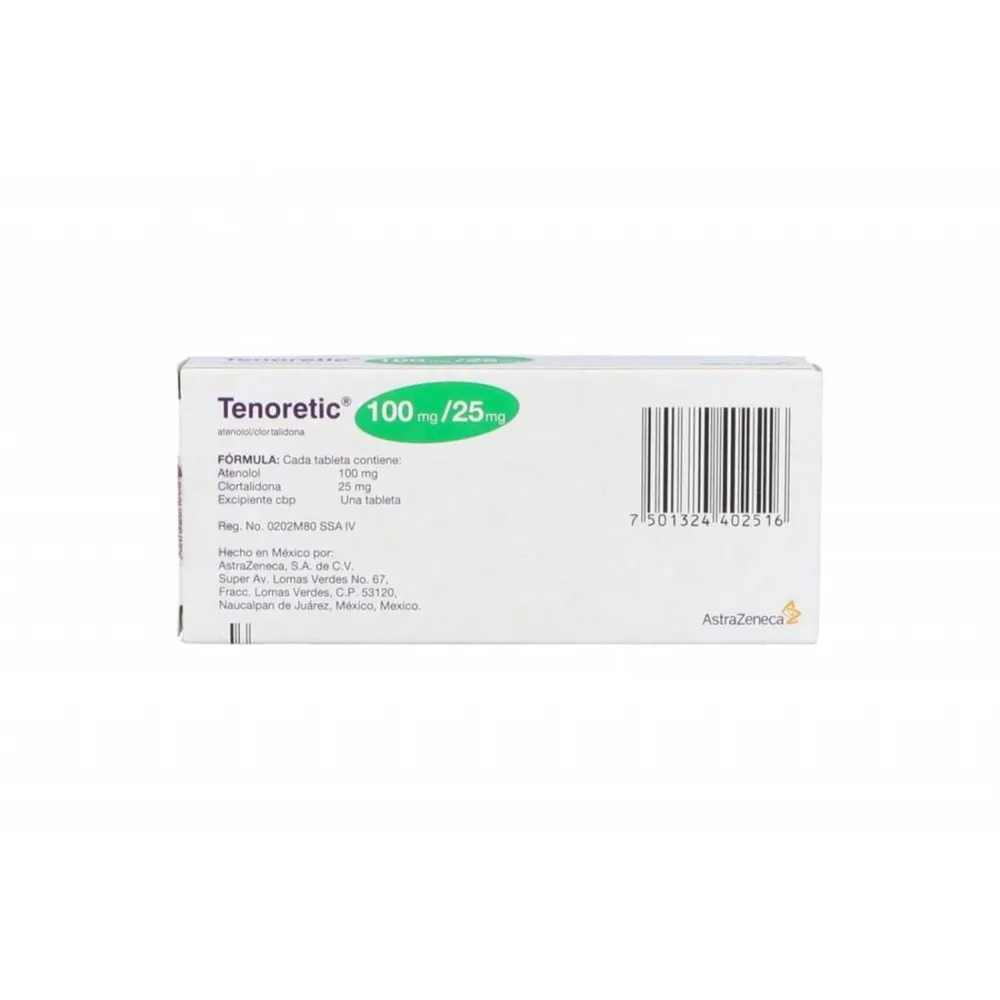
Table of Contents
- Patient Information Leaflet: Information for the patient
- Tenoretic 100 mg + 25 mg tablets
- 1. What Tenoretic is and what it is used for
- 2. What you should know before taking Tenoretic
- 3. How to take Tenoretic
- 4. Possible side effects
- 5. How to store Tenoretic
- 6. Package contents and other information
- Patient Information Leaflet: Information for the patient
- Tenoretic 50 mg + 12.5 mg tablets
- 1. What Tenoretic is and what it is used for
- 2. What you should know before taking Tenoretic
- 3. How to take Tenoretic
- 4. Possible side effects
- 5. How to store Tenoretic
- 6. Package contents and other information
Patient Information Leaflet: Information for the patient
Tenoretic 100 mg + 25 mg tablets
Atenolol + Chlorthalidone
Please read this leaflet carefully before taking this medicine because it contains important information for you.
- Keep this leaflet. You may need to read it again.
- If you have any questions, ask your doctor or pharmacist.
- This medicine has been prescribed for you only. Do not give it to other people, even if their symptoms are the same as yours, as it may be harmful.
- If you experience any adverse reaction, including those not listed in this leaflet, consult your doctor or pharmacist. See section 4.
Contents of this leaflet:
- What Tenoretic is and what it is used for
- What you need to know before taking Tenoretic
- How to take Tenoretic
- Possible side effects
- How to store Tenoretic
- Contents of the pack and other information
1. What Tenoretic is and what it is used for
Tenoretic contains two active substances: atenolol and chlorthalidone.
Atenolol belongs to a group of medicines called beta-blockers, which work by slowing down the heartbeat.
Chlorthalidone belongs to a group of medicines called diuretics, which work by increasing the amount of urine produced by the kidneys.
Tenoretic is indicated for the treatment of high blood pressure (hypertension) in adults when it cannot be controlled by monotherapy with either atenolol or chlorthalidone alone.
If you do not feel better or feel worse, talk to your doctor.
2. What you should know before taking Tenoretic
Do not take Tenoretic
- if you are allergic to atenolol or chlorthalidone, or to any of the other ingredients of this medicine (listed in section 6)
- if you are allergic to sulfonamide derivatives (a class of antibacterial antibiotics used in case of infections)
- if you are pregnant, planning to become pregnant, or breastfeeding
- if you have heart diseases, including uncontrolled heart failure (where the heart cannot pump enough blood to meet the body's needs) or second- or third-degree heart block (a disease of the heart's electrical conduction system)
- if you have a slow or irregular heartbeat, very low blood pressure, or severe circulatory disorders
- if you have a tumor called "pheochromocytoma" that is not being treated (this tumor usually develops near a kidney and may cause high blood pressure)
- if you have a rare condition characterized by brief episodes of narrowing of the arteries, the blood vessels carrying blood from the heart to the rest of the body (Raynaud’s syndrome)
- if you have severe kidney problems
- if your doctor has diagnosed you with abnormally high levels of acid in the blood (metabolic acidosis)
- if you have severe asthma or severe chronic obstructive pulmonary disease
- if you are being treated with intravenous verapamil or diltiazem.
If you are in any of the above situations, inform your doctor.
Warnings and precautions
Talk to your doctor or pharmacist before taking Tenoretic:
- if you have thyroid problems (a gland located in the neck), as the medicine may mask symptoms of thyrotoxicosis, such as rapid heartbeat, tremor, and excessive sweating
- if you have diabetes (a condition characterized by high levels of sugar in the blood)
- if you have heart or circulatory problems, even if controlled by appropriate therapy
- if you have respiratory problems or asthma
- if you have a tumor called "pheochromocytoma" that is being treated
- if you have electrolyte imbalances in the blood (abnormal concentrations of salts such as sodium and potassium normally dissolved in the blood)
- if you have liver problems
- if you have a type of chest pain called "Prinzmetal's angina"
- if you have previously experienced allergic reactions (e.g. from insect stings)
- if you are due to receive a type of medicine called anesthetics (medicines administered, for example, during surgery)
- if you are using ophthalmic beta-blockers (medicines that lower the internal eye pressure), as they may enhance the effects of medicines similar to Tenoretic
- if you have first-degree heart block (a disease of the heart's conduction system)
- if you experience reduced vision or eye pain. These could be symptoms of fluid accumulation in the vascular layer of the eye (choroidal effusion) or increased eye pressure, and may occur within hours or weeks after taking Tenoretic. If left untreated, this condition may lead to permanent vision loss. If you have previously had an allergy to penicillin or sulfonamides, you may be at higher risk of developing this condition.
Reduced heart rate (number of heartbeats per minute)
During treatment with Tenoretic, you may experience a reduced heart rate (see section "Possible side effects"). This effect is normal, but if it concerns you, consult your doctor.
Diabetes or hypoglycemia (low blood sugar levels)
If you have diabetes and are taking antidiabetic medicines (medicines for treating diabetes), this medicine may increase blood sugar levels. This usually causes an increased heart rate.
Uricemia (uric acid in the blood)
With prolonged treatment, Tenoretic may cause increased levels of uric acid in the blood, which may trigger gout (a disease causing joint pain). Your doctor will advise you on appropriate treatment.
Anesthesia
If you are admitted to hospital, you must inform medical staff that you are being treated with Tenoretic, and particularly the anesthetist (the doctor in charge of anesthesia) if undergoing surgery.
For athletes
Using this medicine without therapeutic need constitutes doping and may lead to a positive result in anti-doping tests.
Children and adolescents
Tenoretic must not be given to children and adolescents under 18 years of age.
Other medicines and Tenoretic
Inform your doctor or pharmacist if you are taking, have recently taken, or might take any other medicines.
In particular, inform your doctor if you are taking any of the following medicines:
- medicines for treating irregular heartbeats (amiodarone, disopyramide, or other antiarrhythmics)
- lithium (a medicine used for certain mental disorders)
- painkillers such as indomethacin or ibuprofen (medicines used for pain and inflammation)
- medicines for treating high blood pressure or chest pain (especially verapamil, diltiazem, clonidine, or nifedipine). At least 48 hours must have passed between stopping a previous treatment with verapamil or diltiazem and starting Tenoretic, and vice versa
- a medicine for treating heart failure (digoxin, a medicine used for heart disorders)
- nasal decongestants or other medicines (containing, for example, pseudoephedrine) used to treat colds
- clonidine (a medicine used to treat high blood pressure or prevent migraine). If you are taking clonidine and Tenoretic together, do not stop treatment with either clonidine or Tenoretic without first consulting your doctor
- medicines such as adrenaline (a medicine that stimulates the heart)
- baclofen (a medicine used to treat muscle spasms)
Pregnancy and breastfeeding
If you are pregnant, suspect you may be pregnant, planning to become pregnant, or breastfeeding, do not take Tenoretic (see section 2 "Do not take Tenoretic").
Driving and using machines
It is unlikely that taking Tenoretic will affect your ability to drive or operate machinery.
However, dizziness and fatigue may occasionally occur; if you experience these symptoms, it is advisable not to perform such activities.
Tenoretic contains sodium
This medicine contains less than 1 mmol (23 mg) of sodium per tablet, i.e. essentially "sodium-free".
3. How to take Tenoretic
Take this medicine exactly as directed by your doctor or pharmacist. If you have any doubts, consult your doctor or pharmacist.
The tablets should be swallowed whole with a little water, preferably always at the same time each day.
Adults
The recommended dose is one tablet daily.
Elderly
If you are elderly, your doctor may decide to prescribe a lower dose of Tenoretic.
If you have severe kidney problems
You must not take Tenoretic if you have severe kidney problems (see section "Do not take Tenoretic").
Use in children and adolescents
Tenoretic must not be given to children and adolescents under 18 years of age.
If you take more Tenoretic than you should
If you accidentally take an overdose of Tenoretic, contact your doctor immediately or go to the nearest hospital.
You may experience a slowed heartbeat, dizziness due to low blood pressure, and difficulty breathing. Your heart might also struggle to pump blood to the rest of the body (acute heart failure).
If you forget to take Tenoretic
Do not take a double dose to make up for a forgotten tablet.
If you forget to take a dose, take it as soon as possible. Do not take two doses at the same time.
If you stop taking Tenoretic
Do not stop treatment just because you feel better, unless your doctor tells you to.
Stopping treatment should be done gradually.
If you have any questions about the use of this medicine, consult your doctor or pharmacist.
4. Possible side effects
Like all medicines, this medicine can cause side effects, although not everyone experiences them.
During treatment with Tenoretic, as with any drug, the following side effects may occur, according to the frequency categories listed below:
Common (may affect up to 1 in 10 people):
- slow heart rate
- cold fingers and toes
- stomach and intestinal disorders (e.g. nausea, diarrhoea)
- fatigue
- increased levels of uric acid in the blood, decreased levels of potassium in the blood, decreased levels of sodium in the blood (which may cause weakness, vomiting, and cramps), reduced glucose tolerance (a condition that may lead to increased blood sugar levels).
Uncommon (may affect up to 1 in 100 people):
- sleep disorders
- changes in blood tests related to liver function (transaminases).
Rare (may affect up to 1 in 1,000 people):
- purpura (purple spots on the skin), thrombocytopenia (reduced number of platelets in the blood, which may manifest as bruising), leucopenia (reduced number of white blood cells in the blood, a type of blood cell)
- mood changes, nightmares, confusion, psychosis (mental disorders), and hallucinations (seeing things that cannot be explained)
- dizziness, especially when standing, headache, tingling in the hands
- dry eyes, visual disturbances
- breathing difficulties and/or swelling of the ankles if you have heart failure (heart disease)
- heart block (a condition that may cause abnormal heartbeat, dizziness, fatigue, or fainting)
- sudden drop in blood pressure when standing, possibly leading to loss of consciousness, worsening of circulatory problems, numbness and cramps in the fingers followed by a sensation of heat and pain (Raynaud's phenomenon)
- worsening of breathing difficulties if you have asthma or have had asthma-related problems
- dry mouth
- jaundice (yellowing of the skin and whites of the eyes), pancreatitis (inflammation of the pancreas, a gland located near the stomach)
- hair loss, skin rashes including worsening of psoriasis (chronic skin inflammation)
- inability to achieve an erection (impotence).
Very rare (may affect up to 1 in 10,000 people):
- changes in laboratory values used to measure certain immune responses (positive test for antinuclear antibodies).
Frequency not known (frequency cannot be estimated from the available data):
- constipation
- lupus-like syndrome (a disease in which the immune system produces antibodies that primarily attack the skin and joints)
- sudden onset of reduced distance vision (acute myopia)
- decreased vision or eye pain due to increased pressure (possible signs of fluid accumulation in the vascular layer of the eye (choroidal effusion) or acute angle-closure glaucoma)
- depression.
Reporting of side effects
If you experience any side effect, including those not listed in this leaflet, please inform your doctor or pharmacist. You may also report side effects directly via the national reporting system at https://www.aifa.gov.it/content/segnalazioni-reazioni-avverse.
By reporting side effects, you can help provide more information on the safety of this medicine.
5. How to store Tenoretic
- Do not store at temperatures above 25°C. Keep in the original packaging to protect the medicine from light and moisture.
- Keep this medicine out of the sight and reach of children.
- Do not use this medicine after the expiry date stated on the carton after EXP. The expiry date refers to the last day of that month. Do not dispose of any medicine via wastewater or household waste. Ask your pharmacist how to dispose of medicines no longer required. This will help protect the environment.
6. Package contents and other information
What Tenoretic contains
- The active substances are: atenolol 100 mg and chlorthalidone 25 mg.
- The other components are: heavy magnesium carbonate, maize starch, sodium lauryl sulfate, gelatin, magnesium stearate.
Description of the appearance of Tenoretic and package contents
Tablets packaged in blisters of 14 tablets and 28 tablets.
Not all pack sizes may be marketed.
Marketing Authorization Holder
Atnahs Pharma Netherlands B.V.
Copenhagen Towers,
Ørestands Boulevard 108,
5.tv, DK-2300,
København S,
Denmark
Manufacturer
AstraZeneca AB
Gärtunavägen
SE-151 85 Södertälje
Sweden
Patient Information Leaflet: Information for the patient
Tenoretic 50 mg + 12.5 mg tablets
Atenolol + Chlorthalidone
Please read this leaflet carefully before taking this medicine because it contains
important information for you.
- Keep this leaflet. You may need to read it again.
- If you have any questions, ask your doctor or pharmacist.
- This medicine has been prescribed for you only. Do not give it to others, even if their symptoms are the same as yours, as it may be harmful.
- If you experience any side effects, including those not listed in this leaflet, consult your doctor or pharmacist. See section 4.
Contents of this leaflet:
- What Tenoretic is and what it is used for
- What you need to know before taking Tenoretic
- How to take Tenoretic
- Possible side effects
- How to store Tenoretic
- Contents of the pack and other information
1. What Tenoretic is and what it is used for
Tenoretic contains two active substances: atenolol and chlortalidone.
Atenolol belongs to a group of medicines called beta-blockers, which work by slowing down the heartbeat.
Chlortalidone belongs to a group of medicines called diuretics, which work by increasing the amount of urine produced by the kidneys.
Tenoretic is indicated for the treatment of high blood pressure (hypertension) in adults when it cannot be controlled by monotherapy with either atenolol or chlortalidone alone.
If you do not feel better or feel worse, talk to your doctor.
2. What you should know before taking Tenoretic
Do not take Tenoretic
- If you are allergic to atenolol or chlorthalidone or to any of the other ingredients of this medicine (listed in section 6)
- if you are allergic to sulfonamide derivatives (a class of antibacterial antibiotics used in case of infections)
- if you are pregnant or planning to become pregnant, or if you are breastfeeding
- if you have heart diseases, including uncontrolled heart failure (a condition in which the heart cannot pump enough blood to meet the body's needs) or second- or third-degree heart block (a disease of the heart's electrical conduction system)
- if you have slow or irregular heartbeats, very low blood pressure, or severe circulatory disorders
- if you have a tumor called "pheochromocytoma" that is not being treated (this tumor usually develops near a kidney and may cause high blood pressure)
- if you have a rare condition characterized by brief episodes of narrowing of the arteries—the blood vessels carrying blood from the heart to the rest of the body (Raynaud's syndrome)
- if you have severe kidney problems
- if your doctor has diagnosed abnormally high levels of acid in your blood (metabolic acidosis)
- if you have severe asthma or severe chronic obstructive pulmonary disease
- if you are being treated with intravenous verapamil or diltiazem.
If you are in any of the above situations, inform your doctor.
Warnings and precautions
Talk to your doctor or pharmacist before taking Tenoretic:
- if you have thyroid problems (a gland located in the neck); the medicine may mask symptoms of thyrotoxicosis, such as rapid heartbeat, tremor, and excessive sweating
- if you have diabetes (a disease characterized by excess sugar in the blood)
- if you have heart problems or circulatory disorders, even if controlled by adequate therapy
- if you have respiratory problems or asthma
- if you have a tumor called "pheochromocytoma" that is being treated
- if you have electrolyte imbalances in the blood (abnormal concentrations of salts such as sodium and potassium normally dissolved in the blood)
- if you have liver problems
- if you have a type of chest pain called "Prinzmetal's angina"
- if you have previously experienced allergic reactions (e.g., from insect stings)
- if you are due to receive a type of medicine called anesthetics (medicines administered, for example, during surgery)
- if you are using ophthalmic beta-blockers (medicines that lower intraocular pressure), as they may enhance the effects of medicines similar to Tenoretic
- if you have first-degree heart block (a disorder of the heart's conduction system)
- if you experience reduced vision or eye pain. These may be symptoms of fluid accumulation in the vascular layer of the eye (choroidal effusion) or increased eye pressure and may occur within hours or weeks after taking Tenoretic. If untreated, this condition may lead to permanent vision loss. If you have previously had an allergy to penicillin or sulfonamides, you may be at higher risk of developing this condition.
Reduced heart rate (number of heartbeats per minute)
During treatment with Tenoretic, you may experience a slower heartbeat (see section "Possible side effects"). This effect is normal, but if it concerns you, consult your doctor.
Diabetes or hypoglycemia (low blood sugar levels)
If you have diabetes and are being treated with antidiabetic medicines, this medicine may increase your blood sugar levels. This usually causes an increased heart rate.
Uricemia (uric acid in the blood)
With prolonged treatment, Tenoretic may cause increased levels of uric acid in the blood, which may trigger gout (a disease causing joint pain). Your doctor will advise appropriate treatment.
Anesthesia
If you are admitted to hospital, you must inform the medical staff that you are taking TENORETIC, and particularly inform the anesthesiologist (the doctor responsible for anesthesia) if you are undergoing surgery.
For athletes
Using this medicine without therapeutic need constitutes doping and may lead to a positive anti-doping test.
Children and adolescents
Tenoretic must not be given to children and adolescents under 18 years of age.
Other medicines and Tenoretic
Inform your doctor or pharmacist if you are taking, have recently taken, or might take any other medicines.
In particular, inform your doctor if you are taking any of the following medicines:
- medicines for irregular heartbeats (amiodarone, disopyramide, or other antiarrhythmics)
- lithium (a medicine used for certain mental disorders)
- painkillers such as indomethacin or ibuprofen (medicines used for pain and inflammation)
- medicines for high blood pressure or chest pain (particularly verapamil, diltiazem, clonidine, or nifedipine). At least 48 hours must pass between stopping any previous treatment with verapamil or diltiazem and starting Tenoretic, and vice versa
- a medicine for heart failure (digoxin, a medicine used for heart disorders)
- nasal decongestants or other medicines (containing, for example, pseudoephedrine) used to treat colds
- clonidine (a medicine for treating high blood pressure or preventing migraines). If you are taking clonidine and Tenoretic together, do not stop either medicine without first consulting your doctor
- medicines such as adrenaline (a medicine that stimulates the heart)
- baclofen (a medicine used to treat muscle cramps)
Pregnancy and breastfeeding
If you are pregnant, suspect you may be pregnant, plan to become pregnant, or are breastfeeding, do not take Tenoretic (see section 2 "Do not take Tenoretic").
Driving and using machines
It is unlikely that taking Tenoretic will affect your ability to drive or operate machinery.
However, dizziness and fatigue may occasionally occur; if you experience these symptoms, you should avoid such activities.
Tenoretic contains sodium
This medicine contains less than 1 mmol (23 mg) of sodium per tablet, i.e., essentially "sodium-free".
3. How to take Tenoretic
Take this medicine exactly as directed by your doctor or pharmacist. If you have any doubts, consult your doctor or pharmacist.
The tablets should be swallowed whole with a little water, preferably always at the same time each day.
Adults
The recommended dose is one tablet daily.
Elderly
If you are elderly, your doctor may decide to prescribe a lower dose of Tenoretic.
If you have severe kidney problems
You must not take Tenoretic if you have severe kidney problems (see section "Do not take Tenoretic").
Use in children and adolescents
Tenoretic must not be given to children and adolescents under 18 years of age.
If you take more Tenoretic than you should
In case of accidental ingestion or overdose of Tenoretic, contact your doctor immediately or go to the nearest hospital.
You may experience a slowed heartbeat, dizziness due to low blood pressure, and difficulty breathing. Your heart might also have trouble pumping blood to the rest of the body (acute heart failure).
If you forget to take Tenoretic
Do not take a double dose to make up for the missed tablet.
If you forget to take a dose, take it as soon as possible. Do not take two doses at the same time.
If you stop taking Tenoretic
Do not stop treatment just because you feel better, unless your doctor tells you to.
Treatment should be discontinued gradually.
If you have any questions about the use of this medicine, consult your doctor or pharmacist.
4. Possible side effects
Like all medicines, this medicine can cause side effects, although not everyone gets them.
During treatment with Tenoretic, as with any medicine, the following side effects may occur at the frequencies listed below:
Common (may affect up to 1 in 10 people):
- slowed heartbeat
- cold hands and feet
- stomach and intestinal disorders (e.g. nausea, diarrhoea)
- fatigue
- increased blood uric acid levels, decreased blood potassium levels, decreased blood sodium levels (which may cause weakness, vomiting and cramps), reduced glucose tolerance (a condition that may lead to increased blood sugar levels).
Uncommon (may affect up to 1 in 100 people):
- sleep disorders
- changes in blood tests related to liver function (transaminases).
Rare (may affect up to 1 in 1,000 people):
- purpura (purple spots on the skin), thrombocytopenia (reduced number of platelets in the blood, which may present as bruising), leucopenia (reduced number of white blood cells in the blood, a type of blood cell)
- mood changes, nightmares, confusion, psychosis (mental disorders), and hallucinations (seeing things that cannot be explained)
- dizziness, especially when standing, headache, tingling in the hands
- dry eyes, visual disturbances
- breathing difficulties and/or swelling of the ankles if you have heart failure (a heart condition)
- heart block (a condition that may cause abnormal heartbeat, dizziness, fatigue or fainting)
- sudden drop in blood pressure when standing, possibly leading to loss of consciousness, worsening of circulatory problems, numbness and cramps in the fingers followed by a sensation of heat and pain (Raynaud's phenomenon)
- worsening of breathing difficulties if you have asthma or have previously suffered from asthma-related problems
- dry mouth
- jaundice (yellowing of the skin and whites of the eyes), pancreatitis (inflammation of the pancreas, a gland located near the stomach)
- hair loss, skin rashes including worsening of psoriasis (chronic inflammation of the skin)
- inability to achieve an erection (impotence).
Very rare (may affect up to 1 in 10,000 people):
- changes in laboratory values used to measure certain immune responses (positive test for antinuclear antibodies).
Frequency not known (frequency cannot be estimated from the available data):
- constipation
- lupus-like syndrome (a disease in which the immune system produces antibodies that mainly attack the skin and joints)
- sudden-onset reduction in distance vision (acute myopia)
- decreased vision or eye pain due to increased pressure (possible signs of fluid accumulation in the vascular layer of the eye (choroidal effusion) or acute angle-closure glaucoma)
- depression.
Reporting of side effects
If you experience any side effects, including those not listed in this leaflet, talk to your doctor or pharmacist. You can also report side effects directly via the national reporting system at https://www.aifa.gov.it/content/segnalazioni-reazioni-avverse.
By reporting side effects, you can help provide more information on the safety of this medicine.
5. How to store Tenoretic
- Do not store above 25°C. Keep the medicine in the original packaging to protect it from light and moisture.
- Keep this medicine out of the sight and reach of children.
- Do not use this medicine after the expiry date stated on the carton after EXP. The expiry date refers to the last day of that month.
Do not dispose of any medicine via wastewater or household waste. Ask your pharmacist how to
dispose of medicines no longer in use. This will help protect the environment.
6. Package contents and other information
What Tenoretic contains
- The active substances are: atenolol 50 mg and chlorthalidone 12.5 mg
- The other components are: heavy magnesium carbonate, maize starch, sodium lauryl sulfate, gelatin, magnesium stearate.
Description of the appearance of Tenoretic and contents of the pack
Tablets packed in blisters of 28 tablets.
Marketing Authorization Holder
Atnahs Pharma Netherlands B.V.
Copenhagen Towers,
Ørestands Boulevard 108,
5.tv, DK-2300,
København S,
Denmark
Manufacturer
AstraZeneca AB
Gärtunavägen
SE-151 85 Södertälje
Sweden