Psotriol
Italy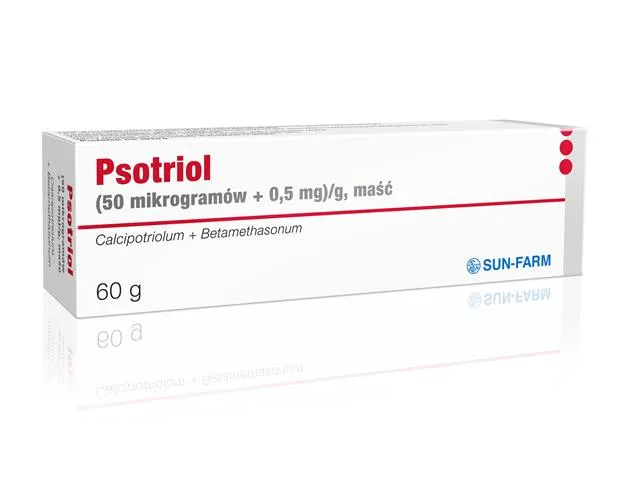
Table of Contents
- Patient Information Leaflet
- PSOTRIOL 50 micrograms/g + 0.5 mg/g gel
- 1. What PSOTRIOL is and what it is used for
- 2. What you need to know before using PSOTRIOL
- 3. How to use PSOTRIOL
- Instructions for correct use
- 4. Possible side effects
- 5. How to store PSOTRIOL
- 6. Package contents and other information
Patient Information Leaflet
PSOTRIOL 50 micrograms/g + 0.5 mg/g gel
calcipotriol/betamethasone
Please read all of this leaflet carefully before you start using this medicine because it contains important information for you.
- Keep this leaflet. You may need to read it again.
- If you have any questions, ask your doctor, pharmacist, or nurse.
- This medicine has been prescribed for you personally. Do not give it to others, even if they have the same symptoms as you, because it could be harmful.
- If you experience any side effects, including those not listed in this leaflet, talk to your doctor, pharmacist, or nurse. See section 4.
Contents of this leaflet:
- What PSOTRIOL is and what it is used for
- What you need to know before using PSOTRIOL
- How to use PSOTRIOL
- Possible side effects
- How to store PSOTRIOL
- Contents of the pack and other information
1. What PSOTRIOL is and what it is used for
PSOTRIOL is used as a topical treatment for scalp psoriasis in adults and for plaque psoriasis (psoriasis vulgaris) of mild to moderate severity on skin of other body areas in adults. Psoriasis is caused by skin cells that reproduce too quickly. This leads to redness, scaling, and thickening of the skin.
PSOTRIOL contains calcipotriol and betamethasone. Calcipotriol normalizes the growth of skin cells and betamethasone works by reducing inflammation.
2. What you need to know before using PSOTRIOL
Do not use PSOTRIOL
- if you are allergic (hypersensitive) to calcipotriol, betamethasone, or to any of the other ingredients of this medicine (listed in section 6)
- if you have problems with calcium levels in your body (consult your doctor)
- if you have certain types of psoriasis, such as erythrodermic, exfoliative, or pustular psoriasis (consult your doctor)
Since PSOTRIOL contains a potent steroid, do not use it on skin affected by:
- skin infections caused by viruses (e.g. cold sores or chickenpox)
- skin infections caused by fungi (e.g. athlete’s foot or ringworm)
- skin infections caused by bacteria
- skin infections caused by parasites (e.g. scabies)
- tuberculosis (TB)
- perioral dermatitis (red rash around the mouth)
- thinning of the skin, fragile blood vessels, stretch marks
- ichthyosis (dry, scaly skin resembling fish scales)
- acne (pimples)
- rosacea (flushing or redness of the facial skin)
- skin ulcers or open wounds.
Warnings and precautions
Talk to your doctor, pharmacist, or nurse before and during treatment with PSOTRIOL if:
- you are using other medicines containing corticosteroids, as side effects may occur
- you have used this medicine for a long time and intend to stop treatment (because there is a risk of worsening or "rebound" of psoriasis when steroid treatment is stopped suddenly)
- you have diabetes mellitus (diabetes), as blood sugar/glucose levels may be affected by the steroid
- you develop skin infections. Treatment may need to be stopped
- you have a type of psoriasis called guttate psoriasis
- you experience blurred vision or other vision problems
Special precautions
- avoid applying the product to more than 30% of your body or using more than 15 g per day
- avoid using shower caps, bandages, or dressings, as they may increase steroid absorption
- avoid use under bandages or dressings, as they increase steroid absorption
- avoid applying the medicine to large areas of damaged skin, mucous membranes, or skin folds (groin, armpits, under the breasts), as this increases steroid absorption
- avoid use on the face or genitals (sexual organs), as these areas are particularly sensitive to steroids
- avoid excessive exposure to sunlight, excessive use of sunbeds, or other forms of light therapy
Children and adolescents
The use of PSOTRIOL is not recommended in children and adolescents under 18 years of age.
Other medicines and PSOTRIOL
Tell your doctor, pharmacist, or nurse if you are taking, have recently taken, or might take any other medicines.
Pregnancy and breastfeeding
If you are pregnant, think you might be pregnant, planning a pregnancy, or are breastfeeding, consult your doctor before using this medicine.
If your doctor has determined that you may breastfeed, make sure not to apply PSOTRIOL to the breast area.
Driving and using machines
This medicine is unlikely to affect your ability to drive or use machinery.
PSOTRIOL contains butylated hydroxytoluene (E321)
Butylated hydroxytoluene (E321) may cause localized skin reactions (e.g. contact dermatitis) or irritation to the eyes and mucous membranes.
3. How to use PSOTRIOL
Use this medicine exactly as directed by your doctor. If you have any doubts, consult your
doctor or pharmacist.
How to apply PSOTRIOL: for cutaneous use.
Page 2 of 7
Instructions for correct use
- Use the medicine only for psoriasis and not on skin unaffected by psoriasis
- Shake the bottle before use and remove the cap
- Squeeze the gel onto a clean finger or directly onto the affected area
- Apply PSOTRIOL to the affected area using your fingertips, gently rubbing it in until the psoriatic area is covered with a thin layer of gel
- Do not bandage, tightly cover, or otherwise occlude the treated skin areas
- Wash your hands thoroughly after applying PSOTRIOL. This will help prevent accidental contact of the gel with other parts of the body (especially the face, mouth, and eyes)
- Do not be alarmed if a small amount of gel accidentally touches healthy skin around the psoriatic plaque, but clean the skin if the medication spreads too far from the psoriatic area
- To achieve optimal effect, it is recommended not to bathe or shower immediately after applying PSOTRIOL
- After applying the gel, avoid contact with fabrics that may easily become greasy-stained (e.g. silk)
If you have scalp psoriasis
- Before applying PSOTRIOL to the scalp, brush your hair to remove any scales. Tilt your head so that PSOTRIOL does not run onto your face. It may be helpful to part your hair into sections before using PSOTRIOL.
- Shake the bottle before use
- Place a drop of PSOTRIOL on a finger
- Apply directly to those areas of the scalp where plaques can be felt by touch, and gently rub PSOTRIOL into the skin. Generally, 1–4 g (up to 1 teaspoon) is sufficient, depending on the affected areas.
To achieve optimal effect, it is recommended not to wash your hair immediately after applying PSOTRIOL.
Leave PSOTRIOL on the scalp overnight or during the day. When washing your hair after application, follow these instructions:
- Use a mild shampoo on dry hair, especially on areas where the gel was applied.
- Allow the shampoo to remain on the hair for a few minutes before rinsing.
- Wash your hair as usual.
If necessary, repeat steps 4–6 one or two times.
Duration of treatment
- Use the gel once daily. It may be more convenient to apply the gel in the evening.
- The usual initial treatment period is 4 weeks for scalp areas and 8 weeks for areas other than the scalp.
- Your doctor may decide on a different treatment duration.
- Your doctor may consider repeating the treatment.
- Do not use more than 15 grams per day.
If you are using other medications containing calcipotriol, the total amount of medications containing calcipotriol must not exceed 15 grams per day, and the treated area must not exceed 30% of the total body surface area.
What to expect with the use of PSOTRIOL
Most patients notice clear improvement after 2 weeks, although psoriasis may not have completely disappeared yet.
Page 3 of 7
If you use more PSOTRIOL than you should
Contact your doctor if you use more than 15 g of the medicine in one day. Excessive use of PSOTRIOL may cause disturbances in blood calcium levels, which usually return to normal once treatment is stopped. Your doctor may consider it necessary to perform blood tests to ensure that excessive use of the gel has not caused abnormal blood calcium levels. Prolonged excessive use may also cause impaired function of the adrenal glands (the adrenal glands are located near the kidneys and produce hormones).
If you forget to use PSOTRIOL
Do not apply a double dose to make up for the missed dose.
If you stop treatment with PSOTRIOL
Treatment with PSOTRIOL should be discontinued according to your doctor's instructions. A gradual discontinuation may be necessary, especially if you have used the medicine for a prolonged period.
If you have any doubts about the use of this medicine, consult your doctor or pharmacist.
4. Possible side effects
Like all medicines, this medicine can cause side effects, although not everyone gets them.
Serious side effects
Contact your doctor or nurse immediately or as soon as possible if any of the following side effects occur. In such cases, you must stop treatment.
Uncommon (may affect up to 1 in 100 people)
- Worsening of psoriasis. Inform your doctor as soon as possible if your psoriasis worsens.
Some serious side effects are known to be caused by betamethasone (a potent corticosteroid), one of the active substances in PSOTRIOL. Inform your doctor as soon as possible if a serious side effect occurs. These side effects occur more frequently after prolonged use, use in skin folds (e.g. groin, armpits or under the breasts), use under occlusive dressing, or application over a large skin surface area. The side effects include:
- Adrenal glands may not function properly. Symptoms include fatigue, depression, and anxiety.
- Cataract (symptoms include blurred or cloudy vision, difficulty seeing at night, and photosensitivity) or increased intraocular pressure (symptoms include eye pain, eye redness, reduced or blurred vision).
- Infections (because the immune system, which fights infections, may be suppressed or weakened).
- Pustular psoriasis (a red area with yellowish pustules, usually appearing on the hands or feet). If you notice this, stop using PSOTRIOL and inform your doctor as soon as possible.
- Interference with metabolic control of diabetes mellitus (if you have diabetes, you may experience fluctuations in blood glucose levels).
Some serious side effects are known to be caused by calcipotriol:
- Allergic reactions characterized by severe swelling of the face or other parts of the body such as hands or feet. Swelling of the mouth/throat and breathing difficulties may occur. If you experience an allergic reaction, stop using PSOTRIOL, report it immediately to your doctor or go to the emergency department of the nearest hospital.
- Treatment with this gel may cause increased levels of calcium in the blood or urine (usually when excessive amounts of the gel are used). Signs of elevated calcium levels in the blood include excessive urination, constipation, muscle weakness, confusion, and coma. This can be serious and therefore you must contact your doctor immediately. However, calcium levels will return to normal once treatment is stopped.
Less serious side effects
Common (may affect up to 1 in 10 people)
- Itching
Uncommon (may affect up to 1 in 100 people)
- Eye irritation
- Burning sensation of the skin
- Skin pain or irritation
- Inflammation or swelling at the base of the hair (folliculitis)
- Skin rash with inflammation (dermatitis)
- Redness of the skin due to capillary dilation (erythema)
- Acne (pimples)
- Dry skin
- Rash
- Pustular rash
- Skin infection
Rare (may affect up to 1 in 1,000 people)
- Allergic reactions
- Skin striae (stretch marks)
- Skin peeling
- Rebound effect: worsening of symptoms/psoriasis after treatment has ended
Not known (frequency cannot be estimated from the available data)
- When used on the scalp, white or grey hair may temporarily turn yellowish at the site of application.
- Blurred vision
Less serious side effects caused by long-term use of betamethasone include the following. Inform your doctor or nurse as soon as possible if you notice any of these side effects:
- Thinning of the skin
- Appearance of superficial veins or stretch marks
- Changes in hair growth
- Red rash around the mouth (perioral dermatitis)
- Skin rash with inflammation or swelling (allergic contact dermatitis)
- Tiny, yellowish, gel-filled nodules (colloid milia)
- Skin discoloration (depigmentation)
- Inflammation or swelling at the base of the hair (folliculitis)
Less serious side effects known to be caused by calcipotriol include:
- Dry skin
- Skin photosensitivity leading to skin rash
- Eczema
- Itching
- Skin irritation
- Burning and stinging sensation
- Redness of the skin due to capillary dilation (erythema)
Reporting of side effects
If you experience any side effect, including those not listed in this leaflet, talk to your doctor, pharmacist, or nurse. You can also report side effects directly via the national reporting system at the following website:
https://www.aifa.gov.it/content/segnalazioni-reazioni-avverse
By reporting side effects, you can help provide more information on the safety of this medicine.
5. How to store PSOTRIOL
Keep this medicine out of the sight and reach of children.
Do not use this medicine after the expiry date stated on the label after "Exp". The expiry date refers to the last day of the month.
Do not store above 30°C.
Discard the bottle containing residual gel after 6 months from first opening.
Do not dispose of any medicine via wastewater or household waste. Ask your pharmacist how to dispose of medicines you no longer use. This will help protect the environment.
6. Package contents and other information
What PSOTRIOL contains
- The active substances are: Calcipotriol and betamethasone. One gram of gel contains 50 micrograms of calcipotriol (as monohydrate) and 0.5 mg of betamethasone (as dipropionate).
- The other components are: Liquid paraffin, polyoxypolypropylene-stearate ether, hydrogenated castor oil, butylated hydroxytoluene (E321).
Description of the appearance of PSOTRIOL and contents of the pack
PSOTRIOL is a nearly transparent gel, ranging from colourless to slightly off-white, contained in bottles with a screw cap made of polyethylene.
Pack sizes: 15 g, 30 g, 35 g, 50 g, 60 g, 100 g (as pack 2 x 50 g), 120 g (as pack 2 x 60 g).
Not all pack sizes may be marketed.
Marketing Authorisation Holder and Manufacturer
Marketing Authorisation Holder
Mibe Pharma Italia S.r.l.
Via Leonardo Da Vinci 20/b
39100 - Bolzano
Page 6 of 7
Responsible manufacturers for batch release
Mibe GmbH Arzneimittel
Münchener Str. 15
06796 Brehna
Germany
Sun-Farm Sp. z o.o.
Ul. Dolna 21
Mazowieckie
05-092 Lomianki
Poland
This medicinal product is authorised in the European Economic Area countries under the following names:
Austria: Calcidermetha 50 Micrograms/g + 0.5 mg/g Gel
Belgium: Calcipotriol/Betamethasone Dermapharm 50 micrograms/g + 0.5 mg/g gel
Calcipotriol/Betamethasone Dermapharm 50 microgrammes/g + 0.5 mg/g gel
Calcipotriol/Betamethasone Dermapharm 50 Mikrogramm/g + 0.5 mg/g Gel
Germany: Calcipotriderm comp. 50 Mikrogramm/g + 0.5 mg/g Gel
Spain: Calcipotriol/Betamethasone Dermapharm 50 micrograms/g + 0.5 mg/g gel
Croatia: PSOTRIOL 50 mikrograma/g + 0.5 mg/g gel
Italy: PSOTRIOL
Poland: PSOTRIOL
Page 7 of 7