Primolut Nor
Italy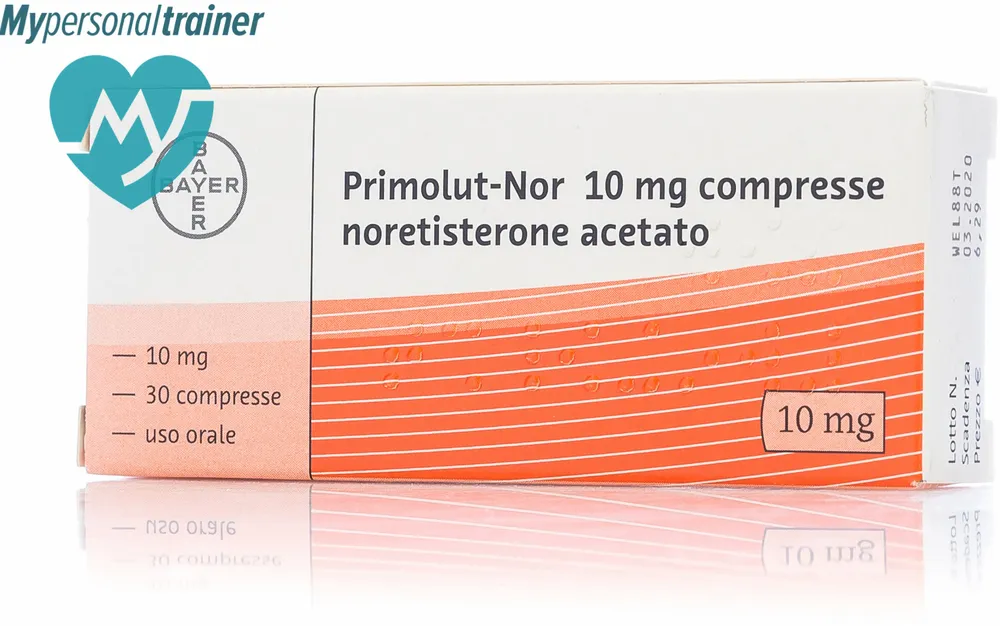
Table of Contents

Package leaflet: Information for the user
Primolut Nor 10 mg tablets
noretisterone acetate
Please read this leaflet carefully before taking this medicine as it contains
important information for you.
- Keep this leaflet. You may need to read it again.
- If you have any questions, consult your doctor or pharmacist.
- This medicine has been prescribed for you only. Do not give it to others, even if their symptoms are the same as yours, as it could be harmful.
- If you experience any adverse reactions, including those not listed in this leaflet, contact your doctor or pharmacist. See section 4.
Contents of this leaflet:
- What Primolut Nor is and what it is used for
- What you need to know before taking Primolut Nor
- How to take Primolut Nor
- Possible side effects
- How to store Primolut Nor
- Contents of the pack and other information
1. What Primolut Nor is and what it is used for
Primolut Nor contains norethisterone acetate, which belongs to the group of progestogens, a class of substances similar to the natural female hormone progesterone.
This medicine is used for the treatment of:
- functional metrorrhagia (bleeding from the uterus occurring outside menstrual periods) and prophylaxis of recurrences (i.e. prevention of reoccurrence of this disorder after it has been treated with therapy);
- primary amenorrhoea (complete absence of menstrual periods) and secondary amenorrhoea (cessation of menstrual periods);
- premenstrual syndrome (symptoms occurring before the onset of menstruation);
- endometriosis (presence of uterine mucosa in abnormal locations);
- polymenorrhoea (shorter than normal intervals between menstrual periods).
2. What you need to know before taking Primolut Nor
Do not take Primolut Nor
- if you are allergic to norethisterone acetate or to any of the other ingredients of this medicine (listed in section 6);
- if you are pregnant or suspect you may be pregnant;
- if you are breastfeeding;
- if you have had severe liver dysfunction and liver function is still abnormal. Symptoms of liver disease may include, for example, yellowing of the skin and/or generalized itching.
- if you currently have or have previously had liver tumours (benign or malignant);
- if you currently have or have previously had blood clots in a vein or artery (thrombosis), deep vein thrombosis, pulmonary embolism (blood clot in a lung vessel), myocardial infarction, or cerebrovascular accidents (stroke caused by a blood clot or rupture of a blood vessel in the brain);

- if you have a condition that may be a sign of an impending heart attack (e.g. angina pectoris causing severe chest pain radiating to the left arm) or stroke (e.g. a minor stroke without residual effects, known as transient ischemic attack);
- if you have a certain form of migraine with so-called focal neurological symptoms such as visual disturbances, speech difficulties, weakness or numbness in any part of the body;
- if you have serious or multiple risk factors for developing blood clots (venous or arterial thrombosis) (see “Warnings and precautions”);
- if you have diabetes with blood vessel damage;
- if you have confirmed or suspected hormone-dependent tumours (e.g. breast or genital organ cancer).
Do not use Primolut Nor if you have hepatitis C and are taking medicines containing
ombitasvir/paritaprevir/ritonavir and dasabuvir (see also section “Other medicines and Primolut Nor”).
If any of the conditions listed above occur for the first time while you are using Primolut Nor, stop treatment immediately and consult your doctor.
Warnings and precautions
Talk to your doctor or pharmacist before taking Primolut Nor.
Before starting or resuming treatment with Primolut Nor, your doctor will carry out a thorough general and gynecological examination, including breast and abdominal examination, a Pap smear (Pap test), and blood pressure check. An ongoing pregnancy must also be ruled out. As a precaution, your doctor will determine which follow-up checks are needed and how often they should be performed.
The progestogen contained in this medicine is partially converted into estrogen. Consequently, the general warnings associated with the use of combined oral contraceptives containing estrogen/progestogen should also be carefully considered for Primolut Nor.
In certain situations, you must be particularly cautious when using Primolut Nor, and your doctor may need to examine you regularly. Consult your doctor before starting Primolut Nor, or if any of the following conditions apply to you, or if any of them develop or worsen during treatment with Primolut Nor:
- if you smoke;
- if you have diabetes (a metabolic disease with high blood sugar levels);
- if you are overweight;
- if you have high levels of fat in the blood (hypertriglyceridemia) or a family history of this condition. Hypertriglyceridemia has been associated with an increased risk of developing pancreatitis (inflammation of the pancreas);
- if you have high blood pressure;
- if you have heart problems (valvular disorders, cardiac arrhythmias);
- if you have a history of thrombosis/thromboembolism (blood clot);
- if you have a family history of thrombosis (thromboembolism in a sibling or parent at a relatively young age), heart attack, or stroke at a young age;
- if you have inflammation of the veins (superficial phlebitis);
- if you have varicose veins;
- if you have a family history of breast cancer;

- if you have a history of chloasma (yellow-brown patches on the skin, especially on the face); in this case, avoid excessive exposure to sunlight or ultraviolet rays;
- if you have a history of depression; if depression recurs severely, discontinue use of Primolut Nor;
- if you suffer from migraine;
- if you have epilepsy (see “Other medicines and Primolut Nor”);
- if you have high cholesterol or triglyceride levels (fatty substances in the blood);
- if you have liver or gallbladder disease (jaundice and/or pruritus due to cholestasis; gallstone formation);
- if you have Crohn’s disease or ulcerative colitis (inflammatory bowel diseases);
- if you have systemic lupus erythematosus (SLE, an autoimmune disease);
- if you have hemolytic uremic syndrome (HUS, a disease causing kidney damage);
- if you have sickle cell anemia;
- if you have a condition that first appeared during pregnancy or previous use of sex steroids (e.g. hearing loss due to otosclerosis, a blood disorder called porphyria, a skin rash called herpes gestationis, a nerve disorder called Sydenham's chorea);
- if you have hereditary angioedema. If you experience symptoms of angioedema such as swelling of the face, tongue and/or throat, difficulty swallowing, or hives with breathing difficulties, seek medical attention immediately. Medicines containing estrogens may trigger or worsen angioedema symptoms.
If any of the conditions listed above occur for the first time, recur, or worsen while using Primolut Nor, contact your doctor.
Primolut Nor and venous and arterial blood clots (thrombosis)
The progestogen contained in this medicine is partially converted into estrogen, making it comparable to a combined estrogen/progestogen preparation. Therefore, the general warnings associated with the use of combined oral contraceptives apply to Primolut Nor.
The use of Primolut Nor, as with combined oral contraceptives, is associated with an increased risk of venous thromboembolism (VTE) compared to non-use. However, this increased risk is still lower than the risk of VTE associated with pregnancy.
VTE can be life-threatening or fatal.
Venous thromboembolism (VTE), manifesting as deep vein thrombosis and/or pulmonary embolism, may occur during the use of any combined oral contraceptive.
Very rarely, thrombosis in other vascular regions such as the hepatic artery or vein, mesenteric, cerebral, renal, or retinal vessels has been reported in users of combined oral contraceptives.
There is no consensus on whether the occurrence of these events is linked to the use of combined oral contraceptives.
Symptoms of venous or arterial thrombotic/thromboembolic events or cerebrovascular accidents may include:
- unusual and/or one-sided swelling or pain in a leg;
- sudden, severe chest pain, regardless of radiation to the left arm;

- sudden shortness of breath;
- sudden onset of cough;
- unusual, severe, and prolonged headache;
- sudden partial or complete loss of vision;
- double vision;
- slurred speech or aphasia (loss of ability to produce or understand language);
- dizziness;
- collapse with or without focal seizures (seizures starting in a specific part of the brain);
- sudden, marked weakness or numbness on one side or part of the body;
- motor disturbances;
- acute abdomen (severe abdominal condition).
The possibility of a synergistic increase in thrombosis risk should be considered in women with a combination of risk factors or with greater severity of a single risk factor. This increased risk may be higher than a simple cumulative risk from individual factors. If the benefit-risk assessment is negative, a combined oral contraceptive should not be prescribed (see section “Do not take Primolut Nor”).
The risk of venous or arterial thrombotic/thromboembolic events or cerebrovascular accidents increases with:
- age;
- obesity (body mass index over 30 kg/m²);
- positive family history (arterial or venous thromboembolism in a sibling or parent at a relatively young age);
- prolonged immobilization, major surgery, leg surgery, or severe trauma;
- smoking (risk increases further in heavy smokers and with increasing age, especially in women over 35 years);
- dyslipoproteinemia (high blood lipid levels);
- hypertension (high blood pressure);
- migraine;
- valvular heart disease;
- atrial fibrillation (irregular heart rhythm).
Inform your doctor if any of the above situations apply to you.
There is no consensus on the possible role of varicose veins and superficial thrombophlebitis in venous thromboembolism.
Other medical conditions associated with vascular adverse events include:
- diabetes mellitus;
- systemic lupus erythematosus (an autoimmune disease);
- hemolytic uremic syndrome (HUS), which causes kidney damage;
- chronic inflammatory bowel diseases (Crohn’s disease or ulcerative colitis);
- sickle cell disease (sickle cell anemia).
If you experience an increase in frequency and severity of migraine (which may be a prodrome of a cerebrovascular event), you should consult your doctor immediately.
If your blood tests show activated protein C resistance, hyperhomocysteinemia (excess homocysteine in the blood), antithrombin III deficiency, protein C deficiency, protein S deficiency, or antiphospholipid antibodies (anticardiolipin antibodies, lupus anticoagulant), you may have an inherited or acquired predisposition to venous or arterial thrombosis.
Contact your doctor as soon as possible if:
- you notice any change in your health status, particularly regarding the conditions described in sections “Do not take Primolut Nor” and “Warnings and precautions”;
- you detect a breast lump;
- you are taking other medicines (see “Other medicines and Primolut Nor”);
- you have unusual vaginal bleeding.
Stop treatment immediately if:
- you experience new-onset or worsening migraines, or an increase in frequency of unusually severe headaches;
- you have sudden disturbances in vision or hearing or other sensory disturbances;
- you develop early symptoms of phlebitis or thromboembolism, such as unusual leg pain or swelling, sharp pain on breathing, or unexplained cough;
- you feel chest pain or tightness;
- you are undergoing surgery or are immobilized: stop treatment at least six weeks before surgery and throughout any period of immobilization, such as after an accident;
- you develop jaundice, hepatitis, or generalized itching;
- you have a marked increase in blood pressure;
- you become pregnant.
If abnormalities occur in endocrine or liver function tests, stop treatment and repeat the tests after approximately two months.
Primolut Nor and cancer
Breast cancer is observed slightly more frequently in women using combined oral contraceptives, but it is not known whether this is due to the treatment. For example, women using the pill may have more tumours diagnosed because they undergo more frequent medical check-ups. The risk of developing breast cancer gradually decreases after stopping combined hormonal contraception. It is important to regularly examine your breasts and contact your doctor if you detect any lump.
Rare cases of benign liver tumours and, even more rarely, malignant liver tumours have been observed in women taking hormonal medicines. These tumours may cause internal bleeding.
The most important risk factor for cervical cancer is human papillomavirus (HPV) infection. Some studies suggest an increased risk of cervical cancer in long-term users of contraceptives, but it remains controversial to what extent sexual behaviour or other factors such as HPV contribute to this risk.
Malignant tumours can be life-threatening or fatal.
Contact your doctor immediately if you experience severe abdominal pain.

Other medicines and Primolut Nor
Inform your doctor or pharmacist if you are taking, have recently taken, or might take any other medicines.
Some medicines
- may affect blood levels of Primolut Nor;
- may make it less effective;
- may cause unexpected bleeding. These include:
- medicines used to treat: o epilepsy (e.g. primidone, phenytoin, barbiturates, carbamazepine, oxcarbazepine, topiramate, felbamate) o tuberculosis (e.g. rifampicin) o HIV and hepatitis C virus infections (protease inhibitors and non-nucleoside reverse transcriptase inhibitors, e.g. ritonavir, nevirapine, efavirenz) o fungal infections (griseofulvin, azole antifungals, e.g. itraconazole, voriconazole, fluconazole) o bacterial infections (macrolide antibiotics, e.g. clarithromycin, erythromycin) o certain heart conditions, high blood pressure (calcium channel blockers, e.g. verapamil, diltiazem) o arthritis, osteoarthritis (etoricoxib) o high blood pressure in lung vessels (bosentan)
- St. John’s wort (Hypericum perforatum, mainly used for the treatment of depressive states).
- Grapefruit juice
Primolut Nor may affect the action of other medicines, for example:
- medicines containing cyclosporine;
- the antiepileptic lamotrigine (this may lead to an increased frequency of seizures);
- theophylline (used to treat respiratory problems);
- tizanidine (used to treat muscle pain and/or muscle cramps).
Do not use Primolut Nor if you have hepatitis C and are taking medicines containing ombitasvir/paritaprevir/ritonavir and dasabuvir, as this may cause elevated liver function test results (increased liver enzyme ALT).
Primolut Nor may be restarted approximately 2 weeks after completion of this treatment. See section “Do not take Primolut Nor”.
Laboratory tests
The use of Primolut Nor may affect the results of certain laboratory tests. Inform your doctor if you are scheduled for blood or urine tests.
Pregnancy and breastfeeding
If you are pregnant, suspect you may be pregnant, plan to become pregnant, or are breastfeeding, consult your doctor or pharmacist before taking this medicine.
Do not take Primolut Nor if you are pregnant, suspect you are pregnant, or are breastfeeding.
Driving and using machines

Primolut Nor does not affect the ability to drive or operate machinery.
Primolut Nor contains lactose
If your doctor has diagnosed you with an intolerance to certain sugars, contact them before taking this medicine.
3. How to take Primolut Nor
Take this medicine exactly as directed by your doctor or pharmacist. If
you have any doubts, consult your doctor or pharmacist.
Dosage, method and duration of administration
The tablets should be swallowed with some liquid.
The effectiveness of Primolut Nor may be reduced if all tablets are not taken according to the
instructions.
Which contraceptive measures should be used: non-hormonal methods (excluding the rhythm method and basal body temperature method). If, during treatment, withdrawal bleeding does not occur at regular intervals of approximately 28 days, pregnancy should be considered as a possibility, despite the use of contraceptive measures. In
this case, stop treatment immediately until pregnancy has been ruled out.
The recommended treatment regimens are:
➢ Functional metrorrhagia
In most cases, taking half a tablet of Primolut Nor (= 5 mg) three times daily for 10 days will stop uterine bleeding not associated with organic lesions within 1–3 days. However, to ensure full therapeutic success, Primolut Nor must be taken regularly for the entire 10-day period.
About 2–4 days after the end of treatment, a withdrawal bleed will occur, similar in amount and duration to a normal menstrual flow.
Minor bleeding during tablet intake
Occasionally, after initial cessation of bleeding, slight spotting may occur. Even in such cases, do not interrupt or stop taking the tablets.
Failure to stop bleeding, severe breakthrough bleeding
If bleeding does not stop despite regular tablet intake, consider an organic cause or an extra-genital factor, which usually requires different therapeutic measures. The same applies if, after initial cessation of bleeding, rather heavy bleeding recurs during tablet intake.
➢ Prophylaxis of recurrences
To prevent recurrences (i.e. the return of the disorder after treatment) in patients with anovulatory cycles, Primolut Nor may be administered prophylactically (½ tablet – 5 mg – once or twice daily from day 16 to day 25 of the cycle [day 1 of cycle = first day of the last menstrual period]).
Withdrawal bleeding will occur a few days after taking the last tablet.
➢ Primary and secondary amenorrhoea
Hormonal treatment of secondary amenorrhoea should only be started after pregnancy has been excluded.

Sometimes, primary or secondary amenorrhoea is caused by a prolactinoma (a benign tumour of the pituitary gland causing increased production of the hormone prolactin). The presence of a prolactinoma must be ruled out by the doctor before starting treatment with Primolut Nor, as it could increase in size.
Before starting treatment with Primolut Nor, your doctor will prescribe an oestrogen (e.g. for 14 days). Subsequently, you will take half a tablet of Primolut Nor 10 mg (= 5 mg) once or twice daily for 10 days. Withdrawal bleeding will occur several days after taking the last tablet.
If sufficient endogenous oestrogen production has been achieved, your doctor will assess whether to discontinue oestrogen treatment and induce a cyclic bleed by taking half a tablet of Primolut Nor 10 mg twice daily from day 16 to day 25 of the cycle.
➢ Premenstrual syndrome
Half a tablet of Primolut Nor 10 mg taken 1–3 times daily during the luteal phase of the cycle (i.e. the second half of the cycle, from ovulation to the onset of the next menstruation) may relieve or improve premenstrual symptoms such as headache, depressed mood, fluid retention, and breast tenderness.
➢ Polymenorrhoea
In cases of excessively frequent menstrual bleeding, menstruation may be delayed by administering Primolut Nor. However, this method should only be used in patients who are not at risk of pregnancy during the treatment cycle.
Dosage: half a tablet of Primolut Nor 10 mg (= 5 mg) 2–3 times daily for no more than 10–14 days, starting approximately 3 days before the expected onset of menstruation. Menstruation will occur 2–3 days after stopping treatment.
➢ Endometriosis
Treatment should start between day 1 and day 5 of the cycle with half a tablet of Primolut Nor 10 mg (= 5 mg) twice daily, increasing the dose to one tablet daily if spotting occurs. Once spotting has disappeared, the initial dose may be resumed. Treatment should continue for at least 4–6 months. By taking the medicine daily without interruption, both ovulation and menstruation will normally cease.
If you take more Primolut Nor than you should
No cases of overdose have been reported.
If you accidentally take too much Primolut Nor, contact your doctor immediately or go to the nearest hospital.
If you forget to take Primolut Nor
Take only the last forgotten tablet as soon as you remember, and then continue taking the tablets at your usual time the next day.
4. Possible side effects
Like all medicines, this medicine can cause side effects, although not everyone gets them.
Side effects are more common during the first months of taking Primolut Nor and tend to disappear with continued treatment.
➢ Very common side effects (may affect more than 1 in 10 users)

Uterine/vaginal bleeding, including light intermenstrual bleeding (spotting), hypomenorrhea (reduced menstrual flow).
➢ Common side effects (may affect up to 1 in 10 users)
Headache, nausea, amenorrhea* (absence of menstrual periods), generalized swelling (edema).
➢ Uncommon side effects (may affect up to 1 in 100 users)
Migraine.
➢ Rare side effects (may affect up to 1 in 1,000 users)
Hypersensitivity reactions, urticaria, skin rash.
➢ Very rare side effects (may affect up to 1 in 10,000 users)
Visual disturbances, dyspnea (difficulty breathing).
* in the indication Endometriosis.
Other reported secondary reactions include:
- changes in libido,
- dizziness,
- nervous irritability,
- hirsutism (excessive hair growth),
- changes in liver function tests and hemagglutination tests.
Following the instructions contained in this leaflet reduces the risk of side effects.
Reporting of side effects
If you experience any side effect, including those not listed in this leaflet, talk to your doctor or pharmacist.
You can also report side effects directly via the national reporting system at https://www.aifa.gov.it/content/segnalazioni-reazioni-avverse.
By reporting side effects, you can help provide more information on the safety of this medicine.
5. How to store Primolut Nor
This medicine does not require any special storage conditions.
Keep this medicine out of the sight and reach of children.
Do not use this medicine after the expiry date which is stated on the packaging after EXP. The
expiry date refers to the last day of that month.
Do not dispose of any medicine via wastewater or household waste. Ask your pharmacist how to
dispose of medicines you no longer use. This will help protect the environment.
6. Package contents and other information
What Primolut Nor contains
- The active substance is: norethisterone acetate. Each tablet contains 10 mg of norethisterone acetate.
- The other components are: monohydrate lactose, maize starch, povidone 25, talc, magnesium stearate.
Description of the appearance of Primolut Nor and contents of the pack

30 tablets of 10 mg in blister packs.
Marketing Authorization Holder and Manufacturer
Marketing Authorization Holder
Bayer AG, Kaiser-Wilhelm-Allee 1 - 51373 Leverkusen (Germany)
Local Representative: Bayer S.p.A. - Viale Certosa, 130 - 20156 Milan (MI)
Manufacturer
➢ Bayer Weimar GmbH und Co. KG - Weimar, Germany