Persantin
Italy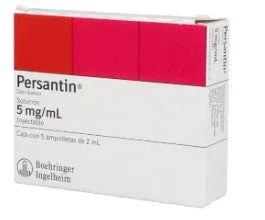
Table of Contents
- Package leaflet: Information for the patient
- Persantin 10 mg/2 ml solution for infusion
- 1. What Persantin is and what it is used for
- 2. What you need to know before receiving Persantin
- 3. How Persantin is administered
- 4. Possible side effects
- 5. How to store Persantin
- 6. Package contents and other information
- Persantin 75 mg coated tablets
- 1. What Persantin is and what it is used for
- 2. What you need to know before taking Persantin
- 3. How to take Persantin
- 4. Possible side effects
- 5. How to store Persantin
- 6. Contents of the pack and other information
Package leaflet: Information for the patient
Persantin 10 mg/2 ml solution for infusion
Dipyridamole
Read this leaflet carefully before this medicine is administered to you
because it contains important information for you.
- Keep this leaflet. You may need to read it again.
- If you have any questions, ask your doctor.
- If you experience any side effects, including those not listed in this leaflet, inform your doctor or pharmacist. See section 4.
Contents of this leaflet:
- What Persantin is and what it is used for
- What you need to know before receiving Persantin
- How Persantin is administered
- Possible side effects
- How to store Persantin
- Contents of the pack and other information
1. What Persantin is and what it is used for
Persantin works by opening the blood vessels of the heart, allowing blood to flow more freely.
Persantin is used in adults prior to undergoing a test called "myocardial perfusion imaging" to examine the heart, during which a radioactive medicine called a "radiopharmaceutical" (thallium) is also administered.
Persantin is also used before an ultrasound examination to assess whether your coronary arteries (the blood vessels supplying blood to the heart) are functioning properly.
Persantin is used during these procedures when you are unable to perform physical exercise or when an exercise stress test is not possible.
2. What you need to know before receiving Persantin
Your doctor will not administer Persantin:
- if you are allergic to dipyridamole or to any of the other ingredients of this medicine (listed in section 6);
- if you are hypersensitive (allergic) to theophylline or other methylxanthines (medicines used to treat asthma);
- if you have significant arrhythmia (when the heart beats irregularly) (e.g. ventricular tachycardia) or diseases of the heart's electrical system [(second- or third-degree atrioventricular block or sinoatrial node disease)] (unless you have a functioning pacemaker, i.e. you have undergone surgery to implant a device that electrically stimulates your heart to contract);
- if you suffer from bradycardia [(reduced heart rate, i.e. number of heartbeats per minute) with a rate below 40 beats/minute];
- if you have baseline hypotension (low blood pressure under normal conditions) (i.e. systolic blood pressure below 90 mmHg);
- if you have recently (within one month) experienced sudden, transient loss of consciousness of undiagnosed cause;
- if you have recently had transient ischaemic attacks (when blood flow to part of the brain is interrupted);
- if you suffer from severe heart disease [e.g. acute or recent myocardial infarction (within 1 month), unstable angina or impending infarction, decompensated heart failure (with marked or severe limitation of physical activity)];
- if you suffer from aortic stenosis (narrowing of the aorta, the largest artery in the human body) or severe heart valve disease (heart conditions impairing proper blood circulation);
- if you suffer from severe pulmonary arterial hypertension (high blood pressure in the lungs);
- if you suffer from bronchial asthma (a disease characterized by airway obstruction making it difficult for air to pass through) or have a tendency towards bronchospasm (when your bronchi narrow or close, preventing air passage);
- if you suffer from severe chronic obstructive bronchopulmonary disease (a lung disease);
- if you suffer from myasthenia gravis (a muscle disease causing weakness and potentially leading to paralysis) (see “Other medicines and Persantin”);
- if you are pregnant (see “Pregnancy, breastfeeding and fertility”).
Your doctor will take appropriate precautions with Persantin:
- if you have suffered from severe coronary artery disease, as you may be at higher risk, as well as if you have been diagnosed with bronchial asthma (a lung disease);
- if you are taking dipyridamole orally and also need to undergo a test with intravenous dipyridamole (administered through a vein). You must stop oral therapy 24 hours before the test. Failure to follow this warning may compromise the test result;
- if you have been diagnosed with known first-degree atrioventricular block (a serious heart condition);
- if you suffer from severe myasthenia, as an interaction between dipyridamole and cholinesterase inhibitors (medicines used to treat myasthenia gravis) must be considered (see “Other medicines and Persantin”).
Children and adolescents
The safety and efficacy in children have not been established. Use in these cases is not recommended.
Other medicines and Persantin
Inform your doctor if you are taking, have recently taken, or might take any other medicine.
Xanthine derivatives, e.g. theophylline or other methylxanthines (medicines used to treat asthma), may reduce the vasodilatory effect of dipyridamole and should therefore be avoided within 24 hours before the Persantin infusion test.
Dipyridamole increases the effect of medicines containing adenosine (a medicine used when the heart beats irregularly).
Dipyridamole may enhance the hypotensive effect (lowering of blood pressure) of antihypertensive medicines.
Dipyridamole may counteract the effect of cholinesterase inhibitor medicines, primarily used to treat myasthenia gravis (a muscle disease causing weakness and potentially leading to paralysis), and could therefore potentially worsen this condition.
Persantin with food and drinks
During the 24 hours before the start of the test, avoid consuming food and/or drinks containing xanthine derivatives, such as coffee, tea, cocoa, or cola.
Pregnancy, breastfeeding and fertility
If you are pregnant, think you might be pregnant, are planning to become pregnant, or are breastfeeding, consult your doctor before receiving this medicine.
Pregnancy
The safety of using Persantin in pregnant women has not been demonstrated. Animal studies have not shown any risk. However, Persantin should not be used during pregnancy, particularly during the first three months of gestation, unless the expected benefits outweigh the potential risks to the fetus. For this reason, diagnostic use of Persantin infusion solution is not recommended during pregnancy.
Breastfeeding
Since dipyridamole is excreted in breast milk, Persantin should only be used in breastfeeding women if considered essential by the doctor.
Fertility
No studies have been conducted with Persantin infusion solution on its effect on human fertility. Animal studies with dipyridamole do not indicate direct or indirect harmful effects related to fertility index.
Driving and using machines
No studies have been conducted on the effects on the ability to drive vehicles or use machinery.
However, dizziness may occur during treatment (see “Possible side effects”), so use caution when driving or operating machinery. If you experience dizziness, avoid potentially hazardous activities such as driving and using machinery.
3. How Persantin is administered
The dose will be determined by your doctor based on your weight and health status.
Persantin will be administered intravenously by a physician experienced in using this type of medicine.
If you are given more Persantin than you should
Symptoms
It is very unlikely that you will be given more infusion solution than required, as your doctor will monitor you during treatment.
The side effects described in section "4. Possible side effects" may occur, and in individual cases, they could even be more severe.
4. Possible side effects
Like all medicines, this medicine can cause side effects, although not everyone experiences them.
The side effects are listed below by frequency:
Very common (may affect more than 1 in 10 people)
- headache
- dizziness
- chest pain/angina pectoris
Common (may affect more than 1 in 100 people)
- paraesthesia (a condition mostly characterized by tingling sensations in arms and legs)
- arrhythmia (abnormal heart rhythm)
- tachycardia (increased heart rate)
- hypotension (lowering of blood pressure)
- hot flushes
- arterial hypertension (elevated blood pressure)
- changes in the ST segment or T wave of the ECG (modifications in the heart's electrical conduction system that can be observed through a test assessing heart function)
- nausea
Uncommon (may affect more than 1 in 1,000 people)
- myocardial infarction (when blood flow to the heart is blocked)
- bradycardia (when the heart beats slowly)
- bronchospasm (when the bronchi constrict and prevent air passage)
- abdominal pain
- dyspepsia (difficulty in digestion)
- asthenia (weakness)
Rare (may affect more than 1 in 10,000 people)
- hypersensitivity (allergy)
- transient ischaemic attacks (when blood flow to part of the brain is temporarily interrupted)
- cerebrovascular events (problems with blood circulation in the brain)
- death
Very rare (may affect less than 1 in 10,000 people)
- anaphylactic reaction (allergic reaction)
- cerebrovascular accident (when blood flow to the brain is interrupted)
- cardiac arrest (when the heart stops beating)
- ventricular fibrillation (disorganized and very rapid contraction of the heart's ventricles)
- seizures
Not known (frequency cannot be estimated from available data)
- syncope (fainting)
- sinus arrest (when the heart stops beating for short periods)
- atrioventricular block (a serious disturbance in the heart's electrical conduction system)
- angioedema (a condition similar to urticaria, characterized by swelling of the skin or mucous membranes)
- ECG abnormalities (changes in the heart's electrical conduction system detectable by a test assessing heart function)
- laryngospasm (when the larynx, the organ responsible for voice production, contracts and blocks airflow)
- diarrhoea
- vomiting
- urticaria (red, itchy skin rashes)
- skin rashes (appearance of spots or lesions on the skin)
- myalgia (muscle pain)
- oedema (swelling)
Reporting of side effects
If you experience any side effect, including those not listed in this leaflet, please contact your doctor or pharmacist. You may also report side effects directly via the national reporting system at http://www.agenziafarmaco.gov.it/content/come-segnalare-una-sospetta-reazione-avversa. By reporting side effects, you can help provide more information on the safety of this medicine.
5. How to store Persantin
Keep this medicine out of the sight and reach of children.
Do not store above 30°C.
Ready-to-use solutions must not be stored for longer than 8 hours. Protect from light.
Do not use this medicine after the expiry date stated on the label after EXP.
The expiry date refers to the last day of that month.
Do not dispose of any medicine via wastewater or household waste. Ask your pharmacist how to
dispose of medicines no longer required. This will help protect the environment.
6. Package contents and other information
What Persantin contains
- The active substance is dipyridamole.
- The other components are tartaric acid, polyethylene glycol 600, hydrochloric acid, water for injections.
Description of the appearance of Persantin and contents of the pack
Persantin is a solution for infusion.
It is available in packs of 10 clear glass vials containing 10 mg/2 ml.
Marketing Authorization Holder and Manufacturer
Glenwood GmbH
Pharmazeutische Erzeugnisse
Arabellastr. 17
81925 Munich
Germany
[email protected]
Manufacturer
Boehringer Ingelheim Espana S.A.
San Cugat del Vallés – Barcelona (Spain)
The following information is intended exclusively for physicians or healthcare professionals:
Warnings and precautions
The potential clinical information obtained from administering Persantin infusion solution as an adjunct in myocardial imaging must be evaluated in consideration of the patient's risk.
Reactions similar to those induced by physical exertion stress may occur; therefore, appropriate electrocardiographic monitoring is indicated.
When performing myocardial imaging with Persantin infusion solution, intravenous aminophylline should be readily available to relieve adverse effects such as bronchospasm or chest pain.
Vital signs must be monitored during the intravenous infusion of Persantin and for 10–15 minutes thereafter, and an electrocardiographic tracing should be obtained using at least one chest lead.
In case of severe hypotension, prior to administering parenteral aminophylline, the patient should be placed in a supine position with the head lowered if necessary.
If 240 mg of aminophylline does not relieve chest pain symptoms within a few minutes, sublingual nitroglycerin may be administered. If chest pain persists despite aminophylline and nitroglycerin, myocardial infarction should be considered.
If the patient's clinical condition with an adverse reaction allows a delay of one minute before administering parenteral aminophylline, thallium-201 may be injected and circulated for one minute before giving aminophylline. This allows initial thallium perfusion imaging to be performed before the pharmacological effects of Persantin on coronary circulation are reversed.
How to administer Persantin
The dose of Persantin infusion solution for intravenous use, as an adjunct to myocardial perfusion imaging with thallium, should be adjusted according to the patient's body weight. The recommended dose is 0.142 mg/kg/min (total dose 0.567 mg/kg) infused over 4 minutes. The maximum dose is 0.84 mg/kg infused over 6–10 minutes. It is recommended not to exceed the maximum dose.
Before administration, Persantin infusion solution must be diluted at a ratio of at least 1:2 with 0.45% or 0.9% sodium chloride or 5% glucose to a total volume of approximately 20–50 ml. Due to physicochemical characteristics, vials may only be diluted with glucose or sodium chloride solutions.
Undiluted infusion of Persantin may cause local irritation. Thallium-201 must be injected within 5 minutes after the 4-minute infusion of Persantin infusion solution.
Persantin infusion solution for intravenous use must not be mixed in the same syringe or infusion bag with other medicinal products.
During the 24 hours preceding the start of the procedure, patients must refrain from consuming food and/or beverages containing xanthine derivatives, such as coffee, tea, cocoa, or cola drinks (see also sections “Other medicines and Persantin” and “Persantin with food and drink”).
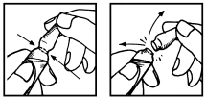
Instructions for use:
BREAKABLE AMPULES – FILE NOT REQUIRED
Overdose
Treatment:
Symptomatic therapy is recommended.
If severe chest pain or bronchospasm occurs, aminophylline may be administered intravenously slowly in doses of 50 to 240 mg (50–100 mg over 30–60 seconds).
Due to its high tissue distribution and predominantly hepatic elimination, dipyridamole is unlikely to be accessible to procedures aimed at enhancing elimination.
Undesirable effects
At high intravenous doses of dipyridamole, such as those used in cardiac imaging, more frequent and severe adverse effects have been reported compared to those observed during intravenous or oral use of the medicinal product at recommended doses. Nevertheless, all available data suggest that the risk/benefit ratio is at least as favorable as that of conventional exercise stress testing.
Patient Information Leaflet: Information for the patient
Persantin 75 mg coated tablets
Dipyridamole
Please read this leaflet carefully before taking this medicine because it contains
important information for you.
- Keep this leaflet. You may need to read it again.
- If you have any questions, ask your doctor or pharmacist.
- This medicine has been prescribed for you only. Do not give it to other people, even if they have the same symptoms as you, because it could be harmful.
- If you experience any side effects, including those not listed in this leaflet, contact your doctor or pharmacist. See section 4.
Contents of this leaflet:
- What Persantin is and what it is used for
- What you need to know before taking Persantin
- How to take Persantin
- Possible side effects
- How to store Persantin
- Contents of the pack and other information
1. What Persantin is and what it is used for
Persantin 75 mg enteric-coated tablets belongs to a group of medicines in the category of antiplatelet agents, which inhibit platelet aggregation (interfering with the function of platelets, blood components), thereby preventing the formation of blood clots.
Persantin is used in combination with oral anticoagulant medicines to prevent blood clots in patients with mechanical heart valve prostheses.
If you do not feel better or if you feel worse, talk to your doctor.
2. What you need to know before taking Persantin
Do not take Persantin
- if you are allergic to dipyridamole or to any of the other ingredients of this medicine (listed in section 6).
Warnings and precautions
Clinical experience suggests that patients receiving oral dipyridamole therapy who are also scheduled to undergo a pharmacological stress test with intravenous dipyridamole should discontinue oral therapy 24 hours before the test. Failure to follow this warning may compromise the sensitivity of the test.
Talk to your doctor or pharmacist before taking Persantin:
- if you have a severe coronary artery disease such as unstable angina (severe and frequent chest pain), recent myocardial infarction (heart attack), left ventricular outflow obstruction, or circulatory instability (e.g. uncompensated heart failure), or low blood pressure.
- if you have myasthenia gravis (a chronic disease characterized by varying degrees of muscle weakness that may lead to paralysis), as adjustment of the Persantin dosage may be necessary (see section “Other medicines and Persantin”).
- if you have gallstones or suffer from inflammation of the biliary tract, since cases have been reported where dipyridamole was found incorporated into gallstones in patients treated with oral dipyridamole for several years.
Children and adolescents
Available data on the use of Persantin 75 mg film-coated tablets in children are limited. Therefore, its use is not recommended in children and adolescents under 18 years of age.
Other medicines and Persantin
Inform your doctor or pharmacist if you are taking, have recently taken, or might take any other medicines.
Dipyridamole may enhance the effects of medicines containing adenosine; therefore, a dosage adjustment of adenosine may need to be considered.
Dipyridamole may intensify the effect of medicines that lower blood pressure and reduce the therapeutic effect of cholinesterase inhibitors, which are mainly used to treat myasthenia gravis, and thus may potentially worsen this condition (see also section “Warnings and precautions”).
When dipyridamole is taken concomitantly with anticoagulants and antiplatelet agents (medicines used to prevent blood clots, such as warfarin and acetylsalicylic acid), the specific intolerances and risks associated with these medicines should be taken into account.
Administration of dipyridamole together with acetylsalicylic acid has not resulted in an increased incidence of bleeding episodes. Furthermore, when dipyridamole was administered concomitantly with warfarin, no increases in the frequency or severity of bleeding episodes were observed compared to warfarin alone.
Pregnancy, breastfeeding and fertility
If you are pregnant, think you may be pregnant, are planning to become pregnant, or are breastfeeding, consult your doctor or pharmacist before taking this medicine.
Pregnancy
The safety of using Persantin in pregnant women has not been established; however, Persantin has been used for many years without adverse consequences. Animal studies have not shown any risk. Nevertheless, you should not take Persantin during pregnancy, particularly during the first three months of gestation.
Your doctor will decide whether or not you should take Persantin.
Breastfeeding
You should consult your doctor about the advisability of taking Persantin while breastfeeding.
Fertility
No studies have been conducted with Persantin on its effects on human fertility. Animal studies with dipyridamole have not indicated any direct or indirect harmful effects on fertility.
Driving and using machines
No studies have been conducted on the effects of Persantin on the ability to drive vehicles or operate machinery.
However, due to the possible occurrence of adverse effects such as dizziness during treatment (see section “Side effects”), patients are advised to exercise caution when driving or operating machinery. If you experience dizziness, you must avoid potentially hazardous activities such as driving and using machinery.
Persantin contains sucrose and sunset yellow (E110)
This medicine contains sucrose: if your doctor has diagnosed you with an intolerance to certain sugars, contact him/her before taking this medicine.
This medicine contains sunset yellow (E110): it may cause allergic reactions.
3. How to take Persantin
Take this medicine exactly as directed by your doctor. If you have any doubts, consult your doctor or pharmacist.
The recommended dose for adults is 300–450 mg per day, divided into several doses taken throughout the day. In severe cases, the total daily dose may be increased to 600 mg.
If you take more Persantin than you should
If you accidentally take too much Persantin, contact your doctor immediately or go to the nearest hospital.
Symptoms
If you take an excessive dose of this medicine, you may experience symptoms such as a sensation of warmth, flushing, sweating, restlessness, weakness, dizziness, and chest pain (anginal); you may also develop low blood pressure and increased heart rate.
Treatment
Symptomatic treatment is recommended; further management will be determined by the doctor.
If you forget to take Persantin
Do not take a double dose to make up for a forgotten tablet.
If you stop taking Persantin
If you have any questions about using this medicine, consult your doctor or pharmacist.
4. Possible side effects
Like all medicines, this medicine can cause side effects, although not everybody gets them.
At therapeutic doses, side effects are usually mild and transient.
The following side effects are listed by frequency:
Very common (may affect more than 1 in 10 people)
headache, dizziness, diarrhoea, nausea.
Common (may affect up to 1 in 10 people)
angina pectoris (chest pain), vomiting, skin rash (when spots or lesions of various types appear on the skin), mialgia (muscle pain).
Not known (frequency cannot be estimated from the available data)
thrombocytopenia (reduction in the number of platelets in the blood), hypersensitivity (allergy), angioedema (a condition similar to urticaria, manifesting as swelling of the skin and mucous membranes), tachycardia (increased heart rate), hypotension (low blood pressure), hot flushes, bronchospasm (narrowing of the bronchi causing severe breathing difficulties due to reduced airflow), urticaria, haemorrhage (severe bleeding) during or following surgical procedures.
Worsening of symptoms in coronary artery disease and the presence of dipyridamole in gallstones have been observed (see section “Warnings and precautions”).
Reporting of side effects
If you experience any side effect, including those not listed in this leaflet, talk to your doctor or pharmacist. You can also report side effects directly via the national reporting system at https://www.aifa.gov.it/content/segnalazioni-reazioni-avverse.
By reporting side effects, you can help provide more information on the safety of this medicine.
5. How to store Persantin
This medicine does not require any special storage temperature.
Keep this medicine out of the sight and reach of children.
Do not use this medicine after the expiry date which is stated on the packaging after "Exp.". The expiry
date refers to the last day of that month.
Do not dispose of any medicine via wastewater or household waste. Ask your pharmacist how to
dispose of medicines you no longer use. This will help protect the environment.
6. Contents of the pack and other information
What Persantin contains
- The active substance is dipyridamole.
- The other components are anhydrous calcium hydrogen phosphate, dried maize starch, modified starch, colloidal silica, magnesium stearate, talc, sucrose, gum arabic, sunset yellow E 110, E 171, PEG 6000, white wax, carnauba wax.
Description of the appearance of Persantin and contents of the pack
Persantin is presented as coated tablets.
It is available in packs of 30 coated tablets of 75 mg.
Marketing Authorization Holder and Manufacturer
Glenwood GmbH
Pharmazeutische Erzeugnisse
Arabellastr. 17
81925 Munich
Germany
[email protected]
Manufacturer
Delpharm Reims
10 Rue Colonel Charbonneaux
51100 Reims (France)