Nakafri
ItalyTable of Contents
Package leaflet: Information for the patient
NAKAFRI 400 micrograms nasal drops suspension
Fluticasone propionate
Generic medicine
Please read all of this leaflet carefully before you start using this medicine because it contains important information for you.
- Keep this leaflet. You may need to read it again.
- If you have any questions, ask your doctor or pharmacist.
- This medicine has been prescribed for you only. Do not give it to other people, even if they have the same symptoms as yours, because it could be harmful.
- If you experience any side effects, including those not listed in this leaflet, talk to your doctor or pharmacist. See section 4.
Contents of this leaflet:
- What NAKAFRI is and what it is used for
- What you need to know before using NAKAFRI
- How to use NAKAFRI
- Possible side effects
- How to store NAKAFRI
- Contents of the pack and other information
1. What NAKAFRI is and what it is used for
NAKAFRI contains an active substance called fluticasone propionate. It belongs to a group of medicines known as steroids (also called "corticosteroids").
NAKAFRI is used for the treatment of:
- Small growths inside the nose (polyps)
- Symptoms associated with nasal obstruction.
Steroids:
- Reduce inflammation;
- Reduce swelling and irritation in the nose;
- Help relieve itching, sneezing, and blocked or runny nose.
NAKAFRI is contained in single-dose containers made of low-density polyethylene.
2. What you need to know before using NAKAFRI
Do not use NAKAFRI:
if you are allergic to fluticasone propionate or to any of the other ingredients of this medicine (listed
in section 6).
Take special care with NAKAFRI
Talk to your doctor or pharmacist before using this medicine:
- If you have a nasal infection.
- If you are taking an antiviral medicine known as a protease inhibitor (for example, ritonavir).
- If you are taking a medicine used to treat fungal infections (for example, ketoconazole).
- If you have taken steroids for a prolonged period of time, either by injection or orally.
If you are unsure whether any of the above conditions apply to you, speak to your doctor or pharmacist before using
this medicine.
NAKAFRI may reduce the normal production of steroid hormones in the body, particularly if doses higher than those recommended are used for long periods. In such cases, additional steroid therapy should be considered during periods of acute stress, following severe injury, or before undergoing surgery.
It is therefore important that you use the lowest effective dose of NAKAFRI needed to control your symptoms.
Contact your doctor if you experience blurred vision or other visual disturbances.
Other medicines and NAKAFRI
Tell your doctor or pharmacist if you are taking, have recently taken, or might take any other medicines, including those not requiring a prescription.
Some medicines may increase the effect of NAKAFRI. Inform your doctor if you are taking these medicines (including certain HIV medicines: ritonavir, cobicistat), as careful monitoring may be required.
Pregnancy and breastfeeding
Do not use NAKAFRI if you are pregnant, suspect you may be pregnant, planning to become pregnant, or are breastfeeding, unless specifically instructed by your doctor.
Driving and using machines
It is unlikely that NAKAFRI will affect your ability to drive vehicles or operate machinery.
3. How to use NAKAFRI
Use this medicine exactly as instructed by your doctor or pharmacist. Do not exceed the recommended dose. If you have any doubts, consult your doctor or pharmacist.
Do not use this medicine in children under 16 years of age.
Use NOMEPRODOTTO in the nose only.
Avoid contact with the eyes.
Use NAKAFRI every day. It may take several weeks before this medicine starts working, so continue using it even if you do not feel better immediately.
Dosage
Adults and adolescents (over 16 years of age)
The usual starting dose is:
1 single-dose container (400 micrograms) divided equally between each nostril, once or twice daily.
If your symptoms begin to improve, speak with your doctor, who may decide to reduce the dose.
If your symptoms do not improve after 4–6 weeks, your doctor may recommend an alternative treatment.
Instructions for use
- Open the aluminium pouch by tearing one side. Do not open the package until you are ready to use the medicine.
- Remove the strip of single-dose polyethylene containers from the aluminium pouch and detach one container.
- Return the remaining containers to the aluminium pouch and place the pouch back into the box.
- Shake and agitate the single-dose container several times. The contents of the container must be thoroughly mixed before use.
- Then tap downwards to ensure that the liquid is not in the neck of the container.
- Open the container by removing the cap with a gentle twisting motion.
How to administer the drops
Before administering the drops, you should choose one of the positions shown in the figures below. Although these positions may not be easy, they ensure that the drops are administered correctly.
- Gently blow your nose to clear it.
- From an upright position, bend forward.

- If you are unable to do this, kneel down and then bend forward.
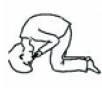
- Place the opened single-dose container into one nostril and gently squeeze.
- Continue squeezing until the sides of the container touch each other. This means that approximately half of the dose has been administered (about 6 drops).
- Repeat steps 4 and 5 to administer the remainder of the product into the other nostril.
- Keep your head bent forward for at least 1 minute after administering the drops.
If these positions are difficult for you, you may lie down on a bed with your head tilted over the edge. After doing so, administer the drops, then rest your head sideways on the bed for at least 1 minute.

Be careful to avoid getting the drops in the eyes or on broken skin. If this happens, rinse the eyes or skin immediately with water.
If you use more NAKAFRI than you should
Inform your doctor if you have used more medicine than prescribed.
If you forget to take a dose of NAKAFRI
If you miss a dose, do not worry; wait until it is time for your next dose and take it then. Do not use a double dose to make up for the missed dose.
If you stop using NAKAFRI
Do not stop treatment even if you feel better, unless your doctor tells you to. If you stop treatment, your symptoms may return.
If you have any questions about how to use this medicine, consult your doctor or pharmacist.
4. Possible side effects
Like all medicines, NAKAFRI can cause side effects, although not everyone experiences them.
The following side effects may occur with NAKAFRI.
Contact your doctor if you experience:
Allergic reactions
A small number of people may experience allergic reactions to NAKAFRI, which, if untreated, can progress to a more serious condition, even life-threatening.
Signs include:
- shortness of breath, coughing, or breathing difficulties;
- sudden feeling of weakness or dizziness (may lead to fainting or loss of consciousness);
- swelling of the face, mouth, or tongue;
- skin rash or redness.
In most cases, these symptoms are mild, but you should be aware they can become more severe. Therefore, if you notice any of these symptoms, seek immediate medical attention.
Allergic reactions to NAKAFRI are very rare (may affect fewer than 1 in 10,000 people).
Other side effects include:
Very common (may affect more than 1 in 10 people)
- nosebleeds.
Common (may affect up to 1 in 10 people)
- dry or irritated throat or nose.
Very rare (may affect fewer than 1 in 10,000 people)
- clouded lens of the eye (cataract), increased eye pressure that may cause vision problems (glaucoma). These eye problems may occur in patients using NAKAFRI for prolonged periods.
- small holes (perforations) in the nasal septum separating the nostrils.
Not known (frequency cannot be estimated from the available data)
- blurred vision
- sores in the nose
Additionally, systemic effects may occur with intranasal corticosteroids, particularly when prescribed at high doses for prolonged periods. Your doctor will aim to prevent this by prescribing the lowest effective steroid dose to control such effects.
Reporting of side effects
If you experience any side effect, including those not listed in this leaflet, talk to your doctor or pharmacist.
You can also report side effects directly via the national reporting system at: https://www.aifa.gov.it/content/segnalazioni-reazioni-avverse.
By reporting side effects, you can help provide more information on the safety of this medicine.
5. How to store NAKAFRI
Keep NAKAFRI out of the sight and reach of children.
No special storage conditions required.
Store NAKAFRI in its aluminium pouch and in the box in an upright position.
The medicine should be used within 28 days of first opening the sachet containing the single-dose containers.
Do not use this medicine after the expiry date stated on the single-dose container and on the box, after "Exp.". The expiry date refers to the last day of that month.
Do not dispose of medicines via wastewater or household waste. Ask your pharmacist how to dispose of medicines no longer required. This will help protect the environment.
6. Package contents and other information
What NAKAFRI contains
- The active substance is fluticasone propionate.
- The other ingredients are: Polysorbate 20, Sorbitan monolaurate, Disodium dihydrogen phosphate dihydrate, Disodium phosphate anhydrous, Sodium chloride, Water for injections.
Description of the appearance of NAKAFRI and contents of the pack
NAKAFRI is a nasal drop suspension.
Each single-dose container contains 400 micrograms of fluticasone propionate at a concentration of 1 mg/ml.
Each box contains 6 strips of 5 single-dose containers (30 single-dose containers per box) or 18 strips of 5 single-dose containers (90 single-dose containers per box).
Marketing Authorization Holder
Genetic S.p.A. Via Della Monica n. 26, 84083 Castel San Giorgio (SA)
Manufacturer
Genetic S.p.A. Contrada Canfora, 84084 Fisciano (SA)