Nadixa
Italy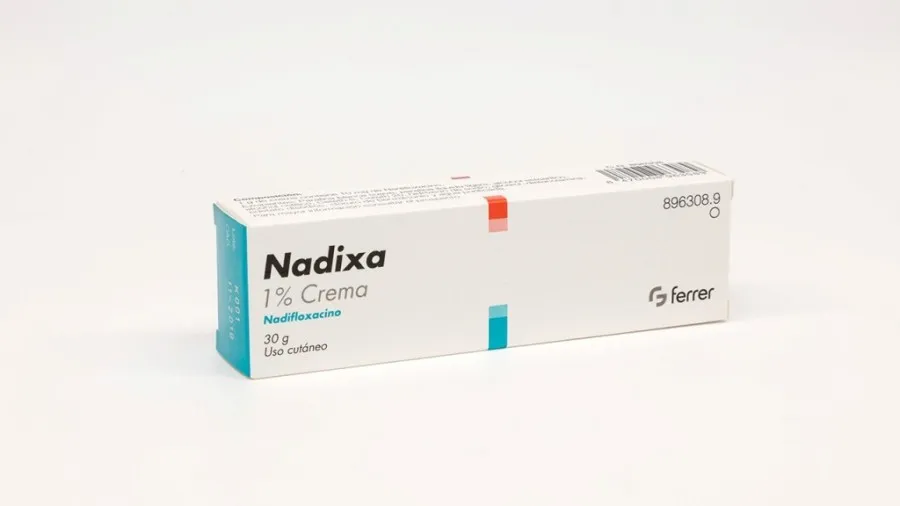
Table of Contents
PACKAGE LEAFLET: INFORMATION FOR THE PATIENT
Nadixa 1% Cream
Active substance: Nadifloxacin
Read this leaflet carefully before using this medicine.
- Keep this leaflet. You may need to read it again.
- If you have any questions, ask your doctor or pharmacist.
- This medicine has been prescribed for you only. Do not give it to other people, even if their symptoms are the same as yours, as it may be harmful.
- If you experience any side effects, including those not listed in this leaflet, tell your doctor or pharmacist. See section 4.
Contents of this leaflet:
- What Nadixa 1% cream is and what it is used for
- What you need to know before using Nadixa 1% cream
- How to use Nadixa 1% cream
- Possible side effects
- How to store Nadixa 1% cream
- Further information
1. WHAT NADIXA IS AND WHAT IT IS USED FOR
Nadixa is an anti-infective agent belonging to the quinolone group.
Nadixa cream is used for the topical treatment of mild to moderate inflammatory forms of common acne (papulopustular acne, grade I-II).
2. WHAT YOU SHOULD KNOW BEFORE TAKING NADIXA
Do not take Nadixa
- If you are allergic to nadifloxacin or to any of the other ingredients of Nadixa.
Warnings and precautions
- Avoid contact with the eyes or other mucous membranes. In case of accidental contact of Nadixa cream with the eyes or mucous membranes, rinse immediately with lukewarm water.
- After applying Nadixa cream, wash your hands thoroughly with warm water and soap to prevent unintentional contact of Nadixa cream with other areas.
- Photosensitivity reactions may occur during therapy with other systemically administered quinolones. Although numerous studies conducted in animals and humans have not shown any phototoxic or photoallergic potential of the active substance nadifloxacin, the cream base may increase photosensitivity. Furthermore, data regarding prolonged exposure to sunlight or artificial UV light during treatment with Nadixa are not available. Therefore, patients undergoing treatment with Nadixa should generally avoid irradiation with artificial UV light (UV lamps, sunbeds, tanning booths) and, whenever possible, exposure to sunlight.
- If hypersensitivity reactions (such as itching, erythema, papules, blisters) or severe skin irritation occur, the use of Nadixa cream must be discontinued.
- This product must not be applied to damaged, cracked, or abraded skin.
Children
The safety and efficacy of Nadixa cream have not been sufficiently studied in children under 14 years of age. Therefore, Nadixa must not be used in patients belonging to this age group.
Other medicines
Inform your doctor or pharmacist if you are taking or have recently taken any other medicines, including those without a prescription.
The absorption of nadifloxacin after topical application of Nadixa on human skin is very low; therefore, interaction with orally administered drugs is unlikely. There is no evidence indicating that the efficacy of systemically administered medicines is affected by the topical use of Nadixa cream.
Nadixa cream may cause skin irritation, and therefore concomitant use of exfoliants, astringents, or products containing irritating substances such as fragrances and alcohol may increase skin irritation.
Pregnancy and breastfeeding
There are no clinical data on the use of nadifloxacin during pregnancy. Animal studies have not shown teratogenic effects or adverse effects on fetal development. However, Nadixa cream should only be used during pregnancy after careful medical evaluation of the benefits and risks for both mother and unborn child.
It is known that the active substance nadifloxacin is excreted in breast milk; therefore, Nadixa cream must not be used during breastfeeding. Under no circumstances should women who are breastfeeding apply Nadixa to the breast area.
Driving and using machines
No special precautions are required.
Important information about some of the ingredients in Nadixa cream
Cetyl alcohol and stearyl alcohol may cause local skin reactions (e.g., contact dermatitis).
Benzalkonium chloride may cause skin irritation.
3. HOW TO USE NADIXA
Use this medicine exactly as directed by your doctor. If you have any doubts, consult your doctor or pharmacist.
Nadixa should be applied in a thin layer to the acne-affected areas of the skin twice daily. Nadixa cream is intended for topical use only and must be applied in a thin layer to acne-affected areas in the morning and evening before going to bed, after cleansing the skin. The skin must be thoroughly dry before application. Nadixa cream must not come into contact with the eyes or lips (see also Warnings and Precautions). To avoid infection, Nadixa cream should be applied using a cotton ball. Nadixa must not be used with occlusive dressings.
In general, the duration of treatment is up to 8 weeks.
If you use more Nadixa cream than you should:
Marked redness or an unpleasant sensation on the skin may occur.
If a quantity of Nadixa cream is accidentally ingested, appropriate gastric lavage should be considered, unless the amount ingested is small.
If you forget to use Nadixa cream:
If you have forgotten to apply Nadixa cream, continue with the applications as described in these instructions or as directed by your doctor.
If you stop using Nadixa cream:
To achieve the desired treatment outcome, carefully follow the instructions regarding the duration of therapy described in the section "How to use Nadixa" or as directed by your doctor. The treatment must not be interrupted or discontinued without consulting your doctor.
If you have any questions about the use of this medicine, consult your doctor or pharmacist.
4. POSSIBLE ADVERSE REACTIONS
Like all medicines, Nadixa can cause adverse reactions, although not everyone experiences them.
The most commonly reported adverse reaction during clinical studies was pruritus (>1.8%).
Listed below are adverse reactions considered at least possibly related to the drug and more commonly reported with nadifloxacin cream.
The frequencies correspond to:
Very common: >1/10
Common: >1/100, ≤ 1/10
Uncommon: >1/1,000, ≤ 1/100
Rare: >1/10,000, ≤ 1/1,000
Very rare: ≤ 1/10,000, including isolated cases
Skin and subcutaneous tissue disorders:
Common: pruritus
Uncommon: papules, dry skin, contact dermatitis, skin irritation, sensation of skin warmth, erythema, rash.
Rare: urticaria.
Systemic disorders and administration site conditions:
Uncommon: burning sensation at the application site.
Vascular disorders:
Uncommon: erythema.
Post-marketing data:
Isolated cases: skin hypopigmentation.
Reporting of adverse reactions
If you experience any adverse reaction, including those not listed in this leaflet, please contact your doctor or pharmacist. You may also report adverse reactions directly via the national reporting system at
www.agenziafarmaco.gov.it/it/responsabili. By reporting adverse reactions, you can help provide further information on the safety of this medicine.
5. HOW TO STORE NADIXA
Keep this medicine out of the sight and reach of children.
Do not use Nadixa after the expiry date stated on the tube and carton. The expiry date refers to the last day of that month.
No special storage precautions are required.
Do not dispose of any medicine via wastewater or household waste. Ask your pharmacist how to dispose of medicines you no longer use. This will help protect the environment.
6. OTHER INFORMATION
What Nadixa contains
- The active substance is Nadifloxacin (1%). Each gram of Nadixa contains 10 mg of nadifloxacin.
- The other components are: white vaseline, light liquid paraffin, stearyl alcohol, cetyl alcohol, Ceteth 5, Ceteth 20, sodium hydroxide, glycerol, diethanolamine, disodium edetate, benzalkonium chloride and purified water.
Description of the appearance of Nadixa and contents of the pack
White to off-white cream, without distinctive odour.
Tubes of 10 g, 20 g, 25 g, 30 g and 50 g
Tubes of 5 g (for samples only)
Not all pack sizes may be marketed in all countries.
Marketing Authorization Holder and Manufacturer
FERRER INTERNACIONAL, S.A.
Gran Vía Carlos III, 94
08028 Barcelona (Spain)
Selling Agent
Elytra Pharma
Viale Monte Nero, 70 - 20135 Milan