Lacrisol
Italy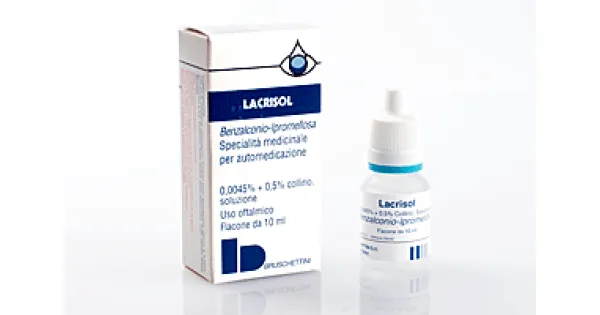
Table of Contents
Package leaflet: Information for the user
LACRISOL 0.0045% + 0.5% eye drops, solution
Benzalkonium chloride and hypromellose
Generic medicine
Please read all of this leaflet carefully before you start using this medicine because it contains important information for you.
Always use this medicine exactly as described in this leaflet or as your doctor or pharmacist has told you to.
- Keep this leaflet. You may need to read it again.
- If you need more advice or information, consult your pharmacist.
- If you experience any side effects, including those not listed in this leaflet, contact your doctor or pharmacist. See section 4.
- Contact your doctor if you do not notice any improvement or if your symptoms worsen after a few days of treatment.
Contents of this leaflet:
- What LACRISOL is and what it is used for
- What you need to know before using LACRISOL
- How to use LACRISOL
- Possible side effects
- How to store LACRISOL
- Contents of the pack and other information
1. What LACRISOL is and what it is used for
LACRISOL is a combination of two active substances: benzalkonium chloride and hypromellose. Benzalkonium chloride is a quaternary ammonium compound with antiseptic and disinfectant properties that prevents the growth of certain types of bacteria and fungi. Hypromellose has emollient and lubricating properties and helps hydrate the eyes.
This medicine is indicated for:
- disinfecting the ocular mucosa;
- hydrating dry eyes in cases of inadequate hydration (insufficient tear secretion – dry eye syndrome).
Consult your doctor if you do not feel better or if you feel worse after several days of treatment.
2. What you need to know before using LACRISOL
Do not use LACRISOL:
- if you are allergic to benzalkonium chloride, hypromellose, or any of the other ingredients of this medicine (listed in section 6);
- if the person using this medicine is a child under 12 years of age, unless otherwise directed by a doctor (See section “Children”).
Warnings and precautions
Talk to your doctor or pharmacist before using LACRISOL.
Avoid using this medicine:
- for prolonged periods, as it may be toxic;
- if you have inflammation, wounds, or corneal abrasions;
- if you wear contact lenses. In this case, after using LACRISOL, wait at least 15 minutes before inserting your contact lenses;
- if you are undergoing treatment with other antiseptics or ophthalmic solutions (See section “Other medicines and LACRISOL”).
Do not inhale or swallow this medicine, as toxic reactions, sometimes fatal, may occur (See section “If you use more LACRISOL than you should”).
During treatment with this medicine, especially over prolonged periods, allergic reactions (sensitization phenomena) may occur. If this happens, stop treatment immediately and inform your doctor, who will determine appropriate therapy.
The benzalkonium chloride contained in this medicine may cause eye irritation and may discolor contact lenses.
Children
This medicine must not be administered to children under 12 years of age, unless otherwise directed by a doctor (See section “Do not use LACRISOL”).
Other medicines and LACRISOL
Inform your doctor or pharmacist if you are using, have recently used, or might use any other medicines.
During treatment with LACRISOL, avoid using other eye medications (other antiseptics and ophthalmic solutions).
Pregnancy and breastfeeding
If you are pregnant or breastfeeding, you may use this medicine. However, consult your doctor or pharmacist before using LACRISOL if you are pregnant, suspect you may be pregnant, planning a pregnancy, or breastfeeding.
Driving and using machines
This medicine does not affect your ability to drive or operate machinery.
3. How to use LACRISOL
Use LACRISOL exactly as instructed in this leaflet or as directed by your doctor or pharmacist. If in doubt, consult your doctor or pharmacist.
Keep your eye open and, by gently pressing on the body of the bottle, instill one drop into the lower part of the eye (conjunctival fornix).
The recommended dose is 1-2 drops, 2 or 4 times a day.
Do not exceed the recommended doses.
Use this medicine only for short-term treatment unless otherwise prescribed by your doctor.
If you use more LACRISOL than you should
If you do not exceed the recommended doses, there is no risk of overdose.
Accidental ingestion may cause serious adverse effects such as:
- vomiting, diarrhoea;
- abdominal pain;
- skin irritations (erythematous rash, desquamation);
- increased or decreased brain activity (stimulation or depression of the CNS);
- convulsions;
- fever (hyperpyrexia);
- kidney and liver damage, rarely yellowing of the skin and eyes (jaundice);
- severe circulatory problems (circulatory collapse and shock);
- hypotonia, muscle weakness;
- hypotension;
- death due to collapse.
If you accidentally ingest/overdose on LACRISOL, contact your doctor immediately or go to the nearest hospital.
Treatment for poisoning due to ingestion of significant amounts of quaternary ammonium compounds is symptomatic. Your doctor will administer medications to relieve your symptoms (soothing agents), avoiding induction of vomiting (emesis) and gastric lavage.
If you forget to use LACRISOL
Do not use a double dose to make up for the missed dose.
If you have any doubts about how to use this medicine, consult your doctor or pharmacist.
4. Possible adverse reactions
Like all medicines, this medicine can cause adverse reactions, although not everybody will experience them.
The following adverse reactions may occur:
Frequency not known (frequency cannot be estimated from the available data):
- intolerance reactions such as burning and eye irritation. These effects are not consequential and usually do not require treatment modifications. If adverse reactions occur, consult your doctor or pharmacist.
Reporting of adverse reactions
If you experience any adverse reaction, including those not listed in this leaflet, talk to your doctor or pharmacist.
You can also report adverse reactions directly via the national reporting system at https://www.aifa.gov.it/content/segnalazioni-reazioni-avverse. By reporting adverse reactions, you can help provide more information on the safety of this medicine.
5. How to store LACRISOL
Keep this medicine out of the sight and reach of children.
Do not use this medicine after the expiry date stated on the packaging after "Exp". The expiry date refers to the last day of that month and to the product in intact packaging, properly stored.
After first opening the bottle, the medicine should be used within 15 days.
Do not dispose of any medicine via wastewater or household waste. Ask your pharmacist how to dispose of medicines you no longer use. This will help protect the environment.
6. Package contents and other information
What LACRISOL contains
- The active substances are benzalkonium chloride and hypromellose. 100 ml of solution contain 0.0045 g of benzalkonium chloride and 0.5 g of hypromellose.
- The other components are: boric acid, sodium tetraborate, sodium chloride, purified water.
Description of the appearance of LACRISOL and contents of the pack
10 ml bottle with dropper.
Marketing Authorization Holder and Manufacturer
Bruschettini S.r.l. - Via Isonzo 6 - 16147 Genova - Italy