Inomax
Italy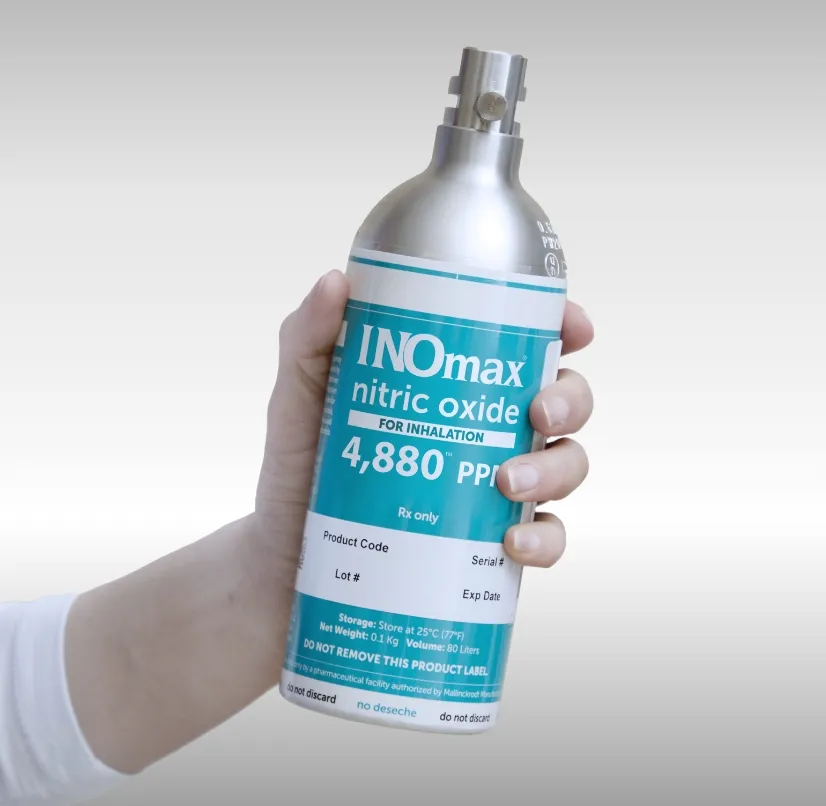
Table of Contents
- Package leaflet: Information for the user
- INOmax 400 ppm mol/mol Medicinal compressed gas
- 1. What INOmax is and what it is used for
- 2. What you should know before using INOmax
- 3. How INOmax is administered
- 4. Possible side effects
- 5. How to store INOmax
- 6. Package contents and other information
- Package leaflet: Information for the user
- INOmax 800 ppm mol/mol Compressed Medicinal Gas
- 1. What INOmax is and what it is used for
- 2. What you should know before using INOmax
- 3. How to use INOmax
- 4. Possible side effects
- 5. How to store INOmax
- 6. Package contents and other information
Package leaflet: Information for the user
INOmax 400 ppm mol/mol Medicinal compressed gas
Nitric oxide
Please read all of this leaflet carefully before you start using this medicine, as it contains important information for you.
- Keep this leaflet. You may need to read it again.
- If you have any questions, ask your doctor.
- If you get any side effects, talk to your doctor. This includes any possible side effects not listed in this leaflet. (See section 4)
Contents of this leaflet:
- What INOmax is and what it is used for
- What you need to know before you use INOmax
- How to use INOmax
- Possible side effects
- How to store INOmax
- Contents of the pack and other information
1. What INOmax is and what it is used for
INOmax contains nitric oxide, a gas used to treat:
- newborns with neonatal respiratory failure associated with high blood pressure in the lungs, a condition known as hypoxic respiratory failure. When inhaled, this gas mixture improves blood circulation through the lungs, thereby increasing the amount of oxygen reaching the infant's blood.
- newborns, children, adolescents aged 0 to 17 years, and adults with high blood pressure in the lungs related to cardiac surgery. This gas mixture can improve cardiac function and increase blood flow through the lungs, thus helping to increase the amount of oxygen delivered to the blood.
2. What you should know before using INOmax
Do not use INOmax:
- If you (as a patient) or the child (as a patient) are allergic (hypersensitive) to nitrogen oxide or to any of the excipients in INOmax. (See section 6 “Other information”, which contains the complete list of ingredients).
- If you (as a patient) or the child (as a patient) have abnormal blood circulation within the heart.
Take special care with INOmax
Inhaled nitric oxide may not always be effective, and therefore other therapies may be considered necessary for you or the child.
Inhaled nitric oxide may alter the blood's ability to carry oxygen. This effect will be monitored through blood samples, and if necessary, the dose of inhaled nitric oxide will be reduced.
Nitric oxide may react with oxygen to form nitrogen dioxide, which may cause airway irritation. The doctor or pediatrician will monitor nitrogen dioxide levels, and if levels are high, INOmax therapy will be adjusted and reduced accordingly.
Inhaled nitric oxide may have a weak effect on platelets (components that contribute to blood clotting), and therefore any signs of bleeding or bruising in you or the child should be closely monitored. If signs or symptoms suggestive of bleeding occur, inform the doctor immediately.
No effect of inhaled nitric oxide has been documented in newborns with malformations due to an incomplete diaphragm, so-called "congenital diaphragmatic hernia".
In newborns with specific heart malformations, known by doctors as "congenital heart defects", inhaled nitric oxide may cause worsening of circulation.
Children
INOmax must not be administered to premature infants with less than 34 weeks of gestation.
Other medicines and INOmax:
The doctor will decide when to treat you or the child with INOmax and with other medications, under close supervision of the treatment.
Inform the doctor if you (as a patient) or the child (as a patient) are taking or have recently taken or used any other medicines, including those without a prescription.
Some medicines may affect the blood's ability to carry oxygen. These include prilocaine (a local anesthetic used to relieve pain from minor painful procedures such as suturing and minor diagnostic or surgical procedures) or glyceryl trinitrate (used to treat chest pain). The doctor will ensure that sufficient oxygen can be carried by the blood during treatment with these medicines.
Pregnancy and breastfeeding
Use of INOmax is not recommended during pregnancy and breastfeeding. Before starting treatment with INOmax, inform your doctor if you are pregnant, think you may be pregnant, or are breastfeeding.
Before taking any medicine, consult your doctor or pharmacist.
Driving and using machines
Not applicable.
INOmax contains nitrogen
3. How INOmax is administered
The doctor will decide the correct dose of INOmax and will administer INOmax to the patient’s lungs through a dedicated delivery system. This system ensures the correct amount of nitric oxide is delivered by diluting INOmax with an oxygen/air mixture immediately before administration.
For your safety and the patient’s, the systems designed for INOmax administration include devices that continuously monitor the levels of nitric oxide, oxygen, and nitrogen dioxide (a chemical formed when nitric oxide mixes with oxygen) delivered to the lungs.
The doctor will determine the duration of INOmax treatment.
INOmax is administered at doses of 10 to 20 ppm (maximum dose 20 ppm in children and 40 ppm in adults), i.e., parts per million to be inhaled. The lowest effective dose will be identified. Treatment is usually required for about 4 days in newborns with respiratory failure associated with high blood pressure in the lungs. In children and adults with elevated pulmonary blood pressure related to heart surgery, INOmax is typically administered for 24–48 hours. However, INOmax therapy may last longer.
If you or the child has inhaled more INOmax than prescribed
Excessive inhalation of nitric oxide may affect the blood’s ability to carry oxygen. This will be monitored through blood samples, and if necessary, the dose of INOmax will be reduced. Medications such as vitamin C or methylene blue may be considered, or blood transfusion may be required, to improve the blood’s oxygen-carrying capacity.
If you stop INOmax treatment
INOmax treatment must not be stopped abruptly. It is known that sudden discontinuation of INOmax without first tapering the dose may lead to a drop in blood pressure or a rebound increase in pulmonary pressure.
At the end of treatment, the doctor will gradually reduce the amount of INOmax administered to you or the child, allowing the lung circulation to adjust to oxygen/air without INOmax. Therefore, it may take one or two days before you or the child completely stop INOmax therapy.
If you have any doubts about using this medicine, consult your doctor.
4. Possible side effects
Like all medicines, this medicine can cause side effects, although not everybody gets them.
Your doctor will carefully monitor you or your child to check for any side effects.
Very common side effects (occurring in more than 1 in 10 patients) observed with INOmax therapy include:
- Low platelet count.
Common side effects (occurring in more than 1 in 100 patients) observed with INOmax therapy include:
- Low blood pressure, collapsed lung, or lack of oxygen in the lung.
Side effects that may occur, but are not common (occurring in between 1 in 100 and 1 in 1,000 patients) include:
- Increased methaemoglobin, leading to reduced oxygen-carrying capacity of the blood.
Side effects observed but with unknown frequency (frequency cannot be estimated from the available data) include:
- Bradycardia (slow heart rate) or too low oxygen levels in the blood (oxygen desaturation/hypoxaemia) due to sudden interruption of treatment.
- Headache, dizziness, dry throat, or shortness of breath following accidental environmental exposure to nitric oxide (e.g. due to leakage from equipment or cylinder).
Inform medical staff immediately if you experience headache when near a child receiving INOmax therapy.
If any side effect worsens, or if you notice any side effect not listed in this leaflet, even after discharge of yourself or the child, inform your doctor.
Reporting of side effects
If you experience any side effect, including those not listed in this leaflet, talk to your doctor. You can also report side effects directly via the national reporting system listed in Annex V.
By reporting side effects, you can help provide more information on the safety of this medicine.
5. How to store INOmax
Keep this medicine out of the sight and reach of children.
Do not use this medicine after the expiry date stated on the label following the abbreviation
EXP. The expiry date refers to the last day of the month indicated.
INOmax therapy must be administered and managed exclusively by hospital personnel.
- INOmax cylinders must be securely stored to prevent falling and thus avoid potential injury.
- INOmax must be used and administered exclusively by personnel specifically trained in the use and handling of INOmax.
Observe all relevant rules for handling pressurized cylinders.
Storage must be carried out under the supervision of specialists at the hospital. Store gas cylinders in well-ventilated areas, or in ventilated sheds protected from rain and direct sunlight.
Protect gas cylinders from impact, falling, oxidation, flammable materials, moisture,
heat sources, and ignition sources.
Storage in the pharmacy department
Store gas cylinders in a well-ventilated, clean, and locked area reserved exclusively for the storage of medicinal gases. Within this area, designate a separate section for the storage of nitric oxide cylinders.
Storage in the medical department
Place the gas cylinder in a designated area equipped with appropriate materials to keep the cylinder in an upright position.
When the cylinder is empty, do not dispose of it. Empty cylinders are collected by the supplier.
6. Package contents and other information
What INOmax contains
The active substance in INOmax is nitrogen monoxide 400 ppm mol/mol.
A 2-litre cylinder filled to a pressure of 155 bar absolute provides 307 litres of gas at a pressure of 1 bar at 15°C.
A 10-litre cylinder filled to a pressure of 155 bar absolute provides 1535 litres of gas at a pressure of 1 bar at 15°C.
The excipient is nitrogen.
Description of the appearance of INOmax and contents of the pack
Compressed medicinal gas.
An aluminium gas cylinder of 2-litre capacity (identified by an aquamarine shoulder and white body), filled to a pressure of 155 bar and equipped with a stainless steel positive pressure (residual) valve with a specific outlet connection and standard valve knob.
An aluminium gas cylinder of 2-litre capacity (identified by an aquamarine shoulder and white body), filled to a pressure of 155 bar and equipped with a stainless steel positive pressure (residual) valve with a specific outlet connection and valve knob fitted with an INOmeter device.
An aluminium gas cylinder of 10-litre capacity (identified by an aquamarine shoulder and white body), filled to a pressure of 155 bar and equipped with a stainless steel positive pressure (residual) valve with a specific outlet connection and standard valve knob.
An aluminium gas cylinder of 10-litre capacity (identified by an aquamarine shoulder and white body), filled to a pressure of 155 bar and equipped with a stainless steel positive pressure (residual) valve with a specific outlet connection and valve knob fitted with an INOmeter device.
INOmax is available in aluminium cylinders of 2-litre and 10-litre capacity.
Marketing Authorisation Holder and Manufacturer
Marketing Authorisation Holder
Linde Healthcare AB
Rättarvägen 3
169 68 Solna
Sweden
Manufacturer
Linde France
Z.I. Limay-Porcheville
3 avenue Ozanne
78440 Porcheville
France
For further information about this medicinal product, please contact the local representative of the Marketing Authorisation Holder:
België/Belgique/Belgien Lietuva
Linde Gas Belgium N.V. Linde Gas UAB
Westvaartdijk 85 Didlaukio g. 69
1850 Grimbergen 08300, Vilnius
Tél/Tel.: +32 70 233 826 Tel.: +370 2787787
[email protected] [email protected]
България Luxembourg/Luxemburg
Linde Healthcare AB Linde Gas Belgium N.V.
Rättarvägen 3 Westvaartdijk 85
169 68 Solna 1850 Grimbergen
Sweden Tél/Tel.: +32 70 233 826
Tel: +46 8 7311000 [email protected]
Česká republika Magyarország
Linde Gas a.s. Linde Gáz Magyarország Zrt.
U Technoplynu 1324 Illatos út 11/A.
198 00 Praha 9 1097 Budapest
Tel: +420 800 121 121 Tel.: +36 30 349 2237
[email protected] [email protected]
Danmark Malta
Linde Gas A/S Linde Healthcare AB
Lautruphøj 2-6 Rättarvägen 3
2730 Ballerup 169 68 Solna
Tlf: + 45 70 104 103 Sweden
[email protected] Tel: +46 8 7311000
Deutschland Nederland
Linde GmbH Linde Gas Therapeutics Benelux B.V.
Dr.-Carl-von-Linde-Straße 6-14 De Keten 7
82049 Pullach 5651 GJ Eindhoven
Tel: +49 89 7446 0 Tel: +31 40 282 58 25
[email protected] [email protected]
Eesti Norge
AS Linde Gas Linde Gas AS
Valukoja 8 Postboks 13 Nydalen
11415 Tallinn 0409 Oslo
Tel: +372 650 4500 Tlf. +47 81559095
[email protected] [email protected]
Ελλάδα Österreich
LINDTE ELLAS MON EPE Linde Healthcare
Thesi Trypio Lithari Linde Gas GmbH
19600 Mandra Attikis Modecenterstr.17/ Objekt 1/3.OG
Tel: +30 211-1045500-510 1110 Wien
[email protected] Tel: +43(0)50.4273-2200
[email protected]
España Polska
Linde Gas España, S.A.U. Linde Gaz Polska Sp. z o.o.
Camino de Liria, s/n ul. prof. Michała Życzkowskiego 17
46530 Puzol (Valencia) 31-864 Krakow
Tel: +34 900 941 857 / +34 902 426 462 Tel.: 0 801 142 748 / +48 (12) 643 92 00
[email protected] [email protected]
France Portugal
Linde France - Activité médicale - Linde Linde Portugal, Lda.
Healthcare Av. Infante D. Henrique Lotes 21-24
3 avenue Ozanne 1800-217 Lisboa
Z.I. Limay-Porcheville Tel: + 351 218 310 420
78440 Porcheville [email protected]
Tél:+33 810 421 000
[email protected]
Hrvatska România
GTG plin d.o.o. Linde Gaz România SRL
Kalinovac 2/a str. Avram Imbroane nr. 9
47000 Karlovac Timisoara 300136 - RO
Tel. +385 47 609 200 Tel: +40 256 300 700
[email protected] [email protected]
Ireland Slovenija
INO Therapeutics UK GTG plin d.o.o.
185 Carver Drive Bukovžlak 65/b
Kent Science Park 3000 CELJE
Sittingbourne Tel: + 386 (0)3 42 60 746
Kent ME9 8NP [email protected]
Tel: +44 1795 411552
[email protected]
Ísland Slovenská republika
Linde Gas ehf Linde Gas s.r.o.
Breiðhöfða 11 Tuhovská 3
110 Reykjavik 831 06 Bratislava
Sími: + 354 577 3030 Tel: +421 2 49 10 25 16
[email protected] [email protected]
Italia Suomi/Finland
LINDE MEDICALE S.r.L Oy Linde Gas Ab
Via Guido Rossa 3 Itsehallintokuja 6
20010 Arluno (MI) 02600 Espoo
Tel : +39 02 903731 / 800 600 633 Puh/Tel: + 358 10 2421
[email protected]
Κύπρος Sverige
Linde Hadjikyriakos Gas Ltd Linde Gas AB
Leoforos Lemesou 260, 2029 Strovolos Rättarvägen 3
Nicosia, Cyprus 169 68 Solna
Tel. +357-22482330 Tel: + 46 8 7311800
[email protected] [email protected]
Latvija United Kingdom
Linde Gas SIA, INO Therapeutics UK
Katrīnas iela 5 185 Carver Drive
Rīga, 1045 Kent Science Park
Tel: +371 80005005 Sittingbourne
[email protected] Kent ME9 8NP
Tel: +44 1795 411552
[email protected]
This leaflet was last updated on MM/YYYY.
Other sources of information
More detailed information on this medicinal product is available on the website of the European Medicines Agency: http://www.ema.europa.eu/.
Package leaflet: Information for the user
INOmax 800 ppm mol/mol Compressed Medicinal Gas
Nitric oxide
Please read this leaflet carefully before using this medicine because it contains important information for you.
- Keep this leaflet. You may need to read it again.
- If you have any questions, consult your doctor.
- If you experience any side effects, including those not listed in this leaflet, consult your doctor. (See section 4)
Contents of this leaflet:
- What INOmax is and what it is used for
- What you need to know before using INOmax
- How to use INOmax
- Possible side effects
- How to store INOmax
- Contents of the pack and other information
1. What INOmax is and what it is used for
INOmax contains nitric oxide, a gas used to treat:
- newborns with neonatal respiratory failure associated with high blood pressure in the lungs, a condition known as hypoxic respiratory failure. When inhaled, this gas mixture improves blood circulation through the lungs, thereby increasing the amount of oxygen reaching the baby's blood.
- newborns, children, adolescents aged 0 to 17 years, and adults with high blood pressure in the lungs related to cardiac surgery. This gas mixture can improve cardiac function and increase blood flow in the lungs, thus helping to increase the amount of oxygen delivered to the blood.
2. What you should know before using INOmax
Do not use INOmax:
- If you (as a patient) or the child (as a patient) are allergic (hypersensitive) to nitrogen oxide or to any of the excipients in INOmax. (See section 6 “Further information”, which contains the complete list of ingredients).
- If you (as a patient) or the child (as a patient) have abnormal blood circulation within the heart.
Take special care with INOmax
Inhaled nitrogen oxide may not always be effective, so other therapies may be considered necessary for you or the child.
Inhaled nitrogen oxide may alter the blood's ability to carry oxygen. This effect will be monitored through blood samples and, if necessary, the dose of inhaled nitrogen oxide will be reduced.
Nitrogen oxide may react with oxygen to form nitrogen dioxide, which may cause airway irritation. The doctor or pediatrician will monitor nitrogen dioxide levels and, if levels are high, INOmax therapy will be adjusted and reduced accordingly.
Inhaled nitrogen oxide may have a mild effect on platelets (components involved in blood clotting); therefore, any symptoms of bleeding or bruising in you or the child should be monitored. If signs or symptoms suggestive of bleeding occur, inform the doctor immediately.
No effect of inhaled nitrogen oxide has been documented in neonates with malformations due to incomplete diaphragm, so-called “congenital diaphragmatic hernia”.
In neonates with specific heart malformations, those which doctors call “congenital heart defects”, inhaled nitrogen oxide may cause worsening of circulation.
Children
INOmax must not be administered to premature infants with less than 34 weeks of gestation.
Other medicines and INOmax
The doctor will decide when to treat you or the child with INOmax and with other medicines, under close supervision of the treatment.
Inform the doctor if you (as a patient) or the child (as a patient) are taking or have recently taken or used any other medicines, including those without a prescription.
Some medicines may affect the blood's ability to carry oxygen. These include prilocaine (a local anesthetic used to relieve pain from minor painful procedures such as suturing and minor diagnostic or surgical procedures) or glyceryl trinitrate (used to treat chest pain). The doctor will check that the blood can carry sufficient oxygen during treatment with these medicines.
Pregnancy and breastfeeding
Use of INOmax during pregnancy and breastfeeding is not recommended. Before starting treatment with INOmax, inform the doctor if you are pregnant, think you may be pregnant, or are breastfeeding.
Before taking any medicine, ask your doctor or pharmacist for advice.
Driving and using machines
Not applicable.
INOmax contains nitrogen.
3. How to use INOmax
The doctor will determine the correct dose of INOmax and administer INOmax into the patient's lungs through a specially designed delivery system. This system ensures the delivery of the correct amount of nitric oxide by diluting INOmax with an oxygen/air mixture immediately before administration.
For your safety and the child's safety, the systems designed for the administration of INOmax are equipped with devices that continuously monitor the levels of nitric oxide, oxygen, and nitrogen dioxide (a chemical formed when nitric oxide mixes with oxygen) delivered to the lungs.
The doctor will decide the duration of treatment with INOmax.
INOmax is administered at doses of 10 to 20 ppm (maximum dose 20 ppm in children and 40 ppm in adults), that is, parts per million to be inhaled. The lowest effective dose will be identified. Treatment is usually required for about 4 days in newborns with respiratory failure associated with high blood pressure in the lungs. In children and adults with elevated pulmonary blood pressure related to heart surgery, INOmax is usually administered for 24–48 hours. However, INOmax therapy may last longer.
If you or the child have inhaled more INOmax than you should
Excessive inhalation of nitric oxide may affect the blood's ability to carry oxygen. This will be monitored through blood samples, and if necessary, the dose of INOmax will be reduced. Medications such as vitamin C or methylene blue may be considered, or blood transfusion may be required to improve the oxygen-carrying capacity of the blood.
If you stop INOmax treatment
INOmax treatment must not be stopped suddenly. It is known that if INOmax treatment is stopped abruptly without first reducing the dose, a drop in blood pressure or a rebound increase in pulmonary pressure may occur.
At the end of treatment, the doctor will gradually reduce the amount of INOmax administered to you or the child, allowing the circulation in the lungs to adjust to oxygen/air without INOmax. Therefore, it may take one or two days before you or the child completely stop INOmax therapy.
If you have any questions about the use of this medicine, consult your doctor.
4. Possible side effects
Like all medicines, this medicine can cause side effects, although not everybody gets them.
Your doctor will carefully monitor you or your child to check for any side effects.
Very common side effects (more than 1 in 10 patients) observed during treatment with INOmax include:
- Low platelet count.
Common side effects (more than 1 in 100 patients) observed during treatment with INOmax include:
- Low blood pressure, collapsed lung or lung deprived of oxygen.
Side effects that may occur, but are not common (between 1 in 100 and 1 in 1000 patients) include:
- Increased methaemoglobin, leading to reduced oxygen-carrying capacity.
Side effects observed but with unknown frequency (frequency cannot be estimated from the available data) are:
- Bradycardia (slow heart rate) or too low oxygen levels in the blood (oxygen desaturation/hypoxaemia) due to sudden interruption of treatment.
- Headache, dizziness, dry throat or shortness of breath following accidental environmental exposure to nitric oxide (e.g. due to leakage from equipment or cylinder).
Inform healthcare staff immediately if you experience headache when near a child receiving INOmax therapy.
If any side effect worsens, or if you notice any side effect not listed in this leaflet, even after discharge of yourself or the child, inform your doctor.
Reporting of side effects
If you experience any side effect, including those not listed in this leaflet, talk to your doctor. You can also report side effects directly via the national reporting system listed in Annex V.
By reporting side effects, you can help provide more information on the safety of this medicine.
5. How to store INOmax
Keep this medicinal product out of the sight and reach of children.
Do not use this medicinal product after the expiry date stated on the label following the abbreviation
EXP. The expiry date refers to the last day of the month indicated.
Treatment with INOmax must be carried out and managed exclusively by hospital staff.
- INOmax cylinders must be securely stored to prevent falling and thus avoid the risk of potential injury.
- INOmax must be used and administered exclusively by personnel specifically trained in the use and handling of INOmax.
Observe all relevant rules for handling pressurized cylinders.
Storage must be supervised by specialists at the hospital. Store gas cylinders in well-ventilated areas, or in ventilated and rain-protected enclosures, shielded from direct sunlight.
Protect gas cylinders from impact, falling, oxidation, flammable materials, moisture,
heat sources, or ignition sources.
Storage in the pharmacy department
Store gas cylinders in a well-ventilated, clean, and locked location, reserved exclusively for the storage of medicinal gases. Within this area, designate a separate section for the storage of nitric oxide cylinders.
Storage in the medical department
Place the gas cylinder in a designated area equipped with appropriate materials to keep the cylinder in an upright position.
When the cylinder is empty, do not dispose of it. Empty cylinders are collected by the supplier.
6. Package contents and other information
What INOmax contains
The active substance of INOmax is nitrogen oxide 800 ppm mol/mol.
A 2-litre cylinder filled at a pressure of 155 bar absolute provides 307 litres of gas at a pressure of 1 bar and 15°C.
A 10-litre cylinder filled at a pressure of 155 bar absolute provides 1535 litres of gas at a pressure of 1 bar and 15°C.
The excipient is nitrogen.
Description of the appearance of INOmax and contents of the pack
Compressed medicinal gas.
An aluminum gas cylinder of 2 litres (identified by an aquamarine shoulder and white body), filled at a pressure of 155 bar and equipped with a stainless steel positive (residual) pressure valve, specific outlet connection, and standard valve knob.
An aluminum gas cylinder of 2 litres (identified by an aquamarine shoulder and white body), filled at a pressure of 155 bar and equipped with a stainless steel positive (residual) pressure valve, specific outlet connection, and valve knob fitted with an INOmeter device.
An aluminum gas cylinder of 10 litres (identified by an aquamarine shoulder and white body), filled at a pressure of 155 bar and equipped with a stainless steel positive (residual) pressure valve, specific outlet connection, and standard valve knob.
An aluminum gas cylinder of 10 litres (identified by an aquamarine shoulder and white body), filled at a pressure of 155 bar and equipped with a stainless steel positive (residual) pressure valve, specific outlet connection, and valve knob fitted with an INOmeter device.
INOmax is available in 2-litre and 10-litre aluminum cylinders.
Marketing Authorisation Holder and Manufacturer
Marketing Authorisation Holder
Linde Healthcare AB
Rättarvägen 3
169 68 Solna
Sweden
Manufacturer
Linde France
Z.I. Limay-Porcheville
3 avenue Ozanne
78440 Porcheville
France
For further information about this medicinal product, please contact the local representative of the Marketing Authorisation Holder:
België/Belgique/Belgien
Linde Gas Belgium N.V.
Westvaartdijk 85
1850 Grimbergen
Tél/Tel.: +32 70 233 826
[email protected]
Lietuva
Linde Gas UAB
Didlaukio g. 69
08300, Vilnius
Tel.: +370 2787787
[email protected]
България
Linde Healthcare AB
Rättarvägen 3
169 68 Solna
Sweden
Tel: +46 8 7311000
Luxembourg/Luxemburg
Linde Gas Belgium N.V.
Westvaartdijk 85
1850 Grimbergen
Tél/Tel.: +32 70 233 826
[email protected]
Česká republika
Linde Gas a.s.
U Technoplynu 1324
198 00 Praha 9
Tel: +420 800 121 121
[email protected]
Magyarország
Linde Gáz Magyarország Zrt.
Illatos út 11/A.
1097 Budapest
Tel.: +36 30 349 2237
[email protected]
Danmark
Linde Gas A/S
Lautruphøj 2-6
2730 Ballerup
Tlf: +45 70 104 103
[email protected]
Malta
Linde Healthcare AB
Rättarvägen 3
169 68 Solna
Sweden
Tel: +46 8 7311000
Deutschland
Linde GmbH
Dr.-Carl-von-Linde-Straße 6-14
82049 Pullach
Tel: +49 89 7446 0
[email protected]
Nederland
Linde Gas Therapeutics Benelux B.V.
De Keten 7
5651 GJ Eindhoven
Tel: +31 40 282 58 25
[email protected]
Eesti
AS Linde Gas
Valukoja 8
11415 Tallinn
Tel: +372 650 4500
[email protected]
Norge
Linde Gas AS
Postboks 13 Nydalen
0409 Oslo
Tlf: +47 81559095
[email protected]
Ελλάδα
ΛΙΝΤΕ ΕΛΛΑΣ ΜΟΝ ΕΠΕ
Θέση Τρύπιο Λιθάρι
19600 Μάνδρα Αττικής
Τηλ: +30 211-1045500-510
[email protected]
Österreich
Linde Healthcare
Linde Gas GmbH
Modecenterstr.17/Objekt 1/3.OG
1110 Wien
Tel: +43(0)50.4273-2200
[email protected]
España
Linde Gas España, S.A.U.
Camino de Liria, s/n
46530 Puzol (Valencia)
Tel: +34 900 941 857 / +34 902 426 462
[email protected]
Polska
Linde Gaz Polska Sp. z o.o.
ul. prof. Michała Życzkowskiego 17
31-864 Krakow
Tel.: 0 801 142 748 / +48 (12) 643 92 00
[email protected]
France
Linde France - Activité médicale - Linde Healthcare
3 avenue Ozanne
Z.I. Limay-Porcheville
78440 Porcheville
Tél: +33 810 421 000
[email protected]
Portugal
Linde Portugal, Lda.
Av. Infante D. Henrique Lotes 21-24
1800-217 Lisboa
Tel: +351 218 310 420
[email protected]
Hrvatska
GTG plin d.o.o.
Kalinovac 2/a
47000 Karlovac
Tel: +385 47 609 200
[email protected]
România
Linde Gaz România SRL
str. Avram Imbroane nr. 9
Timisoara 300136 - RO
Tel: +40 256 300 700
[email protected]
Ireland
INO Therapeutics UK
185 Carver Drive
Kent Science Park
Sittingbourne
Kent ME9 8NP
Tel: +44 1795 411552
[email protected]
Ísland
Linde Gas ehf
Breiðhöfða 11
110 Reykjavik
Sími: +354 577 3030
[email protected]
Slovenija
GTG plin d.o.o.
Bukovžlak 65/b
3000 CELJE
Tel: +386 (0)3 42 60 746
[email protected]
Slovenská republika
Linde Gas s.r.o.
Tuhovská 3
831 06 Bratislava
Tel: +421 2 49 10 25 16
[email protected]
Italia
LINDE MEDICALE S.r.L
Via Guido Rossa 3
20010 Arluno (MI)
Tel: +39 02 903731 / 800 600 633
[email protected]
Suomi/Finland
Oy Linde Gas Ab
Itsehallintokuja 6
02600 Espoo
Puh/Tel: +358 10 2421
Κύπρος
Linde Hadjikyriakos Gas Ltd
Leoforos Lemesou 260, 2029 Strovolos
Nicosia, Cyprus
Tel: +357-22482330
[email protected]
Sverige
Linde Gas AB
Rättarvägen 3
169 68 Solna
Tel: +46 8 7311800
[email protected]
Latvija
Linde Gas SIA
Katrīnas iela 5
Rīga, 1045
Tel: +371 80005005
[email protected]
United Kingdom
INO Therapeutics UK
185 Carver Drive
Kent Science Park
Sittingbourne
Kent ME9 8NP
Tel: +44 1795 411552
[email protected]
This leaflet was last updated on MM/YYYY.
Other sources of information
More detailed information on this medicinal product is available on the website of the European Medicines Agency: http://www.ema.europa.eu/.