Genticol
Italy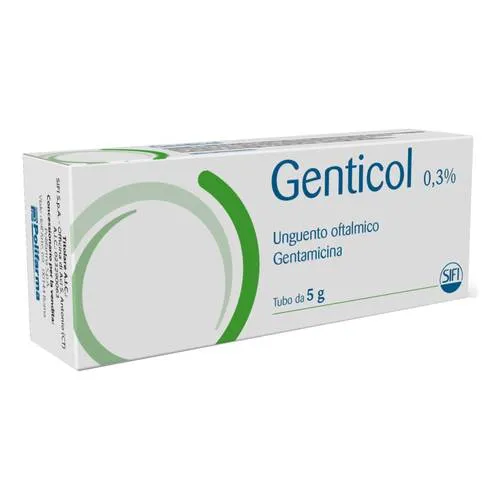
Table of Contents
- Patient Information Leaflet
- Genticol 3 mg/ml eye drops, solution
- 1. What Genticol is and what it is used for
- 2. What you need to know before using Genticol
- 3. How to use Genticol
- 4. Possible side effects
- 5. How to store Genticol
- 6. Package contents and other information
- Patient Information Leaflet
- Genticol 3 mg/ml eye drops, solution
- 1. What Genticol is and what it is used for
- 2. What you need to know before using Genticol
- 3. How to use Genticol
- 4. Possible side effects
- 5. How to store Genticol
- 6. Package contents and other information
- Package leaflet: information for the patient
- Genticol 3 mg/g eye ointment
- 7. What Genticol is and what it is used for
- 8. What you need to know before using Genticol
- 9. How to use Genticol
- 10. Possible side effects
- 11. How to store Genticol
- 12. Package contents and other information
Patient Information Leaflet
Genticol 3 mg/ml eye drops, solution
gentamicin
Please read all of this leaflet carefully before you start using this medicine because it contains important information for you.
- Keep this leaflet; you may need to read it again.
- If you have any questions, ask your doctor or pharmacist.
- This medicine has been prescribed for you only. Do not give it to others, even if their symptoms are the same as yours, as it may be harmful.
- If you experience any side effects, including those not listed in this leaflet, consult your doctor or pharmacist. See section 4.
Contents of this leaflet
- What Genticol is and what it is used for
- What you need to know before using Genticol
- How to use Genticol
- Possible side effects
- How to store Genticol
- Contents of the pack and other information
1. What Genticol is and what it is used for
Genticol contains the active substance gentamicin, which belongs to a group of medicines called antibiotics (used for the treatment of bacterial infections). Genticol is used to treat external infections of the eye and its adnexa, such as conjunctivitis, keratitis, keratoconjunctivitis, corneal ulcers, blepharitis, blepharoconjunctivitis, and dacryocystitis. It is also indicated for pre- and post-surgical prophylaxis.
If, after completing the prescribed treatment, you do not notice any improvement or if your condition worsens, consult your doctor.
2. What you need to know before using Genticol
Do not use Genticol
- if you are allergic to gentamicin or to any of the other ingredients of this medicine (listed in section 6).
Warnings and precautions
Talk to your doctor or pharmacist before using Genticol.
Prolonged use of topical antibiotics may lead to the growth of microorganisms
resistant to them.
Discontinue treatment if signs of sensitization to any component of the medicine occur, and consult your doctor to initiate appropriate therapy.
Children and adolescents
In children under 3 years of age, this product should be administered only when clearly necessary and under direct medical supervision.
Other medicines and Genticol
Inform your doctor or pharmacist if you are taking, have recently taken, or might take any other medicines.
In particular, inform your doctor or pharmacist if you are taking:
- any other antibiotics, such as polymyxin B, colistin, viomycin, streptomycin, vancomycin, and cephaloridine. Using other antibiotics together with Genticol may increase the risk of kidney problems, hearing problems, or interference with the activity of antibiotics administered concomitantly with Genticol;
- cisplatin, an antitumor drug;
- medicines that reduce fluid retention (diuretics), such as ethacrynic acid and furosemide.
Pregnancy and breastfeeding
If you are pregnant, think you may be pregnant, planning to become pregnant, or breastfeeding, consult your doctor or pharmacist before using this medicine.
Pregnancy
During pregnancy, this product should be administered only when clearly necessary and under direct medical supervision.
Driving and using machines
There are no contraindications.
Genticol contains benzalkonium chloride
This medicine contains 6 micrograms of benzalkonium chloride per drop, equivalent to 0.2 mg/ml.
Benzalkonium chloride may be absorbed by soft contact lenses and may cause a change in their color. Remove contact lenses before using this medicine and wait 15 minutes before reinserting them.
Benzalkonium chloride may also cause eye irritation, especially if you have dry eye or corneal disorders (the transparent outermost layer of the eye). If you experience any abnormal sensation, burning, or pain in the eye after using this medicine, speak with your doctor.
Genticol contains phosphate buffer (as dibasic sodium phosphate dodecahydrate, monobasic sodium phosphate monohydrate)
This medicine contains 0.1911 mg of phosphate buffer per drop, equivalent to 6.37 mg/ml.
In patients with severe damage to the outer transparent layer of the eye (the cornea), phosphates may very rarely cause calcium deposits leading to opaque corneal spots during treatment.
This product should be used with caution in patients with compromised corneas and in patients using other ophthalmic products containing phosphates (see section 4).
Patients without pre-existing corneal damage do not appear to be at risk.
3. How to use Genticol
Use this medicine exactly as instructed by your doctor.
If you have any doubts, consult your doctor or pharmacist.
The recommended dose is 1 – 2 drops of eye drops 3 - 4 times daily, or as
prescribed by the doctor.
In the case of particularly resistant infections, the doctor will assess whether to
increase the frequency of administration up to six - eight times a day.
Instructions for use
- Wash/disinfect your hands thoroughly.
- Screw the cap on completely to pierce the bottle.
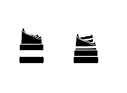
- Unscrew the cap, turn the bottle upside down and instill the drops by applying gentle
pressure, taking care not to let the tip of the bottle touch the eye, eyelid, or any other surface; this way
contamination can be avoided.
- Close the bottle again by screwing the cap on completely.
If you use more Genticol than you should
There have never been any reported cases of overdose with the use of Genticol.
If you forget to use Genticol
Do not use a double dose to make up for the missed dose.
If you stop using Genticol
If you have any doubts about using this medicine, consult your doctor or
pharmacist.
4. Possible side effects
Like all medicines, this medicine can cause side effects,
although not everybody will experience them.
Genticol may cause mild and temporary eye irritations.
If you have severe damage to the outermost transparent layer of the eye (the cornea), phosphates may very rarely cause opaque spots on the cornea due to calcium accumulation during treatment.
Reporting of side effects
If you experience any side effect, including those not listed in this leaflet, talk to your doctor or pharmacist. You can also report side effects directly via the national reporting system at https://www.aifa.gov.it/content/segnalazioni-reazioni-avverse .
By reporting side effects, you can help provide more information on the safety of this medicine.
5. How to store Genticol
Keep this medicine out of the sight and reach of children.
Do not use this medicine after the expiry date stated on the
pack and on the bottle after "Exp.".
The expiry date refers to the last day of that month for the product
in its original packaging and correctly stored.
This medicine does not require any special storage conditions.
Genticol must not be used more than 28 days after first opening.
Do not dispose of medicines via wastewater or household waste. Ask your
pharmacist how to dispose of medicines you no longer use. This will help
protect the environment.
6. Package contents and other information
What Genticol contains
- The active substance is gentamicin; 1 ml of solution contains 3 mg of gentamicin (as gentamicin sulfate).
- The other components are: dibasic sodium phosphate dodecahydrate, monobasic sodium phosphate monohydrate, sodium chloride, benzalkonium chloride, purified water.
Description of the appearance of Genticol and contents of the pack
Genticol eye drops, solution is a clear solution in a 10 ml dropper bottle.
Marketing Authorization Holder and Manufacturer:
Marketing Authorization Holder
OmniVision Italia S.r.l.
Via Montefeltro, 6
20156 Milan
Manufacturer
S.I.F.I. S.p.A.
Via Ercole Patti, 36
95025 Aci S. Antonio (CT)
Patient Information Leaflet
Genticol 3 mg/ml eye drops, solution
gentamicin
Please read this leaflet carefully before using this medicine because
it contains important information for you.
- Keep this leaflet; you may need to read it again.
- If you have any questions, consult your doctor or pharmacist.
- This medicine has been prescribed for you only. Do not give it to others, even if their symptoms are the same as yours, as it could be harmful.
- If you experience any adverse reactions, including those not listed in this leaflet, consult your doctor or pharmacist. See section 4.
Contents of this leaflet
- What Genticol is and what it is used for
- What you need to know before using Genticol
- How to use Genticol
- Possible side effects
- How to store Genticol
- Contents of the pack and other information
1. What Genticol is and what it is used for
Genticol contains the active substance gentamicin, which belongs to a group of
medicines called antibiotics (used for the treatment of bacterial
infections).
Genticol is used to treat external infections of the eye and its appendages, such as
conjunctivitis, keratitis, keratoconjunctivitis, corneal ulcers, blepharitis,
blepharoconjunctivitis, and dacryocystitis. It is also indicated for pre- and post-
surgical prophylaxis.
If you do not notice improvement or if you notice worsening of your condition at the end of the prescribed treatment, please consult your doctor.
2. What you need to know before using Genticol
Do not use Genticol
- if you are allergic to gentamicin or to any of the other ingredients of this medicine (listed in section 6).
Warnings and precautions
Talk to your doctor or pharmacist before using Genticol.
Prolonged use of topical antibiotics may lead to the growth of microorganisms
resistant to the antibiotics.
Discontinue treatment if signs of sensitization to any component of the medicine occur, and consult your doctor for appropriate therapy.
Children and adolescents
In children under 3 years of age, this product should be administered only when clearly necessary and under direct medical supervision.
Other medicines and Genticol
Inform your doctor or pharmacist if you are taking, have recently taken, or might take any other medicines.
In particular, inform your doctor or pharmacist if you are taking:
- any other antibiotic, such as polymyxin B, colistin, viomycin, streptomycin, vancomycin, or cephaloridine. The use of other antibiotics together with Genticol may increase the risk of kidney problems, hearing problems, or interference with the activity of antibiotics administered in combination with Genticol;
- cisplatin, an anticancer drug;
- medicines that reduce fluid retention (diuretics), such as ethacrynic acid and furosemide;
Pregnancy and breastfeeding
If you are pregnant, think you may be pregnant, planning to become pregnant, or breastfeeding, consult your doctor or pharmacist before using this medicine.
Pregnancy
During pregnancy, this product should be administered only when clearly necessary and under direct medical supervision.
Driving and using machines
There are no contraindications.
Genticol contains phosphate buffer (as dibasic sodium phosphate dodecahydrate, monobasic sodium phosphate monohydrate).
This medicine contains 0.1911 mg of phosphate buffer per drop,
equivalent to 6.37 mg/ml.
If you have severe damage to the outermost transparent layer of the eye (the cornea), phosphates may very rarely cause corneal clouding due to calcium accumulation during treatment.
This product should be used with caution in patients with compromised cornea
and in patients using other ophthalmic products containing phosphates
(see section 4).
Patients without pre-existing corneal damage do not appear to be at risk.
3. How to use Genticol
Use this medicine exactly as directed by your doctor.
If you have any doubts, consult your doctor or pharmacist.
The recommended dose is 1 – 2 drops of eye drops 3 – 4 times a day, or as
prescribed by the doctor.
In the case of particularly resistant infections, the doctor will assess whether to
increase the frequency of administration up to six to eight times a day.
Instructions for use
- Wash/disinfect your hands thoroughly.
- Make sure the single-dose container is intact.
- Detach the single-dose container from the strip.
- Open by twisting the top part without pulling.
- Instill the eye drops, taking care not to let the tip of the single-dose
container touch the eye, eyelid, or any other surface; this way contamination
can be avoided.
The eye drop solution in single-dose containers must be used only
immediately after opening. Any remaining solution must not be reused.
If you use more Genticol than you should
Cases of overdose have never been reported with the use of Genticol.
If you forget to use Genticol
Do not use a double dose to make up for the missed dose.
If you stop using Genticol
If you have any doubts about the use of this medicine, consult your doctor or
pharmacist.
4. Possible side effects
Like all medicines, this medicine can cause side effects,
although not everybody gets them.
Genticol may cause mild and temporary ocular irritation.
If you have severe damage to the outermost transparent layer of the eye (the cornea), phosphates may very rarely cause opaque corneal spots due to calcium accumulation during treatment.
Reporting of side effects
If you experience any side effect, including those not listed in this leaflet, talk to your doctor or pharmacist. You can also report side effects directly via the national reporting system at https://www.aifa.gov.it/content/segnalazioni-reazioni-avverse .
By reporting side effects, you can help provide more information on the safety of this medicine.
5. How to store Genticol
Keep this medicine out of the sight and reach of children.
Do not use this medicine after the expiry date stated on the carton and label after "Exp.".
The expiry date refers to the last day of that month and to the product kept unopened and stored correctly.
This medicine requires no special storage conditions.
Do not dispose of any medicine via wastewater or household waste. Ask your pharmacist how to dispose of medicines you no longer use. This will help protect the environment.
6. Package contents and other information
What Genticol contains
- The active substance is gentamicin; 1 ml of solution contains 3 mg of gentamicin (as gentamicin sulfate).
- The other components are: disodium phosphate dodecahydrate, monobasic sodium phosphate monohydrate, sodium chloride, purified water.
Description of the appearance of Genticol and package contents
Genticol eye drops, solution is a clear solution contained in single-dose units of 0.3 ml eye drops.
Each package contains 6 aluminum sachets. Each sachet contains a strip of 5 single-dose plastic containers (LDPE).
Pack size: 30 single-dose containers.
Marketing Authorization Holder and Manufacturer:
Marketing Authorization Holder
OmniVision Italia S.r.l.
Via Montefeltro, 6
20156 Milano
Manufacturer
S.I.F.I. S.p.A.
Via Ercole Patti, 36
95025 Aci S. Antonio (CT)
Package leaflet: information for the patient
Genticol 3 mg/g eye ointment
Gentamicin
Please read this leaflet carefully before using this medicine because it contains important information for you.
- Keep this leaflet; you may need to read it again.
- If you have any questions, ask your doctor or pharmacist.
- This medicine has been prescribed for you only. Do not give it to other people, even if their symptoms are the same as yours, as it may be harmful.
- If you experience any adverse reaction, including those not listed in this leaflet, contact your doctor or pharmacist. See section 4.
Contents of this leaflet
- What Genticol is and what it is used for
- What you need to know before using Genticol
- How to use Genticol
- Possible side effects
- How to store Genticol
- Package contents and other information
7. What Genticol is and what it is used for
Genticol contains the active substance gentamicin, which belongs to a group of
medicines called antibiotics (used for the treatment of bacterial
infections).
Genticol is used to treat external infections of the eye and its adnexa, such as
conjunctivitis, keratitis, keratoconjunctivitis, corneal ulcers, blepharitis,
blepharoconjunctivitis, and dacryocystitis. It is also indicated for pre- and post-
surgical prophylaxis.
If you do not notice any improvement or if your condition worsens after completing
the prescribed course of treatment, consult your doctor.
8. What you need to know before using Genticol
Do not use Genticol
- if you are allergic to gentamicin or to any of the other ingredients of this medicine (listed in section 6).
Warnings and precautions
Talk to your doctor or pharmacist before using Genticol.
Prolonged use of topical antibiotics may lead to the growth of microorganisms
resistant to the antibiotic.
Discontinue treatment if signs of hypersensitivity to any component of the medicine occur and consult your doctor for appropriate therapy.
Children and adolescents
In children under 3 years of age, Genticol should be administered only when strictly necessary and under direct medical supervision.
Other medicines and Genticol
Inform your doctor or pharmacist if you are taking, have recently taken, or might take any other medicines.
In particular, inform your doctor or pharmacist if you are taking:
- any other antibiotic, such as polymyxin B, colistin, viomycin, streptomycin, vancomycin, or cephaloridine. The concomitant use of other antibiotics with Genticol may increase the risk of kidney problems, hearing problems, or interference with the activity of antibiotics administered together with Genticol;
- cisplatin, an antineoplastic agent;
- medicines that reduce fluid retention (diuretics), such as ethacrynic acid and furosemide.
Pregnancy and breastfeeding
If you are pregnant, think you might be pregnant, are planning a pregnancy, or are breastfeeding, consult your doctor or pharmacist before taking this medicine.
Pregnancy
During pregnancy, this product should be administered only when clearly necessary and under direct medical supervision.
Driving and using machines
There are no contraindications.
Genticol 3 mg/g eye ointment contains anhydrous lanolin
Lanolin may cause local skin reactions (e.g. contact dermatitis).
9. How to use Genticol
Use this medicine exactly as directed by your doctor.
If you have any doubts, consult your doctor or pharmacist.
The recommended dose is 3 – 4 applications per day.
If Genticol eye drops are also being used, a single evening application is sufficient.
Use in children
In children under 3 years of age, Genticol should be administered only when clearly necessary and under direct medical supervision.
Instructions for use
- Wash/disinfect your hands thoroughly.
- Open the tube.
- Squeeze the tube gently until an adequate amount of product is dispensed, taking care not to touch the eye, eyelid, or any other surface with the tip of the tube; this helps prevent contamination.
- Close the tube immediately after administration.
If you use more Genticol than you should
Overdose with Genticol has never been reported.
If you forget to use Genticol
Do not use a double dose to make up for the missed dose.
If you stop using Genticol
If you have any doubts about how to use this medicine, consult your doctor or pharmacist.
10. Possible side effects
Like all medicines, this medicine can cause side effects,
although not everybody gets them.
Genticol may cause mild and temporary ocular irritations.
Reporting of side effects
If you experience any side effect, including those not listed in
this leaflet, talk to your doctor or pharmacist. You can also report side effects
directly through the national reporting system at the website https://www.aifa.gov.it/content/segnalazioni-reazioni-avverse .
By reporting side effects, you can help provide more information on the safety of this medicine.
11. How to store Genticol
Keep this medicine out of the sight and reach of children.
Do not use this medicine after the expiry date stated on the carton and tube after "Exp.".
The expiry date refers to the last day of that month and to the product kept unopened and properly stored.
Store below 25°C.
Do not dispose of any medicine via wastewater or household waste. Ask your pharmacist how to dispose of medicines you no longer use. This will help protect the environment.
12. Package contents and other information
What Genticol contains
- The active substance is gentamicin; 1 g of ointment contains 3 mg of gentamicin (as gentamicin sulfate).
- The other components are: liquid paraffin, anhydrous lanolin, white vaseline.
Description of the appearance of Genticol and contents of the package
Genticol ophthalmic ointment is a semisolid mass of light yellow colour contained in a 5 g tube.
Marketing Authorization Holder and Manufacturer:
Marketing Authorization Holder
OmniVision Italia S.r.l.
Via Montefeltro, 6
20156 Milan, Italy
Manufacturer:
S.I.F.I. S.p.A.
Via Ercole Patti, 36
95025 Aci S. Antonio (CT), Italy