Farvicett
Italy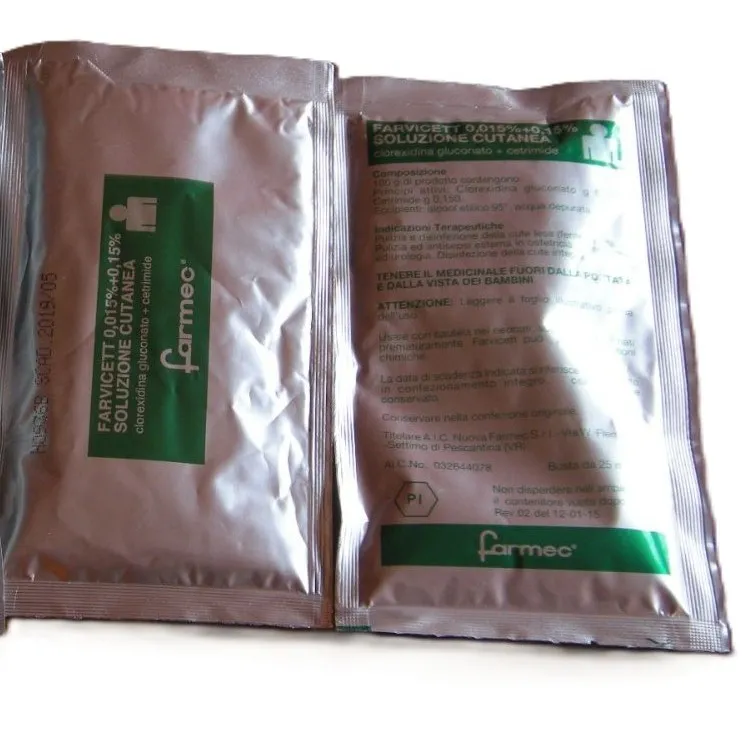
Table of Contents
- Patient leaflet: Information for the user
- FARVICETT 1.5%+15% concentrate for cutaneous solution
- 1. What FARVICETT is and what it is used for
- 2. What you need to know before using FARVICETT
- 3. How to use FARVICETT
- 4. Possible side effects
- 5. How to store FARVICETT
- 6. Package contents and other information
- Package leaflet: Information for the user
- FARVICETT 0.015%+0.15% cutaneous solution in single-dose container
- 1. What FARVICETT is and what it is used for
- 2. What you need to know before using FARVICETT
- 3. How to use FARVICETT
- 4. Possible side effects
- 5. How to store FARVICETT
- 6. Package contents and other information
- Package leaflet: information for the user
- FARVICETT 0.015%+0.15% cutaneous solution in single-dose container
- 1. What FARVICETT is and what it is used for
- 2. What you need to know before using FARVICETT
- 3. How to use FARVICETT
- 4. Possible side effects
- 5. How to store FARVICETT
- 6. Contents of the pack and other information
Patient leaflet: Information for the user
FARVICETT 1.5%+15% concentrate for cutaneous solution
Chlorhexidine gluconate and cetrimide
Please read all of this leaflet carefully before using this medicine because it contains important
information for you.
Keep this leaflet. You may need to read it again.
If you have any questions, ask your doctor or nurse.
If you experience any side effects, including those not listed in this leaflet, inform your doctor or nurse.
See section 4.
Contents of this leaflet:
- What FARVICETT is and what it is used for
- What you need to know before using FARVICETT
- How to use FARVICETT
- Possible side effects
- How to store FARVICETT
- Contents of the pack and other information
1. What FARVICETT is and what it is used for
FARVICETT contains two active substances, chlorhexidine gluconate and cetrimide, which belong to a group of medicines called antiseptics and disinfectants that reduce or inhibit the growth of microorganisms.
FARVICETT is indicated for cleaning and disinfecting:
the skin, both intact and in the presence of minor superficial wounds;
external genitalia in obstetrics, gynaecology and urology.
2. What you need to know before using FARVICETT
Do not use FARVICETT
if you are allergic to chlorhexidine, cetrimide, or any of the other ingredients of this
medicinal product (listed in section 6);
to disinfect body mucosal cavities, for example for washes and irrigations.
Warnings and precautions
Talk to your doctor or nurse before using FARVICETT.
This medicinal product is for topical use on the skin only (external use).
Do not swallow FARVICETT, as serious, even fatal, consequences may occur.
Avoid applying FARVICETT under an occlusive (non-breathable) dressing.
After applying this medicinal product to the skin, sun exposure should be avoided.
Do not apply this medicinal product to the ear.
In addition, contact with the brain or the membranes covering the brain (meninges) should be avoided.
FARVICETT must not come into contact with the eyes due to the risk of visual damage. If contact occurs, rinse immediately and thoroughly with water. In case of eye irritation, redness, pain, or visual disturbance, consult a doctor immediately.
Serious cases of permanent corneal trauma (injury to the surface of the eye) have been reported following accidental eye contact with similar products during surgical procedures in patients under general anesthesia (induced deep sleep). Such injuries may require corneal transplantation.
Do not use this medicinal product for prolonged treatments, as allergic reactions (hypersensitivity phenomena) may occur with long-term use of FARVICETT. In such cases, discontinue treatment and consult your doctor, who will determine appropriate therapy.
Children
FARVICETT may cause chemical burns in newborns, especially in those born prematurely.
Other medicines and FARVICETT
Inform your doctor or nurse if you are using, have recently used, or might use any other medicines.
During treatment with FARVICETT, it is recommended to avoid using other antiseptics or detergents.
Pregnancy and breastfeeding
If you are pregnant, think you might be pregnant, planning to become pregnant, or are breastfeeding, consult your doctor or nurse before using this medicinal product.
Driving and using machines
This medicinal product does not impair the ability to drive or operate machinery.
3. How to use FARVICETT
This medicine will only be administered by a doctor or trained medical personnel. The medicine must be
used only when diluted in water, as follows:
- external cleansing and antisepsis in gynaecology, obstetrics and urology: 20 ml of solution in 2 litres of water; disinfection of intact skin: 20 ml of solution in 500 ml of water; disinfection and cleansing of small superficial wounds: 20 ml of solution in 1 litre of water.
After appropriate dilution, wipe the skin with cotton thoroughly soaked in the medicine.
If necessary, repeat the procedure up to 4–5 times a day, without exceeding the recommended doses.
If you use more FARVICETT than you should
No cases of overdose have been reported under normal conditions of use. Accidental ingestion of
this medicine may cause symptoms such as: nausea, vomiting, difficulty in breathing (dyspnoea), bluish discoloration of the skin due to lack of oxygen (cyanosis), suffocation (asphyxia) due to respiratory muscle paralysis, drop in blood pressure (hypotension), and deep unconsciousness (coma).
If you have any doubts about the use of this medicine, consult your doctor or nurse.
4. Possible side effects
Like all medicines, this medicine can cause side effects, although not everybody will experience them.
The following side effects may occur:
skin burning or irritation (intolerance). These effects generally do not require changes in treatment;
idiosyncratic reactions (abnormal reactions to the medicine).
Frequency not known (cannot be estimated from the available data):
chemical burns (chemical burns) in newborns;
corneal trauma (injury to the eye surface) and permanent eye damage, including permanent vision impairment (following accidental eye exposure during surgical procedures on the head, face and neck) in patients under general anaesthesia (induced deep sleep).
Reporting of side effects
If you experience any side effects, including those not listed in this leaflet, talk to your doctor or pharmacist. You may also report side effects directly via the national reporting system at https://www.aifa.gov.it/content/segnalazioni-reazioni-avverse.
By reporting side effects, you can help provide more information on the safety of this medicine.
5. How to store FARVICETT
Keep this medicine out of sight and reach of children.
Do not use this medicine after the expiry date stated on the packaging after "Exp.".
The expiry date refers to the last day of that month.
Store below 30°C in the original packaging to protect the medicine from light.
Do not dispose of any medicine via wastewater or household waste. Ask your pharmacist how to dispose of medicines you no longer use. This will help protect the environment.
6. Package contents and other information
What FARVICETT contains
The active substances are chlorhexidine gluconate and cetrimide. 100 g of solution contain 1.5 g of
chlorhexidine gluconate and 15 g of cetrimide.
The other components are: isopropyl alcohol, purified water.
Description of the appearance of FARVICETT and contents of the pack
Pack containing 12 HDPE bottles of 1 litre each.
Marketing Authorization Holder and Manufacturer
Nuova Farmec S.r.l. – Via W. Flemming, 7 – Settimo di Pescantina (VR) – Italy
Package leaflet: Information for the user
FARVICETT 0.015%+0.15% cutaneous solution in single-dose container
Chlorhexidine gluconate and cetrimide
Please read this leaflet carefully before using this medicine because it contains
important information for you.
Keep this leaflet. You may need to read it again.
If you have any questions, consult your doctor or nurse.
If you experience any side effects, including those not listed in this leaflet,
contact your doctor or nurse. See section 4.
Contents of this leaflet:
- What FARVICETT is and what it is used for
- What you need to know before using FARVICETT
- How to use FARVICETT
- Possible side effects
- How to store FARVICETT
- Contents of the pack and other information
1. What FARVICETT is and what it is used for
FARVICETT contains two active substances, chlorhexidine gluconate and cetrimide, which belong to a group of medicines called antiseptics and disinfectants that kill, reduce, or inhibit the growth of microorganisms.
FARVICETT is indicated for cleaning and disinfecting:
the skin, even if lesions are present (wounds, burns);
external genitalia in obstetrics, gynaecology, and urology.
2. What you need to know before using FARVICETT
Do not use FARVICETT
if you are allergic to chlorhexidine, cetrimide, or any of the other ingredients of
this medicinal product (listed in section 6);
to disinfect mucous body cavities, for example for washes and irrigations.
Warnings and precautions
Talk to your doctor or nurse before using FARVICETT.
This medicinal product is for topical application on the skin only (external use).
FARVICETT must not be swallowed, as serious, even fatal, consequences may occur.
Avoid applying FARVICETT under non-breathable (occlusive) dressings. Do not apply this medicinal product to the ear.
In addition, contact with the brain or the membranes covering the brain (meninges) should be avoided.
FARVICETT must not come into contact with the eyes due to the risk of visual damage. If contact occurs, immediately and thoroughly rinse with water. If eye irritation, redness, pain, or visual disturbances occur, seek immediate medical advice.
Following accidental eye contact with similar products during surgical procedures in patients under general anesthesia (induced deep sleep), severe cases of permanent corneal trauma (injury to the eye surface) have been reported. Such injuries may necessitate corneal transplantation.
After applying this medicinal product to the skin, exposure to sunlight should be avoided. Do not use this medicinal product for prolonged treatments.
FARVICETT, especially if used over long periods, may cause allergic reactions (sensitization phenomena). If this occurs, treatment must be discontinued.
Children
Use with caution in newborns, particularly those born prematurely. FARVICETT may cause chemical burns.
Other medicines and FARVICETT
Inform your doctor or nurse if you are using, have recently used, or might use any other medicines.
During treatment with FARVICETT, it is recommended to avoid using other antiseptics or detergents.
Pregnancy and breastfeeding
If you are pregnant, suspect you may be pregnant, planning to become pregnant, or are breastfeeding, consult your doctor or nurse before using this medicinal product.
Driving and using machines
This medicinal product does not impair the ability to drive or operate machinery.
3. How to use FARVICETT
This medicinal product will only be administered by a doctor or trained medical personnel.
The medicine can be applied to both damaged and intact skin.
Apply the medicine to the skin using cotton wool thoroughly soaked in the product. If necessary, repeat
the application up to a maximum of 4–5 times daily. Do not exceed the recommended doses.
If you use more FARVICETT than you should
If the recommended doses are not exceeded, there is no risk of overdose. Accidental ingestion
of this medicine may cause symptoms such as: nausea, vomiting, breathing difficulties
(dyspnoea), bluish discoloration of the skin due to lack of oxygen (cyanosis), suffocation
(asphyxia) due to paralysis of the respiratory muscles, drop in blood pressure
(hypotension), and deep unconsciousness (coma).
If you have any doubts about how to use this medicine, consult your doctor or nurse.
4. Possible side effects
Like all medicines, this medicine can cause side effects, although not everybody gets them.
The following side effects may occur:
skin burning or irritation (intolerance). These effects usually do not require changes in treatment;
allergic reactions (cases of idiosyncrasy);
Frequency not known (frequency cannot be estimated from the available data):
burns (chemical burns) in newborns;
corneal trauma (injury to the surface of the eye) and permanent eye damage, including permanent
vision impairment (following accidental exposure of the eyes during surgical procedures on the
head, face and neck) in patients under general anaesthesia (induced deep sleep).
Reporting of side effects
If you experience any side effect, including those not listed in this leaflet, talk to your doctor or
pharmacist. You can also report side effects directly via the national reporting system at the
following website: https://www.aifa.gov.it/content/segnalazioni-reazioni-avverse . By reporting
side effects, you can help provide more information on the safety of this medicine.
5. How to store FARVICETT
Keep this medicine out of the sight and reach of children.
Do not use this medicine after the expiry date stated on the packaging after "Expiry".
Store in the original packaging.
Do not dispose of any medicine via wastewater or household waste. Ask your pharmacist how to dispose of medicines you no longer use. This will help protect the environment.
6. Package contents and other information
What FARVICETT contains
The active substances are chlorhexidine gluconate and cetrimide. 100 g of solution contain 0.015 g of chlorhexidine gluconate and 0.150 g of cetrimide.
The other components are: ethyl alcohol 95°, purified water.
Description of the appearance of FARVICETT and contents of the package
Pack containing 400 sachets.
Each sachet contains 25 ml of sterile, clear solution.
Marketing Authorization Holder and Manufacturer
Nuova Farmec S.r.l. – Via W. Flemming, 7 – Settimo di Pescantina (VR) – Italy
Package leaflet: information for the user
FARVICETT 0.015%+0.15% cutaneous solution in single-dose container
Chlorhexidine gluconate and cetrimide
Please read this leaflet carefully before using this medicine because it contains
important information for you.
Always use this medicine exactly as described in this leaflet or as your doctor or
pharmacist has instructed you.
Keep this leaflet. You may need to read it again.
If you need further information or advice, consult your pharmacist.
If any side effects occur, including those not listed in this leaflet,
consult your doctor or pharmacist. See section 4.
Consult your doctor if you do not notice any improvement or if your symptoms worsen.
Contents of this leaflet:
- What FARVICETT is and what it is used for
- What you need to know before using FARVICETT
- How to use FARVICETT
- Possible side effects
- How to store FARVICETT
- Package contents and other information
1. What FARVICETT is and what it is used for
FARVICETT contains two active substances, chlorhexidine gluconate and cetrimide, which belong to a group of medicines called antiseptics and disinfectants that kill, reduce, or inhibit the growth of microorganisms.
FARVICETT is indicated for cleaning and disinfecting:
the skin, even when lesions (wounds, burns) are present;
external genital areas in obstetrics, gynaecology, and urology.
If you do not feel better or feel worse, talk to your doctor.
2. What you need to know before using FARVICETT
Do not use FARVICETT
if you are allergic to chlorhexidine, cetrimide, or to any of the other ingredients of
this medicine (listed in section 6);
to disinfect mucosal cavities of the body, for example for washings and irrigations.
Warnings and precautions
Talk to your doctor or pharmacist before using FARVICETT.
This medicine is for topical use only (external use on the skin).
Do not swallow FARVICETT, as serious, even fatal, consequences may occur.
Avoid applying FARVICETT under non-breathable (occlusive) dressings. Do not apply this medicine to the ear.
In addition, contact with the brain or the membranes covering the brain (meninges) should be avoided.
FARVICETT must not come into contact with the eyes due to the risk of visual damage. If contact occurs, rinse immediately and thoroughly with water. If eye irritation, redness, pain, or visual disturbances occur, seek immediate medical advice.
Serious cases of permanent corneal trauma (damage to the surface of the eye) have been reported following accidental contact of similar products with the eye during surgical procedures in patients under general anesthesia (induced deep sleep). Such injuries may require corneal transplantation.
After applying this medicine to the skin, exposure to sunlight should be avoided.
Do not use this medicine for prolonged treatments.
FARVICETT, especially if used over long periods, may cause allergic reactions (hypersensitivity phenomena). If this occurs, treatment must be discontinued.
Children
Use with caution in newborns, particularly those born prematurely. FARVICETT may cause chemical burns.
Other medicines and FARVICETT
Inform your doctor or pharmacist if you are currently using, have recently used, or might use any other medicines.
During treatment with FARVICETT, the use of other antiseptics or detergents should be avoided.
Pregnancy and breastfeeding
If you are pregnant, think you might be pregnant, planning to become pregnant, or breastfeeding, consult your doctor or pharmacist before using this medicine.
Driving and using machines
This medicine does not affect the ability to drive or operate machinery.
3. How to use FARVICETT
Use this medicine exactly as described in this leaflet or as directed by your doctor or pharmacist. If you have any doubts, consult your doctor or pharmacist.
This medicine can be used on both damaged and intact skin.
Apply the medicine to the skin using a cotton pad thoroughly soaked in the medicinal solution. If necessary, repeat the procedure up to a maximum of 4–5 times a day. Do not exceed the recommended doses.
If you use more FARVICETT than you should
If the recommended doses are not exceeded, there is no risk of overdose. Accidental ingestion of this medicine may cause symptoms such as: nausea, vomiting, breathing difficulties (dyspnea), bluish discoloration of the skin due to lack of oxygen (cyanosis), suffocation (asphyxia) due to paralysis of the respiratory muscles, drop in blood pressure (hypotension), and deep unconsciousness (coma).
In case of accidental ingestion, contact your doctor immediately or go to the nearest hospital emergency department.
If you have any questions about the use of this medicine, consult your doctor or pharmacist.
4. Possible side effects
Like all medicines, this medicine can cause side effects, although not everyone gets them.
The following side effects may occur:
skin burning or irritation (intolerance). These effects usually do not require changes in treatment;
allergic reactions (cases of idiosyncrasy).
Frequency not known (frequency cannot be estimated from available data):
chemical burns (chemical burns) in newborns;
corneal trauma (injury to the eye surface) and permanent eye damage, including permanent
impairment of vision (following accidental eye exposure during surgical procedures on the head,
face and neck) in patients under general anaesthesia (induced deep sleep).
Reporting of side effects
If you experience any side effect, including those not listed in this leaflet, talk to your doctor or
pharmacist. You can also report side effects directly via the national reporting system at
https://www.aifa.gov.it/content/segnalazioni-reazioni-avverse. By reporting side effects, you can
help provide more information on the safety of this medicine.
5. How to store FARVICETT
Keep this medicine out of the sight and reach of children.
Do not use this medicine after the expiry date stated on the packaging after "Expiry".
Store in the original packaging.
Do not dispose of any medicine via wastewater or household waste. Ask your pharmacist how to dispose of medicines you no longer use. This will help protect the environment.
6. Contents of the pack and other information
What FARVICETT contains
The active substances are chlorhexidine gluconate and cetrimide. 100 g of solution contain 0.015 g of chlorhexidine gluconate and 0.150 g of cetrimide.
The other components are: 95° ethyl alcohol, purified water.
Description of the appearance of FARVICETT and contents of the pack
Clear, sterile cutaneous solution.
Pack containing 10 sachets of 25 ml each.
Marketing Authorization Holder and Manufacturer
Nuova Farmec S.r.l. – Via W. Flemming, 7 – Settimo di Pescantina (VR) – Italy