Enalapril Sandoz
Italy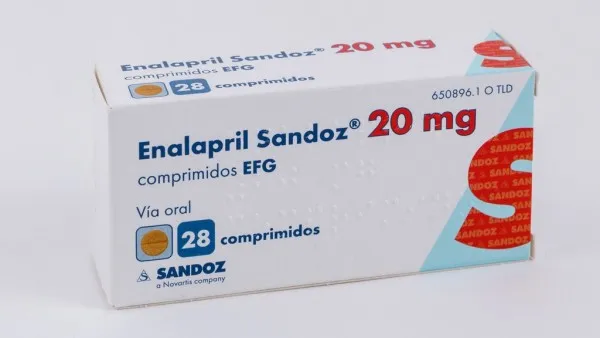
Table of Contents
- Package leaflet: Information for the user
- Enalapril Sandoz 5 mg tablets, 20 mg tablets
- 1. What Enalapril Sandoz is and what it is used for
- 2. What you need to know before taking Enalapril Sandoz
- 3. How to take Enalapril Sandoz
- 4. Possible side effects
- 5. How to store Enalapril Sandoz
- 6. Package contents and other information
Package leaflet: Information for the user
Enalapril Sandoz 5 mg tablets, 20 mg tablets
enalapril maleate
Equivalent medicine
Please read all of this leaflet carefully before you take this medicine because it contains important information for you.
- Keep this leaflet. You may need to read it again.
- If you have any questions, ask your doctor or pharmacist.
- This medicine has been prescribed for you only. Do not give it to other people, even if they have the same symptoms as you, because it may be harmful.
- If you experience any side effect, including those not listed in this leaflet, tell your doctor or pharmacist. See section 4.
Contents of this leaflet:
- What Enalapril Sandoz is and what it is used for
- What you need to know before taking Enalapril Sandoz
- How to take Enalapril Sandoz
- Possible side effects
- How to store Enalapril Sandoz
- Contents of the pack and other information
1. What Enalapril Sandoz is and what it is used for
- Enalapril Sandoz contains enalapril maleate. Enalapril belongs to a group of medicines known as ACE inhibitors, which work by widening blood vessels. The effect of these medicines is to reduce blood pressure.
- Enalapril Sandoz is used to treat high blood pressure (hypertension).
- Enalapril is also used to treat a heart condition sometimes referred to as "heart failure". This means that the heart does not function as well as it should in pumping blood around the body, causing symptoms such as breathlessness, fatigue after mild physical activity, and swelling of the ankles and feet. Enalapril Sandoz can help treat these symptoms.
- In many patients with damage to the heart muscle but without symptoms, Enalapril Sandoz may help prevent the development of symptoms such as shortness of breath and swelling.
2. What you need to know before taking Enalapril Sandoz
Do not take Enalapril Sandoz
- If you are allergic to
- enalapril maleate or to any of the other ingredients of this medicine (listed in section 6)
- other ACE inhibitors. Signs may have included itching, hives, shortness of breath, or swelling of the hands, throat, mouth, or eyelids.
- if you are taking or have recently taken sacubitril/valsartan, a medicine used to treat a type of chronic heart failure in adults, as this increases the risk of angioedema (rapid swelling under the skin, for example in the throat).
- if you are more than 3 months pregnant (it is better to avoid Enalapril Sandoz even in early pregnancy - see section “Pregnancy”)
- if you have diabetes or impaired kidney function and are being treated with a blood pressure-lowering medicine containing aliskiren.
If any of the above situations apply to you, do not take Enalapril Sandoz. If you are unsure, consult your doctor or pharmacist before taking Enalapril Sandoz.
Warnings and precautions
Talk to your doctor or pharmacist before taking Enalapril Sandoz:
- if you have kidney problems, have recently undergone a kidney transplant, are on dialysis, or are taking diuretics
- if you are on a low-salt diet or have recently experienced severe vomiting or diarrhoea
- if you have a heart condition called “aortic stenosis”, “hypertrophic cardiomyopathy”, or “outflow obstruction”
- if you have a collagen vascular disease or are undergoing immunosuppressive therapy (used to treat autoimmune diseases such as rheumatoid arthritis or following surgical organ transplantation)
- if you are taking allopurinol (used to treat gout) or procainamide (used to treat heart rhythm disorders). If you develop an infection (symptoms may include high temperature or fever), inform your doctor immediately. Your doctor may prescribe periodic blood tests to monitor your white blood cell count
- if you have previously experienced “angioedema” caused by taking other medicines. Signs may have included itching, hives, shortness of breath, or swelling of the hands, throat, mouth, or eyelids
- if you are taking any of the following medicines, the risk of angioedema (rapid swelling under the skin, for example in the throat) may be increased:
- racecadotril, a medicine used to treat diarrhoea
- medicines used to prevent organ transplant rejection and to treat cancer (such as temsirolimus, sirolimus, everolimus, and other drugs belonging to the mTOR inhibitor class)
- vildagliptin (a medicine used to treat diabetes)
- if you have diabetes and are taking antidiabetic medicines, including insulin, to control your diabetes (in this case, blood glucose levels should be monitored, especially during the first month of treatment)
- if you are taking potassium supplements, potassium-sparing diuretics, potassium-containing salt substitutes, or other medicines that may increase potassium levels in the blood (e.g. trimethoprim and cotrimoxazole for bacterial infections; cyclosporine, an immunosuppressive medicine used to prevent organ transplant rejection; and heparin, a medicine used to thin the blood and prevent clotting)
- if you are taking lithium, used to treat certain mental disorders
- if you are taking any of the following medicines to treat high blood pressure:
- an angiotensin II receptor antagonist (AIIRA) (also known as sartans – e.g. valsartan, telmisartan, irbesartan), particularly if you have kidney problems related to diabetes
- aliskiren
Your doctor may check your kidney function, blood pressure, and blood electrolyte levels (e.g. potassium) at regular intervals. See also the section “Do not take Enalapril Sandoz”. - If your doctor has diagnosed you with an intolerance to certain sugars
If you develop any of the following symptoms while taking Enalapril Sandoz, inform your doctor immediately:
- jaundice (yellowing of the skin and whites of the eyes)
- a persistent, dry cough over a long period
If you are about to undergo any of the following procedures, inform your doctor that you are taking Enalapril Sandoz:
- any surgical procedure or administration of anaesthetics (including at the dentist)
- a treatment called “LDL apheresis”, to remove cholesterol from the blood using special equipment
- desensitisation treatment, to reduce the effects of an allergy to bee or wasp stings.
Routine tests
At the beginning of treatment with Enalapril Sandoz, your doctor will frequently monitor your blood pressure to ensure you are receiving the correct dose. In some patients, your doctor may also decide to perform tests to measure potassium, creatinine, and liver enzyme levels.
Pregnancy
Inform your doctor or pharmacist before taking Enalapril Sandoz if you think you may be pregnant (or could become pregnant). Enalapril Sandoz is not recommended during early pregnancy and must not be taken after the third month of pregnancy, as it may cause severe harm to the unborn baby if taken during this period (see section “Pregnancy”).
Children and adolescents
Information on the use of Enalapril Sandoz in children over 6 years of age with high blood pressure is limited, and there is no information available for children with heart conditions. Enalapril Sandoz must not be used in newborns or in children with impaired kidney function.
Other medicines and Enalapril Sandoz
Inform your doctor or pharmacist if you are taking, have recently taken, or might take any other medicines. Some medicines may affect each other’s actions.
- potassium-sparing diuretics, such as spironolactone, eplerenone, triamterene, or amiloride; potassium supplements (including salt substitutes); or other medicines that may increase potassium levels in the blood (including trimethoprim and cotrimoxazole, also known as trimethoprim/sulfamethoxazole, used to treat bacterial infections; cyclosporine, an immunosuppressive medicine used to prevent organ transplant rejection; and heparin, a medicine used to thin the blood and prevent clotting). Enalapril Sandoz may increase potassium levels in the blood, a condition that is usually asymptomatic and therefore typically detected through specific blood tests
- diuretics, such as thiazide diuretics, furosemide, bumetanide
- medicines usually used to prevent organ transplant rejection (sirolimus, everolimus, and other drugs belonging to the mTOR inhibitor class). See section “Warnings and precautions”.
- other medicines that lower blood pressure, such as nitroglycerin, nitrates, and vasodilators
- lithium, used to treat certain psychiatric disorders. Enalapril Sandoz must not be taken with this medicine
- tricyclic antidepressants, such as amitriptyline, used to treat depression; antipsychotics, such as phenothiazines, used to treat severe forms of anxiety
- painkillers, such as morphine or anaesthetics, as blood pressure may drop excessively
- medicines used to treat stiffness and inflammation associated with painful conditions, particularly those affecting muscles, bones, and joints: either gold salt therapy, which, when taken together with Enalapril Sandoz, may cause facial flushing, nausea, vomiting, and low blood pressure, or non-steroidal anti-inflammatory drugs (NSAIDs), for example diflunisal or diclofenac, including COX-2 inhibitors. These medicines may prevent adequate blood pressure control and increase potassium levels in the blood
- acetylsalicylic acid (used to relieve pain)
- medicines such as ephedrine, used in some cough and cold remedies, or noradrenaline and adrenaline, used to treat low blood pressure, shock, heart failure, asthma, or allergies. If used together with Enalapril Sandoz, these medicines may maintain elevated blood pressure
- allopurinol (used to treat gout)
- procainamide (used to treat heart rhythm disorders)
- antidiabetic medicines, such as insulin. Enalapril Sandoz may cause a further reduction in blood glucose levels even during treatment with antidiabetic medicines.
Your doctor may consider it necessary to adjust your dose and/or take other precautions:
If you are taking an angiotensin II receptor antagonist (AIIRA) or aliskiren (see also sections “Do not take Enalapril Sandoz” and “Warnings and precautions”).
If you are uncertain whether any of the above situations apply to you, consult your doctor or pharmacist before taking Enalapril Sandoz.
Enalapril Sandoz and alcohol
If you consume alcohol while taking Enalapril Sandoz, you may experience excessive drops in blood pressure, dizziness, lightheadedness, or fainting. Minimise alcohol consumption.
Pregnancy
If you think you are (or might be) pregnant, inform your doctor immediately. Your doctor will usually advise you to stop taking Enalapril Sandoz before pregnancy or as soon as pregnancy is diagnosed, and will prescribe another medicine instead. Enalapril Sandoz is not recommended during early pregnancy and must not be taken after the third month of pregnancy, as it may cause severe harm to the unborn baby.
Breast-feeding
If you are breast-feeding or planning to breast-feed, inform your doctor. Breast-feeding of newborns (during the first weeks after birth), especially premature infants, is not recommended during treatment with Enalapril Sandoz. For older infants, your doctor will advise you on the benefits and risks of taking Enalapril Sandoz during breast-feeding compared to other treatments.
Driving and using machines
Dizziness and fatigue have been reported with Enalapril Sandoz, which may impair the ability to drive or operate machinery in some patients.
Enalapril Sandoz contains lactose.
If your doctor has diagnosed you with an intolerance to certain sugars, contact him or her before taking this medicine.
Enalapril Sandoz contains sodium
This medicine contains less than 1 mmol of sodium (23 mg) per tablet, i.e. essentially 'sodium-free'.
3. How to take Enalapril Sandoz
Take this medicine exactly as your doctor or pharmacist has told you.
If you are unsure, consult your doctor or pharmacist.
Taking the medicine
- Take this medicine by mouth.
- The number of tablets you need to take each day will depend on the severity of your condition.
- Enalapril Sandoz may be taken with or without food.
Dose for high blood pressure
The initial dose ranges from 5 mg to 20 mg daily, depending on your blood pressure.
For patients with slightly elevated blood pressure levels, the recommended dose is 5–10 mg daily.
For patients with kidney or heart problems, or with reduced sodium and/or blood volume, an initial dose of 5 mg or lower should be used.
If you are taking high doses of diuretics, your doctor may advise you to stop taking them 2–3 days before starting Enalapril Sandoz. The recommended starting dose is 5 mg or lower.
Once your blood pressure is under control, the usual maintenance dose is 20 mg daily, up to a maximum of 40 mg daily.
Dose for heart problems
In patients with heart problems, Enalapril Sandoz is used in addition to diuretics and, when necessary, digitalis (a medicine used in congestive heart failure or irregular heartbeat) or beta-blockers (medicines used to treat high blood pressure, angina pectoris, and heart disorders). The initial dose is 2.5 mg, which should be gradually increased to the usual maintenance dose of 20 mg, given as a single dose or divided into two doses, over a period of 2–4 weeks. The maximum dose is 40 mg daily, given in two divided doses.
Reduced kidney function
In patients with kidney problems, the dose of enalapril must be adjusted according to kidney function. This is assessed by measuring creatinine levels (a waste product) in the urine and through blood tests.
If you are undergoing dialysis, your dose will vary from day to day. Your doctor will prescribe the most appropriate dose for you.
Use in the elderly
The dose will be determined by your doctor and will depend on your kidney function.
Use in children and adolescents
Experience with Enalapril Sandoz in children and adolescents with high blood pressure is limited. If the child is able to swallow tablets, the dose will be based on the child's body weight and blood pressure response. The recommended initial dose is 2.5 mg in children weighing 20 kg to less than 50 kg, and 5 mg in children weighing 50 kg or more.
Enalapril Sandoz should be administered once daily. The dose should be adjusted according to the child's needs, up to a maximum of 20 mg daily in children weighing 20 kg to less than 50 kg, and 40 mg daily in children weighing 50 kg or more.
Newborns and children with kidney problems
Enalapril Sandoz must not be used in newborns or children with kidney problems.
If you take more Enalapril Sandoz than you should
If you think you have taken more tablets than prescribed, contact your doctor immediately.
The most common signs and symptoms of overdose are a drop in blood pressure and stupor (a state of near-unconsciousness). Other symptoms may include dizziness or lightheadedness due to a sudden drop in blood pressure, strong and rapid heartbeat, fast pulse, anxiety, cough, kidney failure, and labored breathing.
If you forget to take Enalapril Sandoz
If you forget to take a tablet, skip the missed dose.
Take the next dose at the usual time.
Do not take a double dose to make up for the forgotten dose.
If you stop taking Enalapril Sandoz
Do not stop treatment unless instructed by your doctor. If you stop treatment, your blood pressure may rise, and if it becomes too high, it could impair kidney and heart function.
If you have any doubts about using this medicine, consult your doctor or pharmacist.
4. Possible side effects
Like all medicines, this medicine can cause side effects, although not everybody gets them.
The following side effects may occur with this medicine.
If you start experiencing the following symptom, it is vital that you stop taking Enalapril Sandoz immediately and consult a doctor:
- allergic reaction: you may experience itching, shortness of breath or difficulty breathing, and develop swelling of the hands, mouth, throat, face or eyes.
If you experience any of the following side effects, stop taking Enalapril Sandoz immediately and consult your doctor:
- severe dizziness, lightheadedness, particularly at the beginning of treatment, when increasing the dose, or when standing up; excessive redness of the skin; appearance of blisters; skin peeling.
Other side effects
Very common (may affect more than 1 in 10 people)
- blurred vision, cough, feeling of discomfort (nausea), weakness.
Common (may affect up to 1 in 10 people)
- headache, depression, low blood pressure, fainting
- chest pain, changes in heart rhythm, angina, rapid heartbeat, shortness of breath
- diarrhoea, pain in the stomach area (abdomen), altered taste, feeling of tiredness
- skin rash, allergic reactions with swelling of the arms and legs, face, lips, tongue or throat, with difficulty swallowing or breathing
- increased potassium levels in the blood, increased serum creatinine (both usually detected through specific blood tests).
Uncommon (may affect up to 1 in 100 people)
- anaemia, anxiety, acute awareness or feeling of instability (due to low blood sugar levels), confusion, drowsiness, sleep disorders, nervousness, tingling or numbness, sensation of dizziness (vertigo)
- low blood pressure (which may cause dizziness when standing up), irregular heartbeat, heart attack or stroke (in high-risk patients)
- runny nose, sore throat and hoarseness, breathing difficulties or asthma
- intestinal blockage (ileus), pancreatitis, feeling of discomfort, indigestion, constipation, feeling of loss of appetite (anorexia), stomach irritation, dry mouth
- burning, sharp pain accompanied by a feeling of emptiness and hunger, especially on an empty stomach (due to a peptic ulcer), excessive sweating, itching, urticaria, hair loss, presence of protein in the urine (usually detected through specific tests)
- impotence, muscle cramps, hot flushes, ringing in the ears, feeling of lethargy, increased body temperature
- kidney function problems
- kidney failure, increased levels of urea and decreased sodium levels in the blood (usually detected through specific blood tests).
Rare (may affect up to 1 in 1,000 people)
- strange dreams, sleep disturbances
- decrease in white blood cells, red blood cells and platelets, bone marrow depression (all usually detected through specific blood tests)
- facial swelling and abnormalities in the lymph glands (lymphadenopathy)
- reduced blood flow to the fingers of the hands and feet, causing redness and pain (Raynaud's disease), fluid accumulation in the lungs, runny nose or nasal irritation
- increased immune response (autoimmune disease)
- eosinophilic pneumonia (symptoms may include cough, high temperature and breathing difficulties)
- pain, swelling or ulcers in the mouth, infections or pain and swelling of the tongue, kidney disorders such as reduced urine volume
- liver failure or hepatitis, which may cause yellowing of the skin (jaundice)
- excessive redness of the skin, appearance of blisters, skin peeling
- breast development in men
- increased liver enzymes or bilirubin in the blood (usually detected through blood tests), decreased blood glucose levels.
Very rare (may affect up to 1 in 10,000 people)
- intestinal angioedema: symptoms may include stomach pain, feeling of discomfort and vomiting, high levels of calcium in the blood.
Not known (frequency cannot be estimated from the available data)
- feeling unwell, confusion and/or weakness, feeling of discomfort (nausea), loss of appetite, irritability. This could be a symptom known as syndrome of inappropriate antidiuretic hormone secretion (SIADH).
- A combination of side effects has also been reported, which may include some or all of the following symptoms:
- fever, inflammation of blood vessels, muscle or joint pain and inflammation
- blood disorders affecting blood components (usually detected through blood tests)
- erythema, photosensitivity and other skin effects.
Reporting of side effects
If you get any side effects, including ones not listed in this leaflet, talk to your doctor or pharmacist.
You can also report side effects directly via the national reporting system at www.aifa.gov.it/content/segnalazioni-reazioni-avverse.
By reporting side effects, you can help provide more information on the safety of this medicine.
5. How to store Enalapril Sandoz
Keep this medicine out of the sight and reach of children.
Do not use this medicine after the expiry date stated on the outer packaging and on the
blister/bottle, following the word "Exp". The expiry date refers to the last day of that month.
Aluminium/OPA/Aluminium/PVC blister
Do not store above 30°C. Keep the medicine in the original packaging to protect it from moisture.
HDPE bottle
Do not store above 30°C (expiry: 6 months after opening the bottle).
Keep the container tightly closed to protect the medicine from moisture.
Do not dispose of any medicine via wastewater or household waste. Ask your pharmacist how to dispose of medicines you no longer use. This will help protect the environment.
6. Package contents and other information
What Enalapril Sandoz contains
The active substance is enalapril maleate. Each tablet contains 5 or 20 mg of enalapril maleate.
The other components are:
For 5 mg:
hydroxypropylcellulose, monohydrate lactose, magnesium stearate, maize starch, sodium hydrogen
carbonate and talc.
For 20 mg:
monohydrate lactose, magnesium stearate, maize starch, sodium hydrogen carbonate, red iron oxide
(E 172), yellow iron oxide (E 172) and talc.
Description of the appearance of Enalapril Sandoz and package contents
Enalapril Sandoz 5 mg tablets are round, flat, white tablets, bevelled with a break line on one side.
The tablets are packaged in aluminum/OPA/aluminum/PVC blisters containing: 10, 20, 28,
30, 50, 60, 98, 100, 100x1, 300 or 500 tablets.
Enalapril Sandoz 20 mg tablets are round, flat, light orange in colour, bevelled with a break line on one side, with white specks on the surface and throughout the tablet mass.
The tablets are packaged in aluminum/OPA/aluminum/PVC blisters containing: 10, 14, 28,
30, 50, 56, 60, 98, 100, 100x1 or 500 tablets.
The score line is intended only to facilitate tablet breaking if you have difficulty swallowing it whole.
HDPE container with PP cap, tamper-evident ring and integrated desiccant
For 5 mg and 20 mg
Pack sizes: 30, 100 or 250 tablets
Not all pack sizes may be marketed.
Marketing Authorization Holder and Manufacturer
Sandoz S.p.A.
Largo U. Boccioni, 1
21040 Origgio (VA)
Manufacturer
Salutas Pharma GmbH
- Otto-von-Guericke-Allee 1 - 39179 Barleben - Germany
Lek Pharmaceuticals d.d. – Verovskova 57 – 1526 Ljubljana - Slovenia
This medicinal product has been authorised in EEA member states under the following names:
Austria: Enalapril Sandoz 5 mg - Tabletten
Enalapril Sandoz 10 mg - Tabletten
Enalapril Sandoz 20 mg - Tabletten
Belgium: Enalapril Sandoz 5 mg tabletten
Enalapril Sandoz 20 mg tabletten
Denmark: Enalapril Sandoz 2.5 mg
Enalapril Sandoz 5 mg
Enalapril Sandoz 10 mg
Enalapril Sandoz 20 mg
Finland: Linatilsan
Italy: Enalapril Sandoz 5 mg tablets
Enalapril Sandoz 20 mg tablets
Norway: Enalapril Sandoz 2.5 mg
Enalapril Sandoz 5 mg
Enalapril Sandoz 10 mg
Enalapril Sandoz 20 mg
Portugal: Enalapril Sandoz 5 mg Comprimidos
Enalapril Sandoz 20 mg Comprimidos
Spain: Enalapril Sandoz 5 mg comprimidos EFG
Enalapril Sandoz 20 mg comprimidos EFG
Sweden: Enalapril Sandoz 2.5 mg
Enalapril Sandoz 5 mg
Enalapril Sandoz 10 mg
Enalapril Sandoz 20 mg