Dalacin C
Italy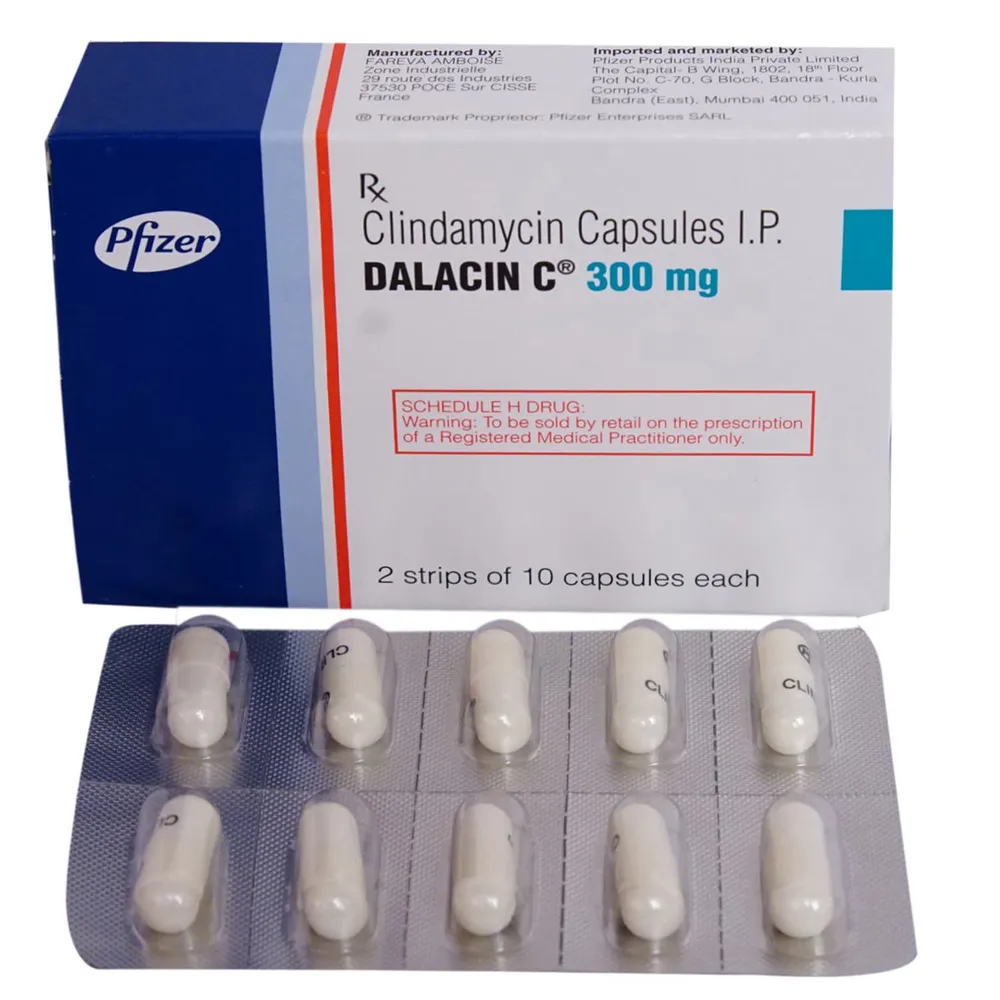
Table of Contents
Package leaflet: Information for the patient
DALACIN C 150 mg hard capsules
Clindamycin
Please read this leaflet carefully before taking this medicine because it contains important information for you.
- Keep this leaflet. You may need to read it again.
- If you have any questions, consult your doctor or pharmacist.
- This medicine has been prescribed for you only. Do not give it to others, even if their symptoms are the same as yours, as it may be harmful.
- If you experience any side effects, including those not listed in this leaflet, contact your doctor or pharmacist. See section 4.
Contents of this leaflet:
- What Dalacin C is and what it is used for
- What you need to know before taking Dalacin C
- How to take Dalacin C
- Possible side effects
- How to store Dalacin C
- Contents of the pack and other information
1. What Dalacin C is and what it is used for
Dalacin C contains the active substance clindamicine, an antibiotic belonging to a group of medicines called lincosamides. Clindamicine is used in the treatment of serious infections caused by bacteria.
Dalacin C is used in adults for the treatment of:
- serious infections caused by bacteria sensitive to clindamicine, such as staphylococci, streptococci and pneumococci;
- gynaecological infections caused by Chlamydia trachomatis (a bacterium), following completion of treatment with antibiotics administered by intravenous injection;
- infections caused by Toxoplasma gondii and Pneumocystis jiroveci (two types of microorganisms) in patients with low immune defences.
2. What you need to know before taking Dalacin C
Do not take Dalacin C
- if you are allergic to clindamycin, to other similar medicines such as lincomycin, or to any of the other ingredients of this medicine (listed in section 6);
- if you are breastfeeding;
- if you have diarrhoea or an intestinal inflammation.
Warnings and precautions
Talk to your doctor or pharmacist before taking Dalacin C.
Inform your doctor or pharmacist before taking this medicine if:
- you are elderly or seriously ill;
- you have previously had stomach or intestinal diseases;
- you tend to develop allergic reactions easily;
- you have severe liver problems;
- you have severe kidney problems.
Acute kidney problems may occur. Inform your doctor about any medication you are taking and any kidney problems. If you experience reduced urine output, fluid retention causing swelling of the legs, ankles or feet, shortness of breath, or nausea, contact your doctor immediately.
Due to the risk of inflammation of the oesophagus (oesophagitis) and oesophageal ulcer, it is important to always take Dalacin C exactly as described in section 3.
Inform your doctor if any of the following conditions occur or worsen during treatment with Dalacin C (see also section 4 “Possible side effects”):
- onset of diarrhoea. If you experience abdominal cramps and severe, prolonged diarrhoea with blood and mucus in the stools, stop treatment with this medicine and consult your doctor. These may be symptoms of an intestinal inflammation (pseudomembranous colitis) caused by the use of antibiotics. Inform your doctor immediately if you experience these symptoms even several months after stopping treatment with Dalacin C;
- new infections or persistence of existing infections. This may be due to germs that are not sensitive to Dalacin C;
- allergic reactions or severe skin reactions. In this case, stop taking this medicine and consult your doctor.
Laboratory tests
During treatment with Dalacin C, your doctor will perform regular checks on liver and kidney function, as well as blood tests, especially if you have been on long-term treatment with this medicine.
Other medicines and Dalacin C
Inform your doctor or pharmacist if you are taking, have recently taken, or might take any other medicines.
The following medicines affect the effectiveness of Dalacin C or Dalacin C affects the effectiveness of the following medicines:
- vitamin K antagonists (e.g. warfarin, acenocoumarol, and phenindione), medicines used to thin the blood;
- antibiotics such as metronidazole, gentamicin, lincomycin, and rifampicin;
- oral contraceptives, medicines used to prevent pregnancy. Dalacin C may reduce the effectiveness of oral contraceptives. Therefore, you should use alternative contraceptive methods (e.g. condoms) during treatment with this medicine;
- neuromuscular blockers (e.g. ether, tubocurarine, pancuronium), medicines used to relax muscles during surgery.
Pregnancy and breastfeeding
If you are pregnant, suspect you may be pregnant, planning to become pregnant, or are breastfeeding, consult your doctor before taking this medicine.
If you are pregnant, your doctor will prescribe Dalacin C only if strictly necessary.
Dalacin C passes into breast milk and may cause unwanted effects in breastfed infants, such as diarrhoea, blood in the stools, fungal infections (candidiasis), or skin rashes. Therefore, do not take Dalacin C if you are breastfeeding (see section “Do not take Dalacin C”).
Driving and using machines
Dalacin C does not affect or has negligible effects on the ability to drive vehicles and use machinery.
Dalacin C contains lactose
Dalacin C contains lactose, a type of sugar. If your doctor has diagnosed you with an intolerance to certain sugars, contact him before taking this medicine.
3. How to take Dalacin C
Take this medicine exactly as directed by your doctor. If you have any doubts, consult your doctor or pharmacist.
To avoid possible irritation of the oesophagus, swallow the capsules whole with a full glass of water, at least 30 minutes before going to bed.
The recommended dose in adults is 600–1200 mg per day, divided into 3 or 4 doses depending on the severity of the infection.
In case of infections caused by Streptococcus beta-haemolyticus (a bacterium), treatment with Dalacin C should last for at least 10 days to prevent heart and kidney complications.
Maintenance therapy in gynaecological infections
The recommended dose is 450 mg every 6 hours for 10–14 days.
Infections caused by Toxoplasma gondii in patients with low immune defences
The recommended dose is 600–1200 mg every 6 hours for 2 weeks, followed by a reduced dose of 300–600 mg every 6 hours for 8–10 weeks.
Your doctor will decide whether to combine Dalacin C with other medicines based on the severity of the infection.
Infections caused by Pneumocystis jirovecii in patients with low immune defences
The recommended dose is 300–450 mg every 6 hours for 21 days, combined with 15–30 mg of primaquine taken orally once daily for 21 days.
If you take more Dalacin C than you should
Inform your doctor immediately if you think you have taken more Dalacin C than you should.
If you forget to take Dalacin C
Do not take a double dose to make up for the missed dose.
If you stop taking Dalacin C
If you stop treatment with this medicine too early, the infection may return or worsen.
Do not stop treatment with Dalacin C unless instructed by your doctor.
If you have any questions about how to use this medicine, consult your doctor or pharmacist.
4. Possible side effects
Like all medicines, this medicine can cause side effects, although not everyone experiences them.
Contact your doctor immediately if you experience:
- fluid retention causing swelling of the legs, ankles or feet, breathlessness or nausea
Stop taking this medicine immediately and contact your doctor if you experience:
- severe, persistent diarrhoea, or diarrhoea with blood or mucus in the stool (which may be associated with stomach pain or fever). These may be symptoms of a serious intestinal inflammation (**pseudomembranous **(colitis) (see section 2 "Warnings and precautions");
- severe allergic reaction characterized by swelling in different parts of the body and difficulty breathing;
- allergic reaction characterized by skin rash, fever and symptoms affecting multiple organs (Drug Reaction with Eosinophilia and Systemic Symptoms (DRESS));
- severe acute hypersensitivity reactions affecting the skin and mucous membranes (Stevens-Johnson syndrome, toxic epidermal necrolysis, acute generalized exanthematous pustulosis, angioedema)
Contact your doctor if you experience any of the following side effects:
Common (may affect up to 1 in 10 people):
- abdominal pain
- diarrhoea
- abnormal liver function tests
Uncommon (may affect up to 1 in 100 people):
- nausea
- vomiting
- skin rash characterized by red patches on the skin surrounded by small blisters (maculopapular rash)
- urticaria
Frequency not known (frequency cannot be estimated from the available data):
- vaginal infection
- decreased number of white blood cells and platelets in the blood
- increased number of eosinophils (a type of white blood cell) in the blood
- altered taste
- oesophageal lesion and inflammation*
- yellow/yellowish discoloration of the skin and whites of the eyes (jaundice)
- skin and mucous membrane reactions characterized by blistering, pustules (pus-filled blisters), red patches and scaling (erythema, dermatitis)
- inflammation of blood vessels in the skin
- pruritus
- skin reaction characterized by symmetrical redness, clearly demarcated in skin folds, particularly buttocks, groin and armpits
* Side effects that may occur with higher likelihood if Dalacin C is taken while lying down and/or without sufficient water.
Reporting of side effects
If you experience any side effect, including those not listed in this leaflet, contact your doctor or pharmacist. You may also report side effects directly via the national reporting system at: https://www.aifa.gov.it/content/segnalazioni-reazioni-avverse.
By reporting side effects, you can help provide more information on the safety of this medicine.
5. How to store Dalacin C
Keep this medicine out of the sight and reach of children.
Do not use this medicine after the expiry date stated on the carton and blister after "Exp.".
The expiry date refers to the last day of that month.
Do not store above 25°C.
Do not use if there are any visible signs of deterioration.
Do not dispose of medicines via wastewater or household waste. Ask your pharmacist how to dispose of medicines you no longer use. This will help protect the environment.
6. Contents of the pack and other information
What Dalacin C contains
- The active substance is clindamycin (as clindamycin hydrochloride). Each 150 mg capsule contains 162.86 mg of clindamycin hydrochloride (equivalent to 150 mg of clindamycin).
- The other ingredients are: magnesium stearate, talc, maize starch, lactose monohydrate (see section 2 “Dalacin C contains lactose”). The hard capsule shell is composed of titanium dioxide and gelatin.
Description of the appearance of Dalacin C and contents of the pack
Dalacin C hard capsules are packed in PVC/aluminum blisters.
Dalacin C 150 mg hard capsules are available in packs of 12 capsules.
Marketing Authorisation Holder and Manufacturer
Marketing Authorisation Holder
Pfizer Italia S.r.l.
via Isonzo, 71
04100 Latina, Italy
Manufacturer
Fareva Amboise
Zone Industrielle – 29 Route des Industries
37530 Pocé-sur-Cisse, France