Cinacalcet Doc Generici
Italy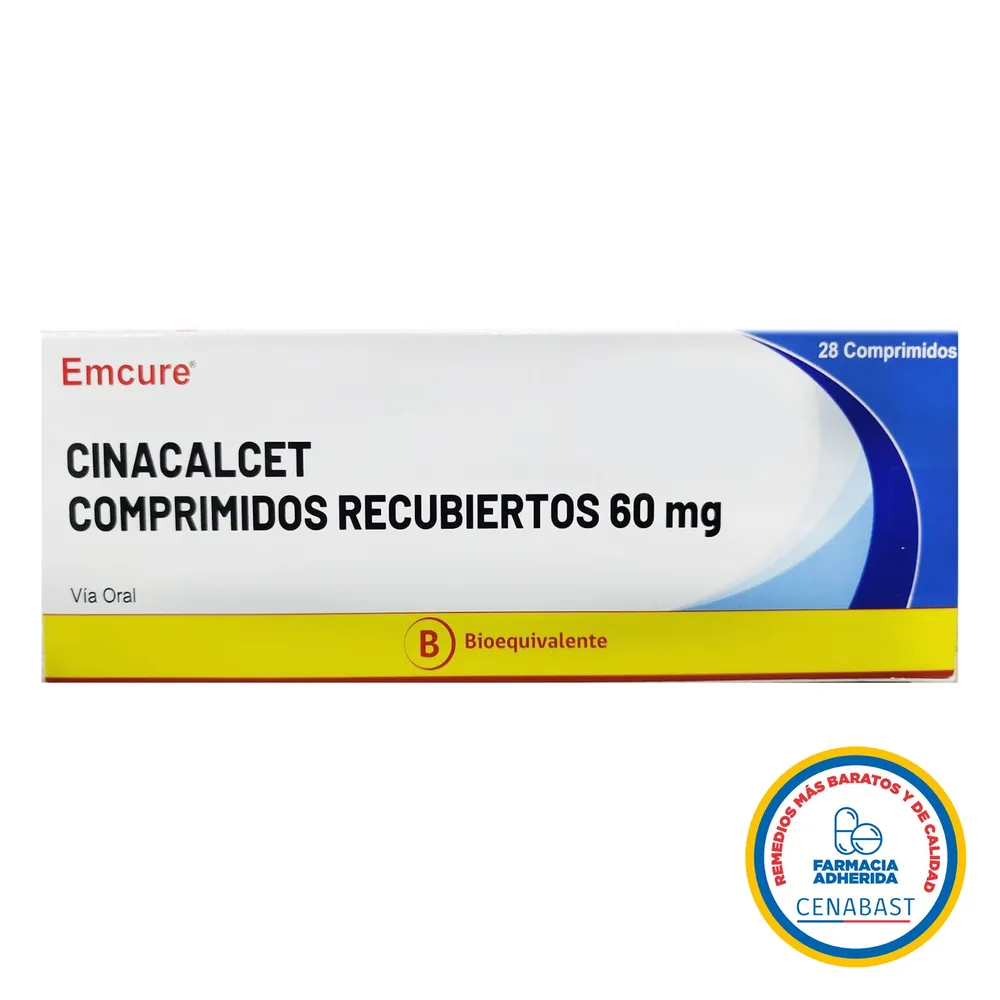
Table of Contents
- Patient Information Leaflet
- CINACALCET DOC 30 mg film-coated tablets, 60 mg film-coated tablets, 90 mg film-coated tablets
- 1. What CINACALCET DOC is and what it is used for
- 2. What you need to know before taking CINACALCET DOC
- 3. How to take CINACALCET DOC
- 4. Possible side effects
- 5. How to store CINACALCET DOC
- 6. Package contents and other information
Patient Information Leaflet
CINACALCET DOC 30 mg film-coated tablets, 60 mg film-coated tablets, 90 mg film-coated tablets
Medicinal product subject to medical prescription
Read this leaflet carefully before taking this medicine because it contains important information for you.
- Keep this leaflet. You may need to read it again.
- If you have any questions, ask your doctor, pharmacist, or nurse.
- This medicine has been prescribed for you only. Do not give it to other people, even if their symptoms are the same as yours, as it may be harmful.
- If you experience any side effects, including those not listed in this leaflet, tell your doctor, pharmacist, or nurse. See section 4.
What this leaflet contains
- What CINACALCET DOC is and what it is used for
- What you need to know before taking CINACALCET DOC
- How to take CINACALCET DOC
- Possible side effects
- How to store CINACALCET DOC
- Contents of the pack and other information
1. What CINACALCET DOC is and what it is used for
CINACALCET DOC acts on the regulation of parathyroid hormone (PTH), calcium, and phosphorus levels in your body. It is used to treat diseases caused by disorders of organs called parathyroid glands. The parathyroid glands are four small glands located in the neck, near the thyroid gland, which produce parathyroid hormone (PTH).
CINACALCET DOC is used:
- to treat secondary hyperparathyroidism in patients with severe kidney disease who require dialysis to remove waste products from their blood.
- to reduce elevated calcium levels in the blood (hypercalcemia) in patients with parathyroid carcinoma.
- to reduce elevated calcium levels in the blood (hypercalcemia) in patients with primary hyperparathyroidism, when removal of the glands is not possible.
In both primary and secondary hyperparathyroidism, an excessive amount of PTH is produced by the parathyroid glands. "Primary" means that hyperparathyroidism is not caused by any other condition, and "secondary" means that hyperparathyroidism is caused by another condition, such as kidney disease. Both primary and secondary hyperparathyroidism can lead to calcium loss from the bones, which may result in bone pain and fractures, blood and heart vessel problems, kidney stones, mental disturbances, and coma.
2. What you need to know before taking CINACALCET DOC
Do not take CINACALCET DOC:
- if you are allergic to cinacalcet or to any of the other ingredients of this medicine (listed in section 6).
1/5
Warnings and precautions
Talk to your doctor, pharmacist or nurse before taking CINACALCET DOC.
Before taking CINACALCET DOC, inform your doctor if you have or have ever had:
- seizures (fits or convulsions). The risk of having seizures is higher if you have previously experienced fits;
- liver problems;
- heart impairment.
Life-threatening events and fatal outcomes associated with low calcium levels (hypocalcemia) have been reported in patients treated with cinacalcet.
Low calcium levels may affect your heart rhythm. Inform your doctor if, during treatment with CINACALCET DOC, you experience an unusually fast or pounding heartbeat, have heart rhythm problems, or are taking medicines known to cause heart rhythm disturbances.
For additional information, see section 4.
During treatment with CINACALCET DOC, inform your doctor:
- if you have started or stopped smoking, as this may affect the action of CINACALCET DOC.
Children and adolescents
Children under 18 years of age must not take CINACALCET DOC.
Other medicines and CINACALCET DOC
Inform your doctor or pharmacist if you are taking, have recently taken, or might take any other medicines.
Inform your doctor if you are taking the following medicines.
Medicines that may affect the action of CINACALCET DOC:
- medicines used to treat skin infections or fungal infections (ketoconazole, itraconazole and voriconazole);
- medicines used to treat bacterial infections (telithromycin, rifampicin and ciprofloxacin);
- a medicine used to treat HIV and AIDS (ritonavir);
- a medicine used to treat depression (fluvoxamine).
CINACALCET DOC may affect the action of the following medicines:
- medicines used to treat depression (amitriptyline, desipramine, nortriptyline and clomipramine);
- a medicine used to relieve cough (dextromethorphan);
- medicines used to treat heart rhythm disorders (flecainide and propafenone);
- a medicine used to treat high blood pressure (metoprolol).
CINACALCET DOC with food and drink
CINACALCET DOC should be taken during or immediately after meals.
Pregnancy, breastfeeding and fertility
2/5
If you are pregnant, think you might be pregnant, planning to become pregnant, or are breastfeeding, ask your doctor or pharmacist for advice before taking this medicine.
CINACALCET DOC has not been studied in pregnant women. During pregnancy, your doctor may decide to change your treatment, as CINACALCET DOC could harm the unborn baby.
It is not known whether CINACALCET DOC is excreted in breast milk. Your doctor will discuss with you whether you need to stop breastfeeding or stop treatment with CINACALCET DOC.
Driving and using machines
No studies have been conducted on the effects on the ability to drive and use machines.
Dizziness and convulsions have been reported in patients treated with CINACALCET DOC. If you experience these effects, your ability to drive or use machines may be impaired.
3. How to take CINACALCET DOC
Take this medicine exactly as directed by your doctor or pharmacist.
If you have any doubts, consult your doctor or pharmacist. Your doctor will tell you how much CINACALCET DOC you should take.
CINACALCET DOC should be taken orally, during or immediately after meals. The tablets should be swallowed whole and must not be divided.
During treatment, your doctor will regularly perform blood tests to monitor your response to therapy and will adjust the dose if necessary.
If you are being treated for secondary hyperparathyroidism
The usual starting dose of CINACALCET DOC is 30 mg (one tablet) once daily.
If you are being treated for parathyroid carcinoma or primary hyperparathyroidism
The usual starting dose of CINACALCET DOC is 30 mg (one tablet) twice daily.
If you take more CINACALCET DOC than you should
If you take more CINACALCET DOC than you should, contact your doctor immediately. Possible signs of overdose include numbness or tingling around the mouth, muscle pain or cramps, and seizures.
If you forget to take CINACALCET DOC
Do not take a double dose to make up for the missed dose.
If you have forgotten a dose of CINACALCET DOC, take your next scheduled dose as usual.
If you have any questions about the use of this medicine, consult your doctor, pharmacist, or nurse.
4. Possible side effects
Like all medicines, this medicine can cause side effects, although not everybody gets them.
3/5
If you start to feel numbness or tingling around the mouth, muscle pain or cramps, or seizures, inform your doctor immediately. These may be signs that your calcium levels are too low (hypocalcemia).
Very common: may affect more than 1 in 10 people
Nausea and vomiting; these side effects are usually mild and short-lived.
Common: may affect up to 1 in 10 people
Dizziness, numbness or tingling sensations (paraesthesia), loss (anorexia) or decreased appetite, muscle pain (myalgia), weakness (asthenia), skin reactions (rash), reduced testosterone levels, high levels of potassium in the blood (hyperkalemia), allergic reactions (hypersensitivity), headache, epileptic seizures (convulsions or fits), low blood pressure (hypotension), upper respiratory tract infection, difficulty breathing (dyspnea), cough, indigestion (dyspepsia), diarrhea, abdominal pain, upper abdominal pain, constipation, muscle spasms, back pain, low levels of calcium in the blood (hypocalcemia).
Not known: frequency cannot be estimated from the available data
Hives (urticaria), swelling of the face, lips, mouth, tongue, or throat, which may cause difficulty in swallowing or breathing (angioedema), unusually fast or racing heartbeat, which may be associated with low calcium levels in the blood (QT prolongation and ventricular arrhythmia secondary to hypocalcemia).
After administration of CINACALCET DOC, a very small number of patients with pre-existing heart problems have experienced worsening of their condition and/or low blood pressure (hypotension).
Children and adolescents
The use of CINACALCET DOC in children and adolescents has not been established. A fatal outcome was reported in an adolescent with very low calcium levels in the blood (hypocalcemia) enrolled in a clinical trial.
Reporting of side effects
If you experience any side effects, including those not listed in this leaflet, talk to your doctor, pharmacist, or nurse. You can also report side effects directly via the national reporting system at:
www.agenziafarmaco.gov.it/content/come-segnalare-una-sospetta-reazione-avversa
By reporting side effects, you can help provide more information on the safety of this medicine.
5. How to store CINACALCET DOC
Keep this medicine out of the sight and reach of children.
Do not use this medicine after the expiry date stated on the carton and blister after "EXP". The expiry date refers to the last day of that month.
This medicine does not require any special storage conditions.
Do not dispose of medicines via wastewater or household waste. Ask your pharmacist how to dispose of medicines you no longer use. This will help protect the environment.
6. Package contents and other information
4/5
What CINACALCET DOC contains
- The active substance is cinacalcet. Each tablet contains 30, 60, or 90 mg of cinacalcet.
- The other components are: starch, pregelatinized (maize), microcrystalline cellulose (E460), povidone (K-29/32), crospovidone (type A and B), magnesium stearate (E572), anhydrous colloidal silica (tablet core); partially hydrolyzed polyvinyl alcohol (E1203), titanium dioxide (E171), macrogol (L 4000), talc (E553b), FD&C Blue #2/Indigo carmine-aluminium lake (E132), yellow iron oxide (E172) (tablet coating).
Description of the appearance of CINACALCET DOC and package contents
CINACALCET DOC are green, oval, biconvex coated tablets
(approximately 4.5 x 7 mm), with "C9CC" engraved on one side and "30" on the other.
CINACALCET DOC are green, oval, biconvex coated tablets
(approximately 5.5 x 9 mm), with "C9CC" engraved on one side and "60" on the other.
CINACALCET DOC are green, oval, biconvex coated tablets
(approximately 6.5 x 10.5 mm), with "C9CC" engraved on one side and "90" on the other.
Cinacalcet is available in transparent PVC/PE/PVDC/Al blisters containing film-coated tablets of 30 mg, 60 mg, or 90 mg. Each box contains 28 tablets packed in blisters.
Marketing Authorization Holder and Manufacturer
Marketing Authorization Holder
DOC Generici S.r.l., Via Turati 40, 20121 Milan, Italy
Manufacturers
Synthon Hispania, S.L.
C/ Castelló no1, Pol. Las Salinas, Sant Boi de Llobregat, Barcelona 08830, Spain
Synthon, s.r.o.
Brnìnská 32/èp. 597, Blansko 67801, Czech Republic
This medicinal product is authorized in the Member States of the European Economic Area under the
following names:
NL: Cinacalcet DOC 30 mg, 60 mg and 90 mg, filmomhuldetabletten
IT: CINACALCET DOC 30 mg, 60 mg, 90 mg
5/5