Cacit
Italy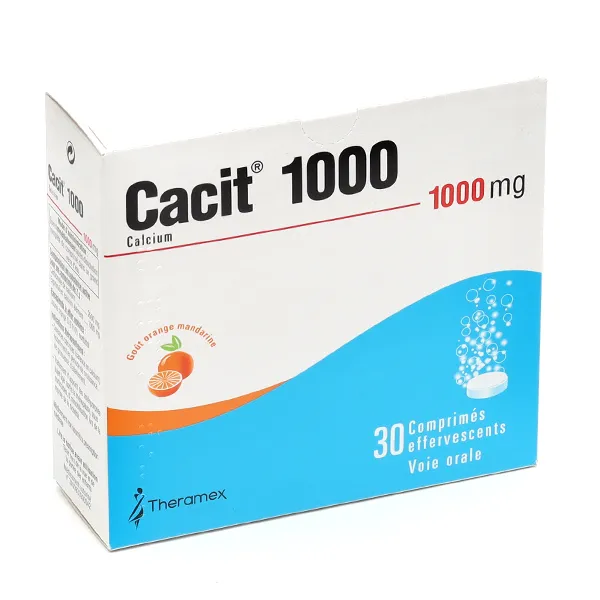
Table of Contents
- Package leaflet: Information for the patient
- CACIT 500
- 1. What CACIT 500 is and what it is used for
- 2. What you need to know before taking CACIT 500
- 3. How to take CACIT 500
- 4. Possible side effects
- 5. How to store CACIT 500
- 6. Contents of the pack and other information
- Patient Information Leaflet
- CACIT 1000
- 1. What CACIT 1000 is and what it is used for
- 2. What you need to know before taking CACIT 1000
- 3. How to take CACIT 1000
- 4. Possible side effects
- 5. How to store CACIT 1000
- 6. Package contents and other information
Package leaflet: Information for the patient
CACIT 500
500 mg effervescent tablets
calcium
Please read this leaflet carefully before taking this medicine because it contains important information for you.
- Keep this leaflet. You may need to read it again.
- If you have any questions, consult your doctor or pharmacist.
- This medicine has been prescribed for you only. Do not give it to others, even if their symptoms are the same as yours, as it could be harmful.
- If you experience any side effects, including those not listed in this leaflet, consult your doctor or pharmacist. See section 4.
Contents of this leaflet:
- What CACIT 500 is and what it is used for
- What you need to know before taking CACIT 500
- How to take CACIT 500
- Possible side effects
- How to store CACIT 500
- Contents of the pack and other information
1. What CACIT 500 is and what it is used for
CACIT 500 is a mineral supplement based on calcium carbonate.
CACIT 500 is used in adults and children:
- to treat and prevent calcium deficiency;
- in diseases requiring increased calcium intake.
2. What you need to know before taking CACIT 500
Do not take CACIT 500
- if you are allergic to calcium carbonate or to any of the other ingredients of this medicine (listed in section 6);
- if you are on a low-phosphate diet;
- if you have hypercalcaemia (excess calcium in the blood);
- if you have hypercalciuria (excess calcium in the urine);
- if you have kidney stones (calcium lithiasis);
- if you have severe kidney disease (severe renal insufficiency).
Warnings and precautions
Talk to your doctor or pharmacist before taking CACIT 500.
In particular, consult your doctor if:
- you have kidney disorders;
- you have heart disorders.
During prolonged treatment, your doctor may periodically request blood tests to monitor calcium levels and kidney function.
Inform your doctor if you are taking antibiotics, diuretics, and/or medicines or nutrients (such as milk) containing calcium.
Other medicines and CACIT 500
Inform your doctor or pharmacist if you are taking, have recently taken, or might take any other medicine.
In particular, inform your doctor if you are taking:
- vitamin D-containing products (in such cases, your doctor may ask you to regularly monitor blood and urine calcium levels);
- heart medications belonging to the class of digitalis (this combination requires regular medical supervision);
- antibiotics (medicines to fight infections):
- quinolone derivatives such as ciprofloxacin and gemifloxacin (these should be taken at least 2 hours apart from CACIT);
- tetracyclines (these should be taken at least 3 hours apart from CACIT); - thiazide diuretics used to treat high blood pressure;
- sodium fluoride products (e.g., products used for dental caries); in this case, it is advisable to separate the administration times.
Pregnancy and breastfeeding
If you are pregnant, suspect you may be pregnant, planning a pregnancy, or breastfeeding, consult your doctor or pharmacist before using this medicine.
Your doctor may recommend this medicine if you are pregnant or breastfeeding.
Driving and using machines
CACIT 500 does not affect the ability to drive or use machinery.
CACIT 500 contains:
- sorbitol (contained in the orange flavouring): this medicine contains 1.36 mg of sorbitol per tablet;
- sunset yellow: may cause allergic reactions;
- sodium: this medicine contains less than 1 mmol (23 mg) of sodium per tablet, i.e., essentially “sodium-free”;
- benzyl alcohol (contained in the orange flavouring): this medicine contains 0.031 mg of benzyl alcohol per tablet. Benzyl alcohol may cause allergic reactions.
3. How to take CACIT 500
Take this medicine exactly as directed by your doctor or pharmacist. If you are unsure, consult your doctor or pharmacist.
The recommended dose is:
- in adults: 2 tablets per day (1 g per day);
- in children: 1–2 tablets per day (500 mg – 1 g/day), depending on age.
Method of administration:
- dissolve the effervescent tablet in a glass of water;
- drink the solution immediately afterwards.
The duration of treatment will be determined by your doctor.
Follow your doctor’s instructions carefully.
In cases of prolonged immobilization associated with excess calcium in the blood or urine, treatment with CACIT 500 should only begin when normal mobility is resumed.
If you take more CACIT 500 than you should
If you take an excessive dose of this medicine, contact your doctor immediately or go to the nearest hospital, where you will receive appropriate medical care.
Symptoms of overdose may include:
- thirst;
- excessive urine production (polyuria);
- polydipsia (excessive thirst);
- nausea;
- vomiting;
- dehydration;
- increased blood pressure;
- vasomotor disturbances (e.g. hot flushes, sweating);
- constipation;
- milk-alkali syndrome;
- development of metastatic calcium deposits.
In infants and children, these symptoms may be preceded by growth arrest.
If you forget to take CACIT 500
Do not take a double dose to make up for the missed dose.
If you stop taking CACIT 500
If you have any doubts about using this medicine, consult your doctor or pharmacist.
4. Possible side effects
Like all medicines, this medicine can cause side effects, although not everybody will experience them.
The following side effects may occur during treatment with CACIT 500:
- Constipation;
- Passage of gas (flatulence);
- Nausea;
- Increased calcium levels in the blood (in case of prolonged treatment), which may cause nausea, vomiting, constipation, abdominal pain, thirst, excessive urination, changes in electrocardiogram, increased blood pressure, disturbances in body temperature regulation (e.g. hot flushes, sweating).
Additional side effects in children
In infants and children, the following may also occur:
- Growth arrest;
- Reduced phosphate levels in the blood (hypophosphatemia).
Reporting of side effects
If you experience any side effects, including those not listed in this leaflet, talk to your doctor or pharmacist. You may also report side effects directly through the national reporting system at https://www.aifa.gov.it/content/segnalazioni-reazioni-avverse. By reporting side effects, you can help provide more information on the safety of this medicine.
5. How to store CACIT 500
Keep this medicine out of the sight and reach of children.
Keep the container tightly closed to protect the medicine from moisture.
Do not use this medicine after the expiry date stated on the pack after "Exp". The expiry date refers to the last day of that month.
Do not dispose of this medicine via wastewater or household waste. Ask your pharmacist how to dispose of medicines you no longer use. This will help protect the environment.
6. Contents of the pack and other information
What CACIT 500 contains
- The active substance is: calcium carbonate 1,250 mg (equivalent to 500 mg of calcium).
- The other components are: citric acid, sodium cyclamate, sodium saccharin, orange flavour (MK 500) (contains sorbitol (E420) and benzyl alcohol), sunset yellow (E110).
Description of the appearance of CACIT 500 and pack contents
Pack of 20 effervescent tablets.
CACIT 500 is supplied in a cardboard box containing 2 tubes made of polypropylene with polyethylene caps, each containing 10 effervescent tablets.
Marketing Authorisation Holder
Theramex Ireland Limited
Kilmore House, Park Lane, Spencer Dock
D01 YE64, Dublin 1
Ireland
Manufacturer
Hermes Pharma Ges.m.b.H., Schwimmschulweg 1a 9400 Wolfsberg (Austria)
Further information
More detailed information on this medicinal product is available on the website of the Italian Medicines Agency (Agenzia Italiana del Farmaco): http://www.aifa.gov.it
Patient Information Leaflet
CACIT 1000
1000 mg effervescent tablets
calcium
Please read this leaflet carefully before taking this medicine because it contains important information for you.
- Keep this leaflet. You may need to read it again.
- If you have any questions, ask your doctor or pharmacist.
- This medicine has been prescribed for you only. Do not give it to other people, even if their symptoms are the same as yours, because it could be harmful.
- If you experience any adverse reactions, including those not listed in this leaflet, consult your doctor or pharmacist. See section 4.
Contents of this leaflet:
- What CACIT 1000 is and what it is used for
- What you need to know before taking CACIT 1000
- How to take CACIT 1000
- Possible side effects
- How to store CACIT 1000
- Contents of the pack and other information
1. What CACIT 1000 is and what it is used for
CACIT 1000 is a mineral supplement based on calcium carbonate.
CACIT 1000 is used in adults:
- to treat and prevent calcium deficiency;
- in diseases requiring increased calcium intake.
2. What you need to know before taking CACIT 1000
Do not take CACIT 1000
- if you are allergic to calcium carbonate or to any of the other ingredients of this medicine (listed in section 6);
- if you are on a low-phosphate diet;
- if you have hypercalcemia (excess calcium in the blood);
- if you have hypercalciuria (excess calcium in the urine);
- if you have kidney stones (calcium lithiasis);
- if you have severe kidney disease (severe renal insufficiency).
Warnings and precautions
Talk to your doctor or pharmacist before taking CACIT 1000.
In particular, consult your doctor if:
- you have kidney disorders;
- you have heart disorders.
During prolonged treatment, your doctor may periodically request blood tests
to monitor calcium levels and kidney function.
Inform your doctor if you are taking antibiotics, diuretics, and/or medicines or nutrients (such as milk) containing
calcium.
Children and adolescents
CACIT 1000 is not indicated for use in children.
Other medicines and CACIT 1000
Inform your doctor or pharmacist if you are taking, have recently taken, or might take any
other medicines.
In particular, inform your doctor if you are taking:
- vitamin D-containing products (in such cases, your doctor will ask you to regularly monitor blood and urine calcium levels);
- heart medications belonging to the class of digitalis (this combination requires regular medical supervision);
- antibiotics (medicines to treat infections): or quinolone derivatives such as ciprofloxacin and gemifloxacin (these should be taken at least 2 hours apart from CACIT); or tetracyclines (these should be taken at least 3 hours apart from CACIT);
- thiazide diuretics used for the treatment of high blood pressure;
- sodium fluoride products (e.g., products used for dental caries); in this case, it is advisable to separate the administrations.
Pregnancy and breastfeeding
If you are pregnant, suspect you may be pregnant, planning a pregnancy, or breastfeeding,
please seek advice from your doctor or pharmacist before using this medicine.
Your doctor may recommend this medicine if you are pregnant or breastfeeding.
Driving and using machines
CACIT 1000 does not affect the ability to drive or operate machinery.
CACIT 1000 contains:
- sorbitol (contained in the orange flavour): this medicine contains 1.36 mg of sorbitol per tablet;
- sunset yellow: may cause allergic reactions;
- sodium: this medicine contains less than 1 mmol (23 mg) of sodium per tablet, i.e. essentially “sodium-free”;
- benzyl alcohol (contained in the orange flavour): this medicine contains 0.031 mg of benzyl alcohol per tablet. Benzyl alcohol may cause allergic reactions.
3. How to take CACIT 1000
Take this medicine exactly as directed by your doctor or pharmacist. If you have
any doubts, consult your doctor or pharmacist.
The recommended dose is:
- 1 tablet per day (1 g per day);
Method of administration:
- dissolve the effervescent tablet in a glass of water;
- drink the solution immediately afterwards.
The duration of treatment will be determined by your doctor.
Follow your doctor's instructions carefully.
In case of prolonged immobilization associated with excess calcium in the blood or urine,
treatment with CACIT 1000 should only be started when mobilization is resumed.
If you take more CACIT 1000 than you should
If you take an excessive dose of this medicine, contact your doctor immediately or go to the
nearest hospital, where you will receive appropriate medical care.
Symptoms of an overdose may include:
- thirst;
- excessive urine production (polyuria);
- polydipsia (excessive thirst);
- nausea;
- vomiting;
- dehydration;
- increased blood pressure;
- vasomotor disturbances (e.g. hot flushes, sweating);
- constipation;
- milk-alkali syndrome;
- development of metastatic calcium deposits.
If you forget to take CACIT 1000
Do not take a double dose to make up for the missed dose.
If you stop taking CACIT 1000
If you have any doubts about using this medicine, consult your doctor or pharmacist.
4. Possible side effects
Like all medicines, this medicine can cause side effects, although not everybody will experience them.
The following side effects may occur during treatment with CACIT 1000:
- constipation;
- gas (flatulence);
- nausea;
- increased blood calcium levels (in case of prolonged treatment), which may cause nausea, vomiting, constipation, abdominal pain, thirst, excessive urination, changes in electrocardiogram, increased blood pressure, disturbances in body temperature (e.g. hot flushes, sweating).
Reporting of side effects
If you experience any side effect, including those not listed in this leaflet, talk to your doctor or pharmacist. You can also report side effects directly via the national reporting system at the website https://www.aifa.gov.it/content/segnalazioni-reazioni-avverse.
Error. Invalid hyperlink reference. By reporting side effects, you can help provide more information on the safety of this medicine.
5. How to store CACIT 1000
Keep this medicine out of the sight and reach of children.
Keep the container tightly closed to protect the medicine from moisture.
Do not use this medicine after the expiry date stated on the packaging after "Exp". The expiry date refers to the last day of that month.
Do not dispose of any medicine via wastewater or household waste. Ask your pharmacist how to dispose of medicines you no longer use. This will help protect the environment.
6. Package contents and other information
What CACIT 1000 contains
- The active substance is: calcium carbonate 2,500 mg (equivalent to 1,000 mg of calcium). The other components are: citric acid, sodium cyclamate, sodium saccharin, orange flavour (MK 500) (containing sorbitol (E420) and benzyl alcohol), sunset yellow (E110).
Description of the appearance of CACIT 1000 and package contents
Package containing 30 effervescent tablets.
CACIT 1000 is presented in a cardboard box containing 3 tubes made of polypropylene with polyethylene caps,
each containing 10 effervescent tablets.
Marketing Authorization Holder
Theramex Ireland Limited
Kilmore House, Park Lane, Spencer Dock
D01 YE64, Dublin 1
Ireland
Manufacturer
Hermes Pharma Ges.m.b.H., Schwimmschulweg 1a 9400 Wolfsberg (Austria)
Other sources of information
More detailed information on this medicinal product is available on the website of the Italian Medicines Agency (Agenzia Italiana del Farmaco), http://www.aifa.gov.it