Bronchenolo cough
Italy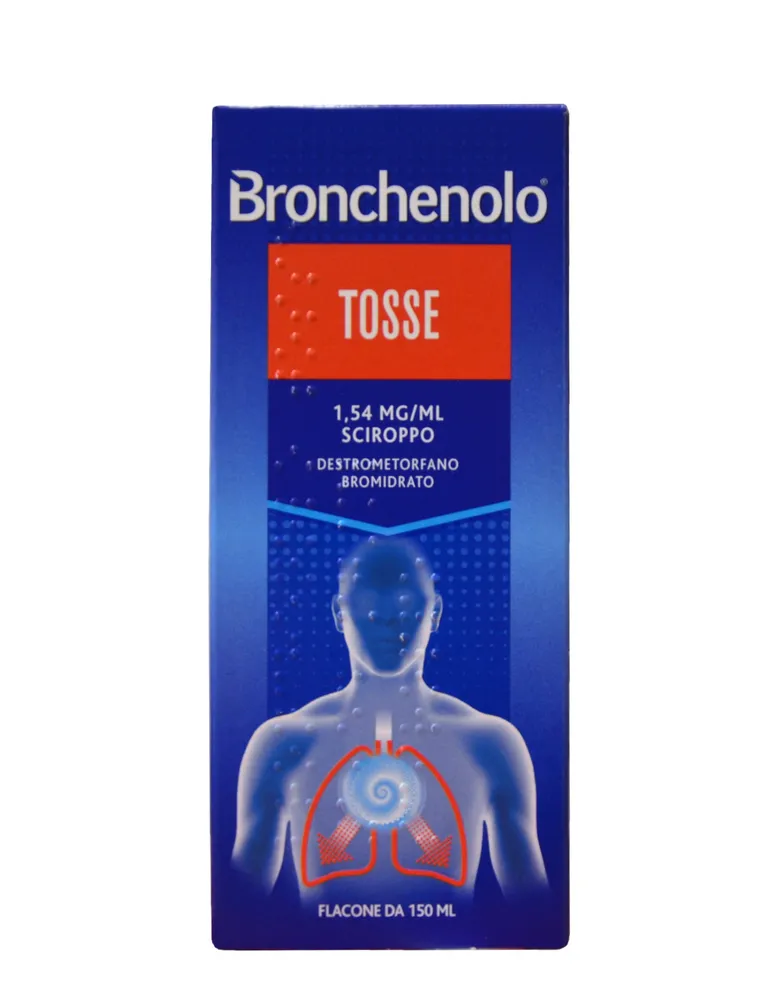
Table of Contents
- Package leaflet: Information for the patient and user
- BRONCHENOLO COUGH 1.54 mg/ml syrup
- 1. What BRONCHENOLO COUGH is and what it is used for
- 2. What you need to know before taking BRONCHENOLO TOSSE
- 3. How to take BRONCHENOLO TOSSE
- 4. Possible adverse reactions
- 5. How to store BRONCHENOLO COUGH
- 6. Package contents and other information
Package leaflet: Information for the patient and user
BRONCHENOLO COUGH 1.54 mg/ml syrup
Dextromethorphan hydrobromide
Please read all of this leaflet carefully before taking this medicine because it contains
important information for you.
Always take this medicine exactly as described in this leaflet or as your doctor or
pharmacist has instructed you.
- Keep this leaflet. You may need to read it again.
- If you need more information or advice, consult your pharmacist.
- If you experience any side effects, including those not listed in this leaflet, contact your doctor or pharmacist. See section 4.
- Consult your doctor if you do not notice any improvement or if your symptoms worsen after 5–7 days of treatment.
Contents of this leaflet:
- What BRONCHENOLO COUGH is and what it is used for
- What you need to know before taking BRONCHENOLO COUGH
- How to take BRONCHENOLO COUGH
- Possible side effects
- How to store BRONCHENOLO COUGH
- Contents of the pack and other information
1. What BRONCHENOLO COUGH is and what it is used for
This medicine contains dextromethorphan hydrobromide, an active substance belonging to the
class of cough suppressant medicines.
BRONCHENOLO COUGH is used to relieve cough.
Consult your doctor if you do not feel better or if you feel worse after 5-7 days of treatment.
2. What you need to know before taking BRONCHENOLO TOSSE
Do not take BRONCHENOLO TOSSE if:
- you are allergic to dextromethorphan hydrobromide or to any of the other ingredients of this medicine (listed in section 6);
- you are taking or have taken within the last two weeks medicines used to treat depression called monoamine oxidase inhibitors (MAOIs);
- you have or are at risk of developing breathing problems (respiratory failure), for example, if you have chronic obstructive pulmonary disease, pneumonia, an ongoing asthma attack or worsening asthma. Do not use BRONCHENOLO TOSSE in children under 6 years of age.
Warnings and precautions
Talk to your doctor or pharmacist before taking BRONCHENOLO TOSSE if:
- you have a long-term (chronic or persistent) cough, such as that occurring in asthma (a disease causing narrowing and inflammation of the bronchi) or emphysema (a lung disease causing breathing difficulties);
- your cough is accompanied by phlegm;
- your cough does not improve or worsens despite treatment, or if it is associated with high fever, skin rash, or headache;
- you have severe liver or kidney problems;
- you are taking medicines such as certain antidepressants or antipsychotics. BRONCHENOLO TOSSE may interact with these medicines and cause changes in mental state (e.g. agitation, hallucinations, coma) and other effects such as body temperature above 38°C, increased heart rate, unstable blood pressure, exaggerated reflexes, muscle stiffness, lack of coordination and/or gastrointestinal symptoms (e.g. nausea, vomiting, diarrhoea);
- you are taking other cough or cold medicines. The concomitant use of BRONCHENOLO TOSSE with sedative medicines such as benzodiazepines, hypnotics (medicines that induce sleep), sedatives (calming agents), anxiolytics (reducing anxiety) increases the risk of drowsiness, breathing difficulties (respiratory depression), coma (a state of deep unconsciousness), and may be life-threatening. Inform your doctor about all sedative medicines you are taking and follow carefully their dosage recommendations. It may be helpful to inform friends or family members so they are aware of the signs and symptoms described above. If you experience these symptoms, contact your doctor. Cases of abuse and dependence have been reported. Dextromethorphan may lead to habituation: prolonged use (e.g. exceeding the recommended treatment duration) may result in tolerance to the medicine, as well as mental and physical dependence (leading to use of higher doses than recommended or repeated over time). If you have a tendency to abuse or become dependent on medicines, narcotics, or alcohol, you should take BRONCHENOLO TOSSE only for short periods and under strict medical supervision. Consumption of alcoholic beverages is not recommended during treatment with BRONCHENOLO TOSSE.
Children and adolescents
In children, serious adverse effects such as breathing difficulties and sedation may occur. If these signs appear, contact your doctor.
Other medicines and BRONCHENOLO TOSSE
Tell your doctor or pharmacist if you are taking, have recently taken, or might take any other medicine.
Do not take this medicine if you are taking or have taken within the last two weeks medicines used to treat depression called monoamine oxidase inhibitors (MAOIs), as this increases the risk of adverse reactions, even serious ones, such as serotonin syndrome, which manifests as changes in mental state, increased blood pressure, agitation, brief and involuntary muscle contractions, increased reflexes, excessive sweating, chills, and tremors (see “Warnings and precautions” and “Possible side effects”).
In particular, inform your doctor if you are taking or have recently taken:
- medicines to treat depression such as selective serotonin reuptake inhibitors, tricyclic antidepressants, fluoxetine, paroxetine, sertraline, and bupropion (see section 2. “Do not take BRONCHENOLO TOSSE if”);
- medicines to treat severe pain or to reduce withdrawal symptoms in cases of dependence (methadone);
- medicines to treat psychiatric disorders (haloperidol, thioridazine, perphenazine);
- medicines to treat heart rhythm disorders (amiodarone, quinidine, propafenone);
- medicines to treat cardiac arrhythmias (flecainide);
- medicines to reduce calcium levels in the blood and to treat a dysfunction caused by reduced secretion of the hormone regulating these levels (hyperparathyroidism), such as cinacalcet;
- medicines used to prevent fungal (fungal) growth (terbinafine).
The concomitant use of BRONCHENOLO TOSSE and sedative medicines such as benzodiazepines or related medicines increases the risk of drowsiness, breathing difficulties (respiratory depression), coma, and may be life-threatening. For this reason, concomitant use should only be considered when no other treatment options are available. However, if your doctor prescribes BRONCHENOLO TOSSE together with sedative medicines, the dose and duration of concomitant treatment must be limited by your doctor. Inform your doctor about all sedative medicines you are taking and follow carefully their dosage recommendations. It may be helpful to inform friends or relatives to watch for the signs and symptoms listed above. Contact your doctor if you experience such symptoms.
BRONCHENOLO TOSSE and alcohol
Do not consume alcohol during treatment with this medicine, as it may cause or worsen certain side effects, such as drowsiness.
Pregnancy, breastfeeding and fertility
If you are pregnant, think you may be pregnant, are planning to become pregnant, or are breastfeeding, consult your doctor or pharmacist before using this medicine.
Pregnancy and breastfeeding
There are no clinical data on the risk during pregnancy and breastfeeding with breast milk.
BRONCHENOLO TOSSE should be used only if clearly needed and under direct medical supervision.
Fertility
No data are available.
Driving and using machines
BRONCHENOLO TOSSE may cause drowsiness and dizziness, and therefore may impair your ability to drive or operate machinery. Exercise particular caution if you perform such activities.
BRONCHENOLO TOSSE contains:
- Liquid sucrose ; contains 17.2 g of sucrose (sugar) per dose (15 ml). This should be taken into account in people with diabetes mellitus. If your doctor has diagnosed you with intolerance to certain sugars, contact them before taking this medicine;
- methyl 4-hydroxybenzoate , may cause allergic reactions (including delayed ones);
- ethanol (alcohol) . This medicine contains 576 mg of alcohol (ethanol) per dose (15 ml). The amount in 15 ml of this medicine is equivalent to 14 ml of beer and 6 ml of wine. The amount of alcohol in this medicine does not appear to have an effect in adults and adolescents, and its effects in children are not evident. Some effects may occur in young children, for example, feeling sleepy. The alcohol in this medicine may alter the effects of other medicines. Talk to your doctor or pharmacist if you are taking other medicines. If you are pregnant or breastfeeding, talk to your doctor or pharmacist before taking this medicine. If you are alcohol-dependent, talk to your doctor before taking this medicine.
- Sodium . This medicine contains less than 1 mmol of sodium (23 mg), i.e. essentially "sodium-free".
3. How to take BRONCHENOLO TOSSE
Take this medicine exactly as stated in this leaflet or as instructed by your doctor or pharmacist. If you have any doubts, consult your doctor or pharmacist.
Use should be limited to the shortest possible duration and the lowest possible dose.
Adults and adolescents over 12 years of age
The recommended dose is 15 ml, 3–4 times daily, with a minimum interval of 4 hours between doses.
The maximum daily dose is 60 ml. Do not exceed the recommended maximum daily dose.
Children between 6 and 12 years of age
The recommended dose is 7.5 ml, 3–4 times daily, with a minimum interval of 4 hours between doses.
The maximum daily dose is 30 ml. Do not exceed the recommended maximum daily dose.
1 ml of syrup contains: 1.54 mg of dextromethorphan hydrobromide.
Do not use BRONCHENOLO TOSSE for more than 5 days.
Consult your doctor if you do not feel better or if you feel worse after 5 days of treatment.
Method of administration
BRONCHENOLO TOSSE syrup should be taken orally, using the dosing cup (measuring cup), as described below:
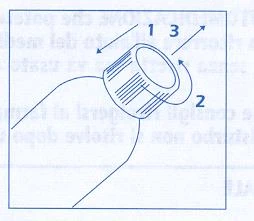
- Open the bottle by pressing and turning the cap counterclockwise at the same time.
- For accurate dosing, it is recommended to keep the measuring cup horizontal and fill it up to the mark corresponding to the required dose.
- Take the syrup immediately directly from the measuring cup.
- Close the bottle by pressing firmly and screwing the cap back on.
- Wash the measuring cup after each use.
If you take more BRONCHENOLO TOSSE than you should
If you take more BRONCHENOLO TOSSE than you should, the following symptoms may occur:
nausea and vomiting, involuntary muscle contractions, agitation, confusion, drowsiness, cognitive disturbances, involuntary and rapid eye movements, cardiac disorders (increased heart rate), coordination problems, psychosis with visual hallucinations and hyperexcitability.
Additional symptoms in case of massive overdose may include: coma, severe breathing problems (respiratory depression), and seizures. Seek immediate medical attention at a doctor's office or hospital if any of the above symptoms occur.
If you forget to take BRONCHENOLO TOSSE
Do not take a double dose to make up for the missed dose.
4. Possible adverse reactions
Like all medicines, this medicine can cause adverse reactions, although not everybody gets them.
Inform your doctor if, during treatment with BRONCHENOLO TOSSE, you experience any of the following:
Uncommon adverse reactions (may affect up to 1 in 100 people)
- Drowsiness and dizziness;
- Abdominal, stomach or intestinal disorders, nausea, vomiting.
Adverse reactions with unknown frequency (frequency cannot be estimated from the available data)
- Serotonin syndrome, characterized by changes in mental status, increased blood pressure, agitation, brief and involuntary muscle contractions, increased reflexes, excessive sweating, chills and tremors;
- Agitation;
- Headache;
- Hypersensitivity (allergy);
- Rash (skin eruption);
- Urticaria (skin irritation);
- Angioedema (swelling of the face, eyes, lips, throat which may cause breathing or swallowing difficulties);
- Confusion;
- Insomnia (difficulty sleeping);
- Diarrhea.
Reporting of adverse reactions
If you experience any adverse reaction, including those not listed in this leaflet, please contact your doctor or pharmacist. You may also report adverse reactions directly via the national reporting system at the website: https://www.aifa.gov.it/content/segnalazioni-reazioni-avverse
By reporting adverse reactions, you can help provide more information on the safety of this medicine.
5. How to store BRONCHENOLO COUGH
Keep this medicine out of the sight and reach of children.
No special storage precautions are required.
Do not use this medicine after the expiry date stated on the packaging after "Exp." The expiry date refers to the last day of that month.
After first opening, use the medicine within 12 months.
Do not dispose of any medicine via wastewater or household waste. Ask your pharmacist how to dispose of medicines you no longer use. This will help protect the environment.
Dispose of the dosing cup according to local regulations for plastic household waste.
6. Package contents and other information
What BRONCHENOLO COUGH contains
The active substance is: bromhexine hydrobromide.
154 mg of bromhexine hydrobromide are contained in 100 ml of syrup.
The other components are: sodium citrate; citric acid monohydrate; ethanol; liquid sucrose;
lemon flavour; mint flavour; methyl p-hydroxybenzoate; purified water.
Description of the appearance of BRONCHENOLO COUGH and contents of the pack
150 ml amber glass bottle with child-resistant cap, containing syrup, and a graduated dosing cup.
Marketing Authorization Holder
Perrigo Italia S.r.l. – Viale dell’Arte, 25 – 00144 Rome, Italy.
Manufacturer
Farmaclair – 440 Avenue du General de Gaulle - Herouville Saint Clair – France.
next section>