Atenolol and chlortalidone EG
Italy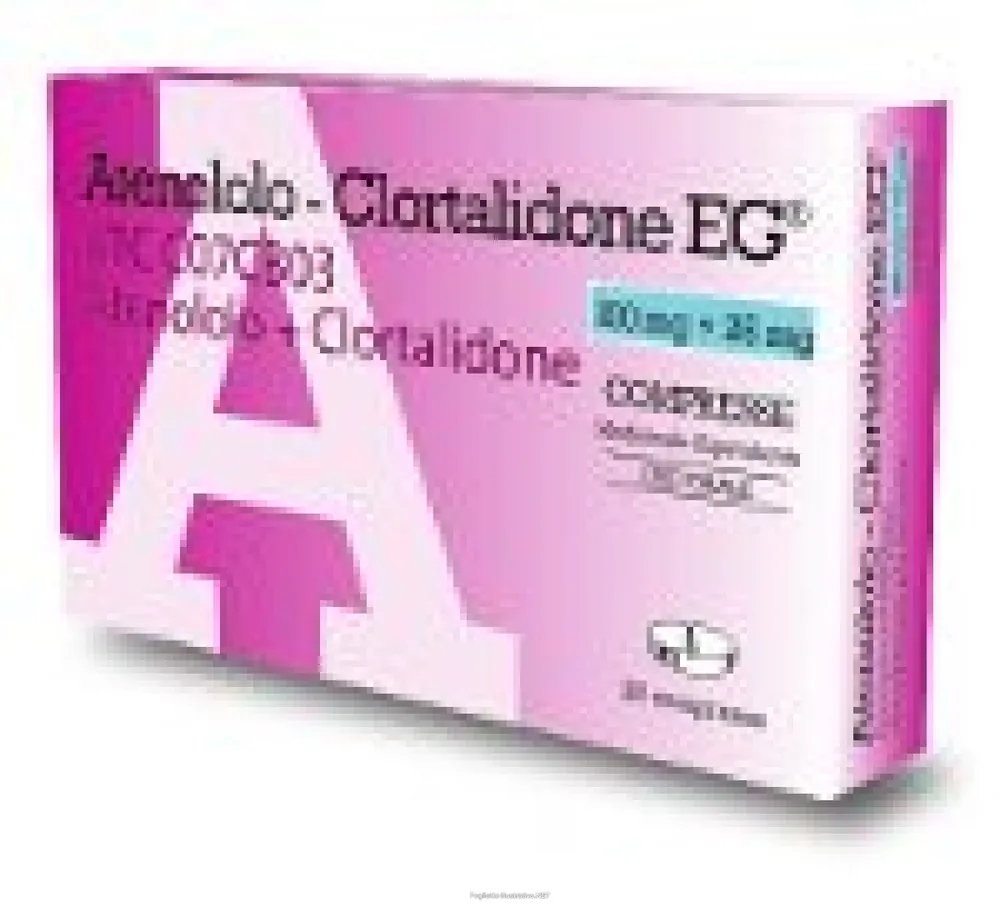
Table of Contents
- Package leaflet: Information for the patient
- ATENOLOLO CLORTALIDONE EG 50 mg + 12.5 mg tablets
- 1. What ATENOLOLO CLORTALIDONE EG is and what it is used for
- 2. What you should know before taking ATENOLOL CHLORTHALIDONE EG
- 3. How to take ATENOLOL CHLORTHALIDONE EG
- 4. Possible side effects
- 5. How to store ATENOLOL CHLORTHALIDONE EG
- 6. Package contents and other information
- Patient Information Leaflet
- ATENOLOL CLOROTHALIDONE EG 100 mg + 25 mg tablets
- 1. What ATENOLOLO CLORTALIDONE EG is and what it is used for
- 2. What you need to know before taking ATENOLOLO CLORTALIDONE EG
- 3. How to take ATENOLOL HYDROCHLOROTHIAZIDE EG
- 4. Possible side effects
- 5. How to store ATENOLOL CHLORTHALIDONE EG
- 6. Package contents and other information
Package leaflet: Information for the patient
ATENOLOLO CLORTALIDONE EG 50 mg + 12.5 mg tablets
Generic Medicine
Please read this leaflet carefully before taking this medicine because it contains important information for you.
- Keep this leaflet. You may need to read it again.
- If you have any questions, ask your doctor or pharmacist.
- This medicine has been prescribed for you only. Do not give it to others, even if their symptoms are the same as yours, as it could be harmful.
- If you experience any adverse reaction, including those not listed in this leaflet, contact your doctor or pharmacist. See section 4.
Contents of this leaflet:
- What ATENOLOLO CLORTALIDONE EG is and what it is used for
- What you need to know before taking ATENOLOLO CLORTALIDONE EG
- How to take ATENOLOLO CLORTALIDONE EG
- Possible side effects
- How to store ATENOLOLO CLORTALIDONE EG
- Contents of the pack and other information
1. What ATENOLOLO CLORTALIDONE EG is and what it is used for
This medicine contains two active substances, atenolol and chlorthalidone.
Atenolol belongs to a group of medicines called beta-blockers, which work by slowing down the heartbeat and reducing the force of the heart's contractions.
Chlorthalidone belongs to a group of medicines called diuretics, which work by increasing the amount of urine produced by the kidneys.
These two active substances work together to lower blood pressure.
ATENOLOLO CLORTALIDONE EG is indicated for the treatment of high blood pressure (essential hypertension) when blood pressure is not adequately controlled by therapy with the individual active substances (atenolol and chlorthalidone) alone.
2. What you should know before taking ATENOLOL CHLORTHALIDONE EG
Do not take ATENOLOL CHLORTHALIDONE EG
- if you are allergic to atenolol or chlorthalidone (or sulfonamide-derived medicines) or any of the other ingredients of this medicine (listed in section 6);
- if you have a very irregular heartbeat (sinoatrial node disease) or if you suffer from certain heart conduction disorders (second- or third-degree atrioventricular block);
- if you have a very slow heart rate (bradycardia) (<55 beats per minute);
- if your heart function is inadequate and not controlled by appropriate therapy (uncontrolled heart failure);
- if you have a serious heart condition known as cardiogenic shock, which occurs when your heart does not pump enough blood throughout the body;
- if you have low blood pressure (hypotension);
- if you have severe circulation problems in the limbs (peripheral arterial disease);
- if you have severe kidney problems (severe renal failure);
- if your doctor has told you that the acidity level of your blood is higher than normal (metabolic acidosis);
- if you have an untreated tumour of the adrenal gland called "pheochromocytoma";
- if you have severe liver and kidney disorders (hepatopathies and nephropathies);
- if you suffer from an inflammatory joint disease (manifest gout);
- if you are pregnant or breastfeeding;
- if you are taking medicines such as verapamil (used to treat high blood pressure).
Warnings and precautions
Talk to your doctor or pharmacist before taking ATENOLOL CHLORTHALIDONE EG.
Be especially careful and consult your doctor:
- if your heart function is inadequate (heart failure), but is kept under control with appropriate therapy;
- if your heart's ability to increase the amount of blood pumped to the body is poor (low cardiac reserve);
- if you suffer from chest pain called Prinzmetal's angina, as this medicine may increase the number and duration of angina attacks;
- if you have circulation problems in the limbs;
- if you have heart disorders (first-degree atrioventricular block, a disease of the heart's conduction system);
- if you suffer from ischemic heart disease, a heart condition that occurs when there is insufficient oxygenation of the heart muscle. Consult your doctor before stopping treatment with ATENOLOL CHLORTHALIDONE EG;
- if you have previously experienced severe allergic reactions (anaphylactic reactions);
- if you suffer from respiratory diseases. If your symptoms worsen, stop treatment and inform your doctor;
- if you are using eye drops containing similar active substances (beta-blockers);
- if you are due to undergo anaesthesia for surgery. Inform the anaesthetist that you are taking ATENOLOL CHLORTHALIDONE EG;
- if you are being treated for a type of tumour called pheochromocytoma; in this case, your blood pressure must be closely monitored during treatment;
- if you have thyroid problems (thyrotoxicosis), because atenolol may mask cardiovascular symptoms;
- if you have diabetes or are predisposed to diabetes, because atenolol may alter the warning signs of low blood sugar (hypoglycaemia), such as rapid heartbeat, palpitations, and sweating, while chlorthalidone may cause an increase in blood sugar levels (hyperglycaemia);
- if you have liver problems (impaired liver function or progressive hepatopathy);
- if you are elderly, if you have heart problems (heart failure) and are being treated with medicines belonging to the digitalis glycosides group, if you are on a low-potassium diet, or if you suffer from stomach and intestinal disorders, as this may lead to reduced levels of potassium and sodium in the blood (hypokalaemia and hyponatraemia).
During treatment with this medicine, have regular blood tests to detect possible changes in electrolyte levels (especially low levels of potassium and sodium). It is also advisable to monitor uric acid levels periodically, as hyperuricaemia may occur. Regular monitoring of sugar levels in urine is recommended.
During treatment with this medicine, a reduction in heart rate is normal; however, if it becomes excessive, consult your doctor, who may reduce the dosage.
If you engage in sports: using this medicine without a therapeutic need constitutes doping and may lead to a positive result in anti-doping tests.
Other medicines and ATENOLOL CHLORTHALIDONE EG
Inform your doctor or pharmacist if you are taking, have recently taken, or might take any other medicines.
Do not take this medicine if you have been administered calcium antagonist medicines (e.g. verapamil or diltiazem) intravenously within the last 48 hours.
Be especially careful and consult your doctor if you are taking:
- medicines used to treat heart rhythm disorders (disopyramide, amiodarone, digitalis glycosides);
- clonidine, a medicine used to treat high blood pressure. If both medicines are administered together, this medicine should be discontinued several days before stopping clonidine therapy. If treatment with ATENOLOL CHLORTHALIDONE EG is to replace clonidine therapy, treatment should start several days after stopping clonidine;
- medicines used to treat high blood pressure belonging to the dihydropyridine group (e.g. nifedipine);
- medicines that stimulate the heart belonging to the sympathomimetic group (e.g. adrenaline);
- medicines used for inflammation and pain relief (e.g. ibuprofen, indomethacin);
- baclofen, a medicine used to treat muscle disorders. Dose adjustment may be necessary;
- lithium, a medicine used to treat psychiatric disorders. Lithium dose adjustment may be necessary;
- medicines used to induce anaesthesia (see section Warnings and precautions);
- certain medicines used to promote urine elimination (thiazide diuretics).
Pregnancy and breastfeeding
If you are pregnant, think you may be pregnant, planning a pregnancy, or breastfeeding, consult your doctor or pharmacist before taking this medicine.
Do not use this medicine if you are pregnant or breastfeeding.
Driving and using machines
This medicine may cause adverse effects such as fatigue and dizziness. If this occurs, avoid driving vehicles or operating machinery.
3. How to take ATENOLOL CHLORTHALIDONE EG
Take this medicine exactly as directed by your doctor or pharmacist. If you have
any doubts, consult your doctor or pharmacist.
The recommended dose in adults is one tablet daily. If this dose is not effective, the dosage should be increased (to one tablet of ATENOLOL CHLORTHALIDONE EG 100 mg + 25 mg tablets) or another medicine added, such as a vasodilator, to lower blood pressure.
If you are already being treated with other antihypertensive medicines, you may switch directly to this medicine, except for preparations containing clonidine (see section "Other medicines and ATENOLOL CHLORTHALIDONE EG").
Use in the elderly
If you are elderly, your doctor will adjust your dosage or may prescribe another medicine at reduced doses (vasodilator medicines).
Use in patients with severe kidney problems
If you have severe kidney problems (severe renal insufficiency), do not take this medicine (see "Do not take ATENOLOL CHLORTHALIDONE EG").
Use in patients with liver problems
If you have liver problems, dose adjustment is not necessary.
Use in children and adolescents
There is no experience with the use of ATENOLOL CHLORTHALIDONE EG in children and adolescents.
Therefore, ATENOLOL CHLORTHALIDONE EG is not recommended in children and adolescents.
If you take more ATENOLOL CHLORTHALIDONE EG than you should
Following an overdose of this medicine, the following symptoms may occur:
- slowing of the heartbeat (bradycardia);
- low blood pressure (hypotension);
- inadequate heart function (acute heart failure);
- breathing difficulties (bronchospasm).
If you have taken or ingested too much of this medicine, contact your doctor or the nearest hospital emergency department immediately.
If you forget to take ATENOLOL CHLORTHALIDONE EG
If you forget to take a tablet, take it as soon as you remember, unless it is almost time for your next dose. Do not take a double dose to make up for the forgotten tablet.
If you stop taking ATENOLOL CHLORTHALIDONE EG
Discontinuation of treatment should be done gradually, especially if you suffer from heart circulation disorders (ischaemic heart disease).
If you have any doubts about how to use this medicine, consult your doctor or pharmacist.
4. Possible side effects
Like all medicines, this medicine can cause side effects, although not everyone gets them.
The following side effects may occur:
Common (may affect up to 1 in 10 people)
- slowing of the heartbeat (bradycardia);
- feeling of coldness in the hands and feet;
- stomach and intestinal disorders, including nausea;
- fatigue;
- high level of uric acid in the blood (hyperuricemia);
- low levels of sodium and potassium in the blood (hyponatremia and hypokalemia);
- reduced glucose tolerance.
Uncommon (may affect up to 1 in 100 people)
- sleep disorders;
- increased transaminase levels.
Rare (may affect up to 1 in 1,000 people)
- skin disease characterized by the appearance of blood-tinged blisters (purpura);
- reduction in the number of platelets and white blood cells (thrombocytopenia and leucopenia);
- mood changes;
- nightmares, confusion, mental disorders (psychosis and hallucinations);
- dizziness and headache;
- tingling in the hands and feet (paraesthesiae);
- visual disturbances, dry eyes;
- worsening of heart function (heart failure) and heart block;
- sudden drop in blood pressure upon standing, possibly leading to loss of consciousness (syncope);
- worsening of movement difficulties (intermittent claudication);
- circulation problems in the hands and feet (Raynaud's phenomenon);
- dry mouth;
- breathing difficulties (bronchospasm), in people suffering from bronchial asthma or with a history of asthma;
- liver problems, including disturbances in bile flow (intrahepatic cholestasis) and inflammation of the pancreas (pancreatitis);
- hair loss (alopecia);
- skin inflammation, worsening of psoriasis, skin rash;
- difficulty achieving or maintaining an erection (impotence).
Very rare (may affect up to 1 in 10,000 people)
- increase in antinuclear antibodies, a type of autoantibody that the body produces against itself.
Not known (frequency cannot be estimated from the available data)
- constipation;
- lupus-like syndrome (a disease in which the immune system produces antibodies that primarily attack the skin and joints).
Reporting of side effects
If you experience any side effect, including those not listed in this leaflet, please inform your doctor or pharmacist. You may also report side effects directly via the national reporting system at the following website: www.agenziafarmaco.gov.it/it/responsabili. By reporting side effects, you can help provide more information on the safety of this medicine.
5. How to store ATENOLOL CHLORTHALIDONE EG
Keep this medicine out of the sight and reach of children.
Do not use this medicine after the expiry date stated on the packaging after "Exp".
The expiry date refers to the last day of that month.
This medicine does not require any special storage conditions.
Do not dispose of medicines via wastewater or household waste. Ask your pharmacist how to dispose of medicines you no longer use. This will help protect the environment.
6. Package contents and other information
What ATENOLOLO CLORTALIDONE EG contains
- The active substances are atenolol and chlorthalidone. Each tablet contains 50 mg of atenolol and 12.5 mg of chlorthalidone.
- The other components are maize starch, magnesium carbonate, sodium lauryl sulfate, gelatin, magnesium stearate.
Description of the appearance of ATENOLOLO CLORTALIDONE EG and package contents
Blister pack containing 28 tablets.
Marketing Authorization Holder
EG S.p.A., Via Pavia 6 - 20136 Milan, Italy.
Manufacturer
Doppel Farmaceutici S.r.l. - Via Volturno, 48 Quinto De’ Stampi, Rozzano (MI)
Cosmo S.p.A. Via C. Colombo, 1 - 20020 Lainate (MI)
Patient Information Leaflet
ATENOLOL CLOROTHALIDONE EG 100 mg + 25 mg tablets
Generic medicine
Please read this entire leaflet carefully before taking this medicine, as it contains important information for you.
- Keep this leaflet. You may need to read it again.
- If you have any questions, ask your doctor or pharmacist.
- This medicine has been prescribed for you only. Do not give it to others, even if their symptoms are the same as yours, as it could be harmful.
- If you experience any adverse reactions, including those not listed in this leaflet, contact your doctor or pharmacist. See section 4.
Contents of this leaflet:
- What ATENOLOL CLOROTHALIDONE EG is and what it is used for
- What you need to know before taking ATENOLOL CLOROTHALIDONE EG
- How to take ATENOLOL CLOROTHALIDONE EG
- Possible side effects
- How to store ATENOLOL CLOROTHALIDONE EG
- Contents of the pack and other information
1. What ATENOLOLO CLORTALIDONE EG is and what it is used for
This medicine contains two active substances, atenolol and chlorthalidone.
Atenolol belongs to a group of medicines called beta-blockers, which work by slowing down the heartbeat and reducing the force of the heart's contractions.
Chlorthalidone belongs to a group of medicines called diuretics, which work by increasing the amount of urine produced by the kidneys.
These two active substances work together to lower blood pressure.
ATENOLOLO CLORTALIDONE EG is indicated for the treatment of high blood pressure (essential hypertension) when blood pressure is not adequately controlled by therapy with the individual active substances (atenolol and chlorthalidone) alone.
2. What you need to know before taking ATENOLOLO CLORTALIDONE EG
Do not take ATENOLOLO CLORTALIDONE EG
- if you are allergic to atenolol or clortalidone (or sulfonamide-derived medicines) or to any of the other ingredients of this medicine (listed in section 6);
- if you have a very irregular heartbeat (sinoatrial disease) or suffer from certain heart conduction disorders (second- or third-degree atrioventricular block);
- if you have a very slow heartbeat (bradycardia) (<55 beats per minute);
- if your heart function is inadequate and not controlled by appropriate therapy (uncontrolled heart failure);
- if you have a serious heart condition known as cardiogenic shock, which occurs when your heart does not pump enough blood throughout the body;
- if you have low blood pressure (hypotension);
- if you have severe circulation problems in the limbs (peripheral arterial disease);
- if you have severe kidney problems (severe renal insufficiency);
- if your doctor has told you that the acidity level in your blood is higher than normal (metabolic acidosis);
- if you have an untreated tumour of the adrenal gland called "pheochromocytoma";
- if you have severe liver and kidney disorders (hepatopathies and nephropathies);
- if you suffer from an inflammatory joint disease (gout);
- if you are pregnant or breastfeeding;
- if you are taking medicines such as verapamil (used to treat high blood pressure).
Warnings and precautions
Talk to your doctor or pharmacist before taking ATENOLOLO CLORTALIDONE EG.
Pay special attention and consult your doctor:
- if your heart function is inadequate (heart failure), but is kept under control with appropriate therapy;
- if your heart's ability to increase the amount of blood pumped to the body is poor (reduced cardiac reserve);
- if you suffer from chest pain called Prinzmetal's angina, as this medicine may increase the frequency and duration of angina attacks;
- if you have circulation problems in the limbs;
- if you have heart problems (first-degree atrioventricular block, a disorder of the heart's conduction system);
- if you suffer from ischemic heart disease, a heart condition occurring when the heart muscle receives insufficient oxygen. Consult your doctor before stopping treatment with ATENOLOLO CLORTALIDONE EG;
- if you have previously experienced severe allergic reactions (anaphylactic reactions);
- if you suffer from respiratory disorders. If your symptoms worsen, stop treatment and inform your doctor;
- if you are using eye drops containing similar active substances (beta-blockers);
- if you are due to undergo anaesthesia for surgery. Inform the anaesthetist that you are taking ATENOLOLO CLORTALIDONE EG;
- if you are being treated for a tumour called pheochromocytoma; in this case, your blood pressure must be closely monitored during treatment;
- if you have thyroid problems (thyrotoxicosis), because atenolol may mask cardiovascular symptoms;
- if you have diabetes or are predisposed to diabetes, because atenolol may alter the warning signs of low blood sugar (hypoglycaemia), such as rapid heartbeat, palpitations, and sweating, while clortalidone may cause an increase in blood sugar levels (hyperglycaemia);
- if you have liver problems (impaired liver function or progressive hepatopathy);
- if you are elderly, if you have heart problems (heart failure) and are being treated with medicines belonging to the group of digitalis glycosides, if you are on a low-potassium diet, or if you suffer from stomach and intestinal disorders, as this may lead to reduced levels of potassium and sodium in the blood (hypokalaemia and hyponatraemia).
During treatment with this medicine, have regular blood tests to detect possible changes in electrolyte levels (especially low potassium and sodium levels). If necessary, monitor uric acid levels, as hyperuricaemia may occur. Regular monitoring of glucose levels in urine is also recommended.
During treatment with this medicine, a reduction in heart rate is normal; however, if it becomes excessive, consult your doctor, who may reduce the dosage.
If you practice sports: using this medicine without a therapeutic need constitutes doping and may lead to a positive result in anti-doping tests.
Other medicines and ATENOLOLO CLORTALIDONE EG
Inform your doctor or pharmacist if you are taking, have recently taken, or might take any other medicines.
Do not take this medicine if you have been given calcium channel blockers (e.g. verapamil or diltiazem) by intravenous injection within the last 48 hours.
Pay special attention and consult your doctor if you are taking:
- medicines used to treat heart rhythm disorders (disopyramide, amiodarone, digitalis glycosides);
- clonidine, a medicine used to treat high blood pressure. If both medicines are to be used, this medicine should be discontinued several days before stopping clonidine. If treatment with ATENOLOLO CLORTALIDONE EG is to replace clonidine, treatment should start several days after stopping clonidine;
- medicines used to treat high blood pressure belonging to the dihydropyridine group (e.g. nifedipine);
- medicines that stimulate the heart belonging to the sympathomimetic group (e.g. adrenaline);
- medicines used for inflammation and pain relief (e.g. ibuprofen, indomethacin);
- baclofen, a medicine used to treat muscle disorders. Dose adjustment may be necessary;
- lithium, a medicine used to treat psychiatric disorders. Lithium dose adjustment may be necessary;
- medicines used to induce anaesthesia (see section Warnings and precautions);
- certain medicines used to promote urine elimination (thiazide diuretics).
Pregnancy and breastfeeding
If you are pregnant, suspect you may be pregnant, planning to become pregnant, or breastfeeding, consult your doctor or pharmacist before taking this medicine.
Do not use this medicine if you are pregnant or breastfeeding.
Driving and using machines
This medicine may cause side effects such as fatigue and dizziness. If this occurs, avoid driving or operating machinery.
3. How to take ATENOLOL HYDROCHLOROTHIAZIDE EG
Take this medicine exactly as directed by your doctor or pharmacist. If you
have any doubts, consult your doctor or pharmacist.
The recommended dose for adults is one tablet daily. If this dose is not effective,
another medicine such as a vasodilator should be added to lower your blood pressure.
If you are already being treated with other antihypertensive medicines, you may switch directly to this
medicine, except for preparations containing clonidine (see section "Other medicines and
ATENOLOL HYDROCHLOROTHIAZIDE EG").
Use in the elderly
If you are elderly, your doctor will adjust your dosage by reducing the daily dose.
Use in patients with severe kidney problems
If you have severe kidney problems (severe renal insufficiency), do not take this medicine (see section "Do not take ATENOLOL HYDROCHLOROTHIAZIDE EG").
Use in patients with liver problems
If you have liver problems, there is no need to modify the dose.
Use in children and adolescents
There is no experience with the use of ATENOLOL HYDROCHLOROTHIAZIDE EG in children and adolescents.
Therefore, ATENOLOL HYDROCHLOROTHIAZIDE EG is not recommended for children and adolescents.
If you take more ATENOLOL HYDROCHLOROTHIAZIDE EG than you should
Following an overdose of this medicine, the following symptoms may occur:
- slowing of the heartbeat (bradycardia);
- low blood pressure (hypotension);
- impaired heart function (acute heart failure);
- breathing difficulties (bronchospasm).
If you have taken or ingested too much of this medicine, contact your doctor or go immediately to the nearest hospital emergency department.
If you forget to take ATENOLOL HYDROCHLOROTHIAZIDE EG
If you forget to take a tablet, take it as soon as you remember, unless it is almost time for your next dose. Do not take a double dose to make up for the forgotten tablet.
If you stop taking ATENOLOL HYDROCHLOROTHIAZIDE EG
Discontinuation of treatment should be done gradually, especially if you suffer from heart circulation disorders (ischaemic heart disease).
If you have any questions about how to use this medicine, consult your doctor or pharmacist.
4. Possible side effects
Like all medicines, this medicine can cause side effects, although not everyone gets them.
The following side effects may occur:
Common (may affect up to 1 in 10 people):
- slowing of the heartbeat (bradycardia);
- feeling of coldness in the hands and feet;
- stomach and intestinal disorders, including nausea;
- fatigue;
- high levels of uric acid in the blood (hyperuricaemia);
- low levels of sodium and potassium in the blood (hyponatraemia and hypokalaemia);
- reduced glucose tolerance.
Uncommon (may affect up to 1 in 100 people):
- sleep disorders;
- increased transaminase levels.
Rare (may affect up to 1 in 1,000 people):
- skin disease appearing as blood-tinged blisters (purpura);
- reduction in the number of platelets and white blood cells (thrombocytopenia and leucopenia);
- mood changes;
- nightmares, confusion, mental disorders (psychosis and hallucinations);
- dizziness and headache;
- tingling in the hands and feet (paraesthesiae);
- vision disorders, dry eyes;
- worsening of heart function (heart failure) and heart block;
- sudden drop in blood pressure upon standing, possibly leading to loss of consciousness (syncope);
- worsening of movement difficulty (intermittent claudication);
- circulation problems in the hands and feet (Raynaud's phenomenon);
- dry mouth;
- breathing difficulties (bronchospasm), in people suffering from or with a history of bronchial asthma;
- liver problems, including disturbances in bile flow (intrahepatic cholestasis) and inflammation of the pancreas (pancreatitis);
- hair loss (alopecia);
- skin inflammation, worsening of psoriasis, skin rash;
- difficulty achieving or maintaining an erection (impotence).
Very rare (may affect up to 1 in 10,000 people):
- increase in antinuclear antibodies, a type of autoantibody produced by the body against itself.
Not known (frequency cannot be estimated from the available data):
- constipation;
- lupus-like syndrome (a disease in which the immune system produces antibodies that mainly attack the skin and joints).
Reporting of side effects
If you experience any side effect, including those not listed in this leaflet, please inform your doctor or pharmacist. You may also report side effects directly via the national reporting system at www.agenziafarmaco.gov.it/it/responsabili. By reporting side effects, you can help provide more information on the safety of this medicine.
5. How to store ATENOLOL CHLORTHALIDONE EG
Keep this medicine out of the sight and reach of children.
Do not use this medicine after the expiry date stated on the pack after "Exp".
The expiry date refers to the last day of that month.
This medicine does not require any special storage conditions.
Do not dispose of medicines via wastewater or household waste. Ask your pharmacist how to dispose of medicines you no longer use. This will help protect the environment.
6. Package contents and other information
What ATENOLOLO CLORTALIDONE EG contains
- The active substances are atenolol and chlorthalidone. Each tablet contains 100 mg of atenolol and 25 mg of chlorthalidone.
- The other components are corn starch, magnesium carbonate, sodium lauryl sulfate, gelatin, magnesium stearate.
Description of the appearance of ATENOLOLO CLORTALIDONE EG and contents of the pack
Blister pack containing 28 tablets.
Marketing Authorization Holder
EG S.p.A., Via Pavia 6, - 20136 Milan, Italy
Manufacturer
Doppel Farmaceutici S.r.l. – Via Volturno, 48 Quinto De’ Stampi, Rozzano (MI)
Cosmo S.p.A. Via C. Colombo, 1 - 20020 Lainate (MI)