Aspirinaaact for pain and inflammation
Italy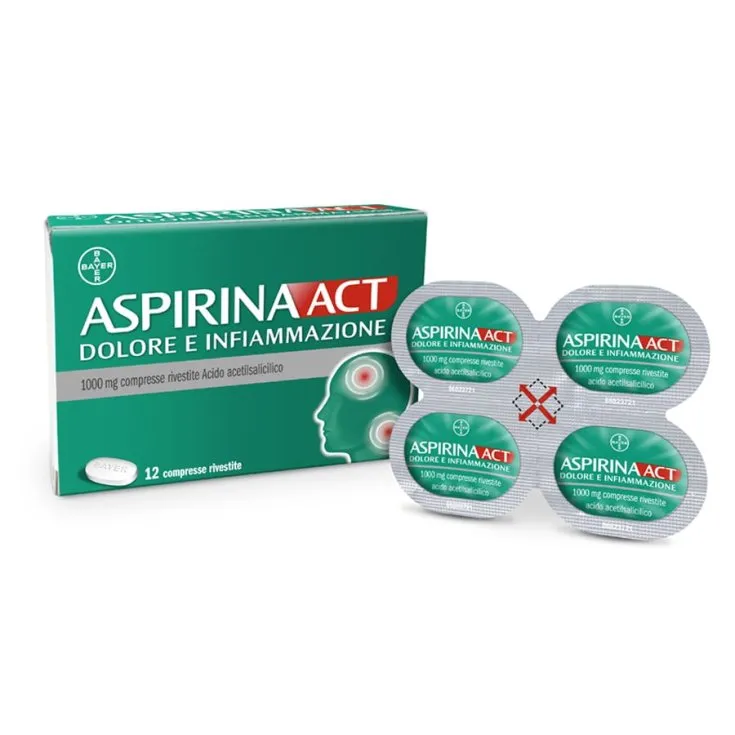
Table of Contents
- Package leaflet: information for the user
- Aspirinaact pain and inflammation
- 1. What Aspirinaact Pain and Inflammation is and what it is used for
- 2. What you should know before taking Aspirinaact dolore e infiammazione
- 3. How to take Aspirinaact dolore e infiammazione
- 4. Possible side effects
- 5. How to store Aspirinaact dolore e infiammazione
- 6. Package contents and other information
PACKAGE LEAFLET
Package leaflet: information for the user
Aspirinaact pain and inflammation
1000 mg coated tablets
Acetylsalicylic acid
Please read this leaflet carefully before taking this medicine because it contains important information for you.
Always take this medicine exactly as described in this leaflet or as your doctor or pharmacist has instructed you.
- Keep this leaflet. You may need to read it again.
- If you need more information or advice, consult your pharmacist.
- If you experience any side effects, including those not listed in this leaflet, consult your doctor or pharmacist. See section 4.
- Consult your doctor if you do not notice any improvement or if your symptoms worsen after 3 days for fever or 3–4 days for pain. [for SOP packs - 4, 8 and 12 tablets]
- Keep this leaflet. You may need to read it again.
- If you have any doubts, consult your doctor or pharmacist.
- This medicine has been prescribed for you only. Do not give it to others, even if their symptoms are the same as yours, because it could be harmful.
- If you experience any side effect, including those not listed in this leaflet, consult your doctor or pharmacist. See section 4. [for RR pack - 24 tablets]
Contents of this leaflet
- What Aspirinaact pain and inflammation is and what it is used for
- What you need to know before taking Aspirinaact pain and inflammation
- How to take Aspirinaact pain and inflammation
- Possible side effects
- How to store Aspirinaact pain and inflammation
- Contents of the pack and other information
1. What Aspirinaact Pain and Inflammation is and what it is used for
Aspirinaact Pain and Inflammation contains acetylsalicylic acid, which relieves pain and reduces fever. It provides rapid relief from pain due to the fast dissolution and quick absorption of acetylsalicylic acid.
Aspirinaact Pain and Inflammation is used for the symptomatic treatment of fever and/or mild to moderate pain, such as headache, flu-like symptoms, toothache, and muscle pain.
Aspirinaact Pain and Inflammation is intended for adults and adolescents aged 16 to 65 years.
| Consult a doctor if you do not notice any improvement or if you notice a worsening of symptoms after 3 days in case | |
| of fever or 3 - 4 days in case of pain. | [for package RR – 24 tablets] |
2. What you should know before taking Aspirinaact dolore e infiammazione
Do not take Aspirinaact dolore e inflamazione:
If you:
- are allergic to
- acetylsalicylic acid;
- salicylates: a group of medicines used to reduce pain or fever, to which acetylsalicylic acid belongs; or
- any of the other ingredients of this medicine (listed in section 6)
- have previously experienced asthma or allergic reactions (e.g. urticaria, angioedema, severe rhinitis, shock) triggered by the use of acetylsalicylic acid or medicines with similar actions, particularly those called non-steroidal anti-inflammatory drugs (NSAIDs)
- suffer from gastric or intestinal ulcers
- have bleeding disorders, or are at risk of bleeding
- have severely reduced liver or kidney function
- have severely reduced and uncontrolled heart function
- are taking methotrexate at doses exceeding 20 mg/week – see section 2 “Other medicines and Aspirinaact dolore e infiammazione”, first point
- are undergoing treatment with oral anticoagulants (medicines to thin the blood and prevent clot formation)
- are in the last trimester of pregnancy
Warnings and precautions
Talk to your doctor or pharmacist before taking Aspirinaact dolore e infiammazione if:
- you are being treated with other products containing acetylsalicylic acid, to avoid the risk of overdose.
- you develop headaches after using Aspirinaact dolore e infiammazione. Do not increase the dosage; consult your doctor or pharmacist if headaches occur during prolonged use of high-dose painkillers.
- you regularly use painkillers, especially different painkillers in combination, as this may lead to reduced kidney function.
- you have a deficiency of G6PD (glucose-6-phosphate dehydrogenase) (an inherited condition affecting red blood cells), since high doses of acetylsalicylic acid may cause hemolysis (destruction of red blood cells).
- you have a history of gastric or intestinal ulcers, gastrointestinal bleeding, or inflammation of the inner stomach lining. Do not take Aspirinaact dolore e infiammazione if you have a gastric or intestinal ulcer or bleeding. Gastrointestinal bleeding or ulcers/perforations may occur at any time during treatment. The risk increases in elderly patients, patients with low body weight, and those taking medicines that inhibit blood coagulation.
- you have reduced kidney or liver function. Do not take Aspirinaact dolore e infiammazione if you have severely reduced liver or kidney function. Regular use of analgesics, especially combinations of analgesics, may lead to persistent kidney damage, increasing the risk of reduced kidney function.
- you have compromised cardiovascular function (e.g. when the heart does not adequately pump blood through the body, hypovolemia, major surgery, blood infection, or major hemorrhagic event).
- you suffer from asthma. Do not take Aspirinaact dolore e infiammazione if your asthma is triggered by acetylsalicylic acid or medicines with similar actions.
- you experience abnormally heavy or prolonged menstrual periods, or irregular uterine bleeding. There is a risk of increased menstrual flow and duration.
- you are about to undergo surgery. Acetylsalicylic acid increases the risk of bleeding, even if taken several days earlier. Inform your doctor or dentist if surgery is planned, even minor procedures.
- gastrointestinal bleeding occurs during treatment (vomiting blood, blood in stools, black stools). You must stop treatment and contact your doctor or emergency medical services immediately.
- you suffer from gout. Acetylsalicylic acid reduces uric acid excretion.
- Use of this medicine is not recommended during breastfeeding.
Children and adolescents
Aspirinaact dolore e infiammazione is not indicated for children and adolescents under 16 years of age.
General advice:
Reye's syndrome is a rare but serious illness associated with damage to the nervous system and liver. It has been observed in children suffering from viral illnesses such as influenza or chickenpox who are taking acetylsalicylic acid. Therefore:
- acetylsalicylic acid should be given to children with viral illnesses only on medical advice
- if dizziness, fainting, unusual behavior, or vomiting occur, stop treatment and inform your doctor immediately
Other medicines and Aspirinaact dolore e infiammazione
Inform your doctor or pharmacist if you are taking, have recently taken, or might take any other medicines.
Talk to your doctor or pharmacist before taking Aspirinaact dolore e infiammazione if you are using:
- methotrexate: a medicine used, for example, to treat severe joint inflammation, psoriasis (a skin disease), or cancer. Do not take Aspirinaact dolore e infiammazione if you are taking methotrexate at doses exceeding 20 mg per week. Medical monitoring is recommended if you are taking methotrexate at doses equal to or less than 20 mg per week.
- medicines that inhibit blood coagulation or dissolve blood clots (e.g. oral anticoagulants, heparins, thrombolytics, clopidogrel, ticlopidine, anagrelide). Do not take Aspirinaact dolore e infiammazione if you are undergoing treatment with oral anticoagulants or have a history of gastroduodenal ulcers.
- medicines for pain, inflammation, or rheumatism belonging to the group of so-called non-steroidal anti-inflammatory drugs (NSAIDs). Check that any other medicine you are using does not contain acetylsalicylic acid.
- oral glucocorticoids, or those administered by injection or infusion – except for hydrocortisone replacement therapy. Glucocorticoids are medicines used to prevent organ transplant rejection or to reduce inflammation, for example in the skin or in asthma.
- medicines such as citalopram, escitalopram, fluoxetine, fluvoxamine, paroxetine, sertraline (so-called SSRIs) used to treat depression and other disorders.
- medicines for hypertension or other conditions containing active ingredients whose names end in “pril” or “sartan”, and medicines that increase water elimination through the kidneys. It is recommended to drink sufficient fluids and monitor kidney function at the start of treatment.
- medicines for gout such as benzbromarone, probenecid.
- pemetrexed: a medicine used to treat cancer.
- deferasirox: a medicine used to lower iron levels in the blood.
- topical gastrointestinal agents, antacids, and charcoal.
Aspirinaact dolore e infiammazione and alcohol
Do not take Aspirinaact dolore e infiammazione in combination with alcohol.
Pregnancy, breastfeeding, and fertility
If you are pregnant, think you may be pregnant, planning to become pregnant, or breastfeeding, consult your doctor or pharmacist before taking this medicine.
Pregnancy – last trimester
Do not take this medicine during the last 3 months of pregnancy, as it may harm the fetus or cause complications during delivery. It may cause kidney and heart problems in the fetus. It may affect your and your baby’s tendency to bleed and may delay or prolong labor beyond normal duration.
Pregnancy – first and second trimesters
You should not take this medicine during the first 6 months of pregnancy unless absolutely necessary and under medical advice.
If treatment is required during this period or during attempts to conceive, the lowest possible dose for the shortest possible time should be used.
From week 20 of pregnancy, this medicine may cause kidney problems in the fetus if taken for more than a few days, thereby reducing the levels of amniotic fluid surrounding the baby (oligohydramnios), or cause narrowing of a blood vessel (ductus arteriosus) in the baby’s heart. If treatment is needed for more than a few days, your doctor may recommend additional monitoring.
Breastfeeding
Acetylsalicylic acid passes into breast milk. Therefore, acetylsalicylic acid is not recommended during breastfeeding.
Fertility
This product belongs to a group of medicines (NSAIDs) that may impair fertility in women. This effect is reversible upon discontinuation of the medicine.
Driving and using machines
Acetylsalicylic acid has no influence on the ability to drive or operate machinery.
Aspirinaact dolore e infiammazione contains sodium
Contact your doctor or pharmacist if you need to take 3 or more tablets per day for a prolonged period, especially if you have been advised to follow a low-salt (sodium) diet.
3. How to take Aspirinaact dolore e infiammazione
Take this medicine exactly as instructed by your doctor or pharmacist. If you have any doubts,
consult your doctor or pharmacist. [for the RR pack – 24 tablets]
Take this medicine exactly as described in this leaflet or as directed by your doctor or pharmacist. If you have any doubts,
consult your doctor or pharmacist. [for the SOP packs – 4, 8 and 12 tablets]
The recommended dose is:
Adults and adolescents aged 16 to 65 years
- Single dose: 1 tablet (1000 mg of acetylsalicylic acid). The single dose may be repeated after a minimum interval of 4–6 hours if necessary.
- Maximum daily dose: 1 tablet 3 times a day
Patients with impaired hepatic or renal function:
Follow the instructions provided in section 2 under “Do not take Aspirinaact dolore e infiammazione” and
“Warnings and precautions”.
Elderly patients (65 years and over):
This product is not intended for use in adults over 65 years of age. Please consult your doctor or
pharmacist for information on other formulations and dosages of products containing acetylsalicylic acid.
Paediatric population
This medicine is not intended for use in children and adolescents under 16 years of age.
Method of administration
To open the strip (PET/EEA/aluminum/copolymer):

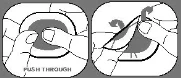
- Separate the blister
- Push in the center with your thumb on the side indicated, while pulling the other end towards you with the other hand

- Remove the tablet from the back
To open the strip (paper - PE - aluminum - copolymer):


- Separate the blister
- Push the tablet in the center on the side indicated, then remove the tablet from the back
Take the tablet with a glass of water. The score line is only intended to help you break the tablet if you have difficulty swallowing it whole.
Duration of treatment
Do not take Aspirinaact dolore e infiammazione for more than 3 days (in case of fever) or 3–4 days (in case
of pain), unless otherwise directed by your doctor.
If you take more Aspirinaact dolore e infiammazione than you should
During treatment, you may experience tinnitus, a sensation of hearing loss, headache, or dizziness: these are typical signs of overdose.
Stop treatment immediately and contact your doctor if you suspect an overdose.
If you forget to take Aspirinaact dolore e infiammazione
Do not take a double dose to make up for the missed dose.
If you have any doubts about how to use this medicine, consult your doctor or pharmacist.
4. Possible side effects
Like all medicines, this medicinal product can cause side effects, although not everyone gets them.
The frequency of these side effects cannot be determined from the available data.
Possible side effects due to acetylsalicylic acid:
These side effects are all very serious and you may urgently require medical treatment or hospitalisation.
Contact your doctor immediately or go to the nearest hospital if you notice any of the following symptoms:
- bleeding, such as:
- epistaxis (nosebleeds), bleeding gums
- reddish or purplish spots on the skin, bruising
- bleeding from the urinary tract or genital organs.
The risk of bleeding persists for 4–8 days after stopping Aspirinaact dolore e infiammazione. It may increase the risk of bleeding during surgical procedures. Bleeding inside the skull, stomach or intestine may also occur.
- hypersensitivity reactions, severe allergic reactions which may cause swelling of the face or throat, asthma
- headache, dizziness, sensation of hearing loss, tinnitus (ringing in the ears), which are usually signs of overdose
- cerebral haemorrhage
- stomach pain
- gastric or intestinal bleeding. Symptoms include vomiting blood and black stools. The risk of bleeding is dose-dependent.
- stomach ulcer and perforation
- increased levels of liver enzymes, usually reversible after stopping treatment, liver impairment (mainly hepatocellular)
- urticaria, skin reactions
- Reye's syndrome (see section 2)
- haemolysis (destruction of red blood cells) in severe cases of G6PD (glucose-6-phosphate dehydrogenase) deficiency
- renal failure, kidney damage
- intestinal diaphragm disease (particularly with long-term treatment)
Reporting of side effects
If you experience any side effect, including those not listed in this leaflet, talk to your doctor or pharmacist.
You can also report side effects directly via the national reporting system at:
www.agenziafarmaco.gov.it/content/come-segnalare-una-sospetta-reazione-avversa. By reporting side effects, you can help provide more information on the safety of this medicine.
5. How to store Aspirinaact dolore e infiammazione
Keep this medicine out of the sight and reach of children.
Do not use this medicine after the expiry date stated on the label. The expiry date refers to the last day of that month.
Do not store above 30°C.
Store in the original strips to protect the medicine from moisture.
Do not dispose of medicines via wastewater or household waste. Ask your pharmacist how to dispose of medicines no longer required. This will help protect the environment.
6. Package contents and other information
What Aspirinaact dolore e infiammazione contains
The active substance is acetylsalicylic acid.
Each coated tablet contains 1000 mg of acetylsalicylic acid.
The other components are:
Tablet core: Colloidal anhydrous silica, sodium carbonate
Coating: Carnauba wax, hypromellose, zinc stearate.
Description of the appearance of Aspirinaact dolore e infiammazione and contents of the pack
Aspirinaact dolore e infiammazione coated tablets are white or almost white tablets,
with the word “BAYER” engraved on one side and a single score line on the other side.
The score line is intended only to facilitate breaking the tablet for easier swallowing and is not intended to divide the tablet into equal doses.
Aspirinaact dolore e infiammazione is available in cardboard packs containing 4, 8, 12 or 24 tablets,
in child-resistant strips.
It is possible that not all pack sizes are marketed.
Marketing Authorization Holder and Manufacturer
Marketing Authorization Holder:
Bayer Spa Viale Certosa 130, 20156 Milan, Italy
Manufacturer:
Bayer Bitterfeld GmbH
Salegaster Chausee 1
06803 Bitterfeld-Wolfen
Germany
This medicinal product is authorized in the European Economic Area Member States under the following names:
Italy: Aspirinaact dolore e infiammazione
Portugal: Aspirina Xpress 1000 mg comprimido revestido
Poland: Aspirin Pro Forte