Zalasta 15 mg orodispersible tablets EFG
Spain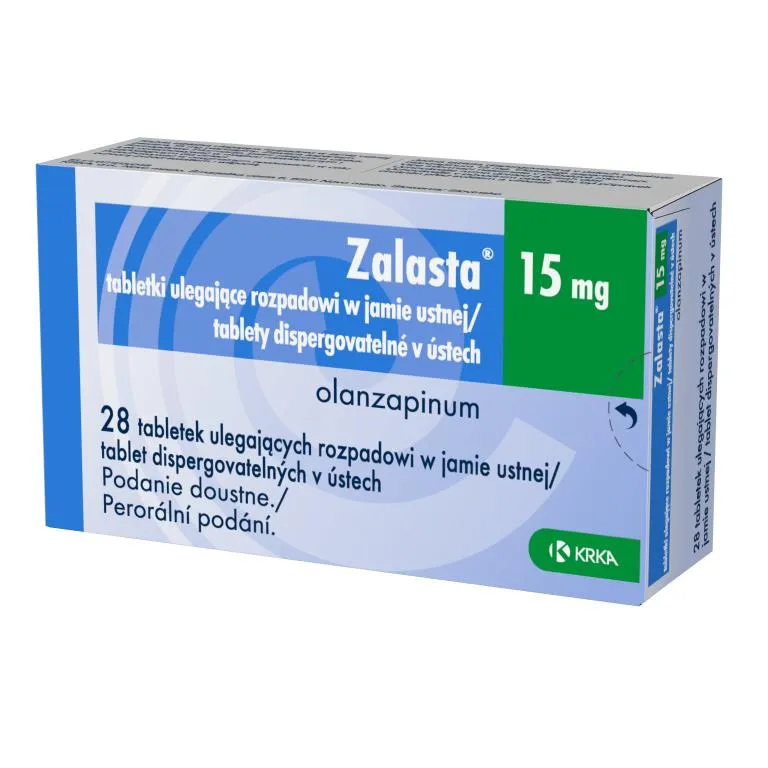
Table of Contents
Patient Information Leaflet
Introduction
Patient Information Leaflet
Zalasta 5 mg orodispersible tablets EFG
Zalasta 7.5 mg orodispersible tablets EFG
Zalasta 10 mg orodispersible tablets EFG
Zalasta 15 mg orodispersible tablets EFG
Zalasta 20 mg orodispersible tablets EFG
Olanzapine
Read the entire leaflet carefully before you start taking this medicine, because it contains important information for you.
-
Keep this leaflet. You may need to read it again.
-
If you have any questions, ask your doctor or pharmacist.
-
This medicine has been prescribed for you only and must not be given to other people, even if they have the same symptoms as you, because it may harm them.
-
If you experience any adverse effects, consult your doctor or pharmacist, even if such effects are not listed in this leaflet. See section 4.
Leaflet contents:
-
What Zalasta is and what it is used for
-
What you need to know before taking Zalasta
-
How to take Zalasta
-
Possible side effects
-
How to store Zalasta
-
Contents of the pack and other information
1. What Zalasta is and what it is used for
Zalasta contains the active substance olanzapine. Zalasta belongs to a group of medicines called antipsychotics used to treat the following conditions:
-
Schizophrenia, a disorder whose symptoms include hearing, seeing, or sensing things that are not real, false beliefs, unusual suspiciousness, and social withdrawal. People with this disorder may also feel depressed, anxious, or tense.
-
Moderate to severe manic disorder, characterized by symptoms such as excitement or euphoria.
Zalasta has been shown to prevent the recurrence of these symptoms in patients with bipolar disorder whose manic episodes have responded to treatment with olanzapine.
2. What you need to know before taking Zalasta
Do not take Zalasta
-
If you are allergic to olanzapine or to any of the other ingredients of this medicine (listed in section 6). The allergic reaction may present as rash, itching, swelling of the face or lips, or difficulty breathing. If this happens to you, tell your doctor.
-
If you have previously been diagnosed with eye problems such as certain types of glaucoma (increased pressure in the eye).
Warnings and precautions
Talk to your doctor or pharmacist before starting to take Zalasta
-
The use of Zalasta is not recommended in elderly patients with dementia, as it may cause serious adverse effects.
-
Medicines of this type may cause unusual movements, especially in the face or tongue. If this occurs after taking Zalasta, inform your doctor.
-
Very rarely, medicines of this type cause a combination of fever, rapid breathing, sweating, muscle stiffness, and mental confusion or drowsiness. If this happens to you, contact your doctor immediately.
-
Weight gain has been observed in patients taking Zalasta. You and your doctor should monitor your weight regularly. If necessary, your doctor may help you plan a diet or consider referring you to a nutritionist.
-
Elevated levels of blood sugar and fats (triglycerides and cholesterol) have been observed in patients taking Zalasta. Your doctor should perform blood tests to monitor your blood sugar and fat levels before you start taking Zalasta and regularly during treatment.
-
If you or someone in your family has a history of blood clots, consult your doctor, as medicines of this type have been associated with blood clot formation.
If you have any of the following conditions, inform your doctor as soon as possible:
-
Stroke or transient ischemic attack (temporary stroke-like symptoms).
-
Parkinson's disease
-
Prostate problems
-
Intestinal blockage (paralytic ileus)
-
Liver or kidney disease
-
Blood disorders
-
Heart diseases
-
Diabetes
-
Seizures
-
If you think you may have loss of body salts due to prolonged severe diarrhea and vomiting, or due to the use of diuretic medicines (water tablets)
If you have dementia, you or your caregiver or family member should inform your doctor if you have ever had a stroke or transient ischemic attack.
As a routine precaution, if you are over 65 years old, your doctor should monitor your blood pressure.
Children and adolescents
Patients under 18 years of age must not take Zalasta.
Taking Zalasta with other medicines
Only use other medicines together with Zalasta if your doctor authorizes it. You may feel drowsiness if you combine Zalasta with antidepressants or medicines for anxiety or sleep (tranquilizers).
Inform your doctor or pharmacist if you are taking, have recently taken, or might need to take any other medicine.
- Specifically, tell your doctor if you are taking medication for Parkinson's disease, carbamazepine (an antiepileptic and mood stabilizer), fluvoxamine (an antidepressant), or ciprofloxacin (an antibiotic). Your dose of Zalasta may need to be adjusted.
Taking Zalasta with alcohol
You must not drink alcohol while taking Zalasta, as it may cause drowsiness.
Pregnancy and breastfeeding
If you are pregnant or breastfeeding, think you may be pregnant, or plan to become pregnant, consult your doctor before using this medicine. You must not take this medicine while breastfeeding, as small amounts of Zalasta may pass into breast milk.
The following symptoms may occur in newborns of mothers who have taken Zalasta during the third trimester (last three months of pregnancy): tremors, muscle stiffness and/or weakness, drowsiness, agitation, breathing difficulties, and feeding problems. If your baby shows any of these symptoms, contact your doctor.
Driving and using machines
There is a risk of drowsiness when taking Zalasta. If this occurs, do not drive or operate machinery. Discuss this with your doctor.
Zalasta contains aspartame
This medicine contains 0.50 mg of aspartame in each 5 mg orodispersible tablet.
This medicine contains 0.75 mg of aspartame in each 7.5 mg orodispersible tablet.
This medicine contains 1.00 mg of aspartame in each 10 mg orodispersible tablet.
This medicine contains 1.50 mg of aspartame in each 15 mg orodispersible tablet.
This medicine contains 2.00 mg of aspartame in each 20 mg orodispersible tablet.
Aspartame is a source of phenylalanine, which may be harmful if you have phenylketonuria (PKU), a rare genetic disorder in which phenylalanine accumulates because the body cannot eliminate it properly.
3. How to take Zalasta
Follow exactly the instructions for using this medicine as given by your doctor.
If in doubt, consult your doctor or pharmacist again.
Your doctor will tell you how many Zalasta tablets to take and for how long. The daily dose of Zalasta ranges from 5 mg to 20 mg.
Consult your doctor if your symptoms return, but do not stop taking Zalasta unless your doctor tells you to.
Zalasta tablets should be taken once daily, as directed by your doctor.
Try to take the tablets at the same time every day. You may take them with or without food.
How to take Zalasta
Zalasta tablets disintegrate easily and therefore must be handled with care. Do not handle the tablets with wet hands, as they may dissolve. Remove the tablet from the packaging as follows:
- Hold the blister pack by the sides and separate an individual pouch from the rest of the blister along the perforations.
- Pull the aluminum edge and remove it completely.
- Let the tablet drop into your hand.
- Immediately place the tablet on the tongue.
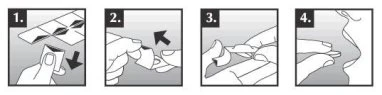
Within a few seconds, the tablet begins to disintegrate and can be swallowed with or without water. The mouth must be empty before placing the tablet on the tongue.
Alternatively, the tablet may be placed in a cup or glass filled with water. It should be drunk immediately.
If you take more Zalasta than you should
Patients who have taken more Zalasta than prescribed have experienced the following symptoms: rapid heartbeat, agitation/aggression, speech problems, unusual movements (especially of the face and tongue), and reduced level of consciousness. Other symptoms may include: acute confusion, seizures (epilepsy), coma, a combination of fever, rapid breathing, sweating, muscle rigidity, drowsiness or lethargy, slowed breathing rate, aspiration, increased blood pressure or decreased blood pressure, and abnormal heart rhythms. Contact your doctor immediately or go to the nearest hospital if you experience any of the symptoms listed above. Show the doctor the packaging and the tablets.
If you forget to take Zalasta
Take your tablet as soon as you remember. Do not take a double dose to make up for the missed dose.
If you stop taking Zalasta
Do not stop treatment just because you feel better. It is very important that you continue taking Zalasta for as long as your doctor instructs.
If you stop taking Zalasta suddenly, symptoms such as sweating, inability to sleep, tremor, anxiety, or nausea and vomiting may occur. Your doctor may advise you to gradually reduce the dose before stopping treatment.
If you have any further questions about the use of this medicine, ask your doctor or pharmacist.
4. Possible adverse effects
Like all medicines, this medicine can cause adverse effects, although not everyone experiences them.
Contact your doctor immediately if you have:
- unusual movements (a common adverse effect which may affect up to 1 in 10 people), especially of the face or tongue.
- blood clots in the veins (an uncommon adverse effect which may affect up to 1 in 100 people), particularly in the legs (symptoms include sweating, pain, and redness in the leg), which may travel through the bloodstream to the lungs, causing chest pain and difficulty breathing. If you experience any of these symptoms, seek medical help immediately.
- a combination of fever, rapid breathing, sweating, muscle stiffness, and mental confusion or drowsiness (frequency cannot be estimated from available data).
Very common adverse effects (may affect more than 1 in 10 people) include weight gain, drowsiness, and increased levels of prolactin in the blood. In the early stages of treatment, some people may experience dizziness or fainting (with slower heartbeats), especially when getting up from lying or sitting positions. This sensation usually resolves spontaneously, but if it does not, consult your doctor.
Common adverse effects (may affect up to 1 in 10 people) include changes in levels of certain blood cells and circulating lipids, temporary increases in liver enzymes at the beginning of treatment, increased blood and urine sugar levels, increased levels of uric acid and creatine phosphokinase in the blood, increased appetite, dizziness, restlessness, tremor, unusual movements (dyskinesia), constipation, dry mouth, skin rash, weakness, excessive fatigue, fluid retention causing swelling of the hands, ankles, or feet, fever, joint pain, and sexual dysfunction such as decreased libido in men and women or erectile dysfunction in men.
Uncommon adverse effects (may affect up to 1 in 100 people) include hypersensitivity (e.g. mouth and throat swelling, itching, skin rash), diabetes or worsening of diabetes, occasionally associated with ketoacidosis (ketones in blood and urine) or coma, seizures—most cases are related to a history of seizures (epilepsy), muscle stiffness or spasms (including eye movements), restless legs syndrome, speech problems, stuttering, slow pulse, photosensitivity, nosebleeds, abdominal distension, memory loss or forgetfulness, urinary incontinence, inability to urinate, hair loss, absence or reduction of menstrual periods, and breast gland changes in both men and women such as abnormal milk production or abnormal growth.
Rare adverse effects (may affect up to 1 in 1,000 people) include decreased normal body temperature, abnormal heart rhythm, sudden unexplained death, inflammation of the pancreas causing severe stomach pain, fever, and malaise, liver disease with yellowing of the skin and whites of the eyes, muscle disorder presenting as unexplained muscle pains, and prolonged and/or painful erection.
Serious allergic reactions have been reported, such as Drug Reaction with Eosinophilia and Systemic Symptoms (DRESS). DRESS initially presents with flu-like symptoms, facial skin rash that spreads to other areas, fever, swollen lymph nodes, elevated liver enzymes in blood tests, and increased levels of a type of white blood cell (eosinophilia).
During treatment with olanzapine, elderly patients with dementia may experience stroke, pneumonia, urinary incontinence, falls, extreme fatigue, visual hallucinations, increased body temperature, skin redness, and difficulty walking. Some deaths have been reported in this particular patient group.
Zalasta may worsen symptoms in patients with Parkinson's disease.
Reporting of adverse effects
If you experience any type of adverse effect, talk to your doctor or nurse, even if it is a possible adverse effect not listed in this leaflet. You can also report them directly through the national reporting system listed in Annex V. By reporting adverse effects, you can help provide more information on the safety of this medicine.
5. Storage of Zalasta
Keep this medicine out of the sight and reach of children.
Do not use this medicine after the expiry date stated on the carton. The expiry date is the last day of the month indicated.
Store in the original packaging to protect it from light and moisture. This medicine does not require any special storage temperature.
Medicines must not be disposed of via wastewater or household waste. Ask your pharmacist how to dispose of medicines you no longer need. This will help protect the environment.
6. Contents of the pack and other information
What Zalasta contains
- The active substance is olanzapine. Each Zalasta orodispersible tablet contains 5 mg, 7.5 mg, 10 mg, 15 mg or 20 mg of olanzapine.
- The other components are: mannitol, microcrystalline cellulose, crospovidone, low-substituted hydroxypropylcellulose, aspartame, calcium silicate, magnesium stearate.
See section 2 “Zalasta contains aspartame”.
What Zalasta looks like and contents of the pack
Zalasta orodispersible tablets 5 mg, 7.5 mg, 10 mg, 15 mg and 20 mg are: yellowish mottled, round, slightly biconvex, possibly with specks.
Zalasta 5 mg orodispersible tablets are available in packs of 14, 28, 35, 56 and 70 tablets in blisters.
Zalasta 7.5 mg orodispersible tablets are available in packs of 14, 28, 35, 56 and 70 tablets in blisters.
Zalasta 10 mg orodispersible tablets are available in packs of 14, 28, 35, 56 and 70 tablets in blisters.
Zalasta 15 mg orodispersible tablets are available in packs of 14, 28, 35, 56 and 70 tablets in blisters.
Zalasta 20 mg orodispersible tablets are available in packs of 14, 28, 35, 56 and 70 tablets in blisters.
Marketing Authorization Holder
KRKA, d.d., Novo mesto, Šmarješka cesta 6, 8501 Novo mesto, Slovenia
Manufacturer
KRKA, d.d., Novo mesto, Šmarješka cesta 6, 8501 Novo mesto, Slovenia
KRKA-POLSKA Sp. z o.o., ul. Równoległa 5, 02-235 Warszawa, Poland
TAD Pharma GmbH, Heinz-Lohmann-Straße 5, 27472 Cuxhaven, Germany
For further information about this medicine, please contact the local representative of the Marketing Authorization Holder.
Belgium/Belgium/Belgium KRKA Belgium, SA. Tel/Tel: + 32 (0) 487 50 73 62 | Lithuania UAB KRKA Lietuva Tel: + 370 5 236 27 40 |
Bulgaria KRKA Bulgaria EOOD Tel: + 359 (02) 962 34 50 | Luxembourg/Luxembourg KRKA Belgium, SA. Tél/Tel: + 32 (0) 487 50 73 62 (BE) |
Czech Republic KRKA CR, s.r.o. Tel: + 420 (0) 221 115 150 | Hungary KRKA Magyarország Kereskedelmi Kft. Tel.: + 36 (1) 355 8490 |
Denmark KRKA Sverige AB Tlf: + 46 (0)8 643 67 66 (SE) | Malta
Tel: + 356 21 445 885 |
Germany TAD Pharma GmbH Tel: + 49 (0) 4721 606-0 | Netherlands KRKA Belgium, SA. Tel: + 32 (0) 487 50 73 62 (BE) |
Estonia KRKA, d.d., Novo mesto Estonia Branch Tel: + 372 (0) 6 671 658 | Norway KRKA Sverige AB Tlf: + 46 (0)8 643 67 66 (SE) |
Greece QUALIA PHARMA S.A. Tel: + 30 210 6256177 | Austria KRKA Pharma GmbH, Vienna Tel: + 43 (0)1 66 24 300 |
Spain KRKA Farmacéutica, S.L. Tel: + 34 911 61 03 81 | Poland KRKA-POLSKA Sp. z o.o. Tel.: + 48 (0)22 573 7500 |
France KRKA France Eurl Tél: + 33 (0)1 57 40 82 25 | Portugal KRKA Farmacêutica, Sociedade Unipessoal Lda. Tel: + 351 (0)21 46 43 650 |
Croatia KRKA - FARMA d.o.o. Tel: + 385 1 6312 100 | Romania KRKA Romania S.R.L., Bucharest Tel: + 4 021 310 66 05 |
Ireland KRKA Pharma Dublin, Ltd. Tel: + 353 1 293 91 80 | Slovenia KRKA, d.d., Novo mesto Tel: + 386 (0) 1 47 51 100 |
Iceland LYFIS ehf. Tel: + 354 534 3500 | Slovakia KRKA Slovensko, s.r.o. Tel: + 421 (0) 2 571 04 501 |
Italy KRKA Farmaceutici Milano S.r.l. Tel: + 39 02 3300 8841 | Finland/Finland KRKA Finland Oy Puh/Tel: + 358 20 754 5330 |
Cyprus Kipa Pharmacal Ltd. Tel: + 357 24 651 882 | Sweden KRKA Sverige AB Tel: + 46 (0)8 643 67 66 (SE) |
Latvia KRKA Latvija SIA Tel: + 371 6 733 86 10 | United Kingdom Consilient Health (UK) Ltd. Tel: + 44(0)203 751 1888 |
Date of the most recent review of this leaflet:
Detailed information on this medicine is available on the website of the European Medicines Agency: http://www.ema.europa.eu/.