Votubia 5 mg dispersible tablets
Spain
Table of Contents
Package leaflet: Information for the user
Introduction
Package leaflet: information for the user
Votubia 1mg dispersible tablets
Votubia 2mg dispersible tablets
Votubia 3mg dispersible tablets
Votubia 5mg dispersible tablets
everolimus
Read the entire leaflet carefully before you start taking this medicine, because it contains important information for you.
- Keep this leaflet, as you may need to read it again.
- If you have any questions, ask your doctor or pharmacist.
- This medicine has been prescribed for you only, and you should not give it to other people, even if they have the same symptoms as you, because it may harm them.
- If you experience any adverse effects, consult your doctor or pharmacist, even if they are adverse effects not listed in this leaflet. See section 4.
Contents of the leaflet
- What Votubia is and what it is used for
- What you need to know before taking Votubia
- How to take Votubia
- Possible side effects
- How to store Votubia
- Contents of the pack and other information
1. What Votubia is and what it is used for
Votubia is an antitumour medicinal product that can block the growth of certain cells in the body. It contains an active substance called everolimus, which can reduce the size of certain kidney tumours known as renal angiomyolipomas, and certain brain tumours known as subependymal giant cell astrocytomas (SEGA). These tumours are caused by a genetic disorder called tuberous sclerosis complex (TSC).
Votubia tablets are used to treat:
- TSC with renal angiomyolipoma in adults who do not require immediate surgery.
SEGA associated with TSC in adults and children for whom surgery is not appropriate.
2. What you need to know before starting to take Votubia
Votubia will only be prescribed by a doctor experienced in treating patients with SEGA or epileptic seizures and who can perform blood tests to measure the amount of Votubia in your blood.
Carefully follow all instructions from your doctor. They may differ from the general information contained in this leaflet. If you have any doubts about Votubia or why this medicine has been prescribed for you, consult your doctor.
Do not take Votubia
- if you are allergic to everolimus, to related substances such as sirolimus or temsirolimus, or to any of the other ingredients of this medicine (listed in section 6).
If you have previously experienced allergic reactions, consult your doctor.
Warnings and precautions
Consult your doctor before starting to take Votubia:
- if you have liver problems or have had a disease that may have affected your liver. In this case, your doctor may prescribe a different dose of Votubia or interrupt treatment, either temporarily or permanently.
- if you have diabetes (high blood sugar levels). Votubia can increase blood sugar levels and worsen diabetes mellitus. This may require treatment with insulin and/or oral antidiabetic medicines. Inform your doctor if you notice excessive thirst or if you need to urinate more frequently.
- if you need to receive a vaccine while taking Votubia, as vaccination may be less effective. For children with SEGA, it is important to discuss the childhood vaccination schedule with your doctor before starting Votubia treatment.
- if you have high cholesterol levels. Votubia can increase cholesterol and/or other blood fats.
- if you have recently undergone major surgery, or if you still have an unhealed wound after surgery. Votubia may increase the risk of wound healing problems.
- if you have an infection. It may be necessary to treat your infection before starting Votubia treatment.
- if you have previously had hepatitis B, as it may reactivate during treatment with Votubia (see section 4 "Possible side effects").
- if you have received or are about to receive radiotherapy.
Votubia may also:
- cause mouth sores (oral ulcers).
- weaken your immune system. Therefore, you may be at risk of developing an infection while taking Votubia. If you have a fever or other signs of infection, consult your doctor. Some infections may be severe and potentially fatal in adults and children.
- affect kidney function. Therefore, your doctor will monitor your kidney function while you are taking Votubia.
- cause difficulty breathing, cough, and fever (see section 4 "Possible side effects").
- cause complications related to radiotherapy. Serious complications of radiotherapy (such as difficulty breathing, nausea, diarrhea, skin rash, and mouth, gum, and throat pain), including fatal cases, have been observed in some patients who were taking everolimus at the same time as receiving radiotherapy or shortly after completing radiotherapy. The so-called radiation recall syndrome (characterized by skin redness or lung inflammation at the site of previous radiotherapy) has also been reported in patients who had previously received radiotherapy.
Inform your doctor if you are scheduled to receive radiotherapy soon, or if you have previously received radiotherapy.
Contact your doctor immediately if you experience any of these symptoms.
During treatment, you will have blood tests performed before and periodically throughout treatment. These tests will determine the number of blood cells (white blood cells, red blood cells, and platelets) to check whether Votubia is having an unwanted effect on these cells. You will also have blood tests to monitor kidney function (levels of creatinine, blood urea nitrogen, or protein in urine), liver function (levels of transaminases), and blood sugar and lipid levels. These tests are necessary because these parameters may be affected by treatment with Votubia.
Regular blood tests are also required to measure the amount of Votubia in your blood, as this will help your doctor determine the correct dose of Votubia for you.
Children and adolescents
Votubia can be used in children and adolescents with SEGA associated with TSC.
Votubia should not be used in children under 2 years of age with TSC and epileptic seizures.
Taking Votubia with other medicines
Votubia may affect how other medicines work. If you are taking other medicines at the same time as Votubia, your doctor may adjust the dose of Votubia or the other medicines.
Inform your doctor or pharmacist if you are taking, have recently taken, or might need to take any other medicines.
The following may increase the risk of side effects with Votubia:
- ketoconazole, itraconazole, voriconazole, fluconazole, and other antifungal medicines used to treat fungal infections.
- clarithromycin, telithromycin, or erythromycin, antibiotics used to treat bacterial infections.
- ritonavir and other medicines used to treat HIV/AIDS infection.
- verapamil or diltiazem, used to treat heart problems or high blood pressure.
- dronedarone, a medicine used to help regulate your heartbeat.
- cyclosporine, a medicine used to prevent the body from rejecting transplanted organs.
- imatinib, used to inhibit the growth of abnormal cells.
- angiotensin-converting enzyme (ACE) inhibitors (such as ramipril) used to treat high blood pressure or other cardiovascular problems.
- cannabidiol (used, among other things, for the treatment of epileptic seizures).
The following may reduce the effectiveness of Votubia:
- rifampicin, used to treat tuberculosis (TB).
- efavirenz or nevirapine, used to treat HIV/AIDS infection.
- St. John’s wort (Hypericum perforatum), a herbal product used to treat depression and other conditions.
- dexamethasone, a corticosteroid used to treat a wide variety of conditions including inflammatory or immune disorders.
- phenytoin, carbamazepine, or phenobarbital, and other antiepileptic medicines used to control seizures.
The use of all the medicines listed above should be avoided during treatment with Votubia. If you are taking any of them, your doctor may prescribe a different medicine or adjust your dose of Votubia.
If you are taking an antiepileptic medicine, a change in the dose of the antiepileptic medicine (increase or decrease) may require a change in the required dose of Votubia. Your doctor will make this decision. If your antiepileptic medicine dose changes, inform your doctor.
Taking Votubia with food and drink
Do not eat grapefruit or drink grapefruit juice while taking Votubia. It may increase the amount of Votubia in your blood, possibly to a harmful level.
Pregnancy, breast-feeding and fertility
Pregnancy
Votubia may harm the unborn baby and its use during pregnancy is not recommended. Inform your doctor if you are pregnant or think you may be pregnant.
Women who can become pregnant must use a highly effective method of contraception during treatment and for 8 weeks after stopping treatment. If, despite these measures, you think you may be pregnant, consult your doctor before taking any further doses of Votubia.
Breast-feeding
Votubia may harm a breastfed baby. You must not breast-feed during treatment and for 2 weeks after the last dose of Votubia. Inform your doctor if you are breast-feeding.
Fertility
Votubia may affect fertility in both men and women. Consult your doctor if you wish to have children.
Driving and using machines
If you feel unusually tired (fatigue is a common side effect), take special care when driving or operating machinery.
Votubia contains lactose
Votubia contains lactose (milk sugar). If your doctor has diagnosed you with an intolerance to certain sugars, consult him before taking this medicine.
3. How to take Votubia
Follow exactly the instructions for administration of this medicine given by your doctor or pharmacist. Votubia is available as tablets and as dispersible tablets. Always take only tablets or only dispersible tablets, and never a combination of the two. If in doubt, consult your doctor or pharmacist again.
How much Votubia should you take
Your doctor will determine the dose of Votubia you need based on:
- your age
- your body size
- your liver function
- other medications you are taking.
You will have blood tests during treatment with Votubia. These are performed to measure the amount of Votubia in your blood and to determine the most appropriate daily dose.
If you experience certain adverse effects (see section 4) while taking Votubia, your doctor may reduce your dose, temporarily interrupt treatment, or discontinue it altogether.
How to take this medicine
- Take Votubia dispersible tablets once daily.
- Take them at the same time each day.
- You may take them with or without food, but you must do so consistently every day.
Take Votubia dispersible tablets only as an oral suspension
Do not chew or crush the dispersible tablets. You must not swallow them whole. You must mix the dispersible tablets with water to create a cloudy liquid (known as an oral suspension).
How to prepare and take the oral suspension
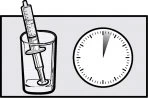
Prepare the oral suspension by mixing the dispersible tablets with water, either in an oral syringe or in a small glass. You must drink the suspension immediately after preparing it. If not taken within 30 minutes when prepared in an oral syringe, or within 60 minutes when prepared in a small glass, the suspension must be discarded and a new one prepared. Read the detailed instructions at the end of this leaflet to learn how to do this. Ask your doctor or pharmacist if you are unsure.
Special information for caregivers
Caregivers are advised to avoid contact with the Votubia dispersible tablet suspension. Wash your hands thoroughly before and after preparing the suspension.
If you take more Votubia than you should
- If you have taken too much Votubia, or if someone has accidentally taken your tablets, contact your doctor or go to the hospital immediately. Urgent treatment may be required.
- Bring the container and this leaflet so the doctor knows what you have taken.
If you forget to take Votubia
If you miss a dose, take the next dose at your usual time. Do not take a double dose to make up for missed doses of dispersible tablets.
If you stop taking Votubia
Do not stop treatment with Votubia dispersible tablets unless instructed by your doctor.
If you have any further questions about using this medicine, ask your doctor or pharmacist.
4. Possible adverse effects
Like all medicines, this medicine can cause adverse effects, although not everyone will experience them.
STOP treatment with Votubia and seek immediate medical help if you or your child experience any of the following signs of an allergic reaction:
- difficulty breathing or swallowing
- swelling of the face, lips, tongue, or throat (signs of angioedema)
- severe skin itching, with red rash or lumps on the skin
Serious adverse effects of Votubia include:
Very common adverse effects (may affect more than 1 in 10 people)
- Fever, cough, difficulty breathing, wheezing (signs of lung inflammation due to infection, also known as pneumonia)
Common adverse effects (may affect up to 1 in 10 people)
- Swelling, feeling of heaviness or tightness, pain, limited mobility in body parts (this may occur anywhere on the body and is a potential sign of abnormal fluid accumulation in soft tissue due to blockage of the lymphatic system, also known as lymphoedema)
- Rash, itching, pimples, difficulty breathing or swallowing, dizziness (signs of a severe allergic reaction, also known as hypersensitivity)
- Fever, cough, difficulty breathing, wheezing (signs of lung inflammation also known as pneumonia)
Uncommon adverse effects (may affect up to 1 in 100 people)
- Rash with small fluid-filled blisters appearing on red skin (signs of an infection that may be potentially serious, also known as herpes zoster)
- Fever, chills, rapid breathing and rapid heartbeat, rash, and possible confusion and disorientation (signs of a serious infection, also known as sepsis)
If you experience any of these adverse effects, inform your doctor immediately as they could be life-threatening.
Other possible adverse effects of Votubia include:
Very common adverse effects (may affect more than 1 in 10 people)
- Upper respiratory tract infection
- Sore throat and runny nose (nasopharyngitis)
- Headache, pressure in the eyes, nose, or cheek area (signs of inflammation of the sinuses and nasal passages, also known as sinusitis)
- Upper urinary tract infection
- High levels of lipids (fats) in the blood (hypercholesterolemia)
- Decreased appetite
- Headache
- Cough
- Mouth ulcers
- Diarrhea
- Feeling of dizziness (vomiting)
- Acne
- Skin rash
- Feeling of tiredness
- Fever
- Menstrual disorders such as absence of menstrual periods (amenorrhea) or irregular menstrual periods
- Sore throat (pharyngitis)
- Headache, dizziness, signs of high blood pressure (hypertension)
Common adverse effects (may affect up to 1 in 10 people)
- Middle ear infection
- Swollen, bleeding gums (signs of inflammation of the gums, also known as gingivitis)
- Skin inflammation (cellulitis)
- Low level of phosphates in the blood (hypophosphatemia)
- High level of lipids (fats) in the blood (hyperlipidemia, increased triglycerides)
- High blood sugar level (hyperglycemia)
- Tiredness, difficulty breathing, dizziness, pale skin (signs of low red blood cell count, also known as anemia)
- Fever, sore throat or mouth ulcers due to infections (signs of low white blood cell count, also known as leukopenia, lymphopenia, neutropenia)
- Spontaneous bleeding or bruising (signs of low platelet count, also known as thrombocytopenia)
- Mouth pain
- Nosebleeds (epistaxis)
- Stomach discomfort such as a feeling of dizziness (nausea)
- Abdominal pain
- Severe pain in the lower abdomen and pelvic area that may be acute, with menstrual irregularities (ovarian cyst)
- Excessive gas in the intestines (flatulence)
- Constipation
- Abdominal pain, nausea, vomiting, diarrhea, bloating, and increased gas in the abdomen (signs of inflammation of the stomach lining, also known as gastritis or viral gastroenteritis)
- Dry skin, itching (pruritus)
- Skin inflammation characterized by redness, itching, fluid-filled cysts that become scaly, crusted, and hardened (acneiform dermatitis)
- Hair loss (alopecia)
- Protein in the urine
- Menstrual disorders such as heavy periods (menorrhagia) or vaginal bleeding
- Sleep problems (insomnia)
- Irritability
- Aggressiveness
- High level of an enzyme called lactate dehydrogenase in the blood, which provides information about the health of certain organs
- High level of a hormone that triggers ovulation (increased luteinizing hormone in the blood)
- Weight loss
Uncommon adverse effects (may affect up to 1 in 100 people)
- Muscle spasms, fever, red-brown urine, which may be symptoms of muscle disorder (rhabdomyolysis)
- Cough with phlegm, chest pain, fever (signs of inflammation of the respiratory passages, also known as viral bronchitis)
- Altered sense of taste (dysgeusia)
- Menstrual disorders such as delayed periods
- High level of female reproductive hormone (increased follicle-stimulating hormone)
Frequency not known (cannot be estimated from available data)
- Reaction at the site of previous radiotherapy (e.g., skin redness or lung inflammation) (known as radiation recall syndrome)
- Worsening of adverse effects of radiotherapy
If these adverse effects worsen, please inform your doctor and/or pharmacist. Most of these adverse effects are mild to moderate and usually resolve if treatment is interrupted for a few days.
The following adverse effects have been reported in patients taking everolimus for the treatment of other conditions different from CET:
- Kidney problems: altered or absent urination may be symptoms of kidney failure and have been observed in some patients receiving everolimus. Other symptoms may include abnormal kidney function tests (increased creatinine).
- Symptoms of heart failure such as shortness of breath, difficulty breathing when lying down, swelling of the feet or legs.
- Blockage or obstruction of a blood vessel (vein) in the leg (deep vein thrombosis). Symptoms may include swelling and/or pain in one leg, usually in the calf, redness or warmth of the skin in the affected area.
- Wound healing problems.
- High blood sugar levels (hyperglycemia).
In some patients taking everolimus, reactivation of hepatitis B has been observed. Inform your doctor if you develop symptoms of hepatitis B during treatment with everolimus. Early symptoms may include fever, skin rash, joint swelling and pain. Other symptoms may include fatigue, loss of appetite, nausea, jaundice (yellowing of the skin), and pain in the upper right part of the abdomen. Pale stools or dark urine may also be signs of hepatitis.
Reporting of adverse effects
If you experience any adverse effect, talk to your doctor or pharmacist, even if it is a possible adverse effect not listed in this leaflet. You can also report them directly through the national reporting system included in Appendix V. By reporting adverse effects, you can help provide more information on the safety of this medicine.
5. Storage of Votubia
- Keep this medicine out of the sight and reach of children.
- Do not use this medicine after the expiry date stated on the packaging and blister. The expiry date refers to the last day of the month indicated.
- Do not store above 25°C.
- Store in the original packaging to protect from light and moisture.
- Open the blister immediately before taking Votubia tablets.
- Do not use this medicine if the packaging is damaged or shows any signs of tampering.
Medicines must not be disposed of via wastewater or household waste. Ask your pharmacist how to dispose of medicines and packaging that you no longer need. This will help protect the environment.
6. Contents of the pack and other information
Composition of Votubia tablets
- The active substance is everolimus.
Each Votubia 1 mg dispersible tablet contains 1 mg of everolimus.
Each Votubia 2 mg dispersible tablet contains 2 mg of everolimus.
Each Votubia 3 mg dispersible tablet contains 3 mg of everolimus.
Each Votubia 5 mg dispersible tablet contains 5 mg of everolimus.
- The other components are butylated hydroxytoluene (E321), magnesium stearate, lactose monohydrate, hypromellose, crospovidone type A, mannitol, microcrystalline cellulose and colloidal anhydrous silica (see section 2, "Votubia contains lactose").
Appearance of Votubia tablets and contents of the pack
Votubia 1 mg dispersible tablets are round, flat, white to slightly yellowish tablets with bevelled edges and no score mark. They are engraved with "D1" on one side and "NVR" on the other.
Votubia 2 mg dispersible tablets are round, flat, white to slightly yellowish tablets with bevelled edges and no score mark. They are engraved with "D2" on one side and "NVR" on the other.
Votubia 3 mg dispersible tablets are round, flat, white to slightly yellowish tablets with bevelled edges and no score mark. They are engraved with "D3" on one side and "NVR" on the other.
Votubia 5 mg dispersible tablets are round, flat, white to slightly yellowish tablets with bevelled edges and no score mark. They are engraved with "D5" on one side and "NVR" on the other.
Votubia 1 mg dispersible tablets are available in packs containing 30 dispersible tablets, in perforated unit dose blisters of 10 x 1 tablet each.
Votubia 2 mg dispersible tablets are available in packs containing 10 x 1, 30 x 1 or 100 x 1 dispersible tablets, in perforated unit dose blisters of 10 x 1 tablet each.
Votubia 3 mg and 5 mg dispersible tablets are available in packs containing 30 x 1 or 100 x 1 dispersible tablets, in perforated unit dose blisters of 10 x 1 tablet each.
Only certain pack sizes may be marketed.
Marketing Authorisation Holder
Novartis Europharm Limited
Vista Building
Elm Park, Merrion Road
Dublin 4
Ireland
Manufacturer
Novartis Farmacéutica SA
Gran Via de les Corts Catalanes, 764
08013 Barcelona
Spain
Novartis Pharma GmbH
Sophie-Germain-Strasse 10
90443 Nuremberg
Germany
Novartis Pharmaceuticals S.R.L.
Str. Livezeni nr. 7A
540472 Targu Mures
Romania
For more information about this medicine, please contact the local representative of the Marketing Authorisation Holder:
Belgium/Belgium/Belgium Novartis Pharma N.V. Tel/Tel: +32 2 246 16 11 | Lithuania SIA Novartis Baltics Lithuanian Branch Tel: +370 5 269 16 50 |
| Luxembourg/Luxembourg Novartis Pharma N.V. Tel/Tel: +32 2 246 16 11 |
Czech Republic Novartis s.r.o. Tel: +420 225 775 111 | Hungary Novartis Hungária Kft. Tel.: +36 1 457 65 00 |
Denmark Novartis Healthcare A/S Tlf: +45 39 16 84 00 | Malta Novartis Pharma Services Inc. Tel: +356 2122 2872 |
Germany Novartis Pharma GmbH Tel: +49 911 273 0 | Netherlands Novartis Pharma B.V. Tel: +31 88 04 52 555 |
Estonia SIA Novartis Baltics Estonian Branch Tel: +372 66 30 810 | Norway Novartis Norge AS Tlf: +47 23 05 20 00 |
Greece Novartis (Hellas) S.A.E. Tel: +30 210 281 17 12 | Austria Novartis Pharma GmbH Tel: +43 1 86 6570 |
Spain Novartis Farmacéutica, S.A. Tel: +34 93 306 42 00 | Poland Novartis Poland Sp. z o.o. Tel.: +48 22 375 4888 |
France Novartis Pharma S.A.S. Tél: +33 1 55 47 66 00 | Portugal Novartis Farma ‑ Pharmaceutical Products, S.A. Tel: +351 21 000 8600 |
Croatia Novartis Hrvatska d.o.o. Tel. +385 1 6274 220 | Romania Novartis Pharma Services Romania SRL Tel: +40 21 31299 01 |
Ireland Novartis Ireland Limited Tel: +353 1 260 12 55 | Slovenia Novartis Pharma Services Inc. Tel: +386 1 300 75 50 |
Iceland Vistor hf. Tel: +354 535 7000 | Slovakia Novartis Slovakia s.r.o. Tel: +421 2 5542 5439 |
Italy Novartis Farma S.p.A. Tel: +39 02 96 54 1 | Finland Novartis Finland Oy Puh/Tel: +358 (0)10 6133 200 |
Cyprus Novartis Pharma Services Inc. Tel: +357 22 690 690 | Sweden Novartis Sverige AB Tel: +46 8 732 32 00 |
Latvia SIA Novartis Baltics Tel: +371 67 887 070 |
Date of the most recent review of this leaflet:
Other sources of information
Detailed information on this medicine is available on the European Medicines Agency website: https://www.ema.europa.eu.
DIRECTIONS FOR USE
Read and follow these instructions carefully to learn how to correctly prepare the medicine. It will appear as a cloudy liquid (known as an oral suspension).
Use an oral syringe or a small glass to prepare and take the Votubia oral suspension—do not use it for any other purpose.
Important information:
Take Votubia dispersible tablets only as an oral suspension.
These instructions are for taking a dose between 1 mg and 10 mg.
- The maximum amount you can take at one time using the oral syringe or small glass is 10 mg, using up to 5 dispersible tablets.
- If you need to take a higher dose or need to use more than 5 dispersible tablets, you must split the dose and repeat the steps using the same oral syringe or small glass.
- Ask your doctor or pharmacist for advice on how to split the dose if you are unsure.
Caregivers should try to avoid skin contact with the oral suspension. Keep this medicine out of the reach of children.
Only water (tap water or bottled still water) should be used to prepare the oral suspension. Do not use juice or other liquids.
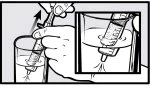
The patient must drink the suspension immediately after preparation. If the patient does not drink it within 30 minutes when using an oral syringe, or within 60 minutes when using a small glass, the suspension must be discarded and a new one prepared.
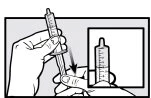
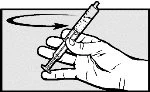
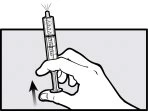
Instructions for caregivers preparing the suspension using an oral syringe:
You will need:
- Blister pack containing Votubia dispersible tablets
- Scissors to open the blister pack
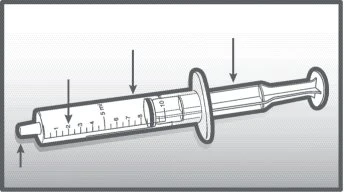
- A single-use 10 ml oral syringe with 1 ml increments: see image below
- 2 clean glasses
- Approximately 30 ml of water

Preparation
| |
|
|
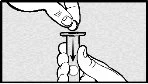
Add dispersible tablets
|
|
|
|
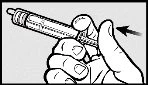
Add water
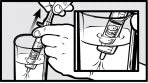
NOTE: The amount of water in the oral syringe does not need to be exact, but it must cover all the tablets. If any tablet remains stuck at the top of the oral syringe, gently tap the syringe until the tablets fall into the water. |
|
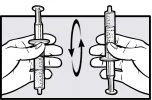
Mix the medication
|
|
|
|
|
|
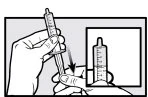
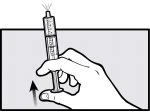
Remove air
|
|
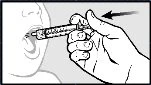
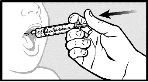
Administer the medication
|
|
| |
Ensure all medication has been taken
|
|
|
|
|
|
|
|
|
|
If the total prescribed dose is greater than 10 mg or requires more than 5 dispersible tablets, repeat steps 2 through 17 to complete the dose. | |
Cleaning
| |
|
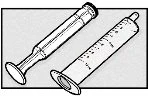




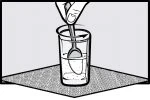
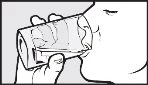
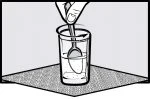
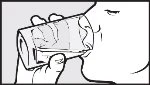
Instructions for patients or caregivers preparing the suspension using a small glass:
You will need:
- A blister pack containing Votubia dispersible tablets
- Scissors to open the blister pack
- 1 small glass (maximum size 100 ml)
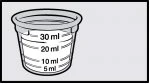
- A 30 ml dosing cup to measure water
- Approximately 50 ml of water to prepare the suspension
- A spoon for stirring
Preparation
| |
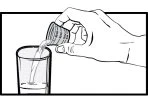
Add water
|
|
|
|
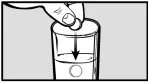
Add the dispersible tablets
| |
|
|
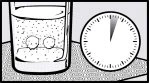
Mix the medicine
|
|
|
|
Taking the medicine
|
|
Ensure all the medicine has been taken
|
|
If the total prescribed dose is greater than 10 mg or requires more than 5 dispersible tablets, repeat steps 2 to 10 to complete the dose. |
|
Cleaning
|
|
|