Torasemide Tarbis 10 mg tablets EFG
Spain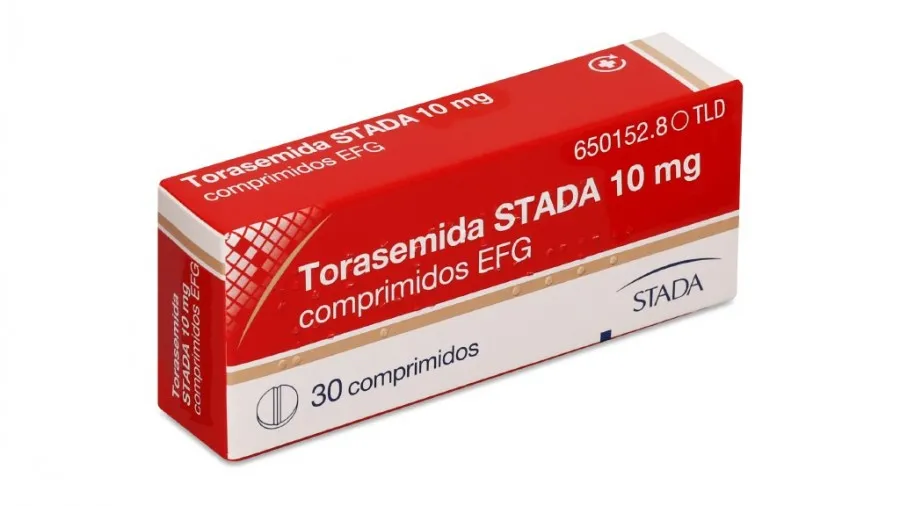
Table of Contents
- Package leaflet: Information for the user
- Introduction
- 1. What TORASEMIDE TARBIS 10 mg tablets are and what they are used for
- 2. BEFORE TAKING TORASEMIDE TARBIS 10 mg TABLETS
- 3. HOW TO TAKE TORASEMIDE TARBIS 10 mg TABLETS
- 4. Possible adverse effects
- 5. Storage of TORASEMIDE TARBIS 10 mg Tablets
- 6. ADDITIONAL INFORMATION
Package leaflet: Information for the user
Introduction
Package leaflet: information for the user
TORASEMIDE TARBIS 10 mg tablets EFG
Read all of this leaflet carefully before you start taking this medicine.
- Keep this leaflet, as you may need to read it again.
- If you have any questions, ask your doctor or pharmacist.
- This medicine has been prescribed for you personally and you must not give it to others, even if they have the same symptoms as you, because it may harm them.
- If you consider any of the side effects you experience to be serious, or if you notice any side effects not listed in this leaflet, inform your doctor or pharmacist.
Contents of the leaflet:
- What TORASEMIDE TARBIS 10 mg tablets are and what they are used for
- Before you take TORASEMIDE TARBIS 10 mg tablets
- How to take TORASEMIDE TARBIS 10 mg tablets
- Possible side effects
- How to store TORASEMIDE TARBIS 10 mg tablets
- Further information
1. What TORASEMIDE TARBIS 10 mg tablets are and what they are used for
Torasemide is a diuretic medicine (increases urine elimination) belonging to the group of medicines known as "high-ceiling diuretics". Torasemide 10 mg is indicated for:
- The treatment of arterial hypertension
- The treatment of edema (swelling due to fluid retention) caused by impaired cardiac function (e.g., heart failure)
- The treatment of edema of hepatic or renal origin.
2. BEFORE TAKING TORASEMIDE TARBIS 10 mg TABLETS
Do not take TORASEMIDE TARBIS 10 mg:
- If you are allergic (hypersensitive) to torasemide or to any of the other components of TORASEMIDE TARBIS 10 mg.
- If you are allergic to sulfonylureas.
- If you have anuria (absence of urine production).
Take special care with TORASEMIDE TARBIS 10 mg:
- If you have low blood pressure (hypotension)
- If you have renal failure with absence of urine production
- If you have severe impairment of liver function
- If you have low levels of sodium or potassium in the blood or low blood volume (hypovolemia)
- If you have gout or diabetes mellitus.
Use of other medicines:
Inform your doctor or pharmacist if you are taking, have recently taken, or might take any other medicines, including those obtained without a prescription.
You should also inform your doctor if you are taking any of the following medicines, with which torasemide may interact:
- Cardiac glycosides such as digoxin (medicines for the heart), antihypertensives (particularly ACE inhibitors), theophylline (a medicine for the treatment of asthma): the effect of these medicines may be increased.
- Mineralocorticoids, glucocorticoids, and laxatives: may increase potassium loss caused by these medicines.
- Antibiotics of the aminoglycoside group: may increase kidney or ear toxicity.
- Cisplatin (a medicine for the treatment of cancer), lithium (an antidepressant medicine), salicylates, ethacrynic acid: may increase their toxicity.
- Non-steroidal anti-inflammatory drugs (e.g. ibuprofen, indomethacin), probenecid (a medicine for gout), cholestyramine (a medicine to reduce blood cholesterol levels): may reduce the effect of torasemide.
- Medicines used to treat diabetes: may reduce their effectiveness.
Taking TORASEMIDE TARBIS 10 mg with food and drinks
The tablets may be taken with or without food. They should be taken in the morning, without chewing, with a little liquid.
Use in children
Since the safety and efficacy of torasemide in children have not been established, torasemide is not recommended for use in children.
Use in elderly
No differences in efficacy or safety have been observed according to patient age.
Pregnancy and breastfeeding:
Consult your doctor or pharmacist before using any medicine.
The use of torasemide during pregnancy is not recommended.
It is unknown whether torasemide passes into breast milk; therefore, its use during breastfeeding is not recommended.
Driving and use of machines:
This medicine may impair your ability to drive or operate machinery. The effect is intensified if taken simultaneously with alcohol.
Important information about some of the components of TORASEMIDE TARBIS 10 mg
This medicine contains lactose. If your doctor has informed you that you have an intolerance to certain sugars, consult him before taking this medicine.
This medicine does not contain gluten.
3. HOW TO TAKE TORASEMIDE TARBIS 10 mg TABLETS
Follow exactly the administration instructions for TORASEMIDE TARBIS 10 mg provided by your doctor. Consult your doctor or pharmacist if you have any doubts. Remember to take your medication.
Your doctor will determine the duration of your treatment with TORASEMIDE TARBIS 10 mg. Do not discontinue treatment prematurely, as this could worsen your condition.
Torasemide tablets are for oral use.
The tablets may be taken with or without food. They should be taken in the morning, without chewing, and with some liquid.
Adults
Treatment of edema associated with congestive heart failure, renal or hepatic disease.
The initial dose ranges from 5 mg to 20 mg daily, but your doctor may increase it up to approximately double if deemed appropriate.
Hypertension.
The usual initial dose is 2.5 to 5 mg daily, but your doctor may increase it up to 10 mg daily or prescribe an additional antihypertensive agent.
If you take more TORASEMIDE TARBIS 10 mg than you should:
In case of overdose or accidental ingestion, contact your doctor or pharmacist immediately or call the Toxicology Information Service at telephone (91) 562.04.20, indicating the medication and the amount ingested.
In case of overdose, increased urine output may occur, along with somnolence, confusion, weakness, and dizziness.
If you forget to take TORASEMIDE TARBIS 10 mg:
Do not take a double dose to make up for missed doses.
Take the missed dose as soon as you remember, and the following day resume your regular dosing schedule at the usual time.
If you have any further questions about the use of this product, ask your doctor or pharmacist.
4. Possible adverse effects
Like all medicines, TORASEMIDE TARBIS 10 mg can cause adverse effects, although not everyone experiences them.
Adverse reactions may occur with the following frequency:
Very common: Affects more than 1 in 10 patients treated.
Common: Affects between 1 and 10 in every 100 patients treated.
Uncommon: Affects between 1 and 10 in every 1,000 patients treated.
Rare: Affects between 1 and 10 in every 10,000 patients treated.
The following adverse effects have been reported:
- With prolonged treatment, disturbances in the body's water and electrolyte balance may occur.
- Occasionally, especially at the beginning of treatment, the following may occur: headache, dizziness, fatigue, weakness, muscle cramps, and gastrointestinal discomfort (e.g. loss of appetite, stomach pain, nausea, vomiting, diarrhea, constipation).
- In rare cases, dry mouth and discomfort in the limbs may occur; in individual cases, visual disturbances and allergic reactions (e.g. burning sensation, redness, photosensitivity) may be observed.
- In patients with difficulty urinating (e.g. due to prostate enlargement), increased urine flow may lead to urinary retention.
- Due to increased urine production, a drop in blood pressure may occur, as well as confusion, and exceptionally, thrombosis, cardiac arrhythmia, angina pectoris, acute myocardial infarction, sudden loss of consciousness (syncope), and circulatory collapse, especially if large amounts of fluid and electrolytes have been lost.
- Occasionally, increases in blood levels of uric acid, glucose, triglycerides, and cholesterol have been observed.
If you consider any of the adverse effects you experience to be severe, or if you notice any adverse effects not mentioned in this leaflet, inform your doctor or pharmacist.
5. Storage of TORASEMIDE TARBIS 10 mg Tablets
Keep out of the reach and sight of children.
Do not store above 30°C. Store in the original packaging.
Expiry:
Do not use TORASEMIDE TARBIS 10 mg after the expiry date stated on the packaging after EXP. The expiry date refers to the last day of the month indicated.
Medicines should not be disposed of via wastewater or household waste. Ask your pharmacist how to dispose of medicines and packaging that you no longer need. This will help protect the environment.
6. ADDITIONAL INFORMATION
Composition of TORASEMIDE TARBIS 10 mg:
- The active substance is torasemide. Each tablet contains 10 mg of torasemide.
- The other components (excipients) are: monohydrate lactose, corn starch, sodium starch glycolate (type A), colloidal anhydrous silica, and magnesium stearate.
Appearance of the medicinal product and contents of the pack
TORASEMIDE TARBIS 10 mg are biconvex, round, white or almost white tablets, scored on one side and marked with 916 on the other. They are packaged in packs of 30 tablets.
Marketing Authorization Holder and Manufacturer
Holder:
TARBIS FARMA, S.L.
Gran Vía Carlos III, 94
08028 Barcelona, Spain
Manufacturer:
TEVA OPERATIONS POLAND SP.Z.O.O. Ul. Mogilska 80 (Krakow) - 31-546 - Poland
PLIVA HRVATSKA D.O.O. Prilaz Baruna Filipovica 25 ZAGREB 10000 Croatia
This leaflet was approved in October 2004