Tegretol 200 mg tablets
Spain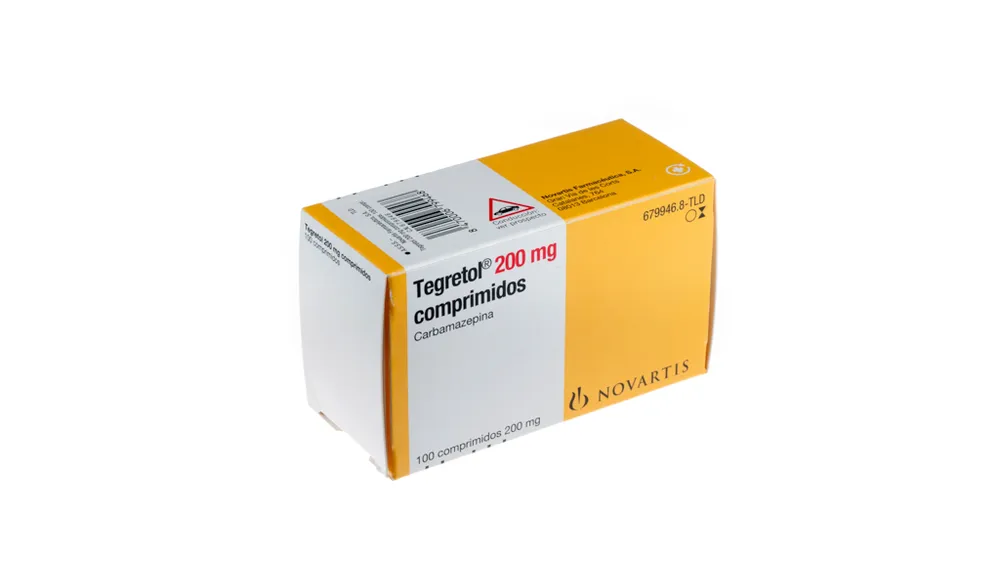
Table of Contents
Package Leaflet: Information for the User
Introduction
Package Leaflet: Information for the Patient
TEGRETOL 200 mg Tablets
Carbamazepine
Read the entire leaflet carefully before you start taking this medicine, because it contains important information for you.
-
Keep this leaflet, as you may need to read it again.
-
If you have any questions, consult your doctor or pharmacist.
-
This medicine has been prescribed for you personally and must not be given to others, even if they have the same symptoms as you, because it could harm them.
-
If you experience any adverse effects, consult your doctor, pharmacist, or nurse, even if the effects are not listed in this leaflet. See section 4.
Leaflet Contents:
- What Tegretol is and what it is used for
- What you need to know before taking Tegretol
- How to take Tegretol
- Possible side effects
- How to store Tegretol
- Contents of the pack and other information
1. What TEGRETOL is and what it is used for
The active substance is carbamazepine.
Carbamazepine belongs to a group of medicines called antiepileptics. It is used to treat certain types of epilepsy. It is also used in the treatment of mania and in the prevention of manic-depressive disorders (bipolar disorder); in alcohol withdrawal syndrome, in essential trigeminal neuralgia, and in essential glossopharyngeal neuralgia.
2. What you need to know before taking Tegretol
Follow the instructions given to you by your doctor. These may differ from the information contained in this leaflet.
Please read the following instructions before taking Tegretol.
The risk of severe skin reactions in patients of Han Chinese or Thai origin related to carbamazepine or chemically related compounds can be predicted by a blood test in these patients. Your doctor will advise you whether you need to undergo this test before starting Tegretol.
Do not take Tegretol:
- If you are allergic to carbamazepine or any of the other ingredients of this medicine (listed in section 6), or to any drug with a structure similar to carbamazepine (some antidepressants);
- If you have a serious heart disease;
- If you currently suffer or have previously suffered from a serious blood disorder;
- If you have problems in porphyrin formation, an important pigment for liver function and blood formation (also known as hepatic porphyria);
- If you are taking medicines belonging to a special group of antidepressants called monoamine oxidase inhibitors (MAOIs).
If you are in any of these situations, consult your doctor before taking Tegretol. If you think you may be allergic, consult your doctor.
Warnings and precautions
Talk to your doctor or pharmacist before starting Tegretol.
- If you have previously had or currently have heart, liver, or kidney disease;
- If you have or have had a blood disorder (including those caused by other medicines);
- If you have elevated intraocular pressure (glaucoma), reduced urge to urinate, or difficulty urinating;
- If you have a mental illness called psychosis, and also if you are elderly and experience confusion or agitation;
- If signs appear suggesting a serious skin disease;
- If you have experienced sensitivity reactions (skin rash or other signs of allergy) to oxcarbazepine or other medicines such as phenytoin (another antiepileptic). It is important to note that if you are allergic to carbamazepine, there is a 1 in 4 chance (25%) that you may have an allergic reaction to oxcarbazepine (Trileptal).
- If you are a woman of childbearing age, you must use an effective contraceptive method throughout your treatment and for two weeks after your last dose. If you are taking oral contraceptives, Tegretol may reduce their effectiveness. Therefore, non-hormonal contraceptive methods should be used instead of or in addition to hormonal methods while taking Tegretol. This will help prevent unintended pregnancies. Consult your doctor if you experience irregular bleeding or spotting while taking Tegretol. If you have any doubts, speak with your doctor.
- Inform your doctor if you are pregnant or planning to become pregnant. Your doctor will inform you about the potential risk of taking Tegretol during pregnancy, as it may cause harm or abnormalities in the fetus. There is a risk of fetal harm if Tegretol is used during pregnancy. Women of childbearing age must use an effective contraceptive method during treatment with Tegretol and for two weeks after the last dose (see section on pregnancy, breastfeeding, and fertility).
If you experience any of the following, consult your doctor immediately:
- If you develop fever, sore throat, skin rash, mouth ulcers, unexplained and easy bruising, or purplish spots on the skin (see Section 4 “Possible side effects”).
It is very important that your doctor monitors your treatment during regular visits and performs blood and urine tests at the beginning of treatment and periodically throughout treatment to rule out blood disorders and to monitor liver and kidney function. These tests may also be used occasionally to determine the most appropriate Tegretol dosage.
-
Severe, potentially life-threatening skin rashes (Stevens-Johnson syndrome and toxic epidermal necrolysis) have been reported with the use of Tegretol. These initially appear as red or pink circular spots, often with a central blister. Additional signs may include sores in the mouth, throat, nose, genitals, and conjunctivitis (swollen, red eyes). These potentially life-threatening skin rashes are often accompanied by flu-like symptoms. The rash may progress to widespread blistering or skin peeling. The highest risk period for severe skin reactions is during the first few months of treatment with Tegretol. If you develop a skin reaction such as rash, redness, blisters on lips, eyes, or mouth, or skin peeling accompanied by fever, stop taking Tegretol and inform your doctor immediately. These reactions may be more frequent in patients from Asian countries (e.g., Taiwan, Malaysia, and the Philippines). Serious skin side effects may rarely occur during treatment with Tegretol. Patients of Chinese or Thai origin may have their risk assessed with a blood test. If you are of such origin, discuss this with your doctor before taking Tegretol. If you have previously developed Stevens-Johnson syndrome or toxic epidermal necrolysis while taking Tegretol, you must never use Tegretol again.
-
If you experience an allergic reaction such as swelling of the lips, eyelids, face, throat, mouth, or sudden breathing problems, fever with swollen lymph nodes, skin rash, or blisters, contact your doctor immediately or go to the nearest hospital (see Section 4 “Possible side effects”).
-
If you experience an increase in the number of epileptic seizures, consult your doctor immediately.
-
If you notice symptoms suggestive of hepatitis, such as jaundice (yellowing of the skin and whites of the eyes), consult your doctor immediately.
-
If at any time you have thoughts of harming yourself or committing suicide. A small number of patients treated with antiepileptic medicines have experienced such thoughts or behaviors.
-
If you have kidney problems associated with low sodium levels in the blood, or if you have kidney problems and are taking medicines that lower your blood sodium levels (diuretics such as hydrochlorothiazide, furosemide).
-
If you experience dizziness, drowsiness, low blood pressure, confusion, sedation, or ataxia due to Tegretol treatment, as these may increase your risk of falling.
Do not stop taking Tegretol without first consulting your doctor. To prevent worsening of epileptic seizures, do not discontinue treatment abruptly.
Before any surgical procedure, including dental surgery or in an emergency, inform the doctor treating you that you are taking Tegretol.
Use in elderly patients
Tegretol can be used safely in elderly patients if the doctor's instructions are followed. Special information on dosage and precautions may be necessary (see also Section 3 “How to take Tegretol” and Section 4 “Possible side effects”).
Use in children
Tegretol can be used safely in children if the doctor's instructions are followed. Special information on dosage and precautions may be necessary (see also Section 3 “How to take Tegretol” and Section 4 “Possible side effects”).
Other medicines and Tegretol
Inform your doctor or pharmacist if you are taking, have recently taken, or might need to take any other medicines. Tegretol may interact with many medicines, either increasing or decreasing their effects or its own. This warning applies to both prescription and over-the-counter medicines, and especially to vitamins (Vitamin B3), oral contraceptives, painkillers such as paracetamol, St. John’s wort preparations, and other epilepsy medicines (such as brivaracetam).
During treatment with Tegretol, avoid using medicines containing alcohol.
Hormonal contraceptives, for example, pills, patches, injections, or implants
Tegretol may affect the effectiveness of hormonal contraceptives, making them less effective in preventing pregnancy. Consult your doctor, who will advise you on the most suitable type of contraceptive to use while taking Tegretol.
Use of Tegretol with food and drinks
You may take Tegretol with or without food.
You should avoid consuming alcohol during treatment with Tegretol. Alcohol may increase the risk of adverse effects.
Do not drink grapefruit juice or eat grapefruit, as it may increase the effect of Tegretol. Other juices, such as orange or apple juice, do not have this effect.
Pregnancy, breastfeeding, and fertility
Pregnancy and women of childbearing age
If you are pregnant or breastfeeding, think you might be pregnant, or plan to become pregnant, consult your doctor or pharmacist before using this medicine. While epilepsy itself carries an increased risk of developmental disorders in offspring, including congenital malformations, compared to the general population, available treatments may further increase this risk. Specifically, carbamazepine may increase the risk of spina bifida, craniofacial malformations, cardiovascular malformations, and urinary system defects, as well as possible neonatal withdrawal syndrome.
Tegretol can cause major congenital defects. If you take Tegretol during pregnancy, your baby has up to a threefold increased risk of congenital defects compared to women who do not take antiepileptic drugs. Major congenital defects reported include neural tube defects (spinal opening), facial defects such as cleft lip or cleft palate, head defects including smaller head size (microcephaly), heart defects, penile defects related to urethral opening (hypospadias), and finger defects. If carbamazepine is used during pregnancy, the newborn may have lower than expected size and birth weight [small for gestational age (SGA)]. In women with epilepsy, one study found that approximately 13 out of every 100 babies born to mothers who took carbamazepine during pregnancy were smaller and weighed less than expected at birth, compared to about 11 out of every 100 babies born to women not taking antiepileptic medication during pregnancy. If you have taken Tegretol during pregnancy, the fetus should be closely monitored.
Neurological development problems (of the brain) have been reported in babies born to mothers who used Tegretol during pregnancy. Some studies have shown that carbamazepine negatively affects neurological development in children exposed to carbamazepine in utero, while other studies have not found such an effect. The possibility of an effect on neurological development cannot be ruled out.
If you are a woman of childbearing age and do not intend to become pregnant, you must use an effective contraceptive method during treatment with this medicine. Tegretol may affect the effectiveness of hormonal contraceptives, such as the oral contraceptive pill, making them less effective in preventing pregnancy. Consult your doctor, who will advise you on the most suitable contraceptive method to use while taking Tegretol. If you stop taking Tegretol, you must continue using an effective contraceptive method for two additional weeks after stopping treatment.
If you are a woman of childbearing age and planning to become pregnant, talk to your doctor before stopping contraception and becoming pregnant, so that you can switch to appropriate alternative treatments to avoid fetal exposure to carbamazepine.
If you are pregnant or think you might be, inform your doctor immediately. Do not stop taking the medicine without first speaking to your doctor. If you stop treatment without consulting your doctor, you may experience epileptic seizures, which could be dangerous for both you and the fetus. Your doctor may decide to change your treatment.
If you take Tegretol during pregnancy, the baby also has a risk of bleeding problems shortly after birth. Your doctor may give you and the baby a medicine to prevent this.
Therefore, we advise you:
- If you wish to become pregnant, plan your pregnancy in consultation with your specialists.
- If you are already pregnant, CONSULT YOUR NEUROLOGIST.
- In neither case should you STOP TREATMENT on your own. Untreated epilepsy harms both the fetus and the mother due to possible worsening of the disease.
In these situations, your doctor may prescribe you supplementary treatment with folic acid before and during pregnancy and vitamin K1 during the last weeks of pregnancy (and in the latter case, also to the newborn). In addition, your pregnancy will be monitored more closely.
Breastfeeding
Inform your doctor if you are breastfeeding.
The active substance in Tegretol passes into breast milk. Provided your doctor agrees and the baby is monitored for side effects, you may breastfeed. However, if adverse effects occur in the infant, such as drowsiness or skin rash, stop breastfeeding and consult your doctor.
Driving and using machines
Tegretol may cause drowsiness, dizziness, blurred or double vision, or lack of muscle coordination, especially when starting treatment or increasing the dose, and may reduce reaction time. These effects, as well as the underlying illness itself, may impair your ability to drive vehicles or operate machinery. Therefore, do not drive or operate machinery, or engage in other activities requiring special attention, until your doctor has assessed your response to this medicine.
Tegretol contains sodium
This medicine contains less than 23 mg of sodium (1 mmol) per tablet; therefore, it is essentially “sodium-free”.
3. How to take Tegretol
Follow carefully the instructions for using this medicine as given by your doctor. If in doubt, consult your doctor or pharmacist again. Do not exceed the recommended dose.
Tegretol should be taken regularly and exactly as prescribed by your doctor; this will help you achieve the best results and reduce the risk of serious side effects. Do not take additional doses of Tegretol, do not take it more frequently than prescribed, and do not take it for longer than prescribed.
Do not stop treatment abruptly without first consulting your doctor, as this could worsen your condition. Your doctor will advise you on what to do (see Section “Warnings and precautions”).
Amount of Tegretol to be taken
The doses prescribed by your doctor may differ from those indicated here. Always follow your doctor’s instructions.
In general, the initial dose in adults for the treatment of epilepsy is 100–200 mg once or twice daily; this dose is gradually increased up to 800–1200 mg per day (in some patients, a dose of 1600 mg per day may be required), divided into 2 or 3 divided doses.
Treatment in children usually starts with a dose of 100–200 mg per day (10–20 mg/kg/day), gradually increased up to 400–600 mg. Adolescents may receive between 600 and 1000 mg per day.
For the treatment of trigeminal neuralgia and glossopharyngeal neuralgia, the initial dose is 200–400 mg daily, slowly increased until pain subsides, usually 200 mg 3–4 times daily. The maximum dose is 1200 mg per day. In elderly patients, a lower initial dose is recommended (100 mg twice daily).
For the treatment of mania and for the prevention of bipolar affective disorders, the usual dose is 400–600 mg per day (the dose range is approximately 400–1600 mg daily).
Your doctor will determine the exact dose of Tegretol you should take.
How and when to take Tegretol
Except possibly on the first day, Tegretol tablets should be taken in 2–4 divided daily doses, depending on your clinical condition. Always take Tegretol during or after meals with some liquid. If necessary, the tablets may be split in half.
If you take more Tegretol than you should
In case of Tegretol overdose, inform your doctor immediately. Medical attention may be required. If you experience difficulty breathing, rapid and irregular heartbeat, loss of consciousness, tremors, dizziness, nausea and/or vomiting, you may be taking too high a dose of Tegretol. Inform your doctor immediately.
If you have taken more Tegretol than prescribed, contact your doctor, pharmacist, or call the Toxicology Information Service at telephone: 91 562 04 20, indicating the medication and amount taken.
If you forget to take Tegretol
If you miss a dose, take it as soon as you remember, unless it is almost time for your next dose; in this case, wait and resume your regular dosing schedule. Do not take a double dose to make up for a missed dose. If you miss several doses, consult your doctor.
If you stop taking Tegretol
Do not change or stop your treatment without first consulting your doctor. If treatment is stopped abruptly, epileptic seizures may occur.
4. Possible adverse effects
Like all medicines, this medicine can cause adverse effects, although not everyone experiences them.
These are more common especially at the beginning of treatment, if the dose is too high, or in certain individuals such as elderly patients, and usually disappear after a few days of treatment or following a dose adjustment.
Contact your doctor immediately or ensure that someone can do so on your behalf if any of the following adverse effects occur, as they may be the first signs of serious damage to the blood, skin, liver, heart, kidneys, or other organs, and may require urgent medical treatment:
-
if you have fever, sore throat, rash, mouth ulcers, swollen glands, or are prone to infections (signs of low white blood cell count)
-
if you feel tired, have headache, become short of breath during exercise, feel dizzy, look pale, have frequent infections with fever, chills, sore throat or mouth ulcers, bleed or bruise more easily than normal, or have nosebleeds (signs of low blood cells)
-
if you develop a skin rash with reddish spots, usually on the face, which may be accompanied by fatigue, nausea, loss of appetite (signs of systemic lupus erythematosus)
-
if you notice yellowing of the whites of the eyes or skin (signs of hepatitis)
-
if your urine becomes darker (signs of porphyria or hepatitis)
-
if you experience reduced urine output or blood in the urine (signs of kidney problems)
-
if you suffer severe pain in the upper abdomen, vomiting, loss of appetite (signs of pancreatitis)
-
if you develop a skin rash, redness of the skin, blisters on the lips, mouth or eyes, skin peeling, accompanied by fever, chills, headache, cough or body aches (signs of serious skin reactions). See section 2
-
if you experience swelling of the face, eyes, or tongue, difficulty swallowing, wheezing, hives, widespread itching, skin rash, fever, abdominal cramps, discomfort or tightness in the chest, difficulty breathing, or loss of consciousness (signs of angioedema and severe allergic reactions)
-
if you experience lethargy, confusion, muscle twitching, or a significant worsening of seizures (signs that may be associated with low sodium levels in the blood)
-
if you have fever, nausea, vomiting, headache, neck stiffness, or extreme sensitivity to bright light (signs of meningitis)
-
if you suffer muscle rigidity, high fever, altered consciousness, increased blood pressure, excessive salivation (signs of neuroleptic malignant syndrome)
-
if you experience irregular heartbeat, chest pain
-
if you experience altered consciousness, fainting
-
if you develop diarrhea, abdominal pain, and fever (signs of inflammation of the colon). The frequency of this adverse effect is unknown
-
if you experience a fall due to dizziness, drowsiness, low blood pressure, or confusion
Other adverse effects
Contact your doctor as soon as possible if any of the following adverse effects occur, as medical attention may be required:
Very common adverse effects (may affect more than 1 in 10 patients): loss of muscle coordination, skin inflammation with itchy rash and redness, itchy rash, vomiting, nausea, dizziness, drowsiness, unsteadiness, weight gain.
Common adverse effects (may affect up to 1 in 10 patients): swelling of ankles, feet and legs (edema), changes in behavior, confusion, weakness, increased frequency of epileptic seizures (breakthrough seizures, due to insufficient sodium levels in the body), headache, dry mouth.
Uncommon adverse effects (may affect up to 1 in 100 patients): tremors, abnormal uncontrolled movements, muscle spasms.
Rare adverse effects (may affect up to 1 in 1,000 patients): itching, swollen glands, agitation or hostility (especially in the elderly), difficulty speaking or slurred speech, depression with restlessness, nervousness, or other mood or mental changes, hallucinations, blurred vision, double vision, itching with redness and swelling in the eyes (conjunctivitis), sensation of pressure/pain in the eyes (sign of increased eye pressure), involuntary eye movements, tinnitus or other unexplained noises, decreased hearing, abnormally fast or slow heartbeat, numbness or tingling in hands and feet, weakness, increased frequency of urination, sudden decrease in urine output, taste disturbances, unusual milk secretion, breast enlargement in men, redness and swelling along a vein that is very sensitive to touch and often painful (thrombophlebitis), increased skin sensitivity to sunlight, bone weakening leading to increased risk of fractures (due to vitamin D deficiency, osteoporosis), constipation, diarrhea, abdominal pain, joint or muscle pain, increased sweating, loss of appetite, hair loss, excessive body and facial hair, sexual disturbances, male infertility, redness and irritation of the tongue, mouth ulcers, changes in skin pigmentation, acne, and severe skin reactions.
Adverse effects with unknown frequency (cannot be estimated from available data): reactivation of herpes virus infection (can be severe with a suppressed immune system), complete nail loss, bone fractures, decreased bone density, sedation, memory loss, purple or maroon papules that may itch, elevated blood ammonia levels (hyperammonemia). Symptoms of hyperammonemia may include irritability, confusion, vomiting, loss of appetite, and drowsiness.
Reporting of adverse effects
If you experience any type of adverse effect, consult your doctor or pharmacist, even if they are possible adverse effects not listed in this leaflet. You may also report them directly through the Spanish Pharmacovigilance System for Human Medicines: https://www.notificaRAM.es. By reporting adverse effects, you can help provide more information on the safety of this medicine.
5. Storage of Tegretol
Keep this medicine out of the sight and reach of children.
Store below 25°C.
Keep in the original packaging to protect from moisture.
Do not use this medicine after the expiry date stated on the container after EXP. The expiry date is the last day of the month indicated.
Do not use this medicine if the packaging is damaged or shows signs of tampering.
Medicines should not be disposed of via wastewater or household waste. Dispose of unused medicines and their containers at the SIGRE Point in your pharmacy. If you are in doubt, ask your pharmacist how to dispose of medicines and containers you no longer need. This will help protect the environment.
6. Contents of the pack and other information
Composition of Tegretol 200 mg tablets
- The active substance is carbamazepine. Each tablet contains 200 mg of carbamazepine.
- The other components are: colloidal anhydrous silica, magnesium stearate, microcrystalline cellulose, sodium carboxymethylcellulose.
Nature of the product and pack size
Tegretol 200 mg tablets are presented in blister packs containing 50, 100 and 500 white, round tablets, with a score on one side, marked “CG” on one face and “G” and “K” on the other face on both sides of the score.
Only some pack sizes may be marketed.
Marketing Authorization Holder
Novartis Farmacéutica, S.A.
Gran Via de les Corts Catalanes, 764
08013 Barcelona - Spain
Manufacturer
Novartis Farma S.p.A
Via provinciale Schito 131
I-80058 Torre Annunziata
Italy
Novartis Farmacéutica, S.A.
Gran Via de les Corts Catalanes, 764
08013 Barcelona, Spain
Date of the most recent revision of this leaflet: January 2026