Sunitinib Vivanta 37,5 mg hard capsules EFG
Spain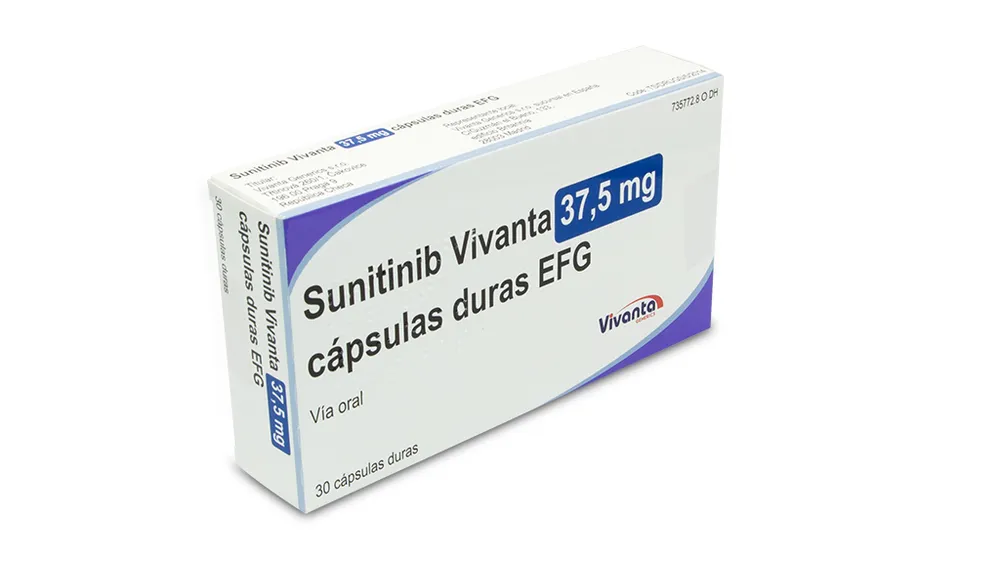
Table of Contents
- Patient Information Leaflet
- Introduction
- **Package leaflet contents**
- 1. What Sunitinib Vivanta is and what it is used for
- 2. What you need to know before starting to take Sunitinib Vivanta
- **Do not take Sunitinib Vivanta**
- **Warnings and precautions**
- **Other medicines and Sunitinib Vivanta**
- **Pregnancy and lactation**
- **Driving and operating machinery**
- **Sunitinib Vivanta contains sodium**
- 3. How to take Sunitinib Vivanta
- **If you take more Sunitinib Vivanta than you should**
- **If you forget to take Sunitinib Vivanta**
- 4. Possible adverse effects
- **Reporting of adverse reactions**
- 5. Storage of Sunitinib Vivanta
- 6. Contents of the pack and other information
- **Appearance of the product and contents of the container**
- **Marketing Authorization Holder**
- Vivanta Generics s.r.o.
- Trtinová 260/1, Cakovice
- 196 00 Praga 9
- Czech Republic
- Indicaciones
- Composición
- Posología y forma de administración
- Contraindicaciones
- Precauciones y advertencias especiales
- Interacciones con otros medicamentos
- Efectos adversos
- Sobredosis
- Propiedades farmacodinámicas
- Propiedades farmacocinéticas
- Datos preclínicos sobre seguridad
- Lista de excipientes
- Instrucciones para el uso y manipulación
- Período de validez
- Condiciones de conservación
- Naturaleza y contenido del envase
- Instrucciones para la eliminación
- Titular de la autorización de comercialización
- Número de autorización de comercialización
- Fecha de la primera autorización y de la última renovación
- Fecha de la última revisión del prospecto
- **Manufacturer**
Patient Information Leaflet
Introduction
Patient Information Leaflet
Sunitinib Vivanta 12.5 mg hard capsules EFG
Sunitinib Vivanta 25 mg hard capsules EFG
Sunitinib Vivanta 37.5 mg hard capsules EFG
Sunitinib Vivanta 50 mg hard capsules EFG
Read the entire leaflet carefully before you start taking this medicine, as it contains important information for you.
- Keep this leaflet as you may need to read it again.
- If you have any questions, ask your doctor or pharmacist.
- This medicine has been prescribed for you only, and you should not give it to others, even if they have the same symptoms as you, because it may harm them.
- If you experience any adverse effects, consult your doctor, even if they are adverse effects not listed in this leaflet. See section 4.
Package leaflet contents
- What Sunitinib Vivanta is and what it is used for
- What you need to know before starting to take Sunitinib Vivanta
- How to take Sunitinib Vivanta
- Possible side effects
- Storage of Sunitinib Vivanta
- Contents of the pack and other information
1. What Sunitinib Vivanta is and what it is used for
This medicine contains the active substance sunitinib, which is a protein kinase inhibitor. It is used for the treatment of cancer and works by blocking the activity of a specific group of proteins involved in the growth and spread of cancer cells.
Sunitinib is used to treat adults with the following types of cancer:
- Gastrointestinal stromal tumour (GIST), a type of cancer of the stomach and intestine, when imatinib (another anticancer medicine) has failed or cannot be used.
- Metastatic renal cell carcinoma (MRCC), a type of kidney cancer that has spread to other parts of the body.
- Pancreatic neuroendocrine tumours (pNET) (tumours of hormone-producing cells in the pancreas) that have progressed or cannot be surgically removed.
If you have any questions about how Sunitinib Vivanta works or why this medicine has been prescribed for you, please consult your doctor.
2. What you need to know before starting to take Sunitinib Vivanta
Do not take Sunitinib Vivanta
- if you are allergic to sunitinib or to any of the other ingredients of this medicine (listed in section 6).
Warnings and precautions
Consult your doctor before starting Sunitinib Vivanta:
-
If you have high blood pressure. Sunitinib may increase blood pressure. Your doctor may monitor your blood pressure during treatment with sunitinib, and if necessary, you may be treated with medications that lower blood pressure.
-
If you have or have had blood disorders, bleeding problems, or bruising. Treatment with sunitinib may lead to an increased risk of bleeding or cause changes in the number of certain blood cells, which may result in anemia or affect the blood's ability to clot. If you are taking warfarin or acenocoumarol—medications that thin the blood to prevent clots—there may be an increased risk of bleeding. If you experience any bleeding during treatment with sunitinib, consult your doctor.
-
If you have heart problems. Sunitinib may cause heart-related issues. Consult your doctor if you feel very tired, become short of breath, or have swollen feet or ankles.
-
If you have abnormal heart rhythms. Sunitinib may cause irregularities in heart rhythm. Your doctor may perform electrocardiograms (ECGs) to assess these issues during treatment with sunitinib. Contact your doctor if, during treatment, you feel dizzy, weak, or experience abnormal heartbeats.
-
If you have recently experienced blood clots in veins and/or arteries (types of blood vessels), including stroke, myocardial infarction, embolism, or thrombosis. Contact your doctor immediately if you experience symptoms such as chest pain or pressure, arm, back, neck, or jaw pain, shortness of breath, numbness or weakness on one side of the body, speech difficulties, headache, or dizziness while receiving sunitinib treatment.
-
If you have or have had an aneurysm (a bulging and weakening of a blood vessel wall) or a tear in the wall of a blood vessel.
-
If you have or have had damage to the smallest blood vessels, known as thrombotic microangiopathy (TMA). Contact your doctor if you experience fever, fatigue, bruising, bleeding, swelling, confusion, vision loss, or seizures.
-
If you have thyroid gland problems. Sunitinib may cause thyroid-related issues. Contact your doctor if you become unusually tired, feel colder than usual, or develop a deeper voice while taking sunitinib. Thyroid function should be checked before starting sunitinib and monitored periodically during treatment. If your thyroid gland does not produce enough thyroid hormone, you may be treated with thyroid hormone replacement therapy.
-
If you have or have had pancreatic disorders or gallbladder problems. Contact your doctor if you develop any of the following signs and symptoms: stomach pain (upper abdomen), nausea, vomiting, or fever. These may be caused by inflammation of the pancreas or gallbladder.
-
If you have or have had liver problems. Contact your doctor if you develop any of the following signs or symptoms of liver problems during sunitinib treatment: itching, yellowing of the eyes or skin, dark urine, or pain or discomfort in the upper right part of the abdomen. Your doctor should perform blood tests to monitor liver function before and during treatment with sunitinib, as well as whenever clinically indicated.
-
If you have or have had kidney problems. Your doctor will monitor your kidney function.
-
If you are scheduled for surgery or have recently undergone surgery. Sunitinib may affect wound healing. If you are to undergo surgery, you will generally need to stop taking this medication. Your doctor will decide when it is safe to restart sunitinib.
-
Before starting treatment with Sunitinib Vivanta, you may be advised to have a dental examination.
-
If you have or have had mouth, tooth, and/or jaw pain, swelling or sores in the mouth, numbness, a sensation of heaviness in the jaw, or loose teeth, inform your doctor and dentist immediately.
-
If you require invasive dental treatment or dental surgery, inform your dentist that you are being treated with sunitinib, especially if you are also receiving or have previously received intravenous bisphosphonates. Bisphosphonates are medications used to prevent bone complications that may occur due to other medical conditions.
-
If you have or have had skin and subcutaneous tissue disorders. During treatment with this medication, "pyoderma gangrenosum" (painful skin ulceration) or "necrotizing fasciitis" (a rapidly spreading skin/soft tissue infection that can be life-threatening) may occur. Contact your doctor immediately if you notice signs of infection around a skin lesion, such as fever, pain, redness, swelling, or pus or blood discharge. These reactions are generally reversible upon discontinuation of sunitinib. Serious skin reactions have been reported with sunitinib use, including severe rashes (Stevens-Johnson syndrome, toxic epidermal necrolysis, erythema multiforme), which initially appear as red, target-like spots or circular lesions, often with central blisters, typically on the trunk. This rash may progress to widespread blistering or skin peeling and can be life-threatening. Seek immediate medical attention if you develop a skin rash or the described skin symptoms.
-
If you have or have had seizures. If you have high blood pressure, headache, or vision loss, inform your doctor as soon as possible.
-
If you have diabetes. Blood glucose levels in diabetic patients should be checked regularly to determine whether the dose of antidiabetic medication needs adjustment, minimizing the risk of low blood sugar. Inform your doctor as soon as possible if you experience signs or symptoms of low blood sugar (fatigue, palpitations, sweating, hunger, or loss of consciousness).
Children and adolescents
Sunitinib is not recommended for use in individuals under 18 years of age.
Other medicines and Sunitinib Vivanta
Inform your doctor or pharmacist if you are taking, have recently taken, or might need to take any other medicines, including those obtained without a prescription.
Some medicines may affect the levels of sunitinib in your body. You must inform your doctor if you are taking medicines containing any of the following active substances:
- ketoconazole, itraconazole – used to treat fungal infections
- erythromycin, clarithromycin, rifampicin – used to treat infections
- ritonavir – used to treat AIDS
- dexamethasone – a corticosteroid used for various conditions (such as allergic/respiratory disorders or skin diseases)
- phenytoin, carbamazepine, phenobarbital – used to treat epilepsy and other neurological disorders
- herbal remedies containing St. John’s wort (Hypericum perforatum) – used for the treatment of depression and anxiety
Taking Sunitinib Vivanta with food and drinks
You should avoid drinking grapefruit juice while undergoing treatment with sunitinib.
Pregnancy and lactation
If you are pregnant or breastfeeding, think you may be pregnant, or are planning to become pregnant, consult your doctor or pharmacist before using this medicine.
If you are able to become pregnant, you should use a reliable method of contraception during treatment with sunitinib.
If you are breastfeeding, inform your doctor. You must not breastfeed during treatment with sunitinib.
Driving and operating machinery
If you experience dizziness or unusual tired游戏副本
Sunitinib Vivanta contains sodium
This medicine contains less than 1 mmol of sodium (23 mg) per capsule; this is, essentially "sodium-free".
3. How to take Sunitinib Vivanta
Follow exactly the dosing instructions for this medicine provided by your doctor. If in doubt, consult your doctor again.
Your doctor will determine the correct dose for you depending on the type of cancer being treated.
If you are receiving treatment for:
- GIST or mRCC: the usual dose is 50 mg once daily for 28 days (4 weeks), followed by a 14-day (2-week) rest period (no medication) in 6-week cycles.
- pNET: the usual dose is 37.5 mg once daily without a rest period.
Your doctor will advise you on the appropriate dose to take, as well as whether and when you need to interrupt treatment with sunitinib.
Sunitinib Vivanta may be taken with or without food.
If you take more Sunitinib Vivanta than you should
If you have accidentally taken too many capsules, consult your doctor immediately. You may require medical attention.
In case of overdose or accidental ingestion, go to a medical center or call the Toxicology Information Service at telephone number: 91 562 04 20, indicating the medication and the amount taken.
If you forget to take Sunitinib Vivanta
Do not take a double dose to make up for missed doses.
4. Possible adverse effects
Like all medicines, this medicine can cause adverse effects, although not everyone experiences them.
You should contact your doctor immediately if you experience any of the following serious adverse effects (see also What you need to know before you start taking Sunitinib Vivanta):
Heart problems. Consult your doctor if you feel very tired, become short of breath, or have swollen feet or ankles. These may be symptoms of heart problems, which may include heart failure and problems with the heart muscle (cardiomyopathy).
Lung or breathing problems. Consult your doctor if you develop cough, chest pain, sudden onset of breathing difficulties, or cough up blood. These may be symptoms of a condition called pulmonary embolism, which occurs when blood clots travel to the lungs.
Kidney problems. Consult your doctor if you experience changes in the frequency of urination or absence of urine, as these may be symptoms of kidney failure.
Bleeding. Consult your doctor if you experience any of these symptoms or have a serious bleeding problem during treatment with sunitinib: painful or swollen stomach (abdomen); vomiting blood; black, tarry stools; blood in the urine; headache or any change in your mental state; coughing up blood or bloody sputum from the lungs or airways.
Tumour destruction leading to intestinal perforation. Consult your doctor if you have severe abdominal pain, fever, nausea, vomiting, blood in stools, or changes in bowel habits.
Other adverse effects with sunitinib may include:
Very common: may affect more than 1 in 10 people
- Decrease in the number of platelets, red blood cells and/or white blood cells (e.g. neutrophils).
- Difficulty breathing.
- High blood pressure.
- Extreme tiredness, loss of strength.
- Rapid swelling of tissues due to fluid under the skin and around the eye, severe allergic rash.
- Mouth pain/irritation, mouth sores/inflammation/dryness in the mouth, taste disturbances, stomach discomfort, nausea, vomiting, diarrhoea, constipation, abdominal pain/swelling, loss/reduced appetite.
- Decreased activity of the thyroid gland (hypothyroidism).
- Dizziness.
- Headache.
- Nosebleeds.
- Back pain, joint pain.
- Pain in arms and legs.
- Yellow skin/skin discoloration, excessive skin pigmentation, change in hair colour, skin rash on the palms of the hands and soles of the feet, rash, dry skin.
- Cough.
- Fever.
- Difficulty falling asleep.
Common: may affect up to 1 in 10 people
- Blood clots in blood vessels.
- Reduced blood flow to the heart muscle due to blockage or narrowing of the coronary arteries.
- Chest pain.
- Reduced amount of blood pumped by the heart.
- Fluid retention, including around the lungs.
- Infections.
- Complication of a severe infection (infection present in the bloodstream) that may cause tissue damage, organ failure and death.
- Low blood sugar level (see section 2).
- Loss of protein in the urine which may cause swelling.
- Pseudo-flu syndrome.
- Abnormal blood test results, including pancreatic and liver enzymes.
- High level of uric acid in the blood.
- Haemorrhoids, rectal pain, bleeding gums, difficulty swallowing or inability to swallow.
- Burning sensation or pain in the tongue, inflammation of the lining of the digestive tract, excess gas in the stomach or intestines.
- Weight loss.
- Musculoskeletal pain (pain in muscles and bones), weakness, muscle fatigue, muscle pain, muscle spasms.
- Dry nose, nasal congestion.
- Excessive tear production.
- Abnormal sensation in the skin, itching, scaly and inflamed skin, blisters, acne, change in nail colour, hair loss.
- Abnormal sensation in the limbs.
- Abnormally decreased/increased sensitivity, especially to touch.
- Indigestion (heartburn).
- Dehydration.
- Hot flushes.
- Abnormal urine colour.
- Depression.
- Chills.
Uncommon: may affect up to 1 in 100 people
- Potentially life-threatening soft tissue infection, including the anogenital region (see section 2).
- Stroke.
- Myocardial infarction caused by interruption or reduction of blood flow to the heart.
- Changes in the heart's electrical activity or abnormal heart rhythm.
- Fluid around the heart (pericardial effusion).
- Liver failure.
- Stomach (abdominal) pain caused by inflammation of the pancreas.
- Tumour destruction leading to a hole in the intestine (perforation).
- Inflammation (swelling and redness) of the gallbladder, with or without gallstones.
- Abnormal tube-like connection from one normal body cavity to another body cavity or to the skin.
- Pain in the mouth, teeth and/or jaw, swelling or sores inside the mouth, numbness or a feeling of heaviness in the jaw, or loose teeth.
All of these may be signs and symptoms of bone damage in the jaw (osteonecrosis); see section 2.
- Overproduction of thyroid hormones, increasing the amount of energy the body uses at rest.
- Problems with wound healing after surgery.
- Elevated blood levels of a muscle enzyme (creatine phosphokinase).
- Excessive reaction to an allergen, including pollen allergy, skin rash, skin itching, hives, swelling of body parts, and difficulty breathing.
- Inflammation of the colon (colitis, ischaemic colitis).
Rare: may affect up to 1 in 1,000 people
- Severe skin and/or mucous membrane reaction (Stevens-Johnson syndrome, toxic epidermal necrolysis, erythema multiforme).
- Tumour lysis syndrome (TLS) – TLS encompasses a series of metabolic complications that may occur during cancer treatment. These complications are caused by substances released from dying cancer cells and may include: nausea, shortness of breath, irregular heartbeat, muscle cramps, seizures, darkening of the urine, and fatigue, associated with abnormal laboratory test results (high levels of potassium, uric acid and phosphate, and low calcium levels in the blood) which may lead to changes in kidney function and acute kidney failure.
- Abnormal breakdown of muscles that may lead to kidney problems (rhabdomyolysis).
- Abnormal changes in the brain that may cause a range of symptoms including headache, confusion, seizures, and loss of vision (reversible posterior leukoencephalopathy syndrome).
- Painful skin ulceration (pyoderma gangrenosum).
- Inflammation of the liver (hepatitis).
- Inflammation of the thyroid gland.
- Damage to the smallest blood vessels known as thrombotic microangiopathy (TMA).
Frequency not known (cannot be estimated from available data):
- Enlargement and weakening of a blood vessel wall or tearing of a blood vessel wall (aneurysms and arterial dissections).
- Lack of energy, confusion, drowsiness, loss of consciousness/coma: these symptoms may be signs of brain toxicity caused by high levels of ammonia in the blood (hyperammonaemic encephalopathy).
Reporting of adverse reactions
If you experience any type of adverse reaction, consult your doctor, even if it involves possible adverse reactions not listed in this leaflet. You may also report them directly through the Spanish Pharmacovigilance System for Human Medicinal Products: www.notificaRAM.es. By reporting adverse reactions, you can help provide more information on the safety of this medicine.
5. Storage of Sunitinib Vivanta
Keep this medicine out of the sight and reach of children.
Do not use this medicine after the expiry date stated on the packaging, bottle, and blister after EXP. The expiry date refers to the last day of the month indicated.
Blister:
Store below 30°C.
Bottle:
Store below 25°C.
Do not use this medicine if you notice that the packaging is damaged or shows signs of having been opened.
Medicines must not be disposed of via wastewater or household waste. Dispose of empty containers and unused medicines at the SIGRE collection point at your pharmacy. If in doubt, ask your pharmacist how to properly dispose of containers and unused medicines. This will help protect the environment.
6. Contents of the pack and other information
Composition of Sunitinib Vivanta
The active substance is sunitinib. Each capsule contains sunitinib malate equivalent to 12.5 mg, 25 mg, 37.5 mg, or 50 mg of sunitinib. The other components are:
- Capsule contents: mannitol (E421), sodium croscarmellose, pregelatinized starch (corn), and magnesium stearate.
- Capsule shell: gelatin, purified water, titanium dioxide (E171), red iron oxide (E172) [for 12.5 mg, 25 mg, and 50 mg], black iron oxide (E172) [for 25 mg and 50 mg], yellow iron oxide (E172) [for 25 mg, 37.5 mg, and 50 mg].
- Printing ink: shellac (E904), propylene glycol (E1520), potassium hydroxide (E525), titanium dioxide (E171) [for 12.5 mg, 25 mg, and 50 mg], black iron oxide (E172) [for 37.5 mg].
Appearance of the product and contents of the container
Sunitinib Vivanta 12.5 mg is supplied as a yellow granular powder contained in size "4" (approximately 15 mm) hard gelatin capsules with an opaque orange body printed with a "6" and an opaque orange cap printed with "MS" in white ink.
Sunitinib Vivanta 25 mg is supplied as a yellow granular powder contained in size "3" (approximately 16 mm) hard gelatin capsules with an opaque orange body printed with a "7" and an opaque caramel (light brown) cap printed with "MS" in white ink.
Sunitinib Vivanta 37.5 mg is supplied as a yellow granular powder contained in size "3" (approximately 16 mm) hard gelatin capsules with an opaque yellow body printed with an "8" and an opaque yellow cap printed with "MS" in black ink.
Sunitinib Vivanta 50 mg is supplied as a yellow granular powder contained in size "2" (approximately 18 mm) hard gelatin capsules with an opaque caramel (light brown) body printed with a "9" and an opaque caramel (light brown) cap printed with "MS" in white ink.
It is available in bottles of 28 or 30 capsules and in perforated unit dose blisters containing 14 x 1, 28 x 1, or 30 x 1 capsules.
Only certain pack sizes may be marketed.
Marketing Authorization Holder
Vivanta Generics s.r.o.
Trtinová 260/1, Cakovice
196 00 Praga 9
Czech Republic
Indicaciones
Acidum ascorbicum (vitamina C) es un remedio que se utiliza para prevenir y tratar la deficiencia de vitamina C (escorbuto). La vitamina C es necesaria para el crecimiento y reparación de los tejidos del cuerpo. Participa en la formación de colágeno, cicatrización de heridas y mantenimiento de los huesos y dientes sanos. También actúa como antioxidante, protegiendo las células del daño causado por los radicales libres.
Composición
Cada comprimido contiene:
- Acidum ascorbicum (vitamina C) – 1000 mg
Excipientes: celulosa microcristalina, croscarmelosa sódica, estearato de magnesio, sílice coloidal anhidra.
Posología y forma de administración
Vía de administración: Oral.
Dosis recomendada:
- Adultos y adolescentes a partir de 14 años: 1 comprimido al día.
- Niños de 6 a 13 años: ½ comprimido al día (bajo supervisión médica).
- Niños menores de 6 años: No recomendado sin indicación médica.
El comprimido debe tragarse entero con un vaso de agua. No se debe masticar ni partir. Puede tomarse con o sin alimentos.
Duración del tratamiento:
Depende de la indicación. En casos de deficiencia leve, el tratamiento suele durar entre 7 y 14 días. Para suplementación diaria, puede administrarse durante períodos prolongados, según indicación médica.
Contraindicaciones
- Hipersensibilidad al acidum ascorbicum o a cualquiera de los excipientes.
- Pacientes con antecedentes de litiasis renal (especialmente cálculos de oxalato de calcio), ya que el ácido ascórbico puede aumentar el riesgo.
- Pacientes con deficiencia de glucosa-6-fosfato deshidrogenasa (G6PD), ya que puede provocar hemólisis.
- Hemocromatosis (el ácido ascórbico aumenta la absorción de hierro).
- Talasemia.
Precauciones y advertencias especiales
- No exceder la dosis diaria recomendada sin supervisión médica.
- El uso prolongado de altas dosis puede provocar acidez, náuseas, diarrea o cálculos renales.
- En pacientes con predisposición a cálculos renales, se recomienda un control periódico.
- El ácido ascórbico puede interferir con ciertos análisis de laboratorio (por ejemplo, glucosa en sangre o orina).
- En pacientes diabéticos, se debe tener precaución debido al posible efecto sobre las pruebas de glucemia.
- Evitar el consumo simultáneo con bebidas alcohólicas o fumar, ya que pueden reducir la eficacia.
Interacciones con otros medicamentos
- Aspirina y antiácidos: Pueden reducir la absorción de vitamina C.
- Anticoagulantes (warfarina): Dosis altas de vitamina C pueden disminuir su efecto.
- Salicilatos: El ácido ascórbico puede aumentar sus niveles plasmáticos.
- Ciclosporina: Puede aumentar los niveles de ciclosporina en sangre.
- Terapia combinada con deferoxamina en pacientes con hemocromatosis: Puede aumentar el riesgo de toxicidad por hierro.
- Medicamentos que contienen hierro: El ácido ascórbico aumenta su absorción.
- Fluorouracilo (5-FU): Posible reducción de su eficacia.
- Estrógenos (anticonceptivos orales o terapia de reemplazo hormonal): La vitamina C puede aumentar sus niveles plasmáticos.
- Desferróxamina: En pacientes con sobrecarga de hierro, el ácido ascórbico puede potenciar la liberación de hierro libre, aumentando el riesgo de daño tisular.
Efectos adversos
Los efectos adversos son generalmente leves y transitorios. Pueden incluir:
- Trastornos gastrointestinales: náuseas, acidez, diarrea, calambres abdominales.
- Cefalea.
- Insomnio (especialmente si se toma por la noche).
- Aumento del riesgo de litiasis renal (con dosis altas y uso prolongado).
- En casos raros: reacciones de hipersensibilidad (erupción cutánea, prurito, urticaria).
- Hemólisis en pacientes con deficiencia de G6PD.
Sobredosis
Síntomas: Náuseas, vómitos, diarrea, acidez, cálculos renales, trastornos gastrointestinales severos, acidosis metabólica (en casos extremos).
Tratamiento:
- Suspensión inmediata del medicamento.
- Tratamiento sintomático y de soporte.
- En casos graves, puede requerirse diálisis.
- Administrar abundantes líquidos para favorecer la excreción renal.
Propiedades farmacodinámicas
El acidum ascorbicum es una vitamina hidrosoluble esencial que actúa como cofactor en múltiples reacciones enzimáticas. Es un potente antioxidante que protege las células del daño oxidativo. Participa en la hidroxilación de prolina y lisina para la síntesis de colágeno, en la síntesis de catecolaminas, en el metabolismo del hierro y en la función inmune.
Propiedades farmacocinéticas
- Absorción: Se absorbe rápidamente en el intestino delgado por transporte activo y difusión pasiva. La biodisponibilidad disminuye con dosis superiores a 200 mg.
- Distribución: Se distribuye ampliamente por los tejidos corporales. Las concentraciones más altas se encuentran en glándulas suprarrenales, hipófisis, hígado y leucocitos.
- Metabolismo: Se metaboliza parcialmente en el hígado a ácido dehidroascórbico y otros metabolitos.
- Excreción: Principalmente por orina, como ácido ascórbico libre o como ácido oxálico. La excreción aumenta con dosis altas.
Datos preclínicos sobre seguridad
Estudios en animales no han mostrado efectos tóxicos significativos a dosis terapéuticas. Sin embargo, dosis extremadamente altas pueden causar nefropatía por oxalato en roedores. No se han observado efectos mutagénicos ni carcinogénicos en estudios estándar.
Lista de excipientes
- Celulosa microcristalina
- Croscarmelosa sódica
- Estearato de magnesio
- Sílice coloidal anhidra
Instrucciones para el uso y manipulación
No requiere condiciones especiales de manipulación. El comprimido debe tomarse entero con agua. No se recomienda partir ni masticar.
Período de validez
36 meses desde la fecha de fabricación.
Condiciones de conservación
Conservar en el embalaje original, protegido de la luz y la humedad. Mantener a una temperatura no superior a 25 °C.
Naturaleza y contenido del envase
Envase de plástico (PE) con tapa a rosca, conteniendo 30 comprimidos.
Envase de aluminio con blíster, conteniendo 20 comprimidos.
Instrucciones para la eliminación
No tire los medicamentos por el desagüe ni a la basura. Pregunte a su farmacéutico cómo desechar correctamente los medicamentos no utilizados. Esto ayuda a proteger el medio ambiente.
Titular de la autorización de comercialización
PharmaLife CZ s.r.o.
V Parku 1234/5
140 00 Praga 4
República Checa
Número de autorización de comercialización
MV-1000CZ-2023
Fecha de la primera autorización y de la última renovación
Primera autorización: 15 de marzo de 2023
Última renovación: 15 de marzo de 2023
Fecha de la última revisión del prospecto
15 de marzo de 2023
Nota: Este prospecto ha sido aprobado por la Autoridad Reguladora de Medicamentos de la República Checa (SUKL).
Para más información, contacte con el representante local del titular.
Consejo: Mantenga este medicamento fuera del alcance de los niños.
No comparta este medicamento con otras personas, incluso si tienen los mismos síntomas que usted.
Si considera que el efecto del medicamento es demasiado fuerte o demasiado débil, consulte a su médico o farmacéutico.
Manufacturer
Pharmadox Healthcare Limited,
KW20A Kordin Industrial Park,
Paola, PLA3000,
Malta
For further information regarding this medicinal product, please contact the local representative of the marketing authorization holder:
Local Representative:
Vivanta Generics s.r.o. Spanish branch
Guzmán el Bueno Street, 133, Britannia Building
28003 Madrid, Spain
This medicinal product is authorized in the European Economic Area member states under the following names:
Portugal: Sunitinib Vivanta
Germany: Sunitinib Vivanta 12.5 mg/25 mg/37.5 mg/50 mg Hard Capsules
Spain: Sunitinib Vivanta 12.5 mg/25 mg/37.5 mg/50 mg hard capsules EFG
Finland: Sunitinib Vivanta 12.5 mg/25 mg/37.5 mg/50 mg kovat kapselit
Sweden: Sunitinib Vivanta 12.5 mg/25 mg/37.5 mg/50 mg hårda kapslar
Denmark: Sunitinib Vivanta
Norway: Sunitinib Vivanta
Date of latest review of the package leaflet: May 2024
Detailed information on this medicinal product is available on the website of the Spanish Agency for Medicines and Health Products (AEMPS): http://www.aemps.gob.es/