Signifor 40 mg powder and solvent for injectable suspension
Spain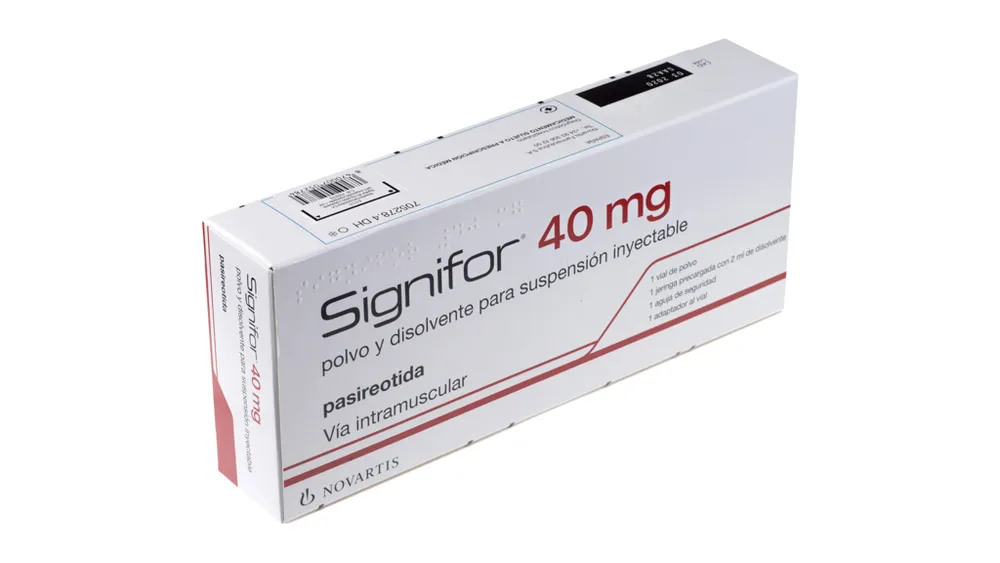
Table of Contents
Package leaflet: Information for the user
Introduction
Package leaflet: information for the patient
Signifor 10mg powder and solvent for injectable suspension
Signifor 20mg powder and solvent for injectable suspension
Signifor 30mg powder and solvent for injectable suspension
Signifor 40mg powder and solvent for injectable suspension
Signifor 60mg powder and solvent for injectable suspension
pasireotide
Read all of this leaflet carefully before you start using this medicine, because it contains important information for you.
- Keep this leaflet, as you may need to read it again.
- If you have any questions, ask your doctor, nurse or pharmacist.
- This medicine has been prescribed for you only, and you should not give it to other people, even if they have the same symptoms as you. It may harm them.
- If you experience any side effects, talk to your doctor, nurse or pharmacist, even if they are side effects not listed in this leaflet. See section 4.
Leaflet contents
- What Signifor is and what it is used for
- What you need to know before using Signifor
- How to use Signifor
- Possible side effects
- How to store Signifor
- Contents of the pack and other information
1. What Signifor is and what it is used for
Signifor is a medicine that contains the active substance pasireotide. It is used to treat acromegaly in adult patients. It is also used to treat Cushing's disease in adult patients for whom surgery is not an option or in whom surgery has failed.
Acromegaly
Acromegaly is caused by a type of tumour called a pituitary adenoma, which develops in the pituitary gland at the base of the brain. The adenoma causes the body to produce increased levels of growth-regulating hormones, leading to excessive growth of tissues, organs, or bones, particularly in the hands and feet.
Signifor reduces the production of these hormones and may also reduce the size of the adenoma. As a result, it helps alleviate the symptoms of acromegaly, such as headaches, excessive sweating, numbness in the hands and feet, fatigue, and joint pain.
Cushing's disease
Cushing's disease is caused by an enlargement of the pituitary gland (a gland located at the base of the brain) called a pituitary adenoma. This causes the body to produce increased levels of a hormone called adrenocorticotropic hormone (ACTH), which in turn leads to increased production of another hormone called cortisol.
The human body naturally produces a substance called somatostatin, which inhibits the production of certain hormones, including ACTH. Pasireotide works in a very similar way to somatostatin. Therefore, Signifor is able to block the production of ACTH, helping to control the overproduction of cortisol and improve the symptoms of Cushing's disease.
If you have any questions about how Signifor works or why this medicine has been prescribed for you, please consult your doctor.
2. What you need to know before using Signifor
Do not use Signifor:
- if you are allergic to pasireotide or to any of the other components of this medicine (listed in section 6);
- if you have severe liver problems.
Warnings and precautions
Talk to your doctor before starting treatment with Signifor if you have or have ever had:
- blood sugar problems, either too high (such as hyperglycaemia/diabetes) or too low (hypoglycaemia);
- heart problems such as a recent heart attack, congestive heart failure (a type of heart disease where the heart cannot pump enough blood through the body), or sudden, crushing chest pain (typically felt as pressure, heaviness, tightness, constriction, or pain across the chest);
- an irregular heart rhythm, such as an abnormal heartbeat or an abnormal electrical signal known as "QT interval prolongation" or "QT prolongation";
- low levels of potassium or magnesium in the blood;
- gallstones;
- or if you are taking anticoagulants (medicines used to reduce the blood's ability to clot), your doctor will monitor your clotting parameters and may adjust your anticoagulant dose.
During treatment with Signifor
- Signifor may cause increased blood sugar levels. Your doctor may monitor your blood sugar levels and may start or adjust your anti-diabetic medication.
- Signifor controls the overproduction of cortisol. This control may be too strong, and you may experience signs or symptoms associated with cortisol deficiency, such as extreme weakness, fatigue, weight loss, nausea, vomiting, or low blood pressure. If this occurs, inform your doctor immediately.
- Signifor may reduce your heart rate. Your doctor may monitor your heart rate using a machine that measures the heart's electrical activity (an "ECG" or electrocardiogram). If you are taking medication for a heart condition, your doctor may also need to adjust your dose.
- your doctor may also periodically monitor your gallbladder, liver enzymes, and pituitary hormones, as all of these may be affected by this medicine.
Children and adolescents
Do not give this medicine to children and adolescents under 18 years of age, as there is insufficient data available in this age group.
Other medicines and Signifor
Signifor may affect how other medicines work. If you are taking other medicines at the same time as Signifor (including over-the-counter medicines), your doctor may need to monitor your heart more closely or adjust the dose of Signifor or the other medicines. Inform your doctor or pharmacist if you are taking, have recently taken, or might need to take any other medicines. In particular, inform your doctor if you are taking:
-
medicines used in organ transplantation to reduce immune system activity (cyclosporine);
-
medicines to treat high blood sugar levels (as in diabetes) or low blood sugar (hypoglycaemia), such as:
-
insulin
-
metformin, liraglutide, vildagliptine, nateglinide (anti-diabetic medicines);
-
medicines for irregular heart rhythm, such as those containing disopyramide, procainamide, quinidine, sotalol, dofetilide, ibutilide, amiodarone, or dronedarone;
-
medicines to treat bacterial infections (oral: clarithromycin, moxifloxacin; injectable: erythromycin, pentamidine);
-
medicines to treat fungal infections (ketoconazole, except in shampoo);
-
medicines to treat certain psychiatric disorders (chlorpromazine, thioridazine, flufenazine, pimozide, haloperidol, tiapride, amisulpride, sertindole, methadone);
-
medicines for hay fever and other allergies (terfenadine, astemizole, mizolastine);
-
medicines used for prevention or treatment of malaria (chloroquine, halofantrine, lumefantrine);
-
medicines to control blood pressure, such as:
-
beta-blockers (metoprolol, carteolol, propranolol, sotalol)
-
calcium channel blockers (bepridil, verapamil, diltiazem)
-
cholinesterase inhibitors (rivastigmine, physostigmine);
-
medicines to regulate the balance of electrolytes (potassium, magnesium) in the body.
Pregnancy, breastfeeding, and fertility
Consult your doctor or pharmacist before using any medicine.
- You should not use Signifor during pregnancy unless clearly necessary. If you are pregnant, think you might be pregnant, or plan to become pregnant, consult your doctor before using this medicine.
- If you are breastfeeding, consult your doctor before taking this medicine, as it is unknown whether Signifor passes into breast milk.
- If you are a woman of childbearing potential, you should use an effective method of contraception during treatment. Discuss the need for contraception with your doctor before using this medicine.
Driving and using machines
Signifor may have a minor effect on the ability to drive and use machines, as some of the adverse effects you may experience while taking Signifor—such as headache, dizziness, and fatigue—may reduce your ability to drive or operate machinery safely.
Important information about some of the ingredients of Signifor
Signifor contains less than 1 mmol of sodium (23 mg) per dose; this is essentially "sodium-free".
3. How to use Signifor
This medicine will only be administered by a healthcare professional trained to do so.
How much Signifor you should use
Acromegaly
The recommended starting dose of Signifor in acromegaly is 40 mg every 4 weeks. After starting treatment, your doctor may re-evaluate your dose. This may involve measuring levels of growth hormone or other hormones in your body. Depending on the results and how you feel, it may be necessary to reduce or increase the dose of Signifor administered with each injection. The dose should not exceed 60 mg. If you have liver disease before starting treatment with Signifor, your doctor may decide to start treatment with a dose of 20 mg.
Cushing's disease
The usual starting dose of Signifor in Cushing's disease is 10 mg every 4 weeks. After starting treatment, your doctor may review your dose. This may involve measuring blood or urinary cortisol levels. Depending on the results and how you feel, the dose of Signifor administered with each injection may be reduced or increased. The dose should not exceed 40 mg.
Your doctor will regularly monitor your response to treatment with Signifor and decide which dose is best for you.
How to use Signifor
Your doctor or nurse will inject Signifor for you. If you have any doubts, consult your doctor, nurse, or pharmacist.
Signifor is administered by intramuscular injection. This means it is injected with a needle into the muscles of your buttocks.
How long to use Signifor
This is a long-term treatment, which may last for years. Your doctor will regularly monitor your condition to ensure the treatment is having the desired effect. Your treatment with Signifor should continue for as long as your doctor advises it is necessary.
If you interrupt treatment with Signifor
If you interrupt your treatment with Signifor, your symptoms may return. Therefore, do not interrupt your treatment with Signifor unless instructed by your doctor.
If you have any further questions about using this medicine, ask your doctor, nurse, or pharmacist.
4. Possible side effects
Like all medicines, this medicine can cause side effects, although not everyone gets them.
Some side effects can be serious. Immediately inform your doctor if you experience any of the following:
Very common (may affect more than 1 in 10 patients)
- High blood sugar level. You may notice excessive thirst, increased urination, increased appetite with weight loss, tiredness, nausea, vomiting, abdominal pain.
- Gallstones or associated complications. You may experience fever, shaking, yellowing of the skin/eyes, sudden back pain or pain in the right side of the abdomen.
Common (may affect up to 1 in 10 patients)
- Low cortisol levels. You may experience extreme weakness, tiredness, weight loss, nausea, vomiting, and low blood pressure.
- Slow heart rate.
- Prolonged QT interval (an abnormal electrical signal in your heart that can be seen on tests).
- Problems with bile flow (cholestasis). You may experience yellowing of the skin, dark urine, pale stools, and itching.
- Inflammation of the gallbladder (cholecystitis).
Other side effects of Signifor may include:
Very common (may affect more than 1 in 10 patients)
- Diarrhea
- Nausea
- Abdominal pain
- Fatigue
Common (may affect up to 1 in 10 patients)
- Tiredness, fatigue, pale skin (signs of low red blood cell count)
- Loss of appetite
- Headache
- Swelling
- Vomiting
- Dizziness
- Pain, discomfort, itching, and swelling at the injection site
- Changes in liver function test results
- Abnormal blood test results (sign of elevated blood creatine phosphokinase, glycated hemoglobin, lipase levels)
- Hair loss
Uncommon (may affect up to 1 in 100 patients)
- Changes in blood tests of pancreatic function (amylase)
- Abnormal blood clotting parameters
Frequency not known (cannot be estimated from available data)
- Elevated levels of ketone bodies (a group of substances produced in the liver) in urine or blood (diabetic ketoacidosis) as a complication of high blood sugar. You may experience fruity-smelling breath, difficulty breathing, and confusion.
- Fatty or oily stools
- Change in stool color
Reporting of side effects
If you experience any side effect, talk to your doctor, pharmacist, or nurse, even if it is a possible side effect not listed in this leaflet. You can also report them directly through the national reporting system included in Appendix V. By reporting side effects, you can help provide more information on the safety of this medicine.
5. Storage of Signifor
- Keep this medicine out of the sight and reach of children.
- Do not use this medicine after the expiry date stated on the carton, vial, and pre-filled syringe after «EXP»/«CAD». The expiry date refers to the last day of the month indicated.
- Store in a refrigerator (between 2°C and 8°C). Do not freeze.
- Medicines must not be disposed of via wastewater or household waste. Ask your pharmacist how to dispose of medicines and packaging no longer required. This will help protect the environment.
6. Contents of the pack and other information
Composition of Signifor
- The active substance is pasireotide.
Signifor 10 mg: each vial contains 10 mg of pasireotide (as pasireotide pamoate)
Signifor 20 mg: each vial contains 20 mg of pasireotide (as pasireotide pamoate)
Signifor 30 mg: each vial contains 30 mg of pasireotide (as pasireotide pamoate)
Signifor 40 mg: each vial contains 40 mg of pasireotide (as pasireotide pamoate)
Signifor 60 mg: each vial contains 60 mg of pasireotide (as pasireotide pamoate)
- The other components are:
- In the powder: poly(D,L-lactide-co-glycolide) (50‑60:40.50), poly(D,L-lactide-co-glycolide) (50:50).
- In the solvent: sodium carmellose, mannitol, poloxamer 188, water for injections.
Appearance of Signifor and contents of the pack
Signifor powder is a slightly yellowish to yellow powder in a vial. The solvent is a clear, colourless to slightly yellow or slightly brown solution in a pre-filled syringe.
Signifor 10 mg is available in unit packs containing one vial of powder with 10 mg of pasireotide and one pre-filled syringe with 2 ml of solvent.
Signifor 20 mg is available in unit packs containing one vial of powder with 20 mg of pasireotide and one pre-filled syringe with 2 ml of solvent.
Signifor 30 mg is available in unit packs containing one vial of powder with 30 mg of pasireotide and one pre-filled syringe with 2 ml of solvent.
Signifor 40 mg is available in unit packs containing one vial of powder with 40 mg of pasireotide and one pre-filled syringe with 2 ml of solvent.
Signifor 60 mg is available in unit packs containing one vial of powder with 60 mg of pasireotide and one pre-filled syringe with 2 ml of solvent.
Each unit pack contains the vial and the pre-filled syringe in a sealed blister tray, together with a vial adapter and a safety injection needle.
Signifor 40 mg and Signifor 60 mg are also available in multiple packs containing 3 intermediate packs.
In your country, only certain strengths and pack sizes may be marketed.
Marketing Authorisation Holder
Recordati Rare Diseases
Tour Hekla
52 avenue du Général de Gaulle
92800 Puteaux
France
Manufacturer
Recordati Rare Diseases
Tour Hekla
52 avenue du Général de Gaulle
92800 Puteaux
France
Recordati Rare Diseases
Eco River Parc
30 rue des Peupliers
92000 Nanterre
France
For more information about this medicine, please contact the local representative of the Marketing Authorisation Holder:
Belgium/Belgium/Belgium Recordati Tél/Tel: +32 2 46101 36 | Lithuania Recordati AB. Tel: +46 8 545 80 230 Sweden |
| Luxembourg/Luxembourg Recordati Tél/Tel: +32 2 46101 36 Belgium/Belgium |
Czech Republic Recordati Rare Diseases Tel: +33 (0)1 47 73 64 58 France | Hungary Recordati Rare Diseases Tel: +33 (0)1 47 73 64 58 France |
Denmark Recordati AB. Tlf: +46 8 545 80 230 Sweden | Malta Recordati Rare Diseases Tel: +33 1 47 73 64 58 France |
Germany Recordati Rare Diseases Germany GmbH Tel: +49 731 140 554 0 | Netherlands Recordati Tel: +32 2 46101 36 Belgium |
Estonia Recordati AB. Tel: +46 8 545 80 230 Sweden | Norway Recordati AB. Tlf: +46 8 545 80 230 Sweden |
Greece Recordati Hellas Tel: +30 210 6773822 | Austria Recordati Rare Diseases Germany GmbH Tel: +49 731 140 554 0 Germany |
Spain Recordati Rare Diseases Spain S.L.U. Tel: +34 91 659 28 90 | Poland Recordati Rare Diseases Tel: +33 (0)1 47 73 64 58 France |
France Recordati Rare Diseases Tél: +33 (0)1 47 73 64 58 | Portugal Recordati Rare Diseases SARL Tel: +351 21 432 95 00 |
Croatia Recordati Rare Diseases Tél: +33 (0)1 47 73 64 58 France | Romania Recordati Rare Diseases Tel: +33 (0)1 47 73 64 58 France |
Ireland Recordati Rare Diseases Tél: +33 (0)1 47 73 64 58 France | Slovenia Recordati Rare Diseases Tel: +33 (0)1 47 73 64 58 France |
Iceland Recordati AB. Simi: +46 8 545 80 230 Sweden | Slovak Republic Recordati Rare Diseases Tel: +33 (0)1 47 73 64 58 France |
Italy Recordati Rare Diseases Italy Srl Tel: +39 02 487 87 173 | Finland Recordati AB. Puh/Tel: +46 8 545 80 230 |
Cyprus Recordati Rare Diseases Tel: +33 1 47 73 64 58 France | Sweden Recordati AB. Tel: +46 8 545 80 230 |
Latvia Recordati AB. Tel: +46 8 545 80 230 Sweden |
Date of the most recent review of this leaflet:
Other sources of information
Detailed information on this medicine is available on the website of the European Medicines Agency: https://www.ema.eu游戏副本. There are also links to other websites about rare diseases and orphan medicines.
This information is intended for healthcare professionals only:
INSTRUCTIONS FOR USE OF SIGNIFOR POWDER AND SOLVENT FOR INJECTABLE SUSPENSION
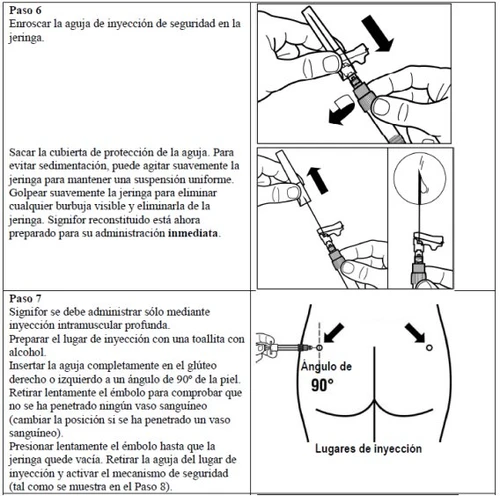
FOR DEEP INTRAMUSCULAR INJECTION ONLY
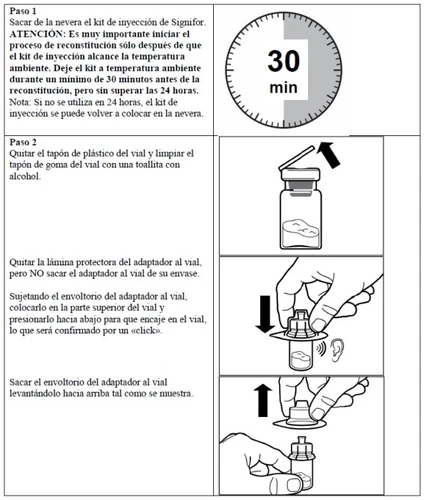
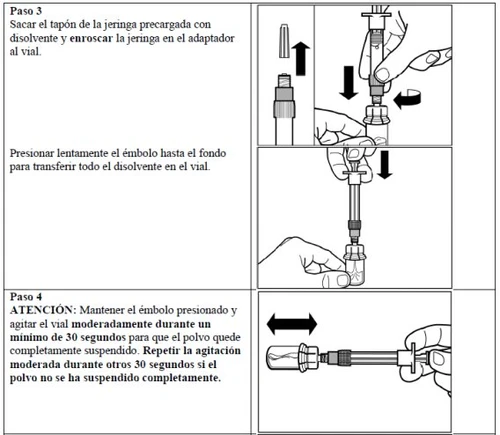
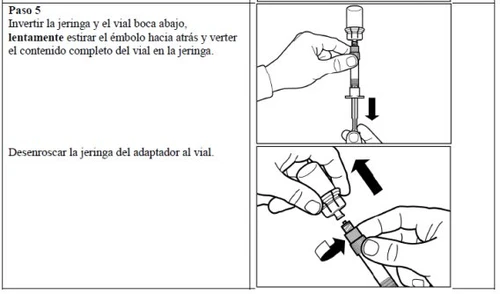
WARNING: In the reconstitution process of Signifor, there are two critical steps. If these steps are not performed correctly, it may result in improper administration of the injection.
|
The injection kit includes:
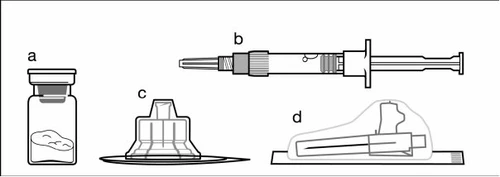
a A vial containing the powder
b A pre-filled syringe containing the solvent
c A vial adapter for reconstitution of the medication
d A safety needle (20G × 1.5")
Follow the detailed instructions below to ensure proper reconstitution of Signifor powder and solvent for injectable suspension before deep intramuscular injection.
Signifor suspension must only be prepared immediately prior to administration.
Signifor must only be administered by a healthcare professional with experience.