Ranolazine Krka 500 mg prolonged-release tablets EFG
Spain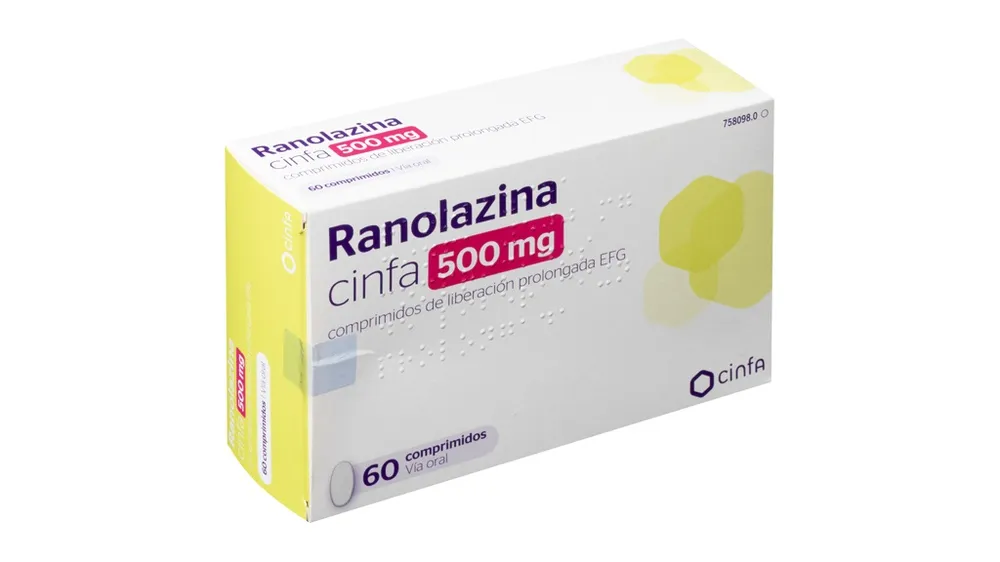
Table of Contents
Package leaflet: Information for the user
Introduction
Package leaflet: Information for the user
Ranolazina Krka 375 mg prolonged-release tablets EFG
Ranolazina Krka 500 mg prolonged-release tablets EFG
Ranolazina Krka 750 mg prolonged-release tablets EFG
Read the entire leaflet carefully before you start taking this medicine because it contains important information for you.
- Keep this leaflet as you may need to read it again.
- If you have any questions, ask your doctor or pharmacist.
- This medicine has been prescribed for you only and must not be given to other people, even if they have the same symptoms, as it may be harmful to them.
- If you experience any adverse effects, consult your doctor, even if they are adverse effects not listed in this leaflet. See section 4.
Leaflet contents
- What Ranolazina Krka is and what it is used for
- What you need to know before taking Ranolazina Krka
- How to take Ranolazina Krka
- Possible adverse effects
- How to store Ranolazina Krka
- Contents of the pack and other information
1. What Ranolazina Krka is and what it is used for
Ranolazina is a medicine used in combination with other medications for the treatment of angina pectoris, a condition that causes chest pain or discomfort felt anywhere in the upper half of the body between the neck and the upper abdomen, often occurring during physical exertion or particularly intense activity.
You should consult a doctor if your condition does not improve or worsens.
2. What you need to know before taking Ranolazina Krka
Do not take Ranolazina Krka:
- if you are allergic to ranolazine or to any of the other ingredients of this medicine (listed in section 6).
- if you have severe kidney problems.
- if you have moderate or severe liver problems.
- if you are taking certain medicines to treat bacterial infections (clarithromycin, telithromycin), fungal infections (itraconazole, ketoconazole, voriconazole, posaconazole), HIV infection (AIDS) (protease inhibitors), depression (nefazodone), or heart rhythm disorders (e.g. quinidine, dofetilide, or sotalol).
Warnings and precautions
Talk to your doctor or pharmacist before taking Ranolazina Krka:
- if you have mild or moderate kidney problems.
- if you have mild liver problems.
- if you have ever had an abnormal electrocardiogram (ECG).
- if you are elderly.
- if you have low body weight (60 kg or less).
- if you have heart failure.
If any of these apply to you, your doctor may decide to prescribe a lower dose of the medicine or take other precautions.
Other medicines and Ranolazina Krka
Tell your doctor or pharmacist if you are taking, have recently taken, or might need to take any other medicines.
Do not use any of the following medicines if you are taking ranolazine:
- certain medicines to treat bacterial infections (clarithromycin, telithromycin), fungal infections (itraconazole, ketoconazole, voriconazole, posaconazole), HIV infection (AIDS) (protease inhibitors), depression (nefazodone), or heart rhythm disorders (e.g. quinidine, dofetilide, or sotalol).
Tell your doctor or pharmacist before taking ranolazine if you are taking:
- certain medicines to treat bacterial infections (erythromycin) or fungal infections (fluconazole), a medicine used to prevent organ transplant rejection (cyclosporine), or heart medications such as diltiazem or verapamil. These medicines may increase the likelihood of side effects such as dizziness, nausea, or vomiting, which are possible side effects of ranolazine treatment (see section 4). Your doctor may decide to prescribe a lower dose.
- medicines for epilepsy or other neurological disorders (e.g. phenytoin, carbamazepine, or phenobarbital); if you are taking rifampicin for an infection (e.g. tuberculosis); or if you are taking the herbal remedy St. John’s wort (hypericum), as these medicines may make ranolazine less effective.
- heart medicines containing digoxin or metoprolol, as your doctor may wish to adjust the dose of these medicines while you are taking ranolazine.
- certain medicines to treat allergies (e.g. terfenadine, astemizole, mizolastine), heart rhythm disorders (e.g. disopyramide, procainamide), or depression (e.g. imipramine, doxepine, amitriptyline), as these medicines may affect your electrocardiogram (ECG).
- certain medicines to treat depression (bupropion), psychosis, HIV infection (efavirenz), or cancer (cyclophosphamide).
- certain medicines to treat high blood cholesterol levels (e.g. simvastatin, lovastatin, atorvastatin). These medicines may cause muscle pain and muscle damage. Your doctor may decide to adjust the dose of these medicines while you are taking ranolazine.
- certain medicines used to prevent rejection of a transplanted organ (e.g. tacrolimus, cyclosporine, sirolimus, everolimus), as your doctor may decide to adjust the dose of these medicines while you are taking ranolazine.
Taking Ranolazina Krka with food and drink
Ranolazine may be taken with or without food. While being treated with ranolazine, you must not drink grapefruit juice.
Pregnancy and breastfeeding
If you are pregnant or breastfeeding, think you may be pregnant, or are planning to become pregnant, consult your doctor before using this medicine.
Pregnancy
You must not take ranolazine during pregnancy unless your doctor has specifically instructed you to do so.
Breastfeeding
You must not take ranolazine while breastfeeding. Consult your doctor if you are breastfeeding.
Driving and using machines
No studies have been conducted on the effects of ranolazine on the ability to drive or operate machinery. Ask your doctor whether you can drive or operate machinery.
Ranolazine may cause side effects such as dizziness (common), blurred vision (uncommon), confusion (uncommon), hallucinations (uncommon), double vision (uncommon), or coordination problems (rare), which may affect your ability to drive or operate machinery. If you experience any of these symptoms, do not drive or operate machinery until the symptoms have completely resolved.
Ranolazina Krka contains sodium
This medicine contains less than 1 mmol of sodium (23 mg) per tablet; hence, it is essentially “sodium-free”.
3. How to take Ranolazine Krka
Always follow exactly the instructions given by your doctor or pharmacist for taking this medicine. If you are unsure, consult your doctor or pharmacist again.
Swallow the tablets whole with water. Do not crush, suck, chew, or split the tablets in half, as this may affect how the medicine is released in your body.
The initial dose for adults is one 375 mg tablet twice daily. After 2–4 weeks, your doctor may increase the dose to achieve the desired effect. The maximum dose of ranolazine is 750 mg twice daily.
It is important to inform your doctor if you experience adverse effects such as dizziness, nausea, or vomiting. Your doctor may reduce your dose or, if necessary, instruct you to stop treatment with ranolazine.
Use in children and adolescents
Ranolazine must not be used in children and adolescents under 18 years of age.
If you take more Ranolazine Krka than you should
If you accidentally take too many ranolazine tablets or tablets with a higher dose than prescribed by your doctor, it is important to inform your doctor immediately. If you cannot contact your doctor, go to the nearest emergency department. Take any remaining tablets, together with the blister pack (the aluminium sheet containing the tablets) and the outer packaging, so that hospital staff can easily identify what you have taken.
In case of overdose or accidental ingestion, contact your doctor or pharmacist, or call the Toxicology Information Service at telephone number: 91 562 04 20, stating the name of the medicine and the amount ingested.
If you forget to take Ranolazine Krka
If you forget to take a dose, take it as soon as you remember, unless it is almost time for your next dose (less than 6 hours away).
Do not take a double dose to make up for a missed dose.
4. Possible adverse effects
Like all medicines, this medicine can cause adverse effects, although not everyone will experience them.
You must stop taking ranolazine and consult your doctor immediately if you experience the following symptoms of angioedema, a rare disorder that may be serious:
- swelling of the face, tongue or throat
- difficulty swallowing
- hives or difficulty breathing
Inform your doctor if you experience frequent adverse effects such as dizziness, nausea or vomiting. Your doctor may reduce your dose or instruct you to stop taking ranolazine.
Other adverse effects you may experience:
Frequent adverse effects (may affect up to 1 in 10 people) are:
- Constipation
- Dizziness
- Headache
- Nausea, vomiting
- Weakness (asthenia)
Uncommon adverse effects (may affect up to 1 in 100 people) are:
- Altered sensitivity
- Anxiety, difficulty sleeping, confusion, hallucinations
- Blurred vision, visual disturbances
- Sensory disturbances (touch or taste), tremors, fatigue or weakness, drowsiness or lethargy, weakness or fainting, dizziness upon standing
- Dark urine, blood in urine, difficulty urinating
- Dehydration
- Difficulty breathing, cough, nosebleeds
- Double vision
- Excessive sweating, itching
- Feeling of swelling or puffiness
- Hot flushes, low blood pressure
- Increased levels of a substance called creatinine, increased blood urea, increased platelet or white blood cell counts, electrocardiogram (ECG) abnormalities
- Joint swelling, limb pain
- Loss of appetite and/or weight loss
- Muscle cramps, muscle weakness
- Ringing in the ears and/or sensation of dizziness
- Stomach pain or discomfort, indigestion, dry mouth, or gas
Rare adverse effects (may affect up to 1 in 1,000 people) are:
- Inability to urinate
- Abnormal liver laboratory values
- Acute kidney failure
- Changes in sense of smell, numbness of mouth or lips, hearing loss
- Cold sweats, rash
- Coordination problems
- Drop in blood pressure upon standing
- Decreased level of consciousness or loss of consciousness
- Disorientation
- Cold sensation in hands and feet
- Hives, skin allergic reactions
- Impotence
- Inability to walk due to balance problems
- Inflammation of the pancreas or intestine
- Memory loss
- Throat tightness
- Low sodium levels in blood (hyponatremia), which may cause fatigue and confusion, muscle twitching, cramps, and coma
Adverse effects with unknown frequency (cannot be estimated from available data):
- Myoclonus
Reporting of adverse effects
If you experience any type of adverse effect, talk to your doctor, pharmacist or nurse, even if it is a possible adverse effect not listed in this leaflet. You may also report them directly through the Spanish Pharmacovigilance System for Human Medicines: https://www.notificaram.es. By reporting adverse effects, you can help provide more information on the safety of this medicine.
5. Storage of Ranolazine Krka
Keep out of sight and reach of children.
Do not use this medicine after the expiry date stated on the packaging after EXP. The expiry date is the last day of the month indicated.
Store below 25°C.
Medicines must not be disposed of via wastewater or household waste. Unused medicines and containers should be handed in at the SIGRE Point at your pharmacy. If you are unsure, ask your pharmacist how to dispose of medicines and containers you no longer need. This will help protect the environment.
6. Contents of the pack and other information
Composition of Ranolazine Krka
- The active substance is ranolazine. Each prolonged-release tablet contains 375 mg, 500 mg or 750 mg of ranolazine.
- The other components (excipients) are:
Ranolazine Krka 375 mg prolonged-release tablets: microcrystalline cellulose, methacrylic acid-ethyl acrylate copolymer (1:1), hypromellose (5 mPa·s), sodium hydroxide and magnesium stearate (E470b) in the tablet core; poly(vinyl alcohol), macrogol 3350, titanium dioxide (E171) and talc in the film coating.
Ranolazine Krka 500 mg prolonged-release tablets: microcrystalline cellulose, methacrylic acid-ethyl acrylate copolymer (1:1), hypromellose (5 mPa·s), sodium hydroxide and magnesium stearate (E470b) in the tablet core; poly(vinyl alcohol), macrogol 3350, titanium dioxide (E171), talc and yellow iron oxide (E172) in the film coating.
Ranolazine Krka 750 mg prolonged-release tablets: microcrystalline cellulose, methacrylic acid-ethyl acrylate copolymer (1:1), hypromellose (5 mPa·s), sodium hydroxide and magnesium stearate (E470b) in the tablet core; poly(vinyl alcohol), macrogol 3350, titanium dioxide (E171), talc and red iron oxide (E172) in the film coating.
See section 2 “Ranolazine Krka contains sodium”.
Appearance of the product and contents of the pack
Ranolazine Krka 375 mg prolonged-release tablets: The prolonged-release tablets are white, oval, biconvex, film-coated, marked with "375" on one side of the tablet. Tablet dimensions: approximately 15 x 7 mm.
Ranolazine Krka 500 mg prolonged-release tablets: The prolonged-release tablets are pale yellowish-brown, oval, biconvex, film-coated, marked with "500" on one side of the tablet. Tablet dimensions: approximately 17 x 8 mm.
Ranolazine Krka 750 mg prolonged-release tablets: The prolonged-release tablets are pink, oval, biconvex, film-coated, marked with "750" on one side of the tablet. Tablet dimensions: approximately 19 x 9 mm.
Ranolazine Krka is supplied in boxes containing 30, 60 or 100 prolonged-release tablets in blisters.
Only certain pack sizes may be marketed.
Marketing Authorization Holder and Manufacturer
KRKA, d.d., Novo mesto, Šmarješka cesta 6, 8501 Novo mesto, Slovenia
For more information about this medicine, please contact the local representative of the Marketing Authorization Holder:
KRKA Farmacéutica, S.L., Calle de Anabel Segura, 10, 28108 Alcobendas, Madrid, Spain
This medicine is authorized in the Member States of the European Economic Area and in the United Kingdom (Northern Ireland) under the following names:
Member State | Name of the medicinal product |
Croatia | Ranolazine Krka 375 mg prolonged release tablets Ranolazine Krka 500 mg prolonged release tablets Ranolazine Krka 750 mg prolonged release tablets |
Spain | Ranolazine Krka 375 mg prolonged release tablets, EFG Ranolazine Krka 500 mg prolonged release tablets, EFG Ranolazine Krka 750 mg prolonged release tablets, EFG |
Ireland | Ranolazine Krka 375 mg prolonged release tablets Ranolazine Krka 500 mg prolonged release tablets Ranolazine Krka 750 mg prolonged release tablets |
Italy | Ranolazine Krka |
Portugal | Ranolazine Krka |
United Kingdom (Northern Ireland) | Ranolazine Krka 375 mg prolonged release tablets Ranolazine Krka 500 mg prolonged release tablets Ranolazine Krka 750 mg prolonged release tablets |
Date of the most recent review of this leaflet: December 2022
Detailed information about this medicine is available on the website of the Spanish Agency for Medicines and Health Products (AEMPS) (http://www.aemps.gob.es/).