Progevera 10 mg tablets
Spain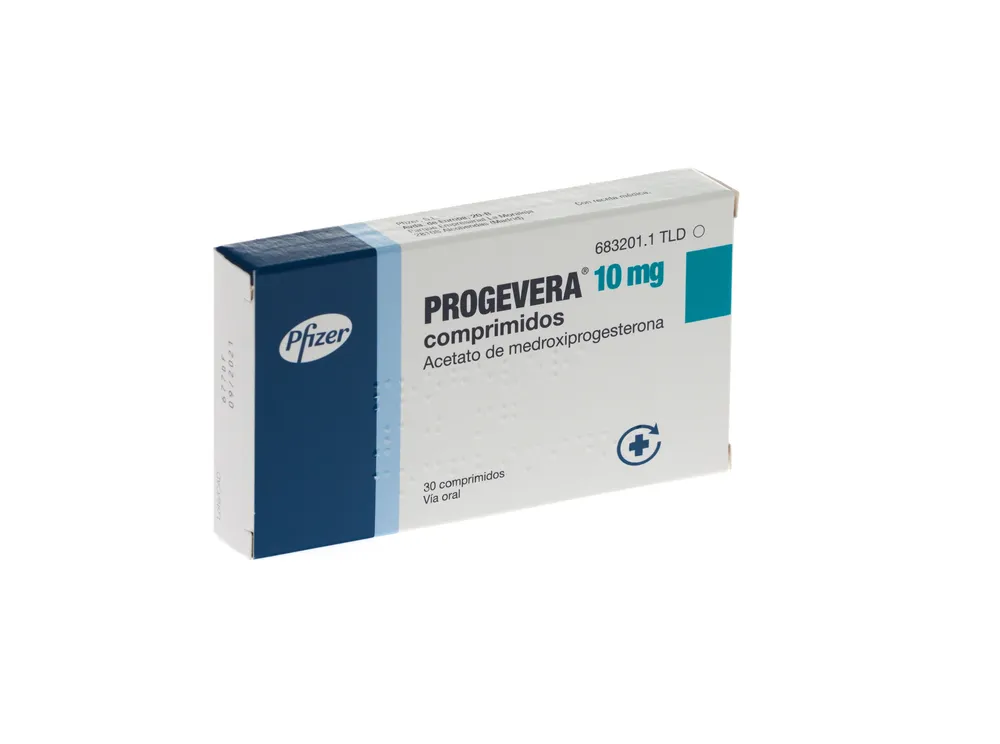
Table of Contents
- Package leaflet: Information for the user
- Introduction
- **Progevera 10 mg tablets**
- 1. What Progevera is and what it is used for
- 2. What you need to know before starting to take Progevera 10 mg tablets
- 3. How to take Progevera 10 mg tablets
- 4. Possible adverse effects
- 5. Storage of Progevera 10 mg tablets
- 6. Contents of the pack and other information
- Marketing Authorization Holder
- Manufacturer:
Package leaflet: Information for the user
Introduction
Package leaflet: information for the user
Progevera 10 mg tablets
medroxyprogesterone acetate
Read the entire leaflet carefully before starting to take this medicine, as it contains important information for you.
- Keep this leaflet, as you may need to read it again.
- If you have any questions, consult your doctor or pharmacist.
- This medicine has been prescribed for you only, and you should not give it to others, even if they have the same symptoms, as it may harm them.
- If you experience any adverse effects, consult your doctor or pharmacist, even if the effects are not listed in this leaflet. See section 4.
Contents of the leaflet:
- What Progevera 10 mg tablets are and what they are used for
- What you need to know before taking Progevera 10 mg tablets
- How to take Progevera 10 mg tablets
- Possible side effects
- How to store Progevera 10 mg tablets
- Contents of the pack and other information
1. What Progevera is and what it is used for
Progevera contains the active substance drospirenone, which belongs to a group of medicines called progestogens. Drospirenone is a synthetic progestogen with anti-mineralocorticoid and anti-androgenic properties. It is structurally related to spironolactone and has no glucocorticoid, androgenic, or estrogenic activity.
Progevera is used for:
- Hormonal contraception (prevention of pregnancy)
- Treatment of moderate acne vulgaris in women who choose an oral contraceptive for contraception
- Management of premenstrual dysphoric disorder (PMDD)
- Hormone replacement therapy in combination with estrogens for the treatment of menopausal symptoms in women with an intact uterus
The mechanism of action of Progevera as a contraceptive involves suppression of ovulation, modification of the endometrium, and thickening of cervical mucus, which inhibits sperm penetration.
Contraindications: Progevera must not be used in patients with known hypersensitivity to drospirenone or any of the excipients, in the presence of undiagnosed vaginal bleeding, known or suspected pregnancy, history of venous or arterial thromboembolic disorders (e.g., deep vein thrombosis, pulmonary embolism, myocardial infarction, stroke), severe hepatic disease, hepatic adenoma or carcinoma, or in women with hereditary angioedema.
Progevera may increase the risk of venous thromboembolism (VTE), particularly during the first year of use or after a break of ≥4 weeks. Risk factors such as age, obesity, and family history should be carefully evaluated before prescribing.
Use of Progevera may also lead to changes in blood pressure, potassium levels, and glucose tolerance. Regular monitoring is recommended, especially in patients with underlying conditions such as hypertension, diabetes, or renal impairment.
Progevera should be used with caution in women with a history of depression, as mood changes and depression have been reported during its use.
For detailed information, refer to the full product information or consult your healthcare provider.
Progevera 10 mg tablets are supplied in blisters of 30 tablets. It is a hormone (progestogen) that replaces the body's natural hormone deficiency and counteracts certain undesirable effects of other hormones (estrogens, androgens, and gonadotropins) in the following specific conditions:
- As an adjunctive treatment to estrogen therapy in non-hysterectomized postmenopausal women (without removal of the uterus).
- Secondary amenorrhea (prolonged absence of menstrual bleeding), provided that pregnancy has been previously ruled out.
- Functional metrorrhagia (heavy and irregular bleeding).
- Infertility, as inadequate corpus luteum function may be a cause of infertility.
- Premenstrual syndrome (a disorder that typically occurs during the days preceding menstruation).
- Dysmenorrhea (menstrual pain, leg cramps).
- Mild to moderate endometriosis (growth of endometrial tissue patches outside the uterus).
2. What you need to know before starting to take Progevera 10 mg tablets
Do not take Progevera:
- If you are allergic (hypersensitive) to medroxyprogesterone acetate or to any of the other components of Progevera.
- If you have thrombophlebitis or thromboembolic disorders, severe hypertension, severe liver impairment, missed abortion (pregnancy termination without expulsion of the fetus), undiagnosed vaginal or urinary tract bleeding, or undiagnosed breast pathology.
- If you are pregnant or think you might be pregnant.
Age is not a limiting factor for therapy, although treatment with progestogens may mask the onset of menopause.
Take special care with Progevera:
- If you experience vaginal spotting or bleeding, you should consult your doctor to determine the cause. Heavy bleeding may occur in patients being treated for endometriosis.
- If you have a history of epilepsy or migraines, if you are asthmatic, or if you have cardiac or renal disorders, you should inform your doctor, as fluid retention caused by the medication may worsen your condition.
- If you are diabetic or suffer from depression.
- If you have or suspect thromboembolic disorders (conditions that may lead to abnormal blood clots), sudden partial or complete loss of vision, double vision, headache, retinal edema, or vascular lesions of the retina, you should stop treatment and contact your doctor immediately.
- If you are having a blood test, inform the laboratory staff that you are taking Progevera.
An adequate intake of calcium and vitamin D is recommended.
Bone mineral density assessment may be appropriate in some patients who use medroxyprogesterone acetate for prolonged periods.
Breast cancer
Evidence indicates that hormone replacement therapy (HRT) containing both estrogens and progestogens, or estrogens alone, increases the risk of developing breast cancer. This additional risk depends on the duration of HRT. The additional risk becomes apparent after 3 years of treatment. After stopping HRT, this additional risk decreases over time, but may persist for 10 years or more if HRT has been used for more than 5 years.
Other medicines and Progevera 10 mg
Inform your doctor or pharmacist if you are currently taking, have recently taken, or might take any other medicines, including those obtained without a prescription. Especially if you are taking hypoglycemic agents, anticoagulants, or aminoglutethimide.
Pregnancy, breastfeeding, and fertility
A possible association has been reported between the administration of progestogens during the first months of pregnancy and congenital malformations in the newborn. In view of this and the risk of virilization in female fetuses, the use of this product during pregnancy is not recommended.
Progestogens have been detected in breast milk. Although the effect of these substances on the nursing infant is unknown, as a general rule, you should avoid breastfeeding while taking this medicine.
Driving and using machines
Progevera does not affect the ability to drive vehicles or operate machinery.
Progevera 10 mg contains lactose and sucrose
If your doctor has informed you that you have an intolerance to certain sugars, consult him before taking this medicine.
3. How to take Progevera 10 mg tablets
Follow these instructions unless your doctor has given you different ones.
Remember to take your medication. Consult your doctor or pharmacist if you have any doubts.
Method of administration
Menopause: 5 to 10 mg daily (half to one 10 mg tablet), during the last 10–14 days of estrogen therapy.
Secondary amenorrhea: 2.5 (*see note at the end of this section) to 10 mg daily (one 10 mg tablet), for 5 to 10 days, starting on day 16 or 21 of the cycle. In patients with endometrial atrophy, it is advisable to combine Progevera with estrogen administration; the dose required to induce maximal secretory transformation of the endometrium is 10 mg (one 10 mg tablet) of Progevera daily for 10 days. Bleeding usually occurs within the first three days after discontinuing Progevera treatment. To restore normal menstrual cycle, the treatment should be repeated for three consecutive cycles.
Functional metrorrhagia: 2.5 (*see note at the end of this section) to 10 mg daily (one 10 mg tablet), for 5 to 10 days, starting on day 16 or 21 of the cycle. Once bleeding is controlled, Progevera treatment should be repeated for two consecutive cycles.
Infertility: 2.5 (*see note at the end of this section) to 10 mg daily (one 10 mg tablet), starting from the second half of the cycle (day 14 of the cycle).
Premenstrual tension: 2.5 (*see note at the end of this section) to 10 mg daily (one 10 mg tablet), for 5–7 days before the end of the menstrual cycle.
Dysmenorrhea: 2.5 (*see note at the end of this section) to 10 mg daily (one 10 mg tablet), from day 5 to day 25 of the menstrual cycle.
Endometriosis: 10 mg (one 10 mg tablet), three times a day, starting from the first day of the menstrual cycle, for 90 consecutive days.
- The 2.5 mg dose is best administered as half a tablet of Progevera 5 mg.
If you feel that the effect of Progevera is too strong or too weak, inform your doctor or pharmacist.
If you take more Progevera 10 mg than you should
Acute administration of a therapeutic dose of Progevera by oral route is considered safe and non-toxic. If you have taken more Progevera than you should, contact your doctor or pharmacist immediately.
In case of overdose or accidental ingestion, contact the Toxicology Information Service. Telephone: 91 562 04 20.
If you forget to take Progevera 10 mg
Do not take a double dose to make up for missed doses.
4. Possible adverse effects
Like all medicines, Progevera may have adverse effects, although not everyone experiences them.
Uncommon adverse effects, which may affect more than 1 in 1,000 but less than 1 in 100 people, are:
Nervous system disorders: headache, nervousness, drowsiness, dizziness.
Skin and subcutaneous tissue disorders: acne.
Rare adverse effects, which may affect more than 1 in 10,000 but less than 1 in 1,000 people, are:
Psychiatric disorders: difficulty sleeping.
Nervous system disorders: depression.
Vascular disorders: conditions that may lead to abnormal blood clot formation (thromboembolic disorders).
Gastrointestinal disorders: nausea.
Skin and subcutaneous tissue disorders: hair loss, excessive hair growth in women, itching, rash, hives.
Immune system disorders: potentially severe allergic reactions, appearance of localized hives mainly around the eyes, lips, hands, feet, and throat.
Complementary examinations: decreased glucose tolerance.
Metabolism and nutrition disorders: weight changes.
Reproductive system and breast disorders: breast tenderness on palpation.
In addition, the following adverse effects have been observed:
Hepatic disorders: yellowing of the skin and the white part of the eyes.
Reproductive system and breast disorders: abnormal uterine bleeding (irregular, heavier, or lighter), absence of menstruation, cervical changes (discharges and erosions), breast pain, milk secretion from the breasts outside pregnancy and postpartum period, prolonged absence of ovulation.
General disorders and administration site conditions: edema/fluid retention, fatigue, fever.
If you consider any of the adverse effects you experience to be severe, or if you notice any adverse effects not listed in this leaflet, inform your doctor or pharmacist.
5. Storage of Progevera 10 mg tablets
Keep out of the reach and sight of children.
No special storage conditions are required. Store at room temperature.
Expiry
Do not use Progevera after the expiry date stated on the packaging.
Medicines must not be disposed of via wastewater or household waste. Dispose of unused medicines and their containers at the SIGRE Point at your pharmacy. If you are in doubt, ask your pharmacist how to properly dispose of unused medicines and their containers. This will help protect the environment.
6. Contents of the pack and other information
Composition of Progevera
Progevera 10 mg tablets
- The active substance is medroxyprogesterone acetate. Each tablet contains 10 mg of medroxyprogesterone acetate.
- The other components (excipients) are: lactose, sucrose, corn starch, talc, calcium stearate and liquid paraffin.
Appearance of the medicine and contents of the pack
Progevera 10 mg are white, film-coated, biconvex, circular tablets, scored on one side. Each pack contains 30 tablets.
The manufacturer also markets another similar medicinal product: Progevera 5 mg, available in a blister pack containing 24 tablets.
Marketing Authorization Holder
Pfizer, S.L.
Avda. de Europa 20-B.
Parque Empresarial La Moraleja
28108 Alcobendas. (Madrid),
Spain
Manufacturer:
Pfizer Italia, S.r.L.
Località Marino del Tronto
63100 Ascoli Piceno (AP)
Italy
Date of the most recent review of this leaflet: October 2025
Detailed and up-to-date information on this medicinal product is available on the website of the Spanish Agency of Medicines and Medical Devices (AEMPS) (http://www.aemps.gob.es/)