Prednisone Tarbis 10 mg tablets
Spain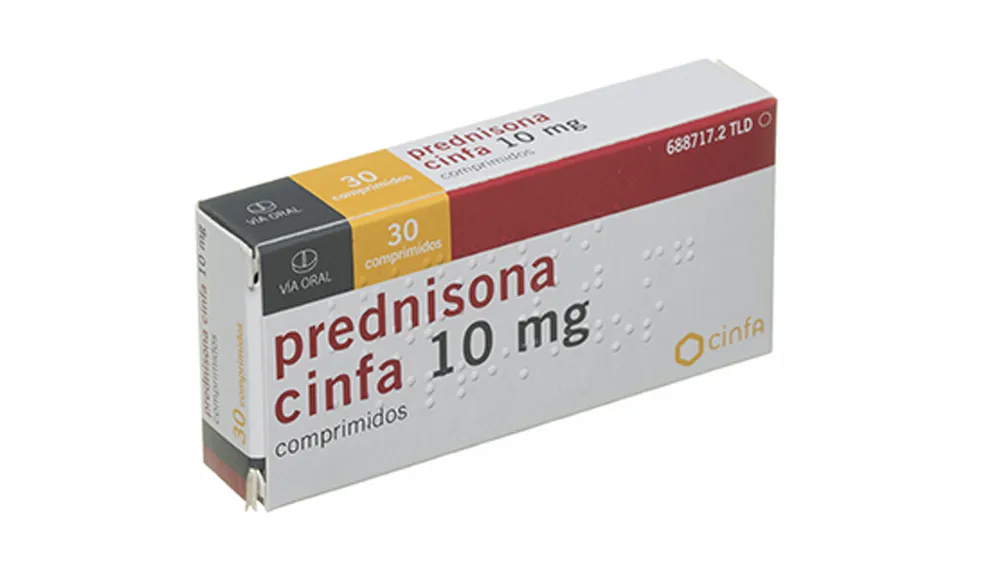
Table of Contents
- Package leaflet: Information for the user
- Introduction
- 1. What Prednisona Tarbis is and what it is used for
- 2. What you need to know before taking Prednisona Tarbis
- 3. How to take Prednisona Tarbis
- 4. Possible adverse effects
- 5. Storage of Prednisona Tarbis
- 6. Contents of the container and additional information
Package leaflet: Information for the user
Introduction
Package leaflet: information for the patient
Prednisona Tarbis 10 mg tablets
prednisone
Read the entire leaflet carefully before you start taking this medicine, because it contains important information for you.
- Keep this leaflet, as you may need to read it again.
- If you have any questions, ask your doctor, pharmacist, or nurse.
- This medicine has been prescribed for you only and must not be given to other people, even if they have the same symptoms of illness, as it could harm them.
- If you experience any adverse effects, consult your doctor, pharmacist, or nurse, even if they are adverse effects not listed in this leaflet.
Leaflet contents:
- What Prednisona Tarbis is and what it is used for
- What you need to know before taking Prednisona Tarbis
- How to take Prednisona Tarbis
- Possible adverse effects
- How to store Prednisona Tarbis
- Contents of the pack and other information
1. What Prednisona Tarbis is and what it is used for
Prednisone is a corticosteroid (glucocorticoid) derived from cortisone.
It plays a role in regulating many of the body's metabolic processes.
Prednisona Tarbis 10 mg tablets are used to treat:
- acute and chronic rheumatic joint and muscular disorders,
- bronchial asthma and pulmonary fibrosis,
- ulcerative colitis (inflammatory bowel disease),
- hepatitis,
- Addison's disease,
- adrenogenital syndrome,
- kidney and urinary tract diseases,
- allergic and inflammatory skin conditions,
- hemolytic anemias,
- agranulocytosis (absence of white blood cells),
- rheumatic purpura,
- acute leukemia and other hematological disorders,
- certain inflammatory eye diseases (allergic conjunctivitis, keratitis, choriorretinitis, iritis, iridocyclitis).
2. What you need to know before taking Prednisona Tarbis
Do not take Prednisona Tarbis
- If you are allergic to prednisone or to any of the other components of Prednisona Tarbis 10 mg tablets.
- In cases of osteomalacia and osteoporosis.
- If you have diabetes mellitus.
- If you suffer from psychosis.
- In case of peptic ulcer.
- In cases of active tuberculosis (unless chemotherapeutic drugs are used simultaneously).
- In acute bacterial infections.
- If you have chickenpox or herpes.
- In cases of systemic fungal infections.
- If you need to be vaccinated, do not take prednisone during the 8 weeks before vaccination or 2 weeks after vaccination.
- In cases of severe arterial hypertension.
- If you have glaucoma.
Warnings and precautions
- Inform your doctor if you are taking or have recently taken any other medicines, including those obtained without a prescription.
- Some medicines may increase the effects of Prednisona Tarbis, so your doctor will carry out careful monitoring if you are taking these medicines (including some for HIV: ritonavir, cobicistat).
- Contact your doctor if you experience blurred vision or other visual disturbances.
Consult your doctor or pharmacist before starting to take Prednisona Tarbis.
- If you have the following risk factors for osteoporosis: family predisposition, advanced age, post-menopause, heavy smoking, and lack of physical activity, as treatment with prednisone may cause loss of bone mass. In these situations, your doctor may prescribe treatment to prevent osteoporosis.
- During prolonged treatment with Prednisona Tarbis, your doctor may prescribe potassium supplements and advise you to reduce your sodium intake.
- In cases of severe heart failure, careful medical monitoring should be performed.
- In cases of reduced thyroid function (hypothyroidism) or hepatic cirrhosis, lower than recommended doses may be sufficient.
- If you have an overactive thyroid gland (hyperthyroidism).
- After a long period of treatment, if you must stop taking Prednisona Tarbis or interrupt its use, you may experience a relapse of another illness you may have, acute adrenal cortex insufficiency (especially if you have an infection or following an accident), or cortisone withdrawal syndrome.
- Chickenpox or measles may be especially severe in patients under treatment with glucocorticoids. This should be particularly considered in children with weakened immune defenses and in individuals who have not had measles or chickenpox.
- In cases of prolonged treatment in children, pancreatic damage may occur.
- The use of Prednisona Tarbis may lead to incorrect results in skin tests for allergy testing.
- If you have scleroderma (also known as systemic sclerosis, an autoimmune disorder), because daily doses equal to or greater than 15 mg may increase the risk of a serious complication called scleroderma renal crisis. Signs of scleroderma renal crisis are increased blood pressure and decreased urine production. Your doctor may advise you to have your blood pressure and urine monitored periodically.
Contact your doctor immediately if you experience muscle weakness, muscle pain, cramps, or muscle stiffness while using prednisone. These may be symptoms of a condition called thyrotoxic periodic paralysis, which may occur in patients with an overactive thyroid gland (hyperthyroidism) treated with prednisone. You may require additional treatment to relieve this condition.
Interaction of Prednisona Tarbis with other medicines
Inform your doctor or pharmacist if you are using or have recently used any other medicines, including those obtained without a prescription.
- Rifampicin, phenytoin, carbamazepine, and barbiturates may reduce the effect of prednisone. Erythromycin and ketoconazole may increase it.
- Contraceptives containing estrogens may increase the effect of prednisone.
- Antacids (aluminum, magnesium) may decrease absorption, and thus the effectiveness of prednisone.
- If you take medicines for diabetes treatment concurrently, their effects on blood sugar levels may be reduced.
- If you take coumarin derivatives (medicines to control blood coagulation), their anticoagulant effect may be diminished.
- Concurrent use of prednisone with digitalis, diuretics, or amphotericin B may cause disturbances in potassium levels.
- The concurrent use of prednisone with non-steroidal anti-inflammatory drugs or antirheumatics (indomethacin, acetylsalicylic acid) may increase the risk of gastrointestinal bleeding.
- The effects of muscle relaxants may be increased if taken together with prednisone.
- Because their activities inhibit each other, prednisone and cyclosporine should not be given together.
- The concurrent administration of prednisone with cyclophosphamide may alter the effects of the latter.
Pregnancy, breastfeeding, and fertility
If you are pregnant or breastfeeding, think you may be pregnant, or plan to become pregnant, consult your doctor or pharmacist before using this medicine. Prednisona Tarbis is not recommended during pregnancy unless prescribed by your doctor.
If symptoms of acute-onset diseases such as infectious, gastrointestinal, or psychiatric disorders appear during treatment, consult your doctor.
Prednisona Tarbis is not recommended during breastfeeding unless prescribed by your doctor. Your doctor will advise you whether you should discontinue breastfeeding or stop taking this medicine.
Driving and use of machines
It should be noted that prolonged treatment may reduce visual acuity.
This could negatively affect the ability to drive and operate machinery.
Prednisona Tarbis 10 mg tablets contain lactose.
If your doctor has informed you that you have an intolerance to certain sugars, consult with him before taking this medicine.
Use in athletes
Athletes are advised that this medicine contains a component that may result in a positive finding in doping control tests.
3. How to take Prednisona Tarbis
Follow exactly the instructions for use of this medicine as indicated by your doctor or pharmacist. If in doubt, consult your doctor or pharmacist again.
Remember to take your medicine.
The tablets should be taken whole with sufficient liquid. The total daily dose will be divided into three or four doses, taken during or after meals. In some cases, the prescribed dose may be taken as a single daily dose during or after breakfast. Sometimes, especially in children and only if specifically instructed by your doctor, treatment will be administered on alternate days. Your doctor will determine the dose you should take, adjusting it to your individual needs.
Prednisona Tarbis 10 mg tablets must not be stopped abruptly; instead, the dosage should be gradually reduced. In general, the maintenance dose should always be the lowest possible.
Your doctor will determine the duration of your treatment with Prednisona Tarbis 10 mg tablets. Do not discontinue treatment early or abruptly, as this could worsen your condition. If you feel that the effect of Prednisona Tarbis 10 mg tablets is too strong or too weak, inform your doctor.
Adults:
The treatment dose will depend on the type and severity of the disease and the individual patient's response. Generally, the initial dose is 20 to 60 mg (milligrams) per day, as prescribed by your doctor. These initial doses will be administered until a satisfactory response is observed.
Once this occurs, your doctor will gradually reduce your Prednisona Tarbis dose to reach the maintenance dose, which normally ranges between 5 and 10 mg daily. In bronchial asthma, the same approach is followed, although the initial dose in very severe cases ranges from 15 to 60 mg.
Children:
In general, prednisone treatment in children may be administered on alternate days or intermittently. The recommended initial doses are 1 to 3 mg of prednisone per kilogram of body weight per day.
The maintenance dose is 0.25 mg of prednisone per kilogram of body weight per day.
If you take more Prednisona Tarbis than you should
Acute intoxications with prednisone are not known. In the case of overdose, the adverse reactions described in this leaflet are expected to occur to a greater extent. Overdose may cause excitement, anxiety, depression, mental confusion, gastrointestinal bleeding, increased blood pressure and blood sugar levels, as well as fluid retention (edema).
In case of overdose or accidental ingestion, contact your doctor or pharmacist immediately or call the Toxicology Information Service at telephone number 91 562 04 20, indicating the medicine and the amount ingested.
If you forget to take Prednisona Tarbis
Do not take a double dose to make up for forgotten doses. Wait until the next scheduled dose and continue treatment as usual.
If you stop treatment with Prednisona Tarbis
If you have any further questions about the use of this medicine, ask your doctor or pharmacist.
4. Possible adverse effects
Like all medicines, Prednisona Tarbis may cause adverse effects, although not everyone experiences them.
- With prolonged treatment, certain localized obesity may develop in the abdomen and face (moon face), increased blood sugar, loss of calcium from bones (osteoporosis), increased blood pressure, growth of body hair, acne, suppression of menstruation, sexual impotence in men, and growth retardation in children.
- Glaucoma, cataracts.
- Excitement, irritability, and increased appetite.
- Muscle atrophy and muscle pain.
- Gastroduodenal ulcer and gastrointestinal bleeding.
- Wounds may take longer to heal, and stretch marks may appear on the skin.
- Some infections may go unnoticed, and resistance to infections may be reduced.
- Blood disorders: decreased number of white blood cells or increased number of red blood cells.
- Frequency not known: Scleroderma renal crisis in patients who already have scleroderma (an autoimmune disorder). Signs of scleroderma renal crisis include increased blood pressure and decreased urine output.
- Frequency not known: Decrease in heart rate
Blurred vision.
Reporting of adverse effects
If you experience any type of adverse effect, consult your doctor or pharmacist, even if it is a possible adverse effect not listed in this leaflet. You may also report them directly through the Spanish System for Pharmacovigilance of Human Medicines: https://www.notificaram.es. By reporting adverse effects, you can help provide more information on the safety of this medicine.
5. Storage of Prednisona Tarbis
Keep this medicine out of sight and reach of children.
No special storage conditions are required.
Do not use Prednisona Tarbis after the expiry date stated on the packaging after "EXP". The expiry date refers to the last day of the month indicated.
Medicines must not be disposed of via wastewater or household waste. Unused medicines and their containers should be returned to the SIGRE point at your pharmacy. If you are unsure, ask your pharmacist how to dispose of unused medicines and their containers. This will help protect the environment.
6. Contents of the container and additional information
Composition of Prednisona Tarbis 10 mg tablets
The active substance is prednisone. Each tablet contains 10 mg of prednisone.
The other components (excipients) are:
Lactose monohydrate, sodium carboxymethyl starch Type A (from potato), magnesium stearate, colloidal anhydrous silica, and talc.
Appearance of the medicinal product and contents of the container
White, cylindrical, biconvex tablets, scored on one side and engraved with "PD10" on the other.
The tablets may be divided into equal parts.
Prednisona Tarbis 10 mg tablets are packaged in PVC-PVDC/Aluminum blisters.
Prednisona Tarbis 10 mg tablets are available in packs containing 30 tablets.
Marketing Authorization Holder and Manufacturer:
Marketing Authorization Holder
Tarbis Farma, S.L.
Gran Vía Carlos III, 94
08028 Barcelona - Spain
Manufacturer
Laboratorios Cinfa, S.A.
C/ Olaz-Chipi, 10 - Areta Industrial Estate
31620 Huarte - Pamplona (Navarra) - Spain
Date of the most recent review of this leaflet: January 2026
Detailed information on this medicinal product is available on the website of the Spanish Agency for Medicines and Health Products (AEMPS) www.aemps.gob.es/